
Let one existing surface lead
Choose one finish to carry most of the kitchen and give the second a clear place to begin and end. The best test is the view from your doorway: you should notice the room before you start counting colours.
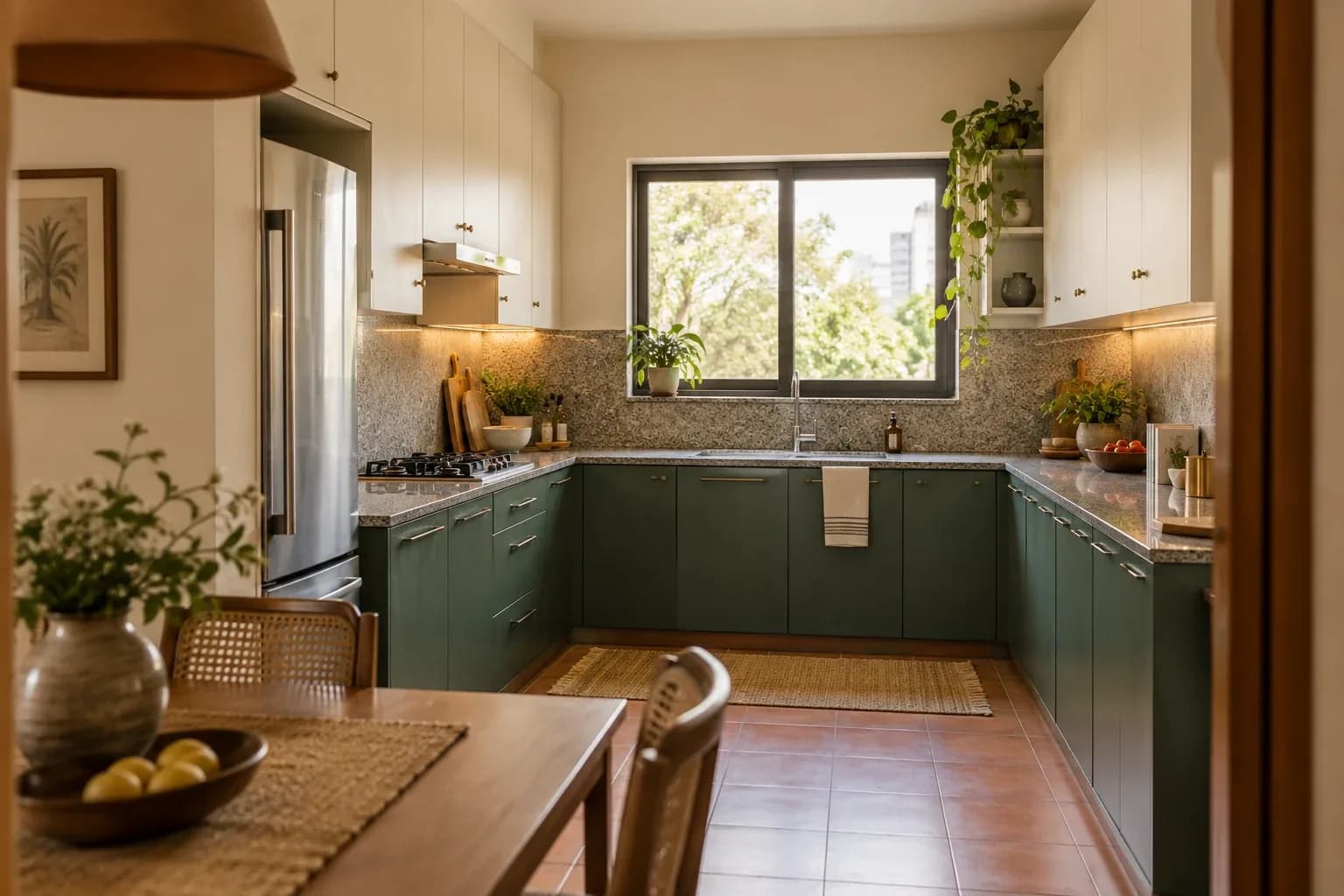
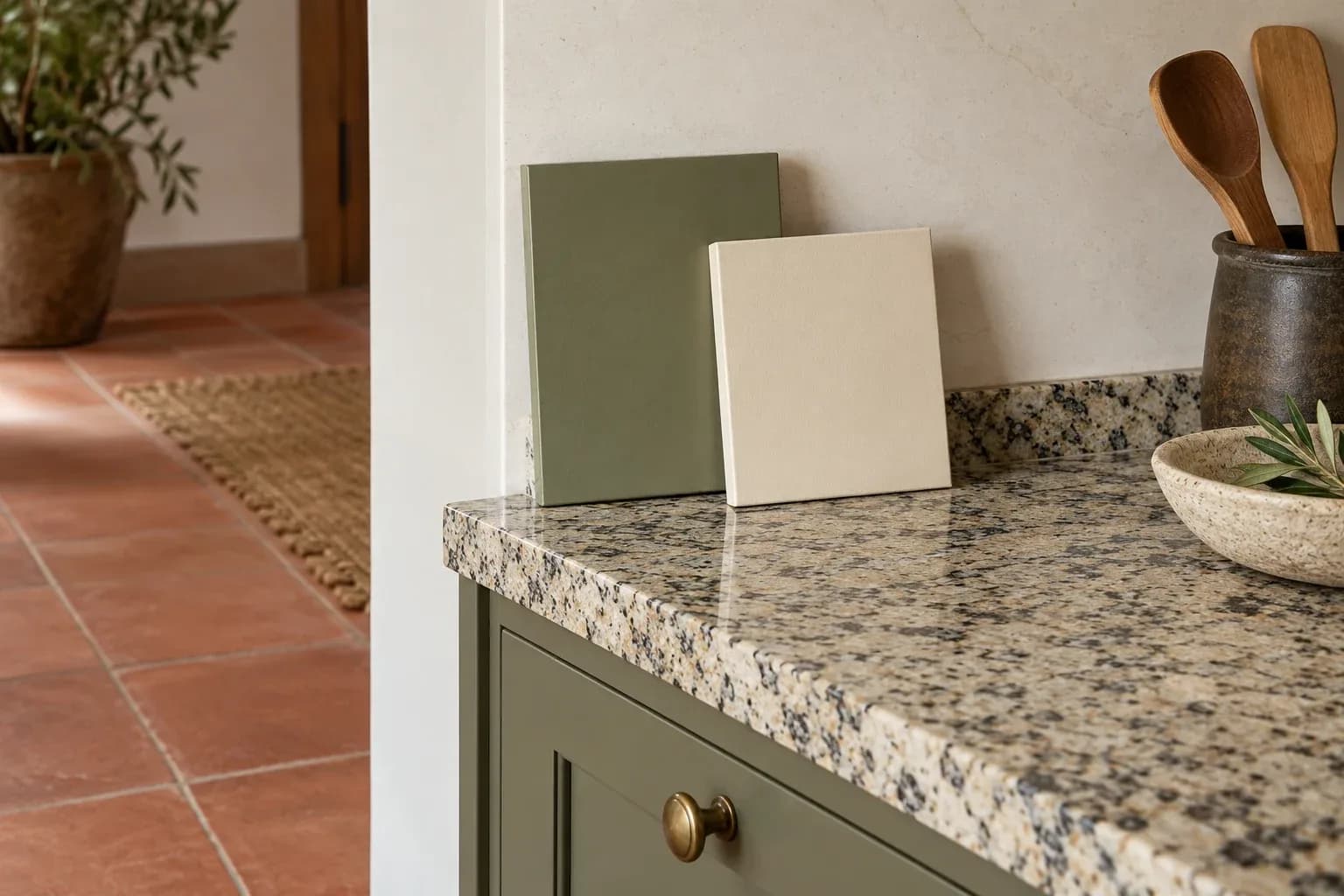
Begin with the surface you won’t replace. It might be a speckled granite counter, a warm brown floor or a green tile you love. Put two cabinet samples beside that surface and remove everything else from the table. If all three demand attention, keep your favourite cabinet finish and quieten its partner.
Picture a kitchen with a reddish floor and a strongly veined counter. A pale, warm upper cabinet can give the eye a resting place. A quieter lower finish can pick up a background colour from the stone. Another bold timber grain might work, but it deserves a full-door sample before you commit.
Draw the colour boundary on the actual elevation
Try three pencil sketches. In the first, shade the base cabinets and leave the uppers light. In the second, keep the long run one colour and shade only the tall pantry bank. In the third, keep the wall cabinets consistent and give a peninsula its own finish. One sketch will usually have a cleaner stopping point than the others.
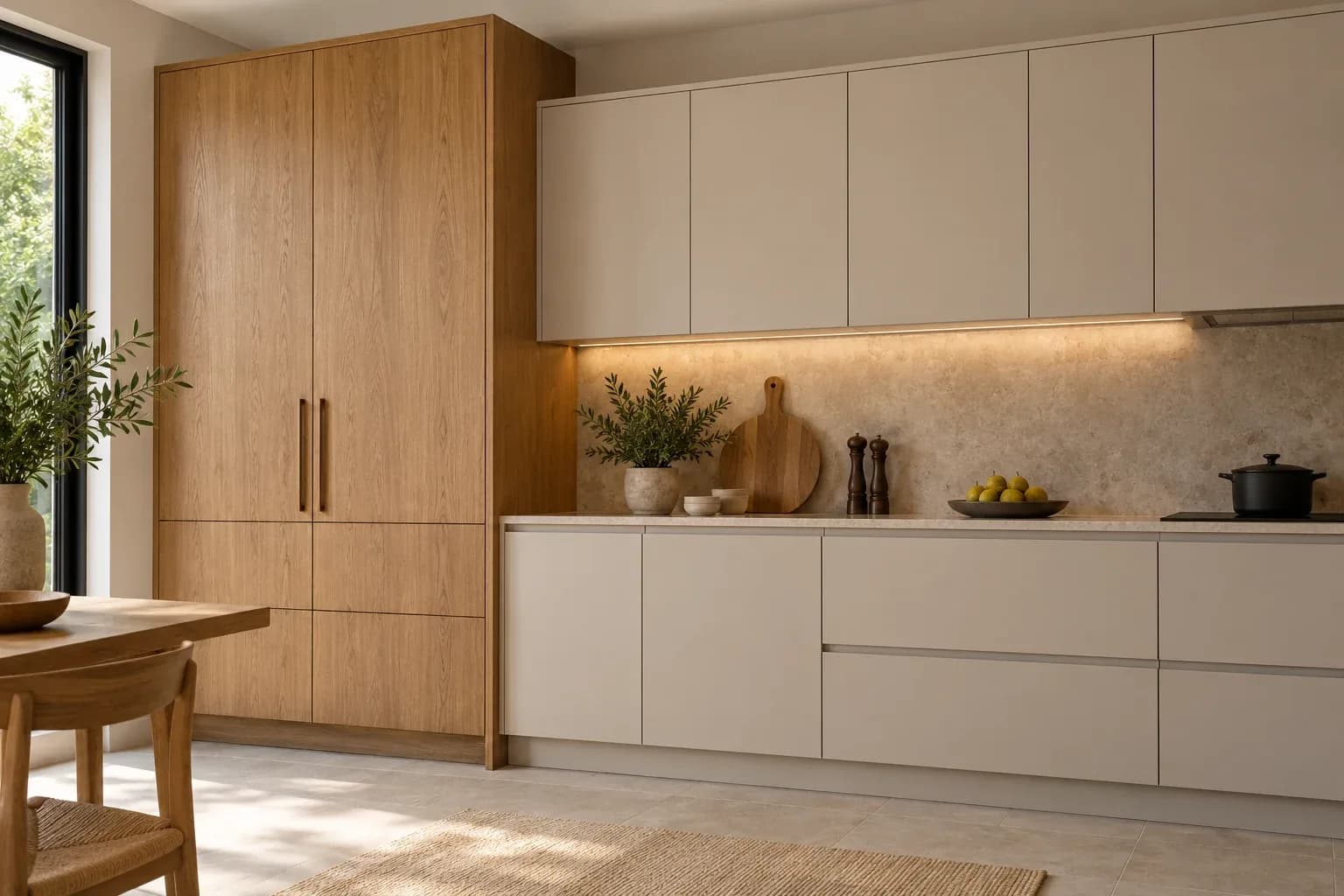
Pay special attention to a tall fridge housing that starts at the floor and finishes beside the uppers. Decide whether it belongs to the wall, the base run or a separate tall bank. Colour the exposed sides and the plinth too. An elevation with all the doors coloured but the ends left blank hides exactly the detail that can surprise you on installation day.
Check the pair at breakfast and after sunset
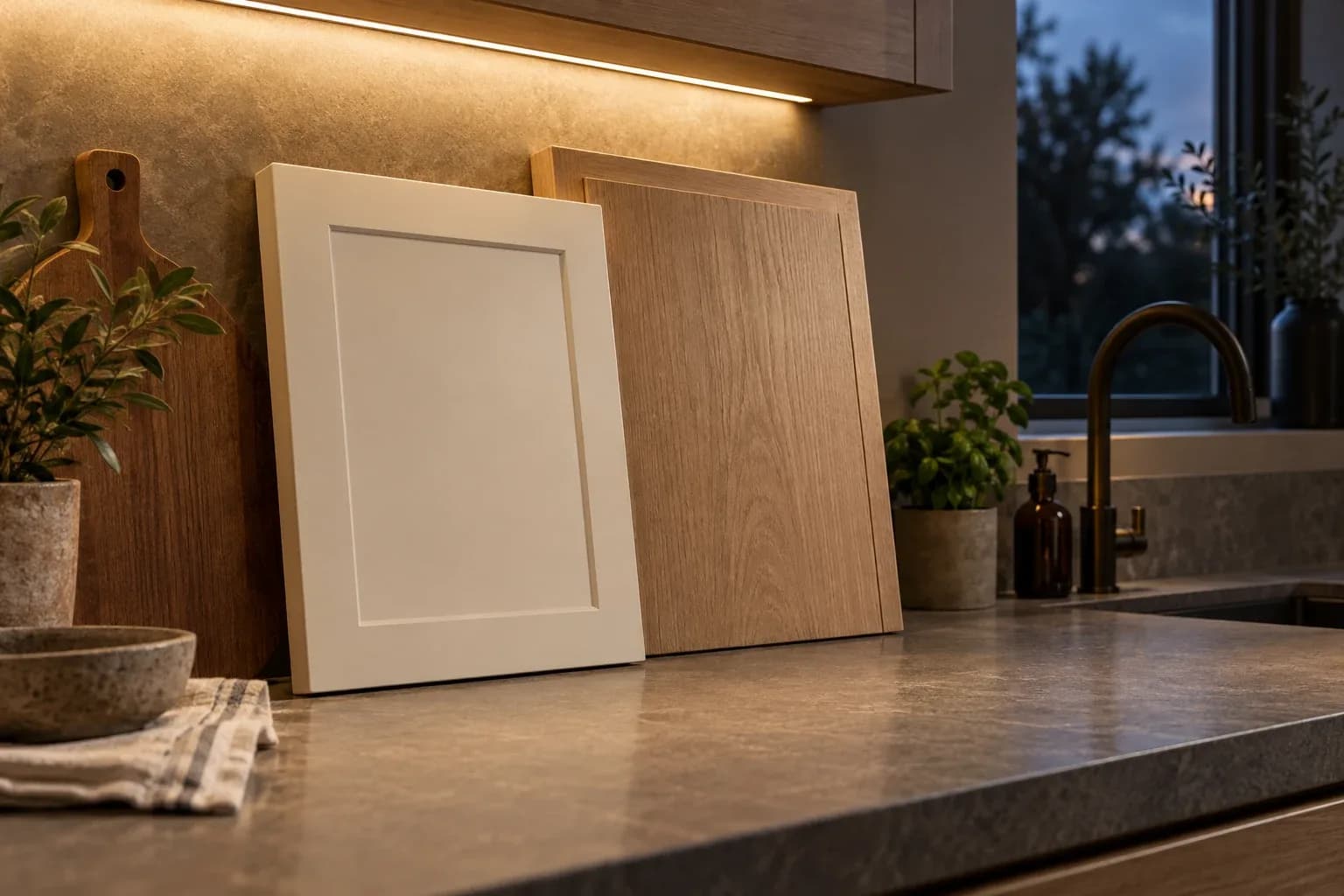
Stand the samples upright where the doors will be. Lay the counter sample flat. Look first from the dining room, then from the place where you chop vegetables. Switch on the task lights you actually use after dark. A white that feels soft next to oak in daylight may look stark near a cool splashback in the evening.
If the combination still feels busy, change one thing at a time. Keep the colours and simplify the handles, or keep the handles and try a quieter grain. Photograph the final arrangement for reference, then record the supplier codes, finish and grain direction. Approve physical samples rather than a phone photo.
Give the tallest cupboard its own sample check. A small square of wood print shows colour but may not show the repeat that appears across a full pantry front. Draw an arrow on the back of the sample to mark the proposed grain direction. Hold it upright beside the solid colour, then turn it to the orientation intended on a shallow drawer. If the two arrangements look like different schemes, note the direction on the drawing. This matters more than the name on the shade card.
Keep thickness out of the colour decision until the pair is chosen. Two quotes might specify a 0.8 mm and a 1 mm decorative sheet. Ask which actual finishes are available in the specification your maker proposes and whether both colours have matching edge material. On a long run, the thin edge seen between neighbouring doors can quietly introduce a third colour.
Keep reading
Questions people ask us
Do dark colours have to go below?
No. Dark lowers give a clear horizontal split, while a dark tall bank can work as a single accent. Where the colour stops matters more than a fixed rule.
Can I mix two wood finishes?
Yes. Check the grain scale as well as the colour. Two similar but mismatched grains can be more distracting than a deliberate contrast.
Should the plinth match the lower doors?
Matching helps the lower run read as one piece. A contrasting plinth draws a line along the floor, so include it in the elevation before ordering.
What if my kitchen has no island?
Use a complete pantry bank or the base run as the second colour. There is no need to scatter isolated accent shutters around the room.
How many handle finishes should I try?
Start with one across both door colours. Add a second only if you can explain where it belongs and like the result on both samples.
Shop these categories
Keep reading
- CompareFlat slab vs Shaker cabinet doors: which suits an everyday kitchen?
Choose slab doors if you want broad, uninterrupted surfaces and a quick wipe across each front. Choose Shaker if you like the shadow around a recessed panel enough to take a little extra care at its lower corners. Both styles can have handles; the profile and the opening method are separate decisions.
- CompareKitchen island vs peninsula: which layout works better in a compact home?
A peninsula earns its place when attaching one end frees up a useful passage or makes everyday seating possible. An island earns its place when people can use the routes around it, even with a stool occupied and the fridge open. Test both in your own room before deciding.
- GuidesHow do you verify plywood quality before it disappears under laminate?
Verify two different things: the identity of the material delivered and the condition of the particular pieces going into your furniture. An invoice can help with the first. It cannot explain a loose layer in the panel in front of you.
- CareUneven cabinet-door gaps: is it a hinge adjustment or a fitting problem?
A gap that changes from top to bottom is a clue, not a diagnosis. Before turning a screw, establish whether one door is out of line, several units are misaligned, or the door itself will not lie flat.
- GuidesCabinet refacing or replacement: when is keeping the old kitchen worth it?
Keep the cabinet boxes if they are dry, firm and arranged the way you cook.
- CompareFloating vs floor-standing bathroom vanity: what should decide your choice?
A floating vanity works when the wall can take the specified load and the plumbing fits behind the storage. A floor-standing unit can offer more room below the basin and conceal low pipework. Decide from a measured view of your wall and a drawer opened to its full depth.