
| White or ivory solid colour | Wood-look finish | |
|---|---|---|
| Visual character | White feels crisp; ivory offers a warmer colour direction. | A wood pattern can connect the inside with the exterior furniture. |
| Finding belongings | Check pale surfaces with your clothes under the actual wardrobe light. | Check the depth and grain against dark clothing and small items. |
| Pattern planning | A plain surface avoids grain-matching decisions. | Agree the grain direction across shelves, dividers and drawer fronts. |
| Product choice | Specify the suitable liner or decorative product, not colour alone. | Confirm that the chosen product is suitable for the intended inner surface. |
Choose the interior you will enjoy using
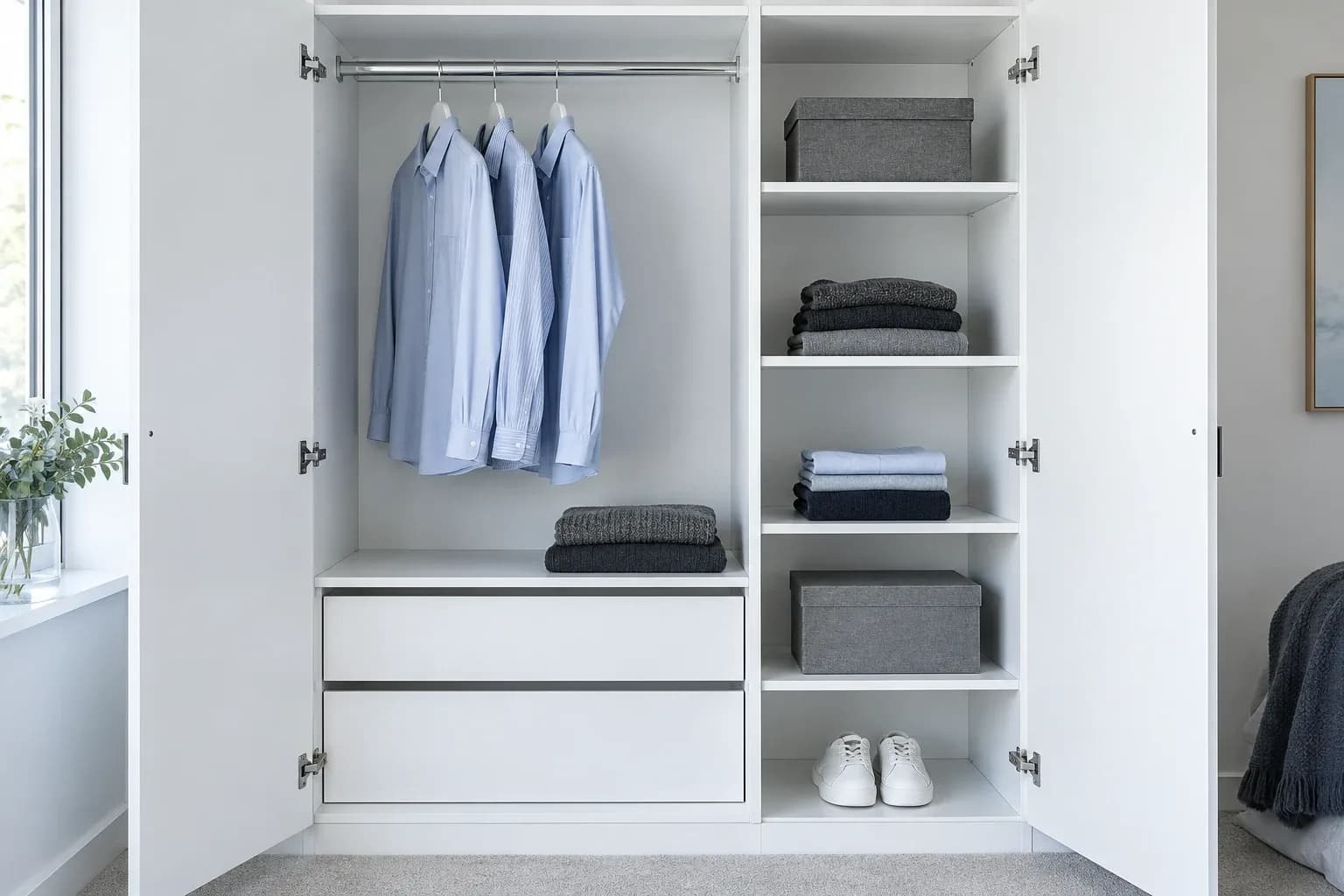
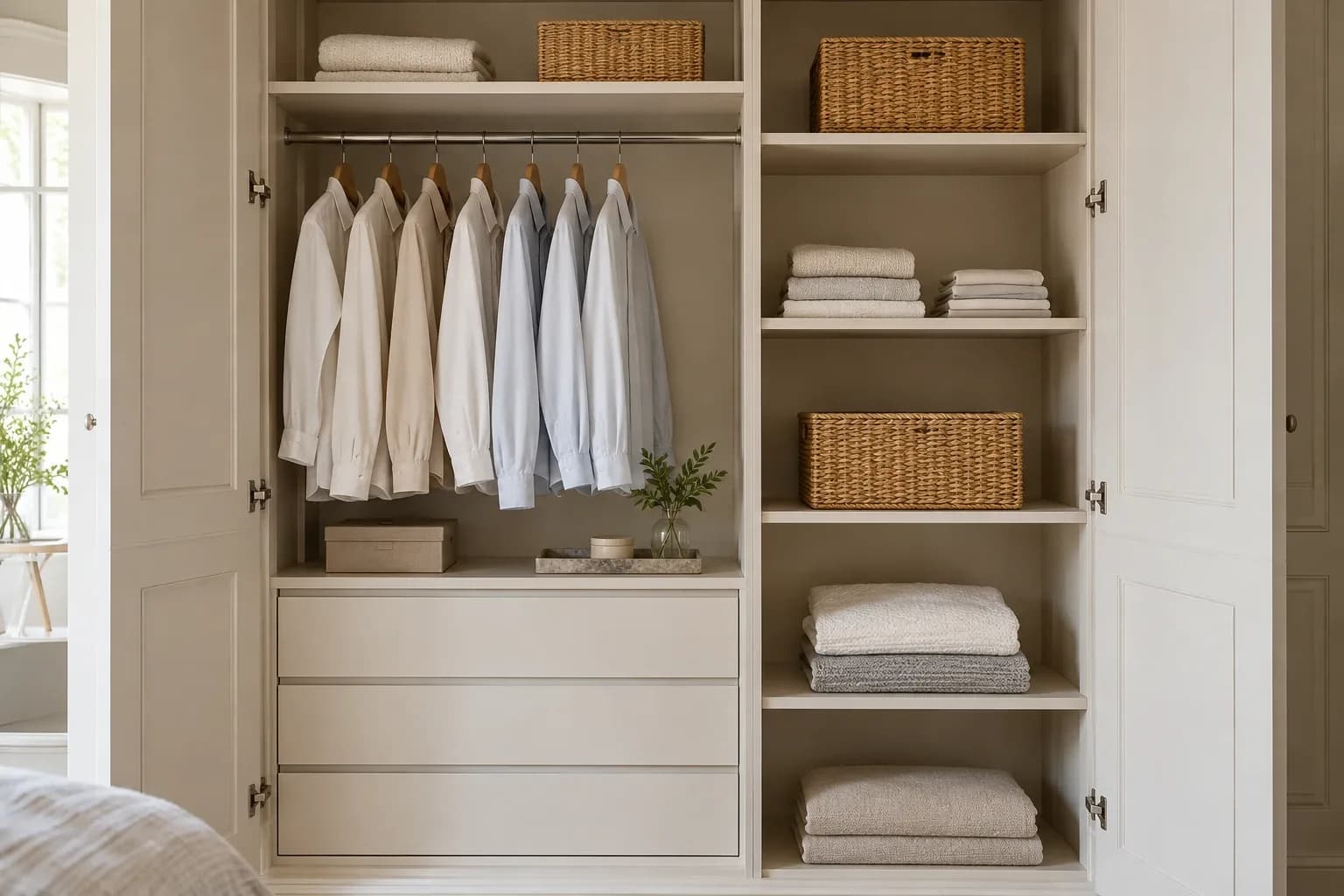
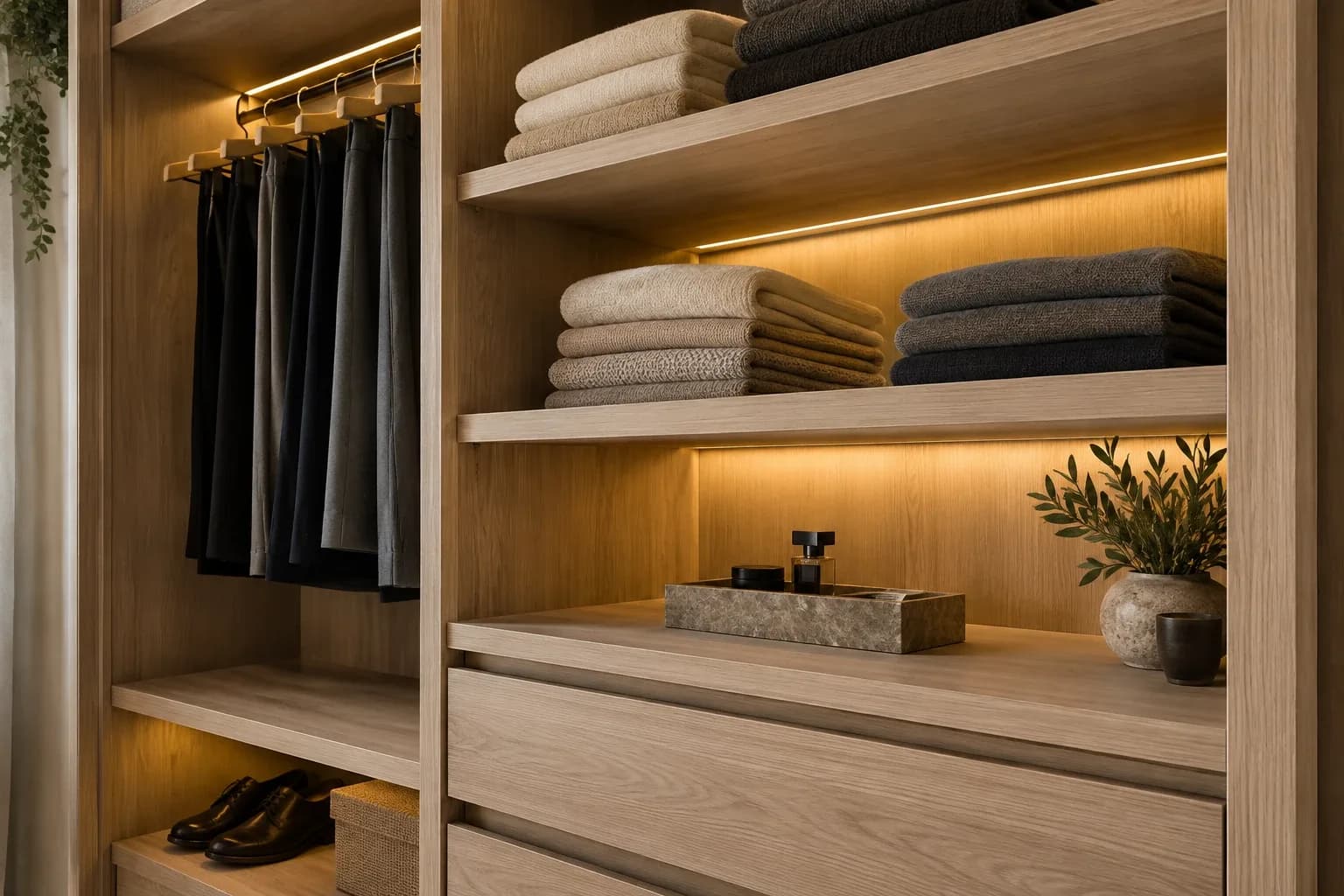
White is a practical visual starting point when you want a crisp, uncomplicated wardrobe interior. Ivory is worth comparing when pure white looks too stark beside warm walls or flooring. A wood look can make the inside feel more connected to the rest of the furniture. None of these colours, by itself, tells you whether a product is the right inner lining.
Separate two decisions: how the interior should look, and what it should be made from. Ask the fabricator to specify the inner surface, board, edges and installation details. A decorative colour name is not a construction specification, and a sheet described as an inner liner should not be accepted without identifying its product range.
Try the colours beside the clothes you actually store. Place a dark shirt, a pale garment and a small accessory against each option. Look under the planned wardrobe light, with the doors open as they will be used. A combination that looks elegant in an empty display may feel different when shelves are full.
Browse white shades, cream shades and wood-look laminates to establish the colour direction. Confirm the suitability of the exact selected product before ordering it for the interior.
What changes when you open the doors
White: simple and crisp. A plain white interior can make the storage layout feel visually straightforward. Compare the particular white against the exterior doors and the wall colour; different whites do not necessarily match. Check the shelf edges as carefully as the flat surfaces, because their colour is visible every time the doors open.
Ivory: a softer transition. Ivory or cream can sit comfortably with warm wood looks and beige room finishes. Check the actual swatch under the wardrobe lighting before approving it. A warm light can change the way a pale neutral reads, so the name on the catalogue is not enough to decide whether the colour feels right.
Wood look: continuity with the furniture. A subtle wood pattern can make an open dressing section feel like part of the room. Agree the grain direction on shelves, vertical dividers and drawer fronts. If the pattern is strong, consider using it selectively rather than covering every small compartment.
Visibility depends on the complete arrangement. A deep shelf with poor lighting can remain awkward to use regardless of the colour. Ask the designer to check access to the back of shelves, the position of drawers and the effect of hanging clothes on the light. Colour should support a usable layout, not compensate for one that is difficult to reach.
If the wardrobe has open shelves, view the inside finish from the bed and doorway as well. It becomes part of the room's palette. Our warm-neutral design collection can help you keep the interior and exterior choices connected.
Keep the specification clear
Ask whether the inner face is a separate lining, a decorative laminate or part of a prefinished board system. Record the manufacturer, range, thickness and edge detail. Do not assume that an outer-door specification can simply be copied to every shelf, or that all products sold for interiors are interchangeable.
Greenlam publishes separate product and grade documents in its technical library. Use the relevant manufacturer's information to confirm the proposed application. The useful question is “Is this exact product suitable here?” rather than “Is white laminate better than wood laminate?”
Cleaning should follow the selected surface's care instructions. Do not choose a darker pattern simply because you hope it will never show dust or marks. Check how the shelf edge, internal corners and drawer bases will be accessed for normal cleaning, and ask the installer what cleaner is appropriate.
Before fabrication, request a small labelled assembly or a clearly marked finish schedule. It should distinguish the external doors, internal vertical panels, shelf faces, drawer interiors and exposed edges. If the budget changes, review those items separately instead of agreeing to an unspecified cheaper inside finish.
Keep the approved product codes with the invoice. If a later shelf or divider is needed, the code and finish description will be more useful than trying to match a photograph of the completed wardrobe.
Questions people ask us
Is white always the best wardrobe interior colour?
No. White is a useful starting point, but compare visibility, lighting and the relationship with the exterior finish. Ivory or a restrained wood look may suit your room better.
Will ivory look yellow?
It depends on the particular shade and lighting. Check the physical swatch inside the wardrobe area under the lights you plan to use.
Can the inside and outside have different finishes?
Yes, provided the fabricator specifies suitable products and construction for each part. Keep the interior and exterior codes separate on the drawing.
Is wood-look laminate harder to clean than white?
Colour alone does not determine the cleaning method. Follow the instructions for the actual surface and finish, and check access to corners and shelf edges.
What should be written on the wardrobe finish schedule?
Identify external doors, internal panels, shelves, drawers and exposed edges, with the product code, finish and construction specification for each.
Shop these categories
Keep reading
- AnswersWill glossy wardrobe doors cause distracting reflections?
A simple room check helps you decide whether a glossy wardrobe will feel bright or visually busy.
- IdeasHow to match wardrobe laminates with your floor and wall colour
Three calm colour directions, plus a way to check that your wardrobe belongs in the room.
- CareHow to remove spice stains from a white laminate surface
A careful first response to turmeric and spice marks, without turning a stain into surface damage.
- CompareAcrylic vs laminate for kitchen cabinets: which should you choose?
Choose kitchen shutters around the finish you love, the construction behind it and the care you can live with.
- GuidesWhich laminate brand should you choose for a modular kitchen?
A practical way to compare brands without losing sight of the kitchen you are actually building.
- Compare0.8 mm vs 1 mm laminate: what should you check before buying?
The 0.2 mm difference is easy to measure. Choosing the right product takes a few more questions.