
Start with a shortlist, not a winner
There is no single laminate brand that is the right answer for every modular kitchen. A useful shortlist starts with the surface you need, the finish you like and a product range your fabricator can specify properly. Merino and Greenlam both publish product information, but a familiar name is only the beginning of the comparison.
Decide which parts of the kitchen you are choosing for. Shutters, cabinet interiors, exposed side panels and work surfaces do not automatically need the same product. Ask the kitchen maker to mark these areas on the drawing before you compare catalogues. This avoids paying for an expensive decorative face in a hidden area or approving an unspecified lining because it looks similar in a quotation.
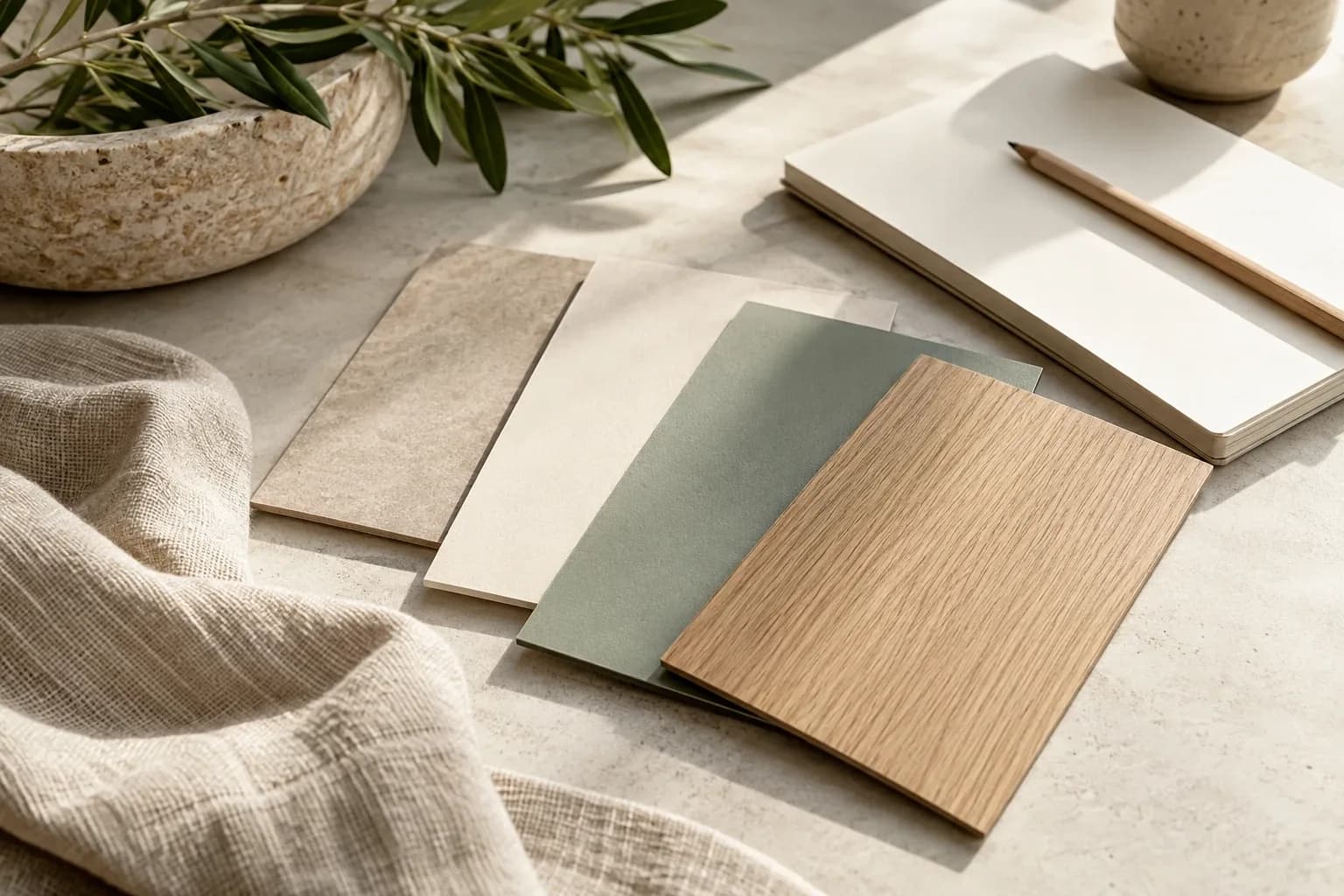
Then choose a small visual direction: perhaps a warm solid colour with one wood accent, or a quiet matte finish across all the doors. Browse solid-colour laminates and wood-look laminates to find that direction. A shortlist of three actual decor codes is easier to assess than a conversation about which brand is best.
For the broader process, read how to choose laminate sheets. This guide focuses on the questions that help you compare brands fairly.
Five checks before you settle on a brand
- 1
Identify the exact range
Ask for the manufacturer, collection, decor code, finish and nominal thickness. A 1 mm sheet description is incomplete without the product range and intended application. Keep this information on the quotation, not only in a chat with the installer.
- 2
Read the relevant product information
Use the manufacturer’s technical sheet for the proposed product. Greenlam lists separate 0.8 mm and 1.0 mm technical documents; Merino also distinguishes its laminate collections. A claim belonging to one specialist range should not be applied to everything carrying the same brand name.
- 3
Inspect the finish in your light
Place the physical swatch beside the countertop and wall references. Look at it upright in daylight and under the planned kitchen lighting. If fingerprints or reflection worry you, handle the swatch with permission and ask how that particular finish should be cleaned.
- 4
Ask the fabricator about construction
Confirm the board, adhesive, reverse finish and edge treatment. Ask to inspect a completed shutter. Brand choice cannot compensate for a poorly specified joint or a door built differently from the agreed drawing. Make sure the installer is comfortable with the selected product.
- 5
Check supply and support
Confirm the quantity and current availability of the exact code, the expected lead time and the process for damaged sheets. Ask for the written warranty and its exclusions. Establish whether the retailer, fabricator or manufacturer should be contacted if a problem appears later.
Make the quotations comparable
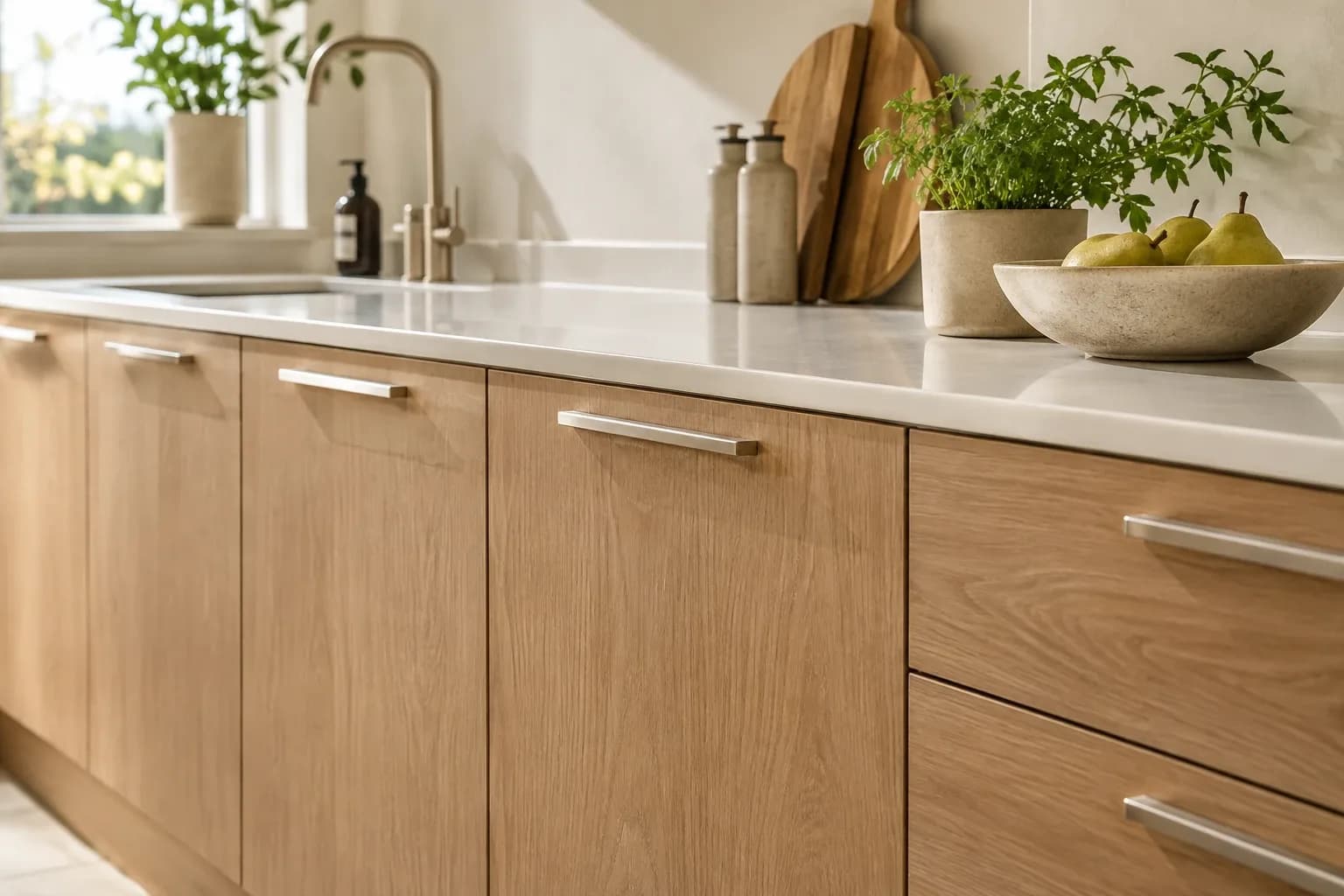
Ask each supplier to quote against the same list of doors and panels. Separate the decorative face, inner finish, supporting board, edges, hardware and installation. If one price includes finished shutters and another covers sheets alone, the headline totals are not comparable.
A more expensive finish can still be worth choosing if it is the one you want to see every day. The decision should be explicit: what is changing, where will it be used and what is the additional installed cost? Keep an alternative decor code ready in case availability changes before ordering.
Manufacturer references: Merino laminate collections and Greenlam technical documents. Use these to identify the relevant range and request current product documentation. They are not a ranking of the brands.
Before paying, check the final drawing against the code list. Record quantities, agreed substitutions and delivery arrangements in writing. Keep the invoice and the care instructions after installation. These small details are more useful than choosing a brand by reputation and leaving the specification open.
Questions people ask us
Which brand is best for a modular kitchen?
Compare the exact product ranges available to you. The right choice depends on the intended surface, finish, documented specification, installation and support.
Should I always buy 1 mm laminate?
Do not choose by thickness alone. Ask the fabricator to specify the product grade and thickness for each application, using the manufacturer’s information.
Can I use different brands in one kitchen?
It can be considered, but check colours, finishes and construction details together. Keep a clear schedule showing the product code for every area.
Does the laminate warranty cover the complete cabinet?
Check the written terms. A surface product warranty and the fabricator’s responsibility for the completed cabinet may cover different things.
What should be written on the final quotation?
Include brand, range, decor code, finish, sheet specification, quantities, board and edge details, installation scope, taxes and delivery arrangements.
Shop these categories
- 1 mm Decorative Laminates
- 0.8 mm Decorative Laminates
- Wood Laminates
- Matte Finish Laminates
- Solid Colour Laminates
- Glossy Finish Laminates
Keep reading
- CompareAcrylic vs laminate for kitchen cabinets: which should you choose?
Choose kitchen shutters around the finish you love, the construction behind it and the care you can live with.
- Compare0.8 mm vs 1 mm laminate: what should you check before buying?
The 0.2 mm difference is easy to measure. Choosing the right product takes a few more questions.
- IdeasHow to match wardrobe laminates with your floor and wall colour
Three calm colour directions, plus a way to check that your wardrobe belongs in the room.
- CompareWhite, ivory or wood-look laminate inside wardrobes?
Choose an interior that makes the wardrobe pleasant to open, easy to organise and consistent with the room.
- PricesWhat should a laminate furniture quote include beyond sheet price?
Turn a single furniture price into a clear scope you can compare and approve.
- CareHow to remove spice stains from a white laminate surface
A careful first response to turmeric and spice marks, without turning a stain into surface damage.