
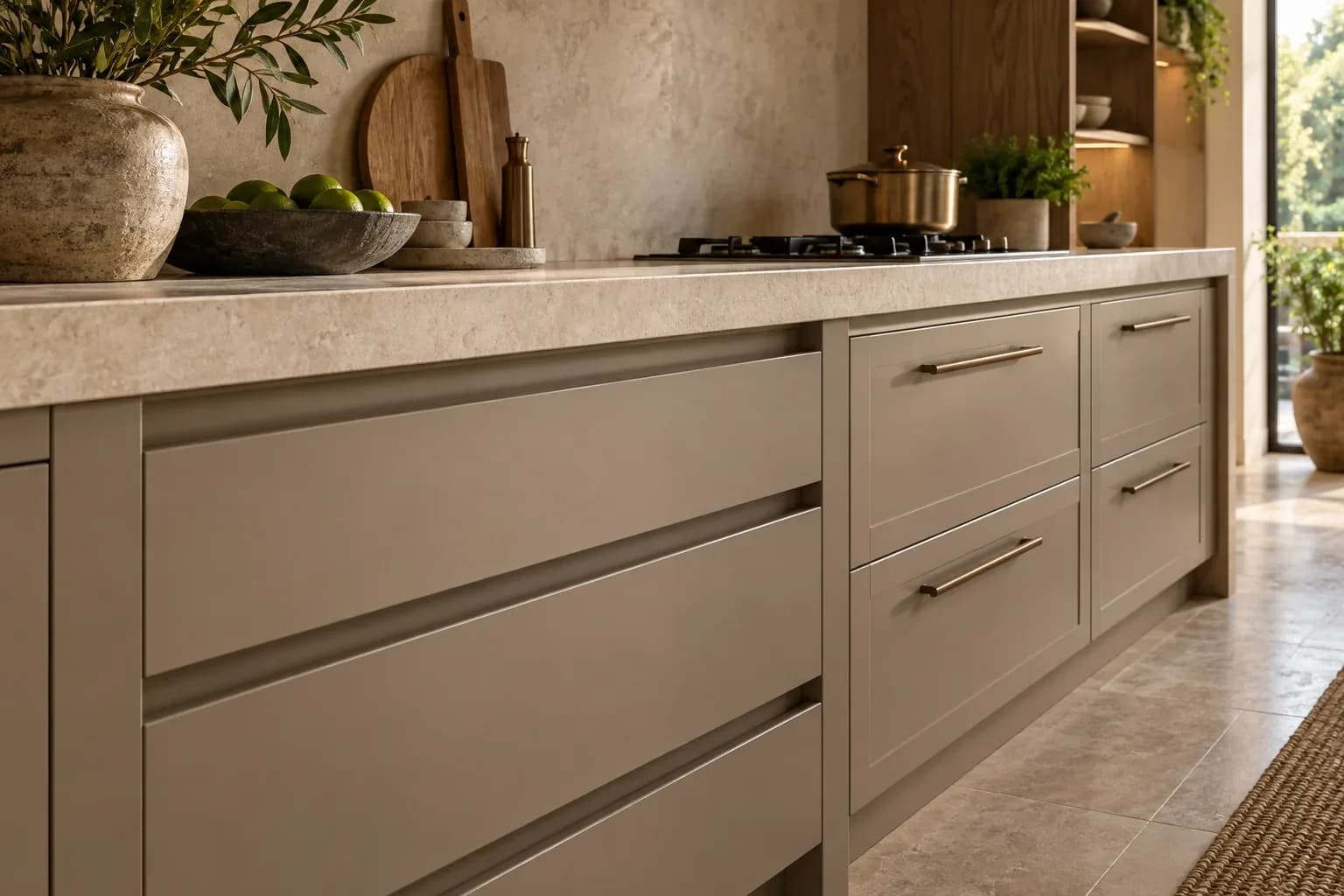
| Handleless fronts | Fronts with handles | |
|---|---|---|
| Opening | Check the specific grip channel or push mechanism. | Choose a handle shape with comfortable clearance. |
| Appearance | Can create a continuous, restrained front. | Handles can add rhythm, contrast or warmth. |
| Cleaning | Touch points and channels need attention. | Handles and their fixing areas need cleaning. |
| Specification | Profile, mechanism and clearances must match. | Handle size, hole spacing and fixings must match. |
Understand what handleless actually means
Handleless cabinets can give a kitchen a quiet, uninterrupted look. Handles offer an obvious place to grip and can make heavier doors feel easier to use. Neither choice is automatically more practical. The important distinction is the opening method, because several very different systems are described as handleless.
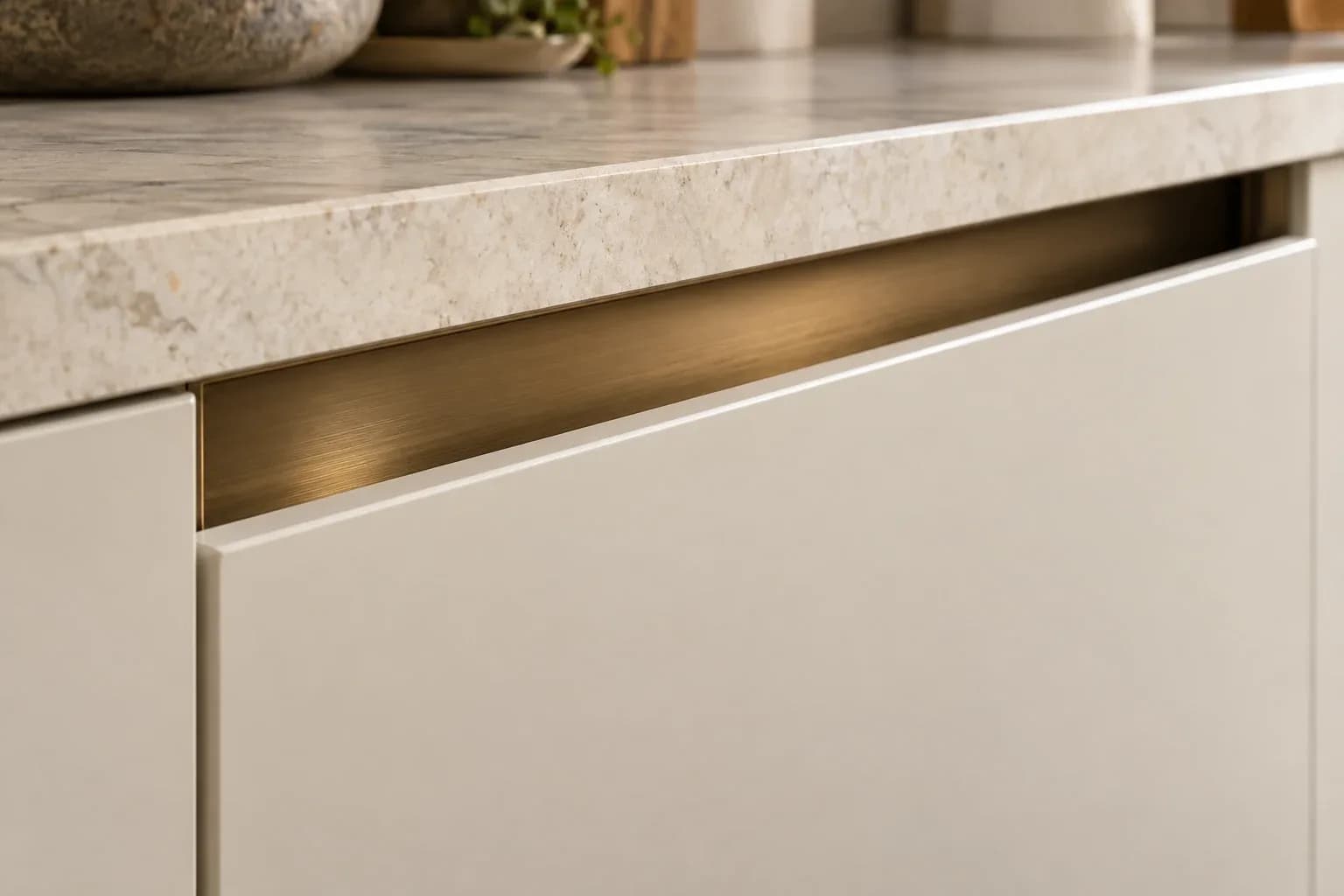
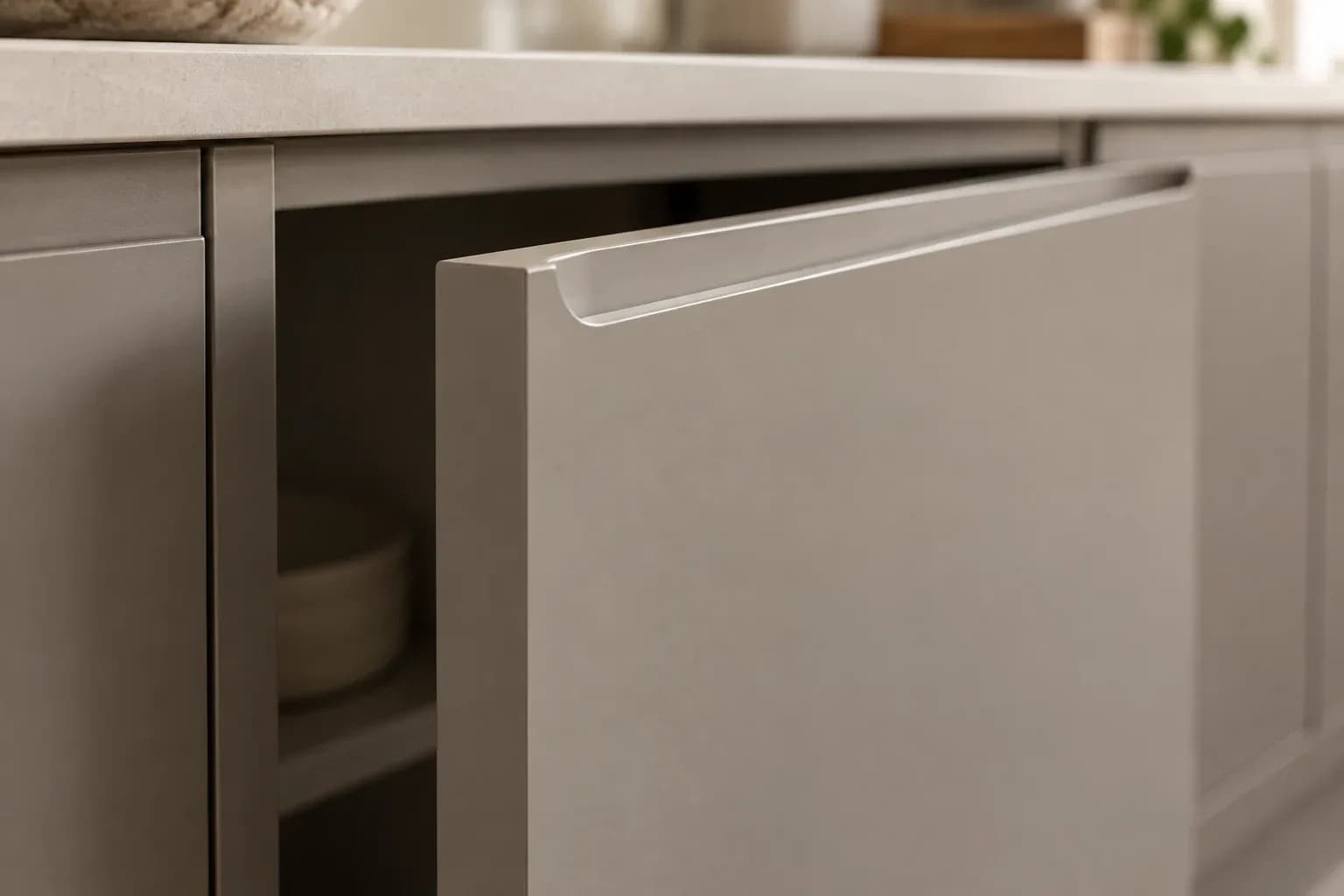
A recessed channel gives your fingers space to pull the front. A shaped edge or integrated pull becomes part of the shutter itself. A push-to-open mechanism releases when you press the front. These arrangements can look similar in a photograph but feel very different when you are cooking.
Start by trying a finished sample at a realistic height. Open it with the hand you would normally use, close it and repeat with the sort of access you have beside a corner or appliance. If you struggle to find a comfortable grip in the showroom, the clean appearance is unlikely to compensate for that frustration every day.
For handled cabinets, look beyond the catalogue photograph. Check finger clearance, the edges of the handle and whether a projecting end catches clothing. A simple handle can look refined when its size and position are consistent. You do not need an elaborate profile to make a kitchen feel considered.
Test movement, touch points and cleaning
Ask the designer to identify every opening system on the elevation. A long refrigerator door, a narrow spice pull-out and a wide pan drawer do not make identical demands. An opening method that feels easy on a small empty sample may behave differently on a loaded unit.
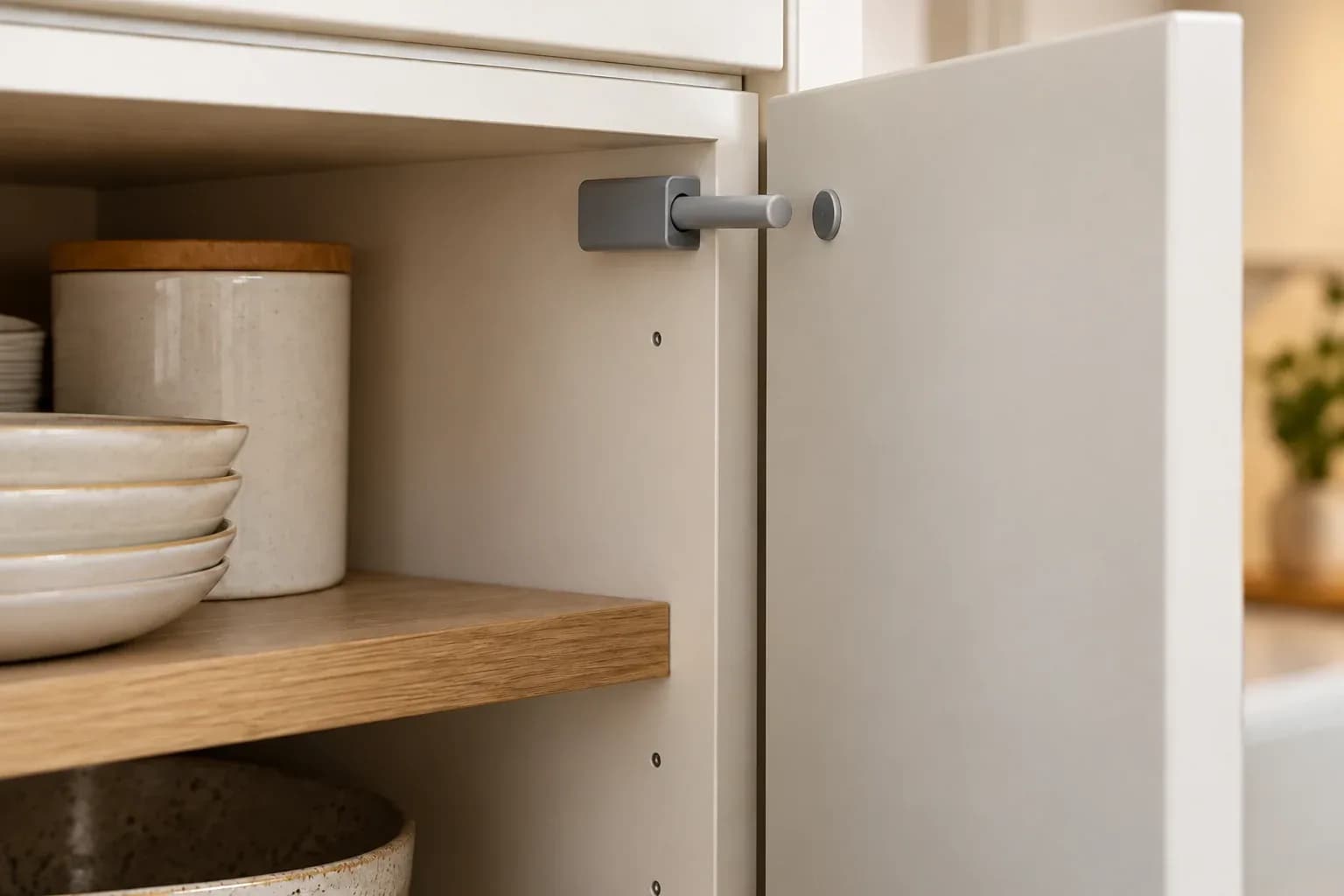
For push-to-open fronts, confirm the compatible hinges or runners, the adjustment requirements and the clearance around the front. Do not assume that an ordinary soft-close component can simply be combined with any push latch. Use the hardware manufacturer's approved configuration and ask the installer to demonstrate the final operation.
Grip channels deserve a cleaning check. Run a cloth through the proposed detail and inspect the corners where surfaces meet. Handleless does not mean touch-free: fingers still contact a front, edge or channel. Handled fronts concentrate contact around the handles, but those handles and their bases also need regular cleaning.
The finish is a separate decision. A darker glossy surface may reveal particular marks or reflections more readily in your room, while a textured surface has a different feel and care routine. Compare samples under your lighting instead of assuming that every matte finish hides fingerprints. Our matte and glossy guide helps separate appearance from the opening mechanism.
Check the completed run for collisions. A projecting handle must clear adjacent fronts and walls. A recessed profile must leave enough room for fingers. Dishwasher, oven and refrigerator clearances should follow their own installation instructions rather than a visual rule copied from the cupboards.
Choose a detail you can live with and maintain
A mixed approach can be sensible. You might use a discreet grip channel on the main base run and a comfortable pull on a tall pantry. Keep the material and alignment intentional so the mix looks designed. There is no requirement for every opening in the kitchen to use the same mechanism.
Ask what happens if a component needs replacing. Keep the profile name, mechanism model, handle hole spacing and finish code with the invoice. A future replacement is easier to identify when you have more than a photograph. Do not accept an unspecified promise that every part will always be available.
Compare quotes for the same cabinet layout. Include profiles, end pieces, mechanisms, handles, fabrication and installation, together with the supporting board and decorative surface. A plain sheet price will not reveal the cost of creating an integrated opening detail. The furniture quotation checklist gives you a useful starting point.
Browse Cabinet Finishes and Cabinet Hinges as separate decisions. If you shortlist a 1 mm decorative laminate, that measurement describes the face sheet and does not determine the finished shutter thickness. Bring the opening detail and finish sample together before approving manufacture.
For a visit to Hinch Hafeezpet in Hyderabad 500085, take the elevation and note which fronts need a grip, profile or push mechanism. Choose handleless if the exact system feels comfortable and you like its detail. Choose handles if a clear grip suits you better. In either case, judge the finished sample and the installed operation rather than the trend label.
Questions people ask us
Does handleless always mean push-to-open?
No. It can mean a recessed channel, an integrated grip or a push mechanism. Ask which construction is being quoted.
Are handleless cabinets harder to clean?
It depends on the detail and finish. Test access to the channel and follow the surface manufacturer's cleaning guidance.
Can I combine handles and handleless fronts?
Yes. Keep the arrangement deliberate and use each opening method where it feels comfortable and works with the hardware.
Can handles be added later?
Sometimes, but suitability depends on the front, mechanism and fixing position. Confirm before drilling or assuming a future conversion will be simple.
Is push-to-open compatible with soft-close?
Only use a combination approved for the particular system. The installer should specify compatible hinges or runners and demonstrate it.
What should I check at handover?
Open and close every front, check grip comfort and collisions, and retain the hardware model and adjustment instructions.
Shop these categories
Keep reading
- IdeasTwo-tone kitchen cabinets: how do you choose a combination that feels balanced?
Choose one finish to carry most of the kitchen and give the second a clear place to begin and end.
- CompareFlat slab vs Shaker cabinet doors: which suits an everyday kitchen?
Choose slab doors if you want broad, uninterrupted surfaces and a quick wipe across each front. Choose Shaker if you like the shadow around a recessed panel enough to take a little extra care at its lower corners. Both styles can have handles; the profile and the opening method are separate decisions.
- CompareKitchen island vs peninsula: which layout works better in a compact home?
A peninsula earns its place when attaching one end frees up a useful passage or makes everyday seating possible. An island earns its place when people can use the routes around it, even with a stool occupied and the fridge open. Test both in your own room before deciding.
- GuidesHow do you verify plywood quality before it disappears under laminate?
Verify two different things: the identity of the material delivered and the condition of the particular pieces going into your furniture. An invoice can help with the first. It cannot explain a loose layer in the panel in front of you.
- CareUneven cabinet-door gaps: is it a hinge adjustment or a fitting problem?
A gap that changes from top to bottom is a clue, not a diagnosis. Before turning a screw, establish whether one door is out of line, several units are misaligned, or the door itself will not lie flat.
- GuidesCabinet refacing or replacement: when is keeping the old kitchen worth it?
Keep the cabinet boxes if they are dry, firm and arranged the way you cook.