
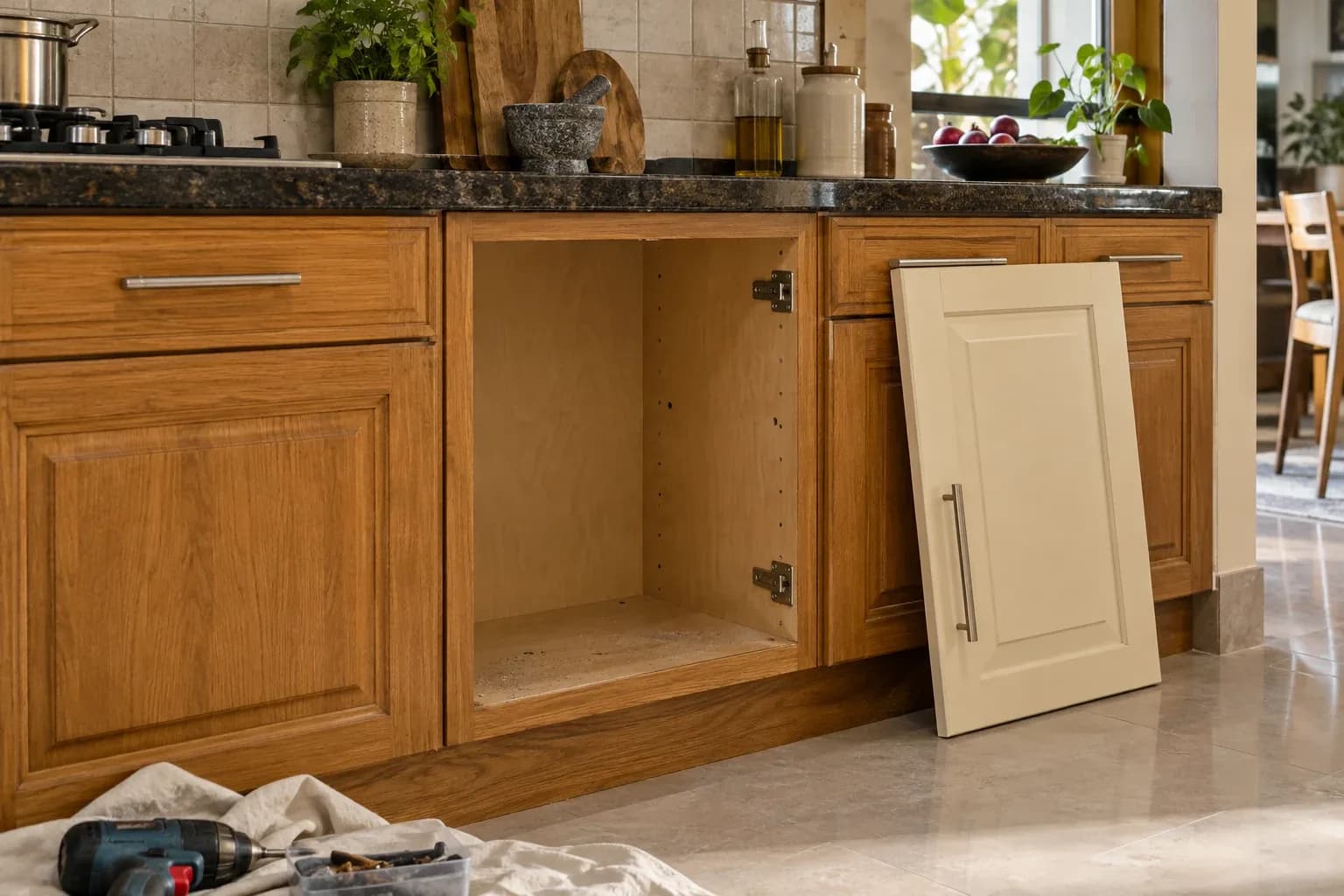
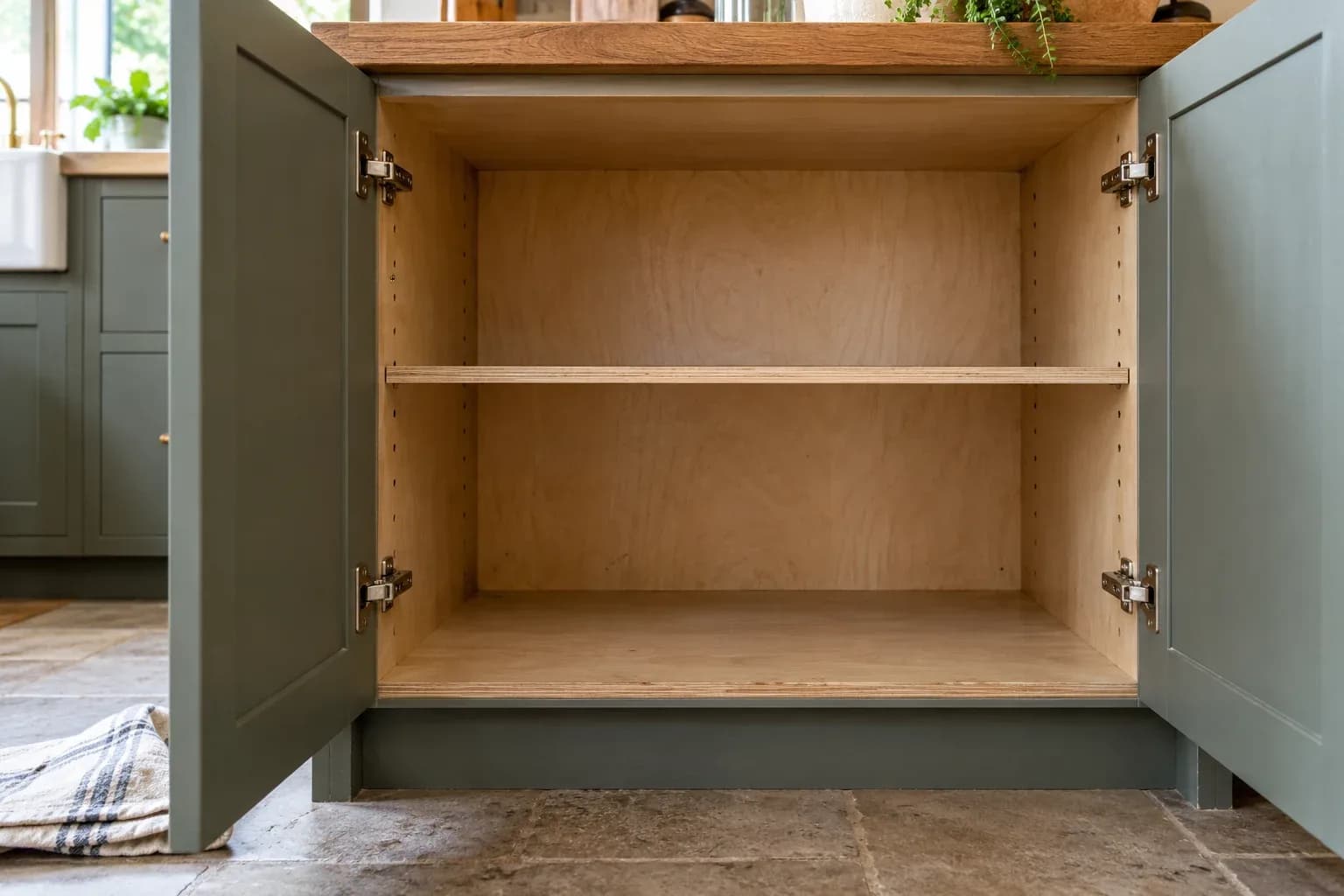
Start with one busy cupboard
Keep the cabinet boxes if they are dry, firm and arranged the way you cook. Replace or redesign the units that fail those tests. A dated door is a reason to look at new fronts; it tells you very little about the cupboard behind it.
Open the cabinet you use to make breakfast. Does the door clear the next handle? Can you reach the tawa without unloading the shelf? Does the drawer run straight when the cutlery is inside? Write down the first thing you would change. If the answer is the colour, refacing is worth pricing. If the answer is where everything lives, new shutters alone will leave the same frustration behind.
Do a separate pass with the units empty. Look at the shelf supports, hinge fixing points, back panel and floor of the sink unit. Photograph loose joints, swelling or evidence of a leak. Have the cause assessed before asking someone to cover it. A sound wall cupboard and a damaged sink base need not receive the same verdict.
Price the kitchen you will see from the doorway
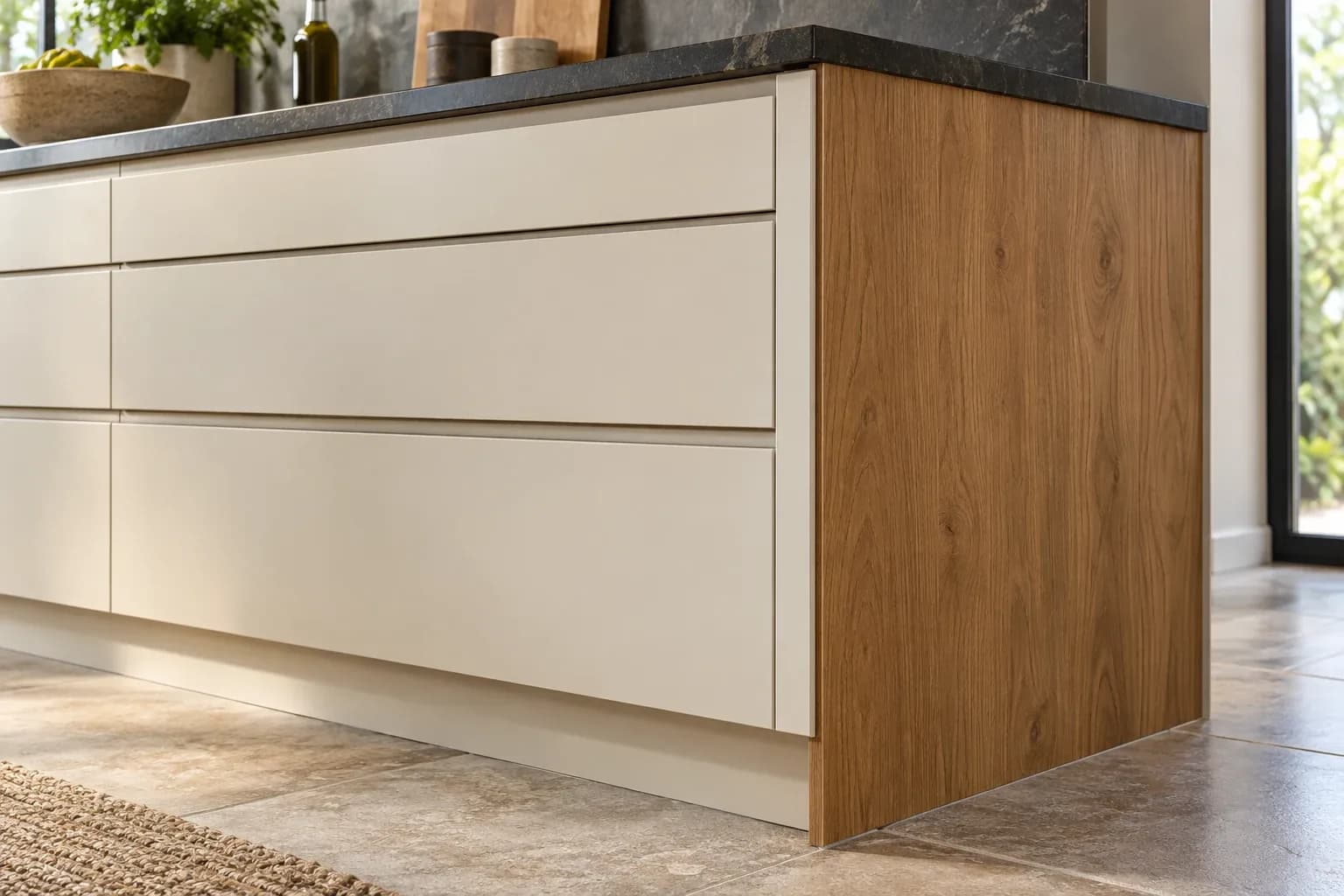
Refacing usually keeps the cabinet boxes and changes the doors, drawer fronts and visible surfaces. A door-only quotation may leave the original colour on the exposed side of the fridge housing, the strip between two doors or the plinth below them. Stand in the kitchen doorway and mark every surface you can see. Then open a door and decide whether the inside edge also needs to match.
For example, replacing honey-coloured fronts with warm white can look intentional if the timber ends remain as a considered accent. One accidental strip of old colour between otherwise white drawers is a different result. Ask for a finished corner sample that shows how the face, edge and side will meet.
Ask the fitter to mock up the tightest corner before ordering a full set of fronts. A cabinet door beside a wall may open freely today, yet catch once a new face and a projecting handle are fitted. Tape a spacer of the proposed build-up to the wall end and swing the neighbouring door and drawer through their full travel. Repeat the test beside the dishwasher. If a quotation lists 0.8 mm or 1 mm laminate, ask for the total finished thickness of the replacement front. The laminate figure describes the decorative sheet. The core, backing and handle position also affect whether you can open the cabinet comfortably.
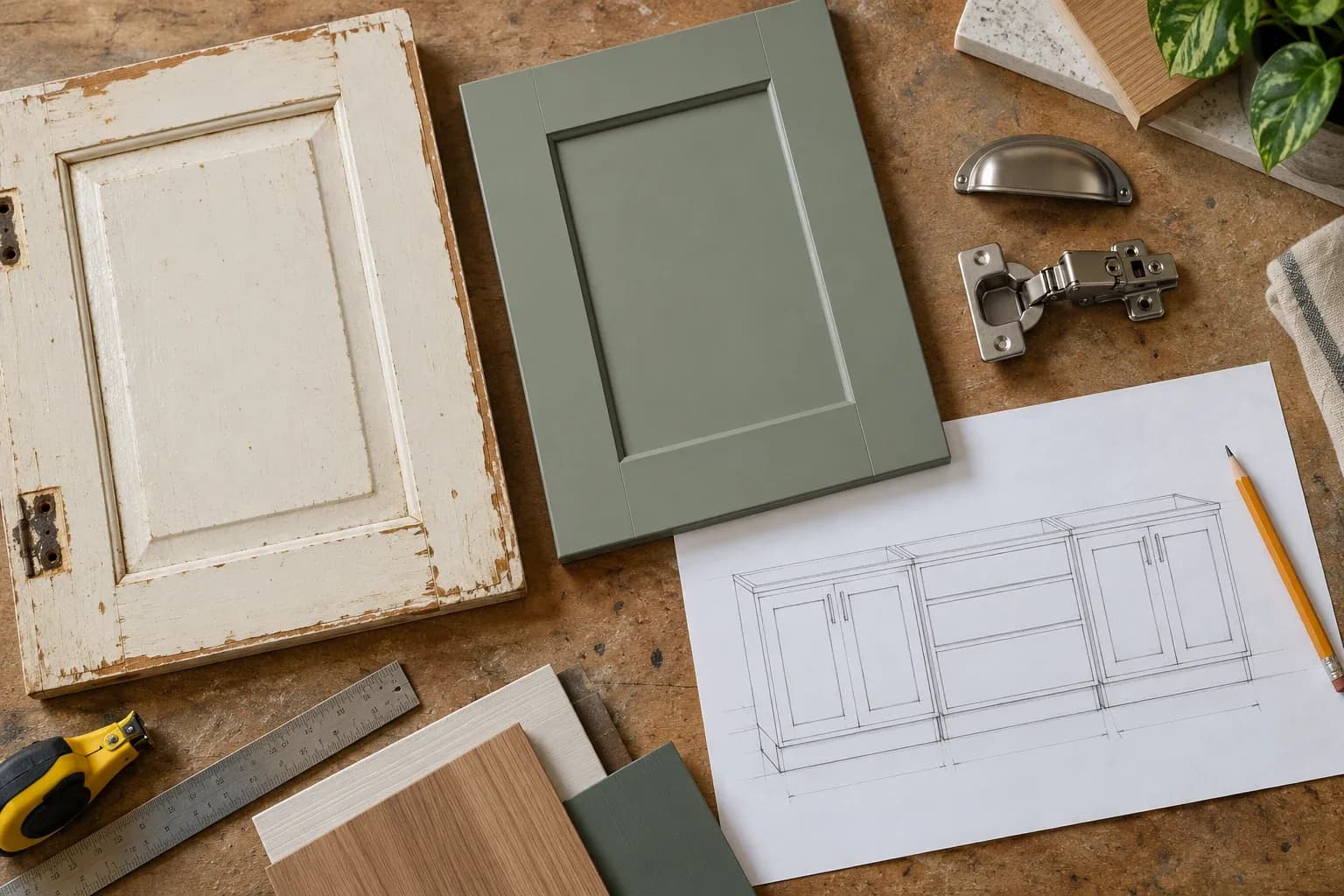
Compare two written scopes, cabinet by cabinet
Give both installers the same list: doors, drawer fronts, exposed ends, handles, hinges, runners, removal and fitting. Mark each part as retained, refinished or replaced. Ask who takes responsibility for the existing worktop, sink and backsplash if a base unit must come out. Keeping a stone top is a project constraint; it is not a promise that it can be removed intact.
A mixed job can make sense: keep sound uppers, replace a failing base and match the new fronts across both. Have the installer explain the order of work, finish match and any risk to neighbouring units. Compare the resulting kitchen and disruption, not just the price per door.
Keep reading
Questions people ask us
Is refacing the same as painting?
No. Painting changes a coating. Refacing generally changes the fronts and the visible finish on retained boxes. Ask the installer to list precisely what their quote covers.
Can I keep the worktop?
Possibly. Show its joints, sink opening and supports to the installer before choosing the scope. Ask for the proposed method in writing.
Do I need new hinges?
Only if the existing hinges are unsuitable, worn or incompatible with the new doors. Have the fitter check the intended overlap, opening and fixing locations.
Will refacing give me more storage?
The basic box volume stays the same. An internal organiser might improve access, but it takes up some space too.
What if only one cabinet is damaged?
Request a separate option for that unit. It may be possible to repair or replace it while retaining the rest.
Shop these categories
Keep reading
- CompareFlat slab vs Shaker cabinet doors: which suits an everyday kitchen?
Choose slab doors if you want broad, uninterrupted surfaces and a quick wipe across each front. Choose Shaker if you like the shadow around a recessed panel enough to take a little extra care at its lower corners. Both styles can have handles; the profile and the opening method are separate decisions.
- CompareKitchen island vs peninsula: which layout works better in a compact home?
A peninsula earns its place when attaching one end frees up a useful passage or makes everyday seating possible. An island earns its place when people can use the routes around it, even with a stool occupied and the fridge open. Test both in your own room before deciding.
- CareUneven cabinet-door gaps: is it a hinge adjustment or a fitting problem?
A gap that changes from top to bottom is a clue, not a diagnosis. Before turning a screw, establish whether one door is out of line, several units are misaligned, or the door itself will not lie flat.
- CompareFloating vs floor-standing bathroom vanity: what should decide your choice?
A floating vanity works when the wall can take the specified load and the plumbing fits behind the storage. A floor-standing unit can offer more room below the basin and conceal low pipework. Decide from a measured view of your wall and a drawer opened to its full depth.
- CompareTall pantry pull-out vs individual pull-out shelves: which is easier to live with?
A single tall pull-out shows several levels of groceries in one movement. Individual trays let you move just the shelf you need. The better choice depends on who opens the pantry, what they store and whether a loaded unit can be used without blocking the busiest route through the kitchen.
- CompareWood veneer vs laminate for bathroom cabinets: which handles moisture better?
For a bathroom vanity, the decorative face is only part of the moisture story. Choose the board, edges, cut-outs and finish together, then keep the assembly away from persistent wetting.