
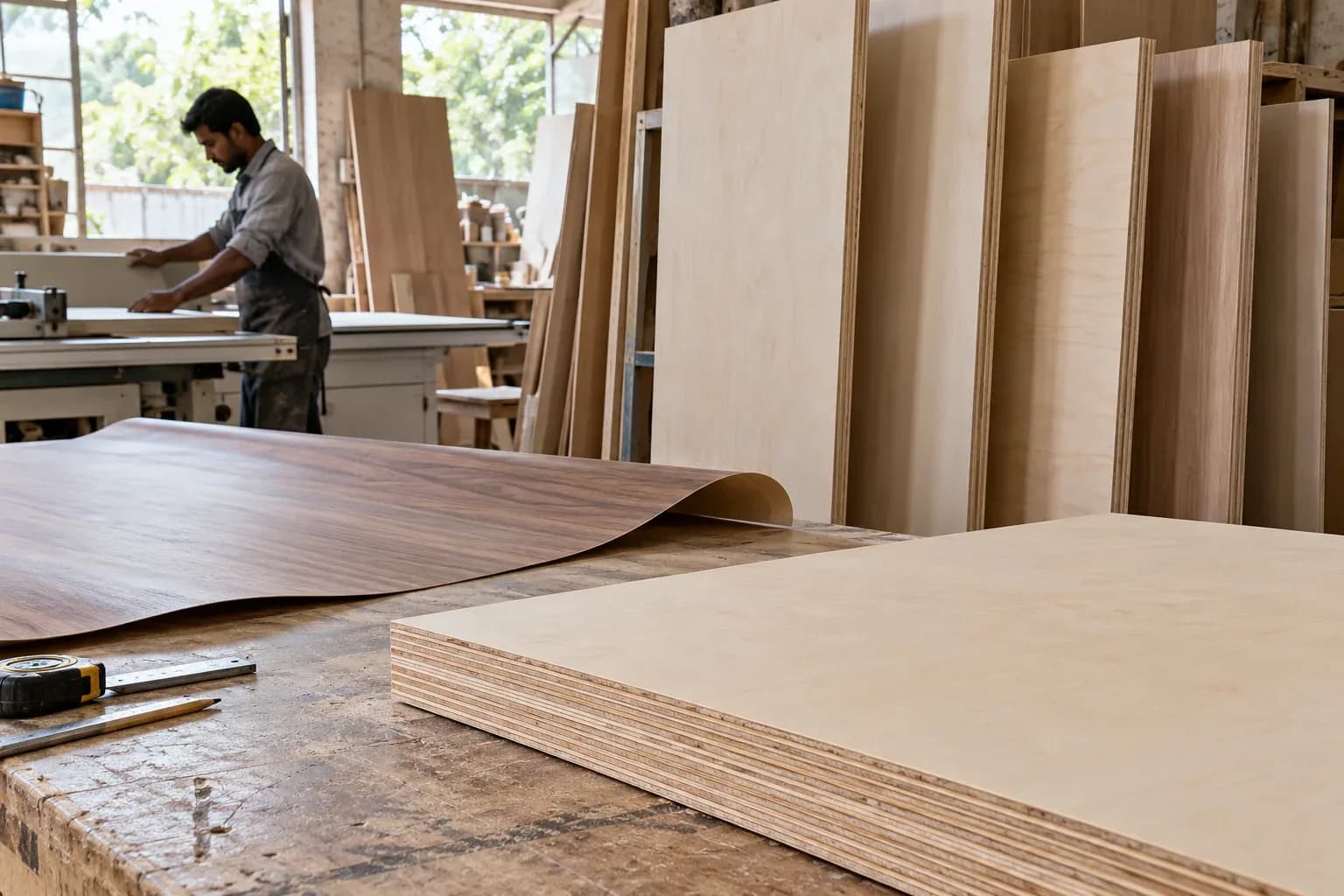
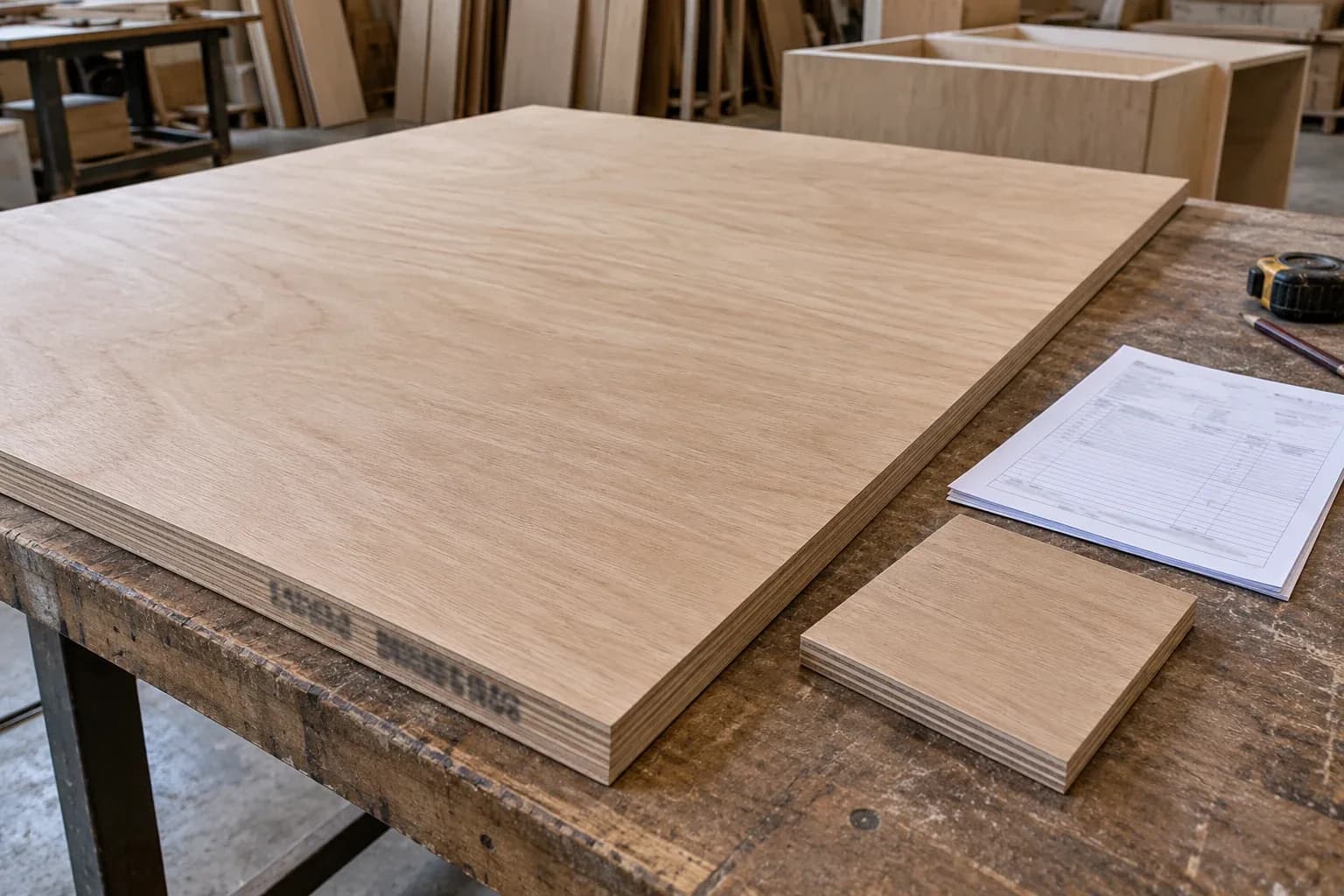
Match the order to the sheet while the markings are visible
Write down what the order promises for each part: cabinet sides, shelves, backs and shutters may use different specifications. Ask for the manufacturer, product line, declared grade and thickness. Photograph the sheet marking next to the delivery paperwork before sheets are cut or faced. A photo of one loose branded board cannot, on its own, identify every finished cabinet in a shipment.
Where the sheet bears a BIS Standard Mark, use the official BIS Care facility to verify the licence details. Compare the manufacturer and product information with the sheet and invoice. If they do not agree, pause the affected pieces and ask for clarification. A licence record is a useful identity check; it is not an inspection report for an individual board.
Use an offcut to ask a precise question
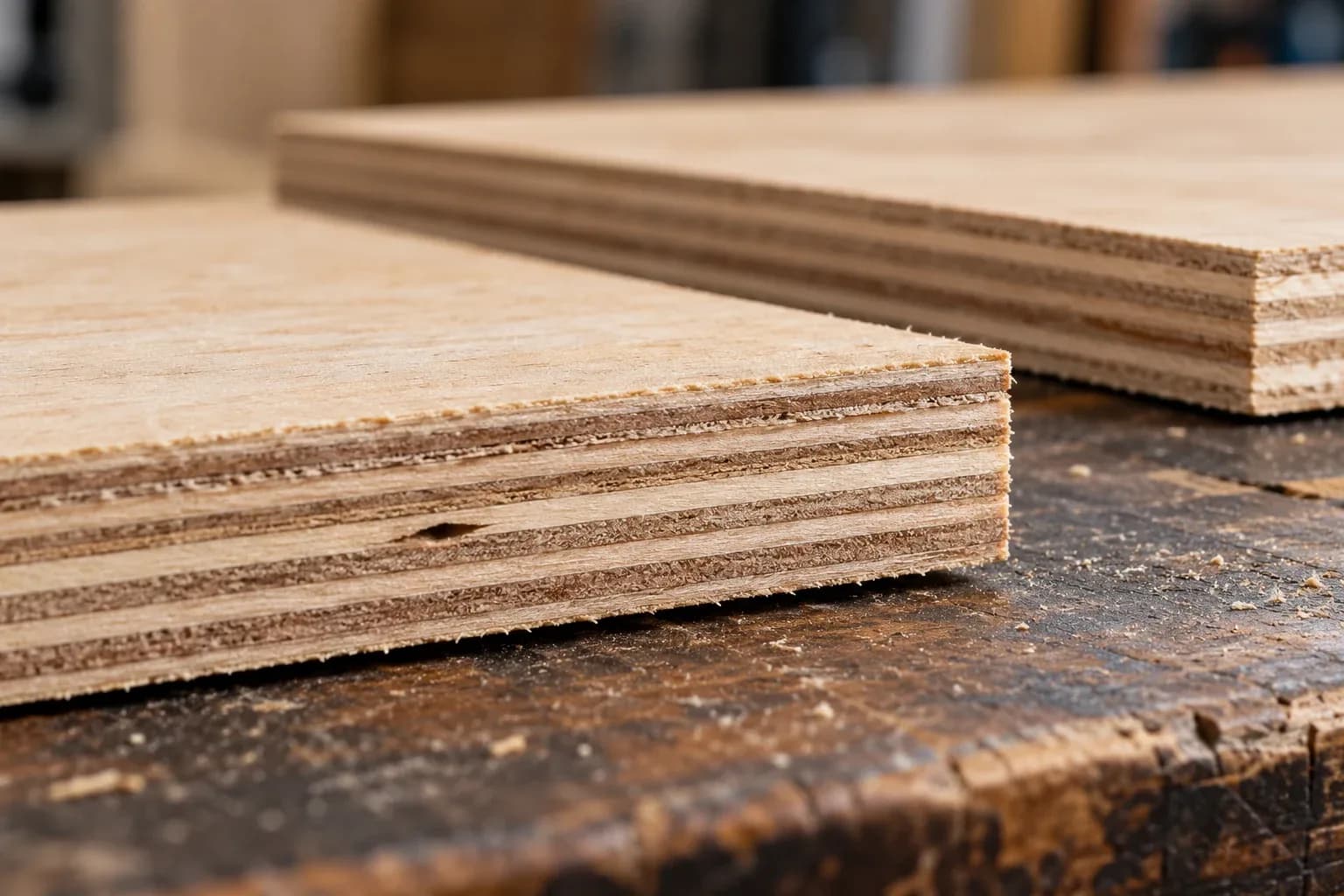
Look at the exposed edge of an offcut from the actual job. A chipped outer face at a cut is a different observation from a separation running between layers. Photograph the detail, note where the piece came from and ask whether the same condition appears on other pieces from the stack. Do not diagnose the full board from the colour of a photograph.
Check that the specified thickness is the one being fitted, especially where a shelf fits an existing groove or a hinge has to sit in a door. If dimensions are disputed, ask the maker to measure at several points and explain the tolerance for that product. A knock test or counting lines on an edge is no substitute for the product specification.
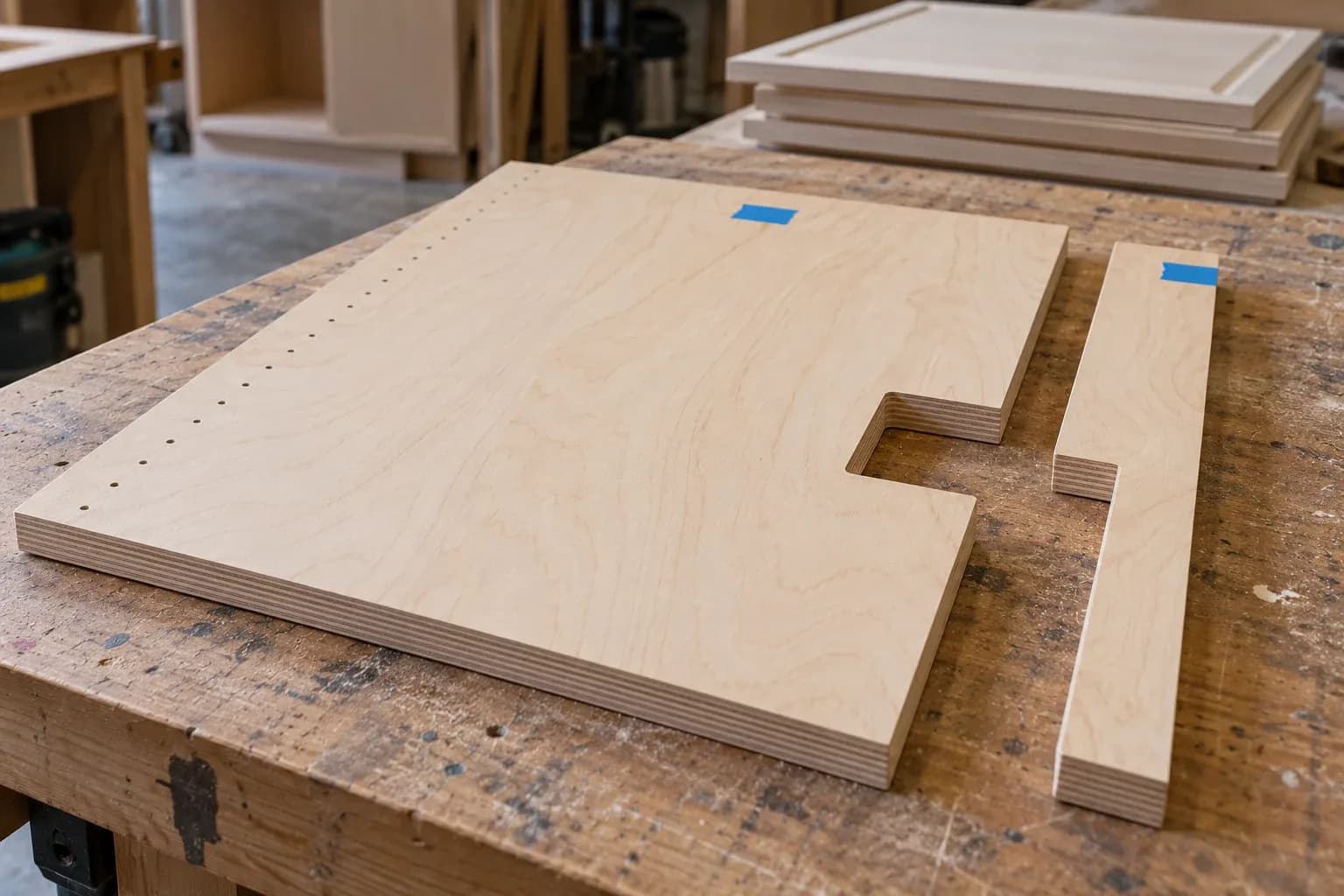
Arrange a checkpoint for factory-finished work
If the units arrive prelaminated, agree the evidence before production: a photo of the marked sheet, a cutting-stage photo linked to your order, and a labelled offcut to retain. This is easier than trying to identify a core through an intact finished surface. For an already delivered unit, inspect accessible cut-outs and ask for records; avoid stripping a sound edge band to investigate.
If one area looks suspect, identify that cabinet on the drawing and ask for a written assessment of that panel. Record whether it will be accepted, replaced or checked by the supplier. Keep the answer with the invoice and warranty terms. That paper trail is more useful than a verbal assurance about the brand.
Specify the unit of measurement as well as the value. An order might call for an 18 mm cabinet side and a 6 mm back, for example. Those are illustrative order entries, not recommended sizes for every cabinet. A 1 mm decorative laminate in the same quotation describes the facing, not either of those boards. Ask the maker to mark the planned components on a simple elevation and record which face treatment is included in the finished dimension.
If part of a delivery is already covered, a loose offcut is useful only if it can be connected to the work. Give the retained piece a cabinet code and ask for a photo of it beside the related marked sheet during cutting. This small step is easier to agree before production than after a dispute about an installed unit.
For a closer look at a common alternative, see BWP plywood vs HDHMR: which should you use for kitchen cabinets?.
Questions people ask us
Can I identify the plywood grade by looking at an edge?
No. An edge can show a visible condition worth investigating, but it cannot establish the declared grade or the board’s performance.
What should I ask for before the laminate goes on?
Request the marking, purchase record, component specification and a job-linked offcut or fabrication photo.
Does a QR code settle a quality dispute?
It may help identify the product when verified through the relevant official service. The condition of the actual panel still needs inspection.
Should every cabinet part use the same thickness?
Not necessarily. Check the specification for each part rather than comparing a cabinet back with a shelf as if they served the same job.
What if the unit is already finished?
Ask the fabricator to connect the delivered unit to its material records. Document any visible defect without damaging the finished surface.
Shop these categories
Keep reading
- GuidesCabinet refacing or replacement: when is keeping the old kitchen worth it?
Keep the cabinet boxes if they are dry, firm and arranged the way you cook.
- CompareFloating vs floor-standing bathroom vanity: what should decide your choice?
A floating vanity works when the wall can take the specified load and the plumbing fits behind the storage. A floor-standing unit can offer more room below the basin and conceal low pipework. Decide from a measured view of your wall and a drawer opened to its full depth.
- CareWhy does a wardrobe smell damp, and how can you prevent moisture build-up?
Start with where the smell is strongest and when it returns. Damp clothes packed on one shelf, condensation against a cool wall and a plumbing leak behind a fitted wardrobe need different responses. A new board or a fragrance insert cannot remove the source of moisture.
- CompareTall pantry pull-out vs individual pull-out shelves: which is easier to live with?
A single tall pull-out shows several levels of groceries in one movement. Individual trays let you move just the shelf you need. The better choice depends on who opens the pantry, what they store and whether a loaded unit can be used without blocking the busiest route through the kitchen.
- IdeasTwo-tone kitchen cabinets: how do you choose a combination that feels balanced?
Choose one finish to carry most of the kitchen and give the second a clear place to begin and end.
- CompareFlat slab vs Shaker cabinet doors: which suits an everyday kitchen?
Choose slab doors if you want broad, uninterrupted surfaces and a quick wipe across each front. Choose Shaker if you like the shadow around a recessed panel enough to take a little extra care at its lower corners. Both styles can have handles; the profile and the opening method are separate decisions.