
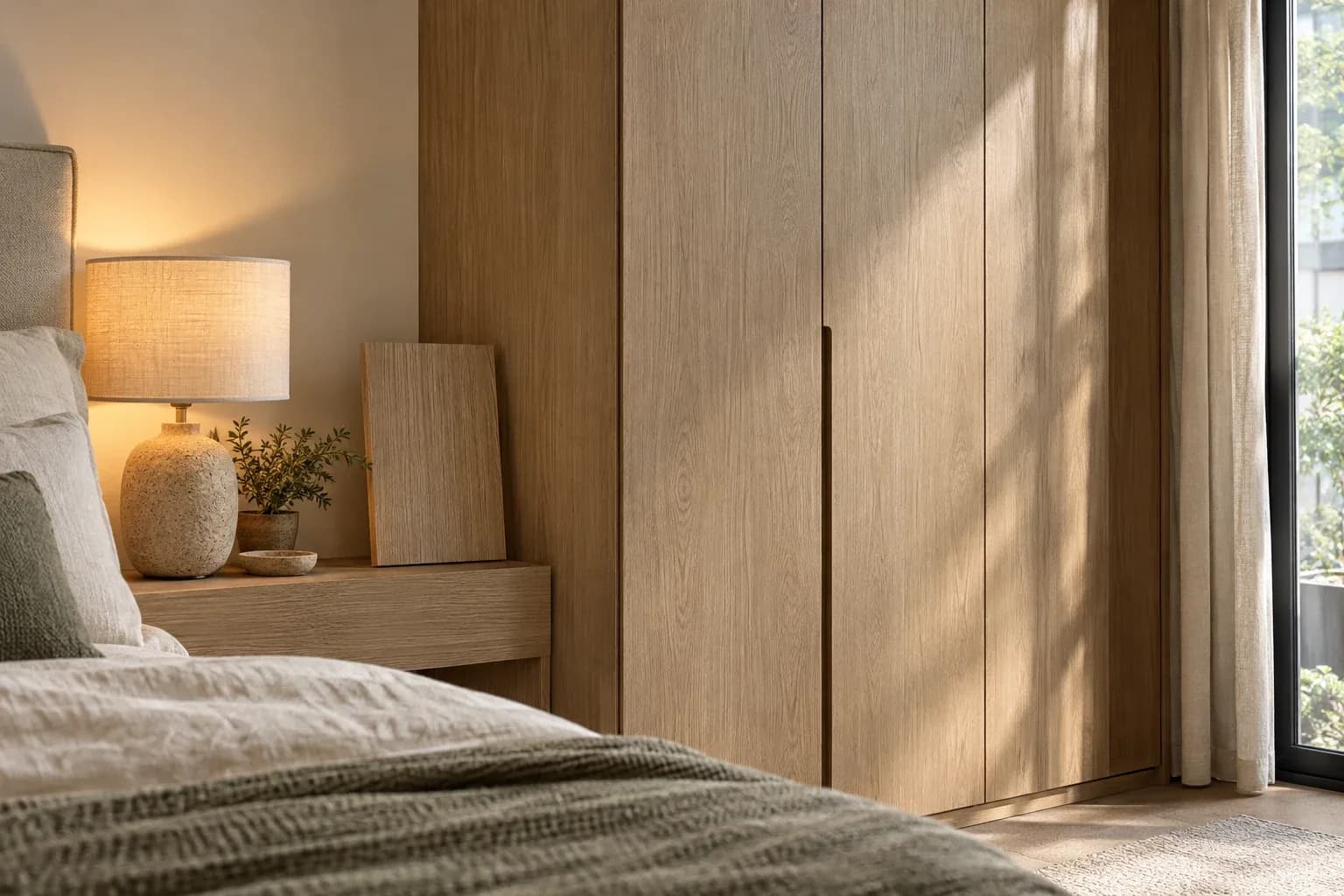
Wardrobe laminate can look different at home because lighting, viewing angle, surrounding colours and surface size differ from the showroom. Compare the approved physical sample against the installed door in the same light. Then check the brand, decor code, finish code and grain direction. A visual difference alone does not establish a defect.
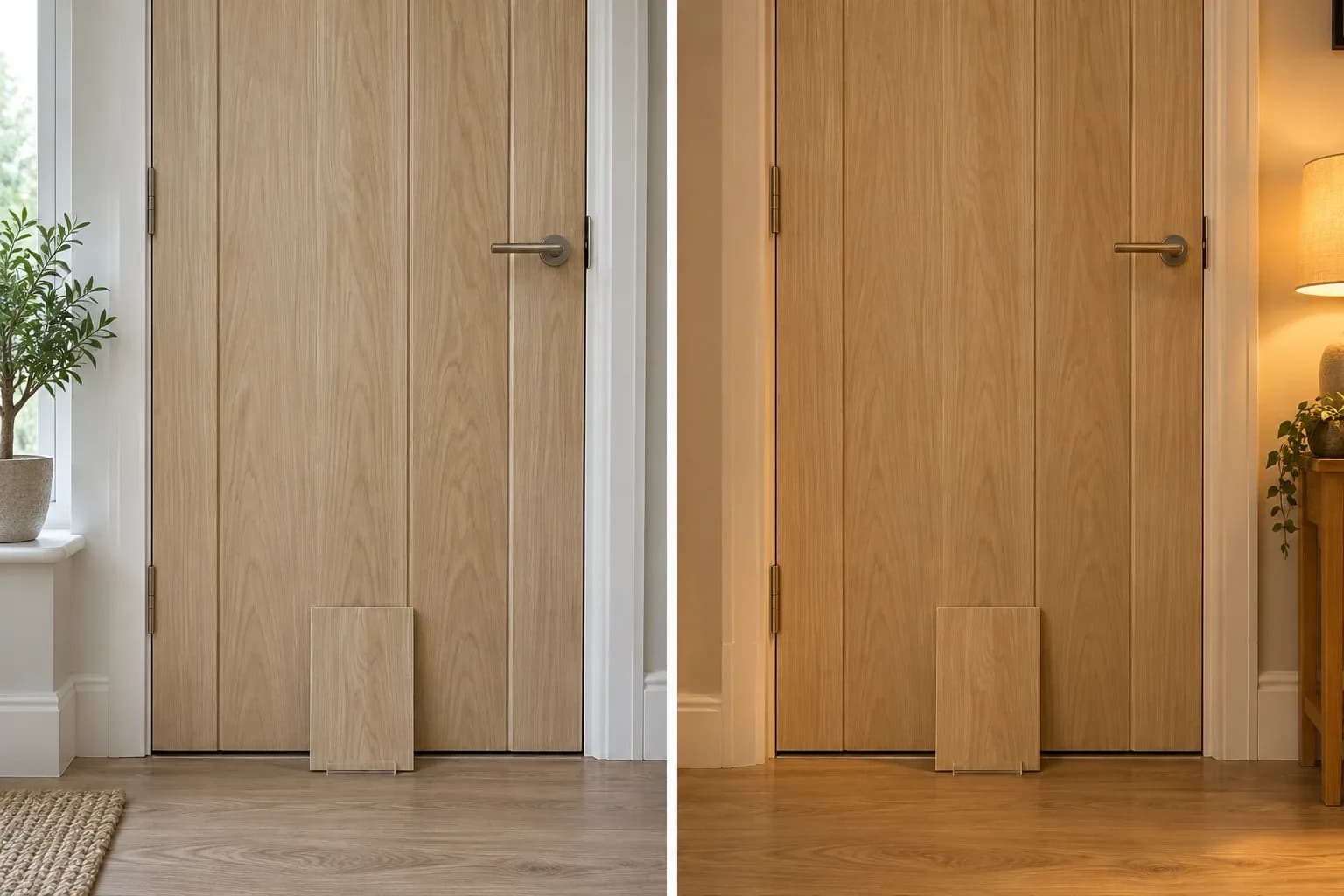
Compare the sample and door in the same place
A small sample viewed under a showroom spotlight is a different experience from a full wardrobe seen across a bedroom. The nearby floor, curtains and wall paint also influence the impression. A pale woodgrain may feel warm beside white paint and comparatively grey beside a warm beige.
Hold the approved sample upright against the door, with its grain facing the same direction. Look at both in daylight and under the bedroom lights you normally use. Check from straight ahead and from an angle. A textured surface can appear more pronounced when light crosses it from the side.
Use this comparison to separate a room effect from a material mismatch. If the sample and door look similar together, changing every shutter may not address the cause. If they remain clearly different under the same conditions, document that before discussing a remedy.
Check the codes before choosing a remedy
Ask for the brand, decor number and surface finish code on the order and the delivered material. A matching colour name alone is not enough: the same decor may be offered with different textures or sheen levels. Compare these records with the sample that was actually approved, rather than a phone photo of a catalogue.
Check whether a protective film is still present and ask the installer how and when the manufacturer says it should be removed. Do not peel uncertain coatings or experiment with polish to create shine. Photograph the comparison and retain the sample, invoice and any available sheet label.
If neighbouring doors differ, also check grain orientation and the supplied material details. Ask the supplier to assess a persistent mismatch. Do not assume either a batch variation or an installation error without checking the evidence.
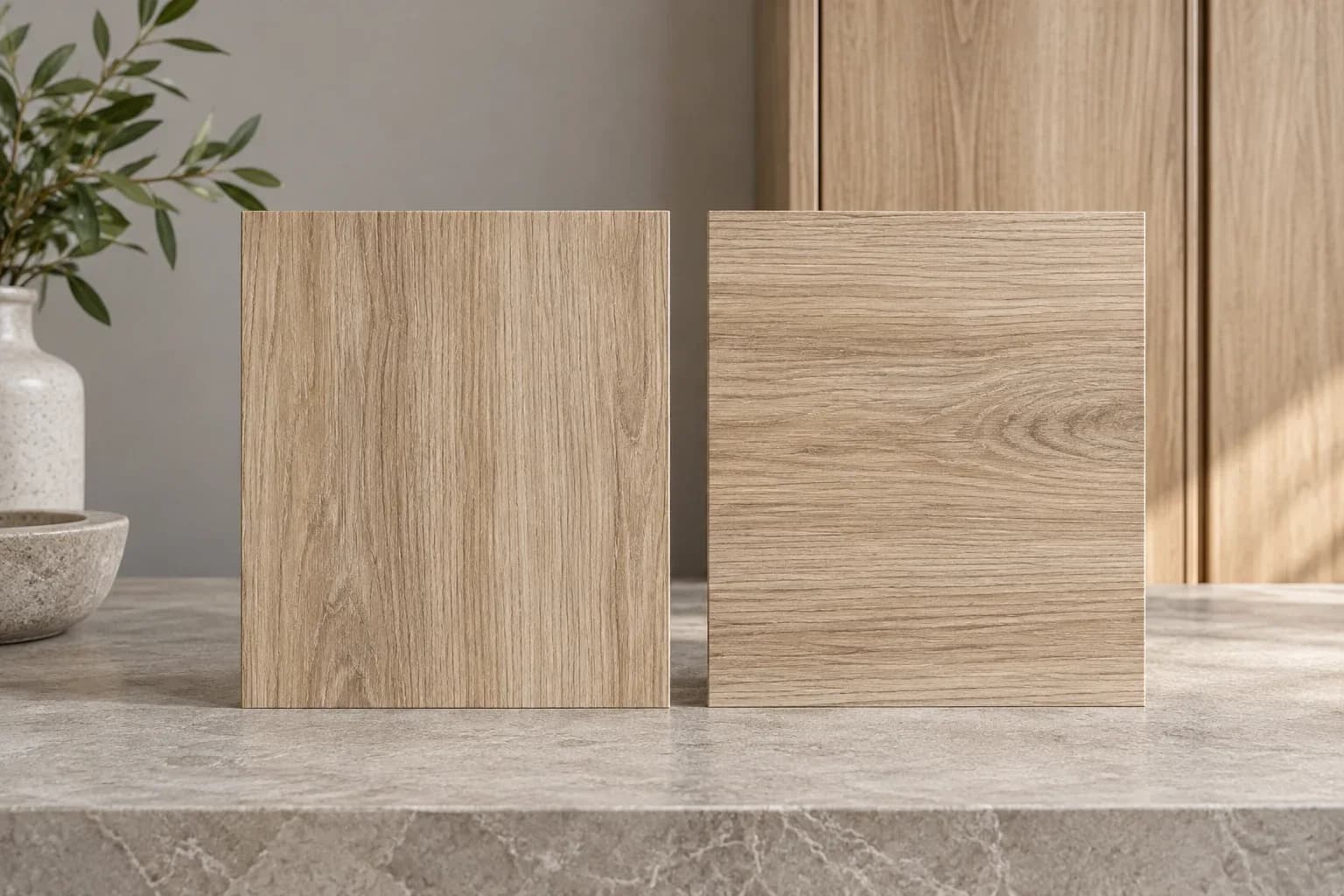
Make the next selection at wardrobe scale
Before approving a replacement, view the candidate upright beside the wall and floor. If possible, use a larger sample or a finished mock-up. Confirm the final lighting first, especially when the showroom relied on focused spotlights and the bedroom uses diffuse ceiling light.
Formica's explanation of light reflectance describes how texture affects reflected light. It supports checking the finish as well as the colour, rather than judging from a screen swatch.
Compare 1 mm wardrobe laminates with wardrobe veneers as separate finish choices. A 1 mm decorative laminate is a surface layer, not the complete door thickness. Hinch is in Hafeezpet, Hyderabad 500085; bring the approved sample and room photographs so the conversation starts with the actual materials.
For a wider colour plan, see matching wardrobe laminates with floor and wall colours.
Questions people ask us
Does a flatter appearance mean the wrong laminate was used?
Not necessarily. Lighting and viewing angle can make texture less visible. Compare the physical sample against the door and check the decor and finish codes.
Can the same colour have a different texture?
Yes, some ranges offer the same decor in different finishes. Confirm the exact finish code as well as the colour or decor number.
Should I choose from a phone photograph?
Use photographs to shortlist. Approve a physical sample in the room because screens, camera exposure and lighting can change its appearance.
Will brighter lighting fix it?
It may change the appearance, but it is not a guaranteed fix. Test a lighting change before buying fittings or replacing doors.
Should I polish a matte laminate to make it look richer?
Follow the manufacturer's care instructions. An unsuitable polish can leave residue or alter the appearance without addressing the original mismatch.
What should I show the supplier?
Share the approved sample, order codes, invoice and side-by-side photographs taken in the same light. Ask for an assessment before authorising replacements.
Shop these categories
Keep reading
- CareWhy does a wardrobe smell damp, and how can you prevent moisture build-up?
Start with where the smell is strongest and when it returns. Damp clothes packed on one shelf, condensation against a cool wall and a plumbing leak behind a fitted wardrobe need different responses. A new board or a fragrance insert cannot remove the source of moisture.
- CompareBlockboard vs plywood for tall wardrobe doors: how do you reduce bending?
A tall wardrobe door needs a complete panel and hardware specification. Choosing blockboard or plywood is only one part of keeping the shutter straight and usable.
- AnswersHow to identify wood veneer or laminate before refinishing
Check the surface material without damaging it before sanding, staining or repainting furniture.
- IdeasTwo-tone kitchen cabinets: how do you choose a combination that feels balanced?
Choose one finish to carry most of the kitchen and give the second a clear place to begin and end.
- CompareFlat slab vs Shaker cabinet doors: which suits an everyday kitchen?
Choose slab doors if you want broad, uninterrupted surfaces and a quick wipe across each front. Choose Shaker if you like the shadow around a recessed panel enough to take a little extra care at its lower corners. Both styles can have handles; the profile and the opening method are separate decisions.
- CompareKitchen island vs peninsula: which layout works better in a compact home?
A peninsula earns its place when attaching one end frees up a useful passage or makes everyday seating possible. An island earns its place when people can use the routes around it, even with a stool occupied and the fridge open. Test both in your own room before deciding.