
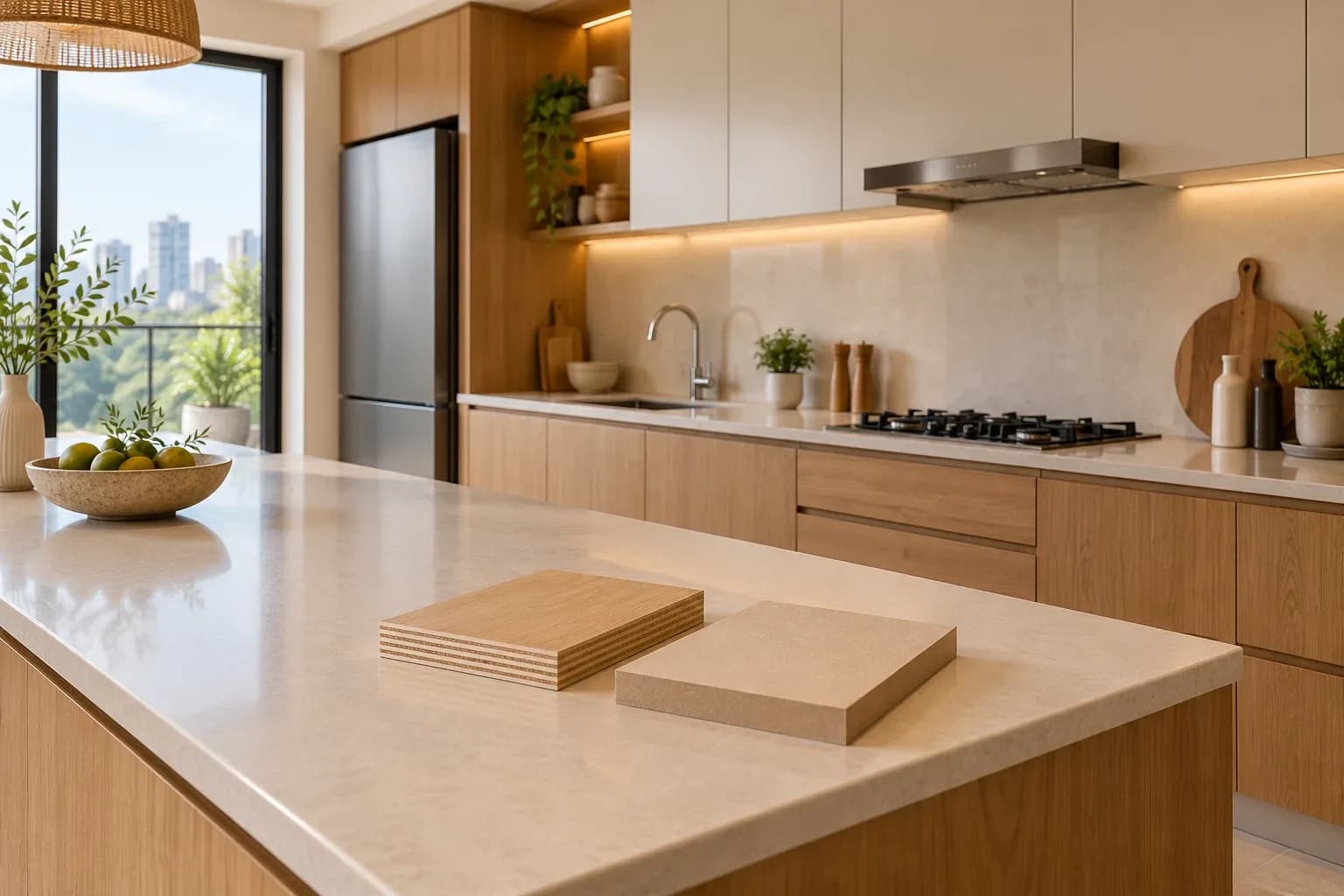
| BWP plywood | HDHMR board | |
|---|---|---|
| Construction | Bonded wood veneers; verify the exact grade and certification. | Dense wood-fibre board; verify the manufacturer and moisture rating. |
| Best decision test | Confirm cabinet construction, screw fixing and protection around leaks. | Confirm shutter machining, hinge specification and sealed cut edges. |
Start with the cabinet, not the board label
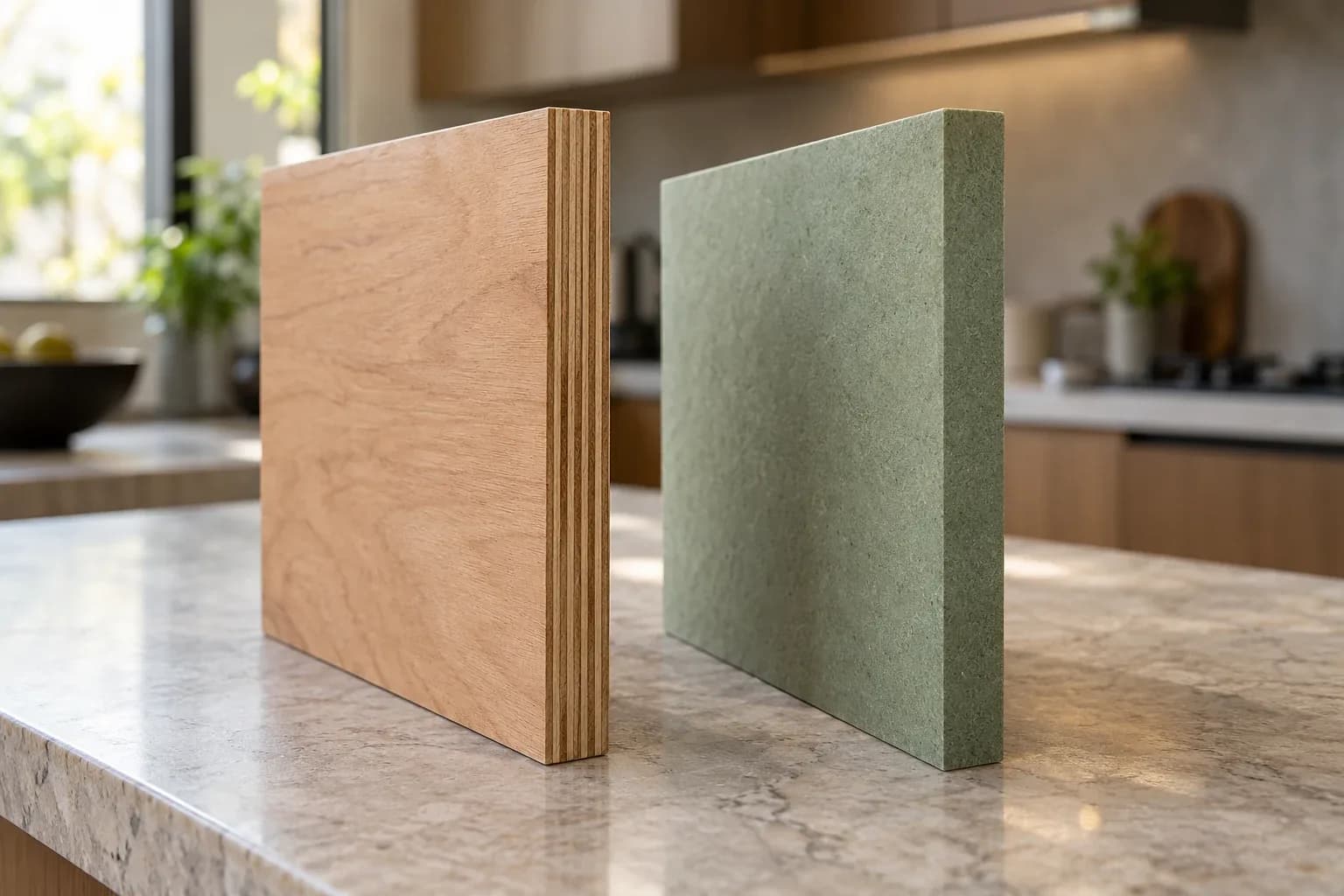
BWP plywood and HDHMR can both belong in a kitchen, but they are not interchangeable specifications. Start by separating the cabinet boxes, shelves and shutters on your drawing. Choose each component around its exposure to moisture, its dimensions, the hardware it carries and the fabricator's supported construction method. A single material name for the whole kitchen leaves too many decisions unwritten.
Plywood is made from bonded layers of wood veneer. HDHMR is a dense wood-fibre panel associated with Action TESA's high-moisture-resistance range. These descriptions explain the construction, not the finished cabinet's resistance to a leaking sink. Ask for the exact manufacturer, product range, thickness and technical sheet before comparing promises.
For a sink cabinet, prioritise a documented wet-area specification and practical protection against leakage. For routed or painted shutters, discuss whether a uniform fibreboard surface suits the proposed design. For plain laminate-faced doors, compare completed shutters made by the fabricator, including their reverse faces and edges. Do not choose one board simply because a salesperson calls it premium.
Keep the decorative face separate from this decision. A wood-look laminate describes the visible surface, while plywood or HDHMR describes the board underneath. The same finish can look very similar on two different constructions. Ask to see a cut-edge offcut as well as the finished face so you understand exactly what is being offered.
Plan for moisture, hardware and fabrication
Mark the sink, dishwasher, plumbing routes and appliance positions on the drawing. Ask how cut edges, pipe openings and joints will be protected, and how a small leak will be noticed before it remains trapped. Neither a decorative face nor a board's moisture claim removes the need to repair plumbing promptly. Access to connections is more useful than hiding every pipe behind a fixed panel.
Do not use the words BWP, marine and 710 as substitutes for the product's actual specification. Read the manufacturer's current documentation and the markings on the delivered sheets. For example, CenturyPly's Sainik 710 information describes its particular BWP product. A number in a range name should not be your only evidence of a certification or standard.
Action TESA's product catalogue distinguishes HDHMR from its other boards. Ask for the technical sheet and fabrication instructions for the proposed range rather than borrowing claims from a different product. Confirm acceptable applications and the requirements for finishing machined surfaces.
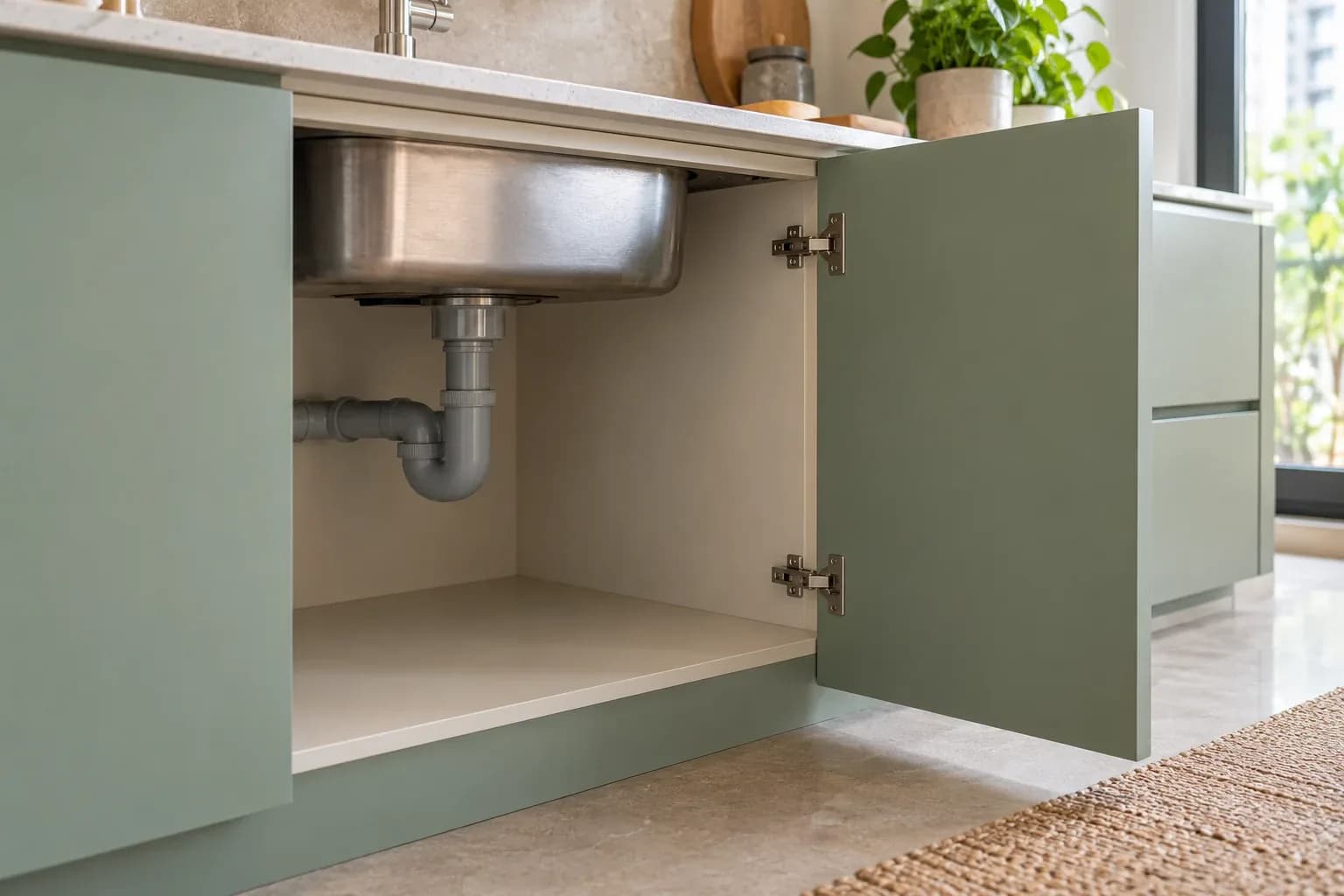
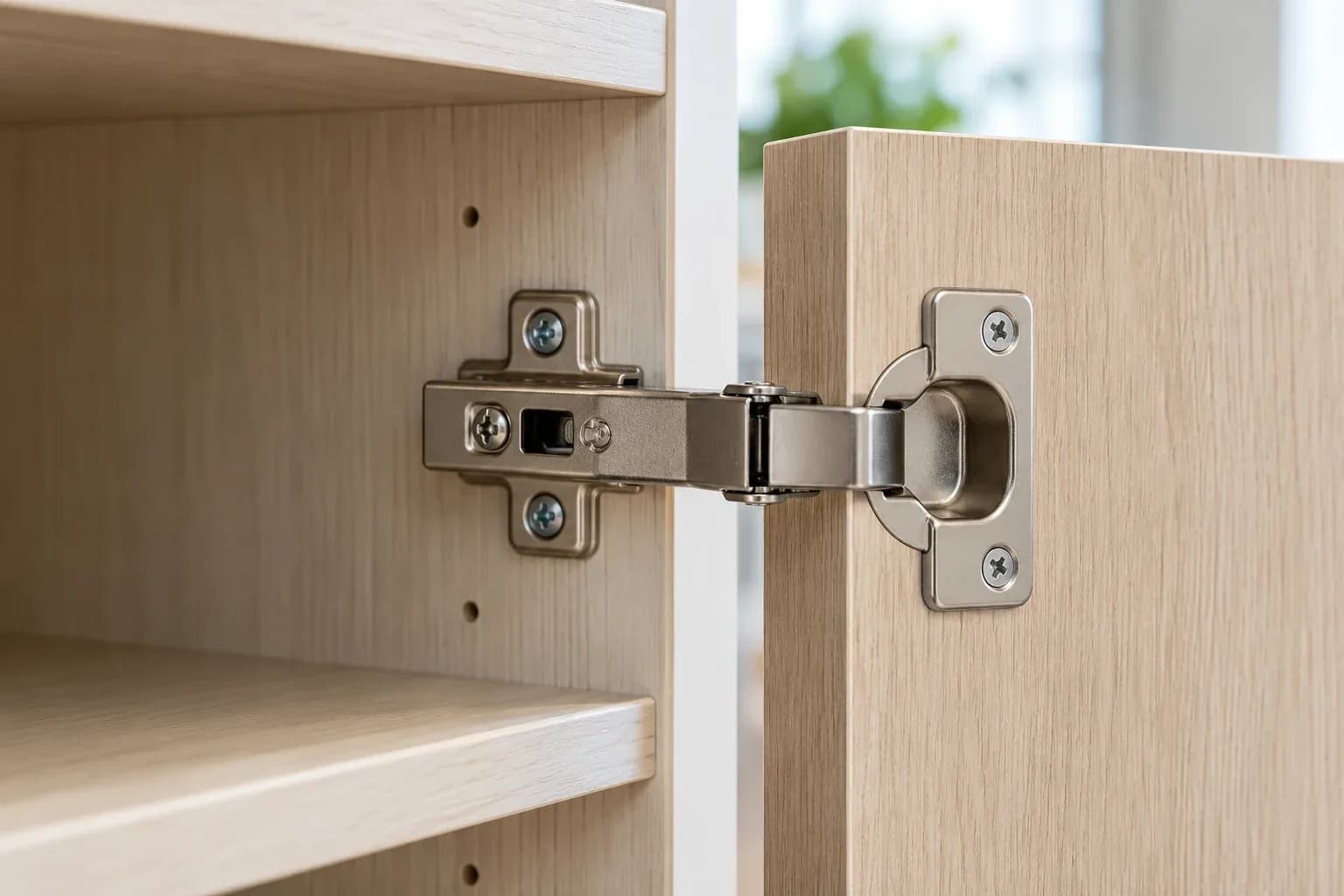
Next, ask the installer to match hinges, screws and runners to the board and door dimensions. A heavy or tall shutter needs a suitable hardware arrangement; adding more screws without a supported fixing detail is not a design specification. Compare the finished door's weight and operation, not a loose board alone. Ask who will adjust the hinges after installation and what happens if a fixing becomes loose.
For shelves, agree the intended contents and span. A shelf holding crockery is a different requirement from a short spice shelf. Have the fabricator specify thickness, support and edge detail for that actual load rather than assuming one board is strongest in every arrangement.
Make the quote comparable before choosing
Ask for two quotations against the same drawing. Keep cabinet dimensions, internal layout, hardware models, laminate codes, delivery and installation scope identical. Then identify which components change between the plywood and HDHMR options. A lower sheet price does not automatically mean a lower finished-kitchen cost once cutting, machining and finishing are included.
Record the carcass, shutter, shelf and back-panel specifications on separate lines. Include the finish on both faces, exposed-edge treatment, hinge and runner models, handle details, installation responsibility and applicable taxes. If the fabricator proposes a mixed construction, have the drawing show where each board will be used. That is easier to review than an invoice saying only modular kitchen.
Inspect a finished shutter before committing. Look along the edge, check the back, open it several times and ask how the construction changes beside appliances. Request written care instructions and the warranty terms for the exact products. Confirm whether a warranty covers the board only or includes fabrication and installation; do not assume these are the same promise.
A sensible choice may use a documented BWP plywood construction for selected cabinet boxes and HDHMR for suitable shutters, or a consistent specification throughout when the manufacturer and fabricator support it. The right answer depends on the actual design. Choose the option whose materials, protection details and service responsibilities are clear enough to check on delivery.
Before accepting the work, compare the delivered markings and invoices with the approved specification. Keep photographs of product labels and concealed construction details. Those records make a later repair conversation much easier than trying to identify an already finished cabinet from its colour.
Browse plywood and HDHMR boards separately. If a quote specifies 18 mm board, verify that exact thickness against the hardware and fabrication requirements instead of treating it as a universal recommendation. Our laminate furniture quote guide explains the other items that belong in a complete quotation.
Questions people ask us
Is HDHMR the same as ordinary MDF?
Do not treat them as identical. Check the exact manufacturer, product range, technical sheet and supported application rather than using a generic fibreboard label.
Does BWP plywood make a sink cabinet leak-proof?
No. Plumbing, joints, cut-outs, edges and installation still need protection. Repair leaks promptly and keep connections accessible.
Can plywood carcasses and HDHMR shutters be combined?
They can be specified together where the manufacturers and fabricator support the construction. Record the board and finish for each component on the drawing.
Which is cheaper for a complete kitchen?
Compare itemised quotations for the same dimensions, hardware and finishes. Sheet price alone does not include machining, finishing, transport and installation.
What should I verify before delivery is accepted?
Match the product range, grade, thickness and sheet markings to the approved quote. Keep invoices, warranty terms and photographs of labels and construction details.
Shop these categories
Keep reading
- CompareFactory-made vs carpenter-made interiors: what justifies the price?
Compare the complete scope and accountability behind an interior quote.
- GuidesAlternatives to plywood for furniture in termite-prone homes
Choose furniture materials alongside proper pest inspection, moisture control and documented specifications.
- CompareSliding vs hinged wardrobes: which works better for your bedroom?
Match the door movement to your bedroom layout and the way you use your wardrobe.
- CareCan peeling kitchen cabinet coverings be repaired?
Identify the covering and the condition of the board before deciding how to repair a peeling cabinet.
- CareHow to remove fingerprints and grease from laminate cabinets
Clean oily marks without turning a small smudge into a damaged finish.
- CareHow to repair a chipped laminate countertop edge
Match the repair to the chip, edge construction and condition of the supporting board.