
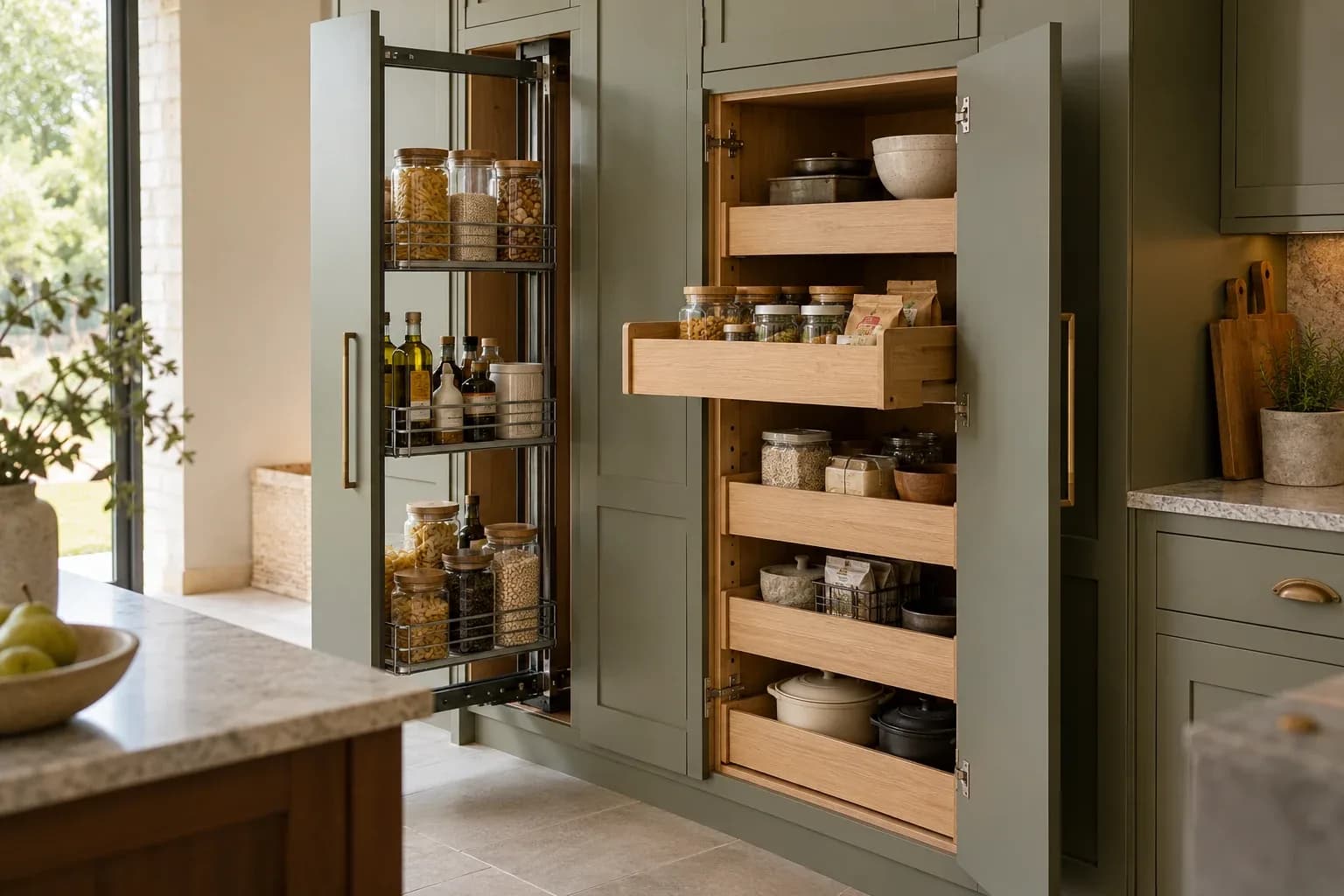
| Single tall pull-out | Individual pull-out shelves | |
|---|---|---|
| Finding food | Several shelves visible together | One tray viewed from above |
| Opening effort | Move the frame and its contents | Move the door, then the selected tray |
| Room to operate | Check extension and side access | Check door swing as well as tray extension |
| Maintenance | Ask how the full frame can be serviced | Ask how each tray comes out and where fittings are available |
Pretend the pantry is full before testing it
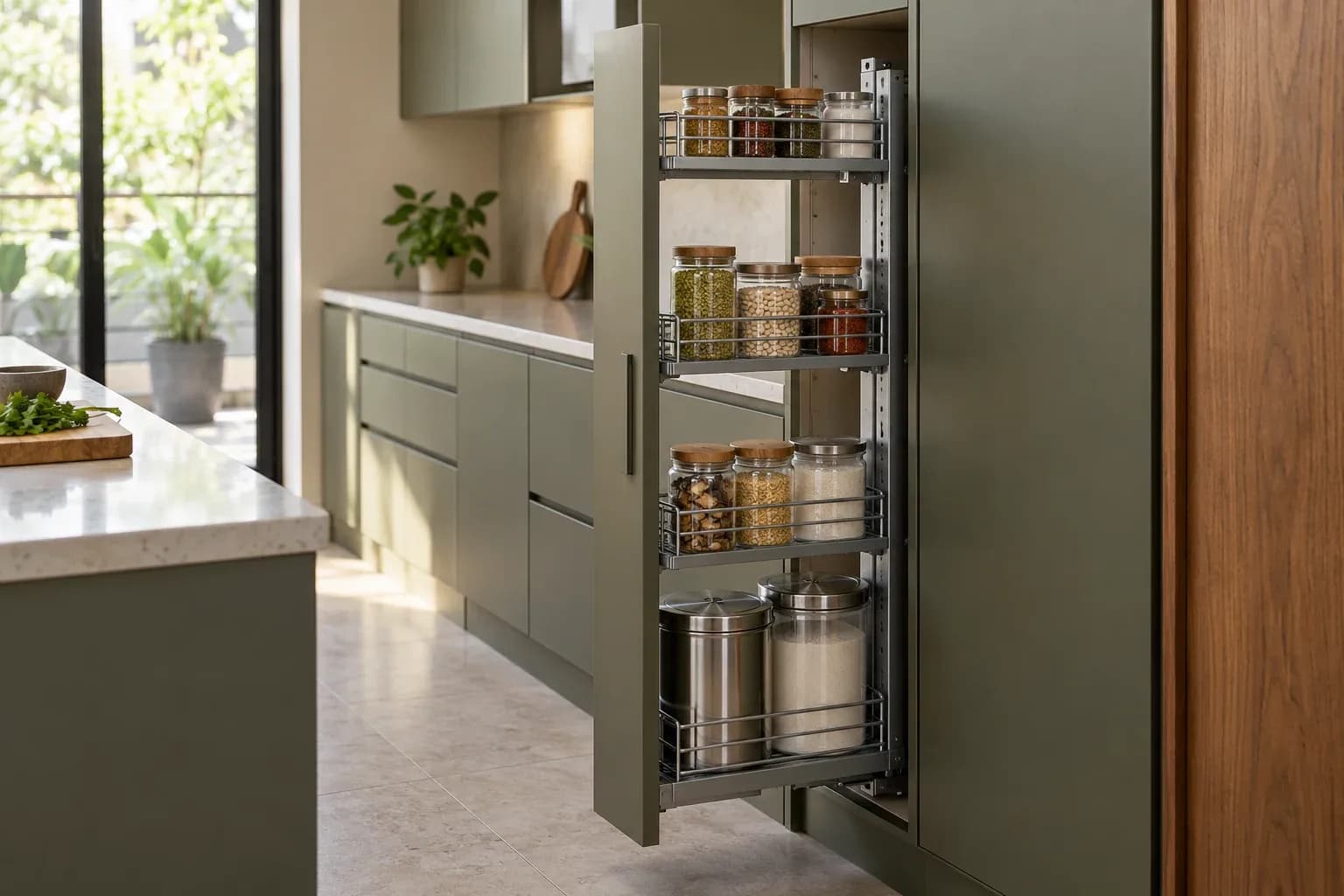
Start with the contents of one real grocery shop. Put the oil bottles, rice container, dal tins, breakfast packets and spare jars together. Notice which items you use every day, which you buy in bulk and which tend to disappear at the back. A tall frame can be useful when a quick side view lets you spot a missing packet. Separate trays can suit a household that usually knows which shelf holds the tea or spices.
An empty pull-out moves differently from a loaded one. Ask for the permitted load for the exact fitting, including any limit per shelf and how it should be distributed. Do not use the rating of a different width or assume that sturdy-looking baskets can carry any amount. If a loaded demonstration is available, let the person who usually cooks open and close it. Try doing it with one hand while the other holds a jar, just as you would at home.
The useful question is not which fitting feels most impressive on the first pull. It is which one you would be happy to open for the tenth time during a busy meal.
Check what you can see, reach and lift out
A full-height frame brings its shelves forward together. Look at it from the side you can actually stand on in your kitchen. A wall at one side or a fridge door beside the cabinet can remove a viewing angle that seemed obvious in the showroom. Can you lift the tallest bottle straight up and out without catching the shelf above? Are small spice packets visible below the rim of a basket?
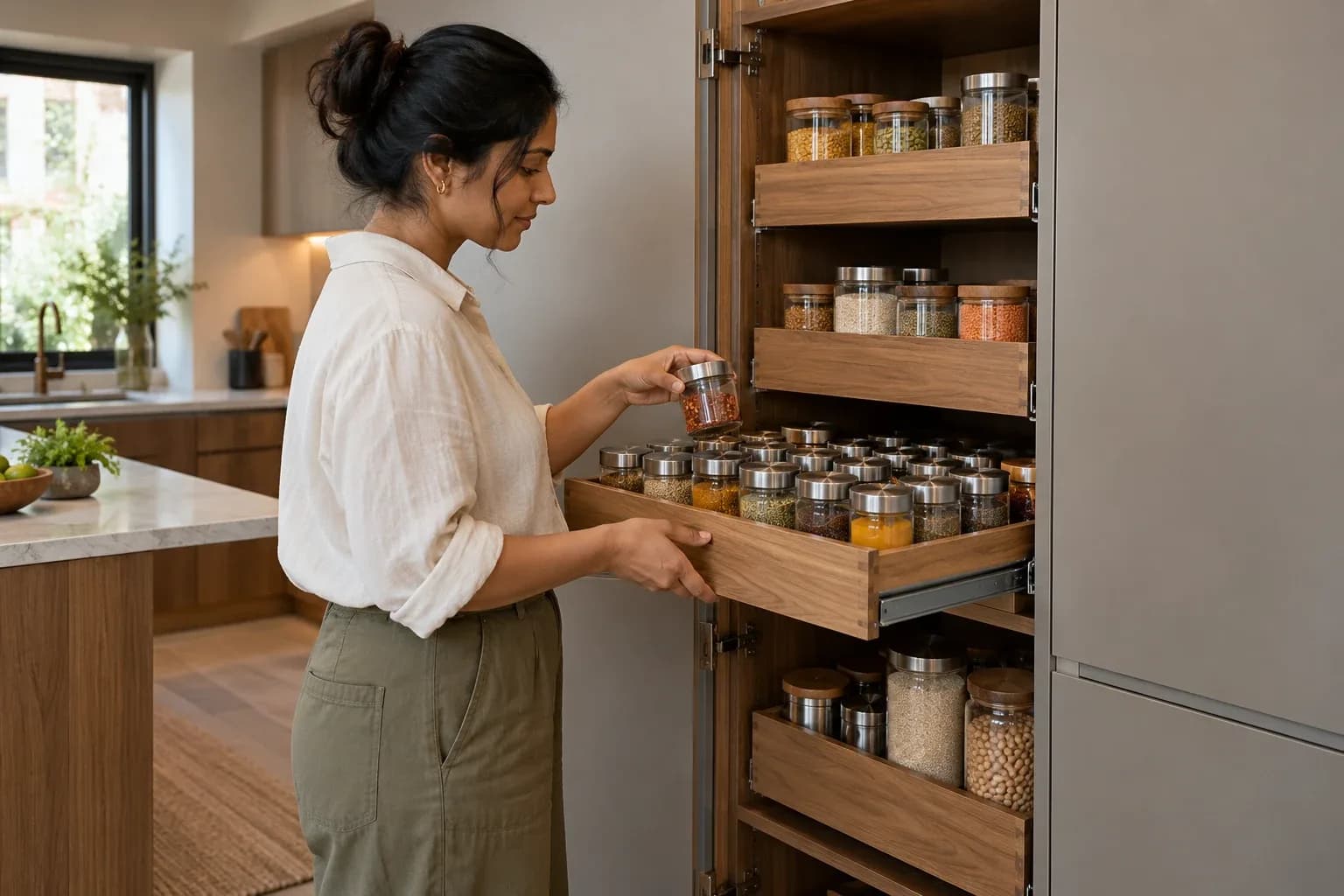
With independent pull-outs, first open the cabinet door as far as the manufacturer requires and extend just one tray. Check the width lost to hardware and whether the door clears the inner drawers. Try taking an item from the back corner while another family member passes. A wide tray may give a clear view from above, but a tray mounted high can be difficult to see into. Reserve the most comfortable levels for heavy or frequently used items.
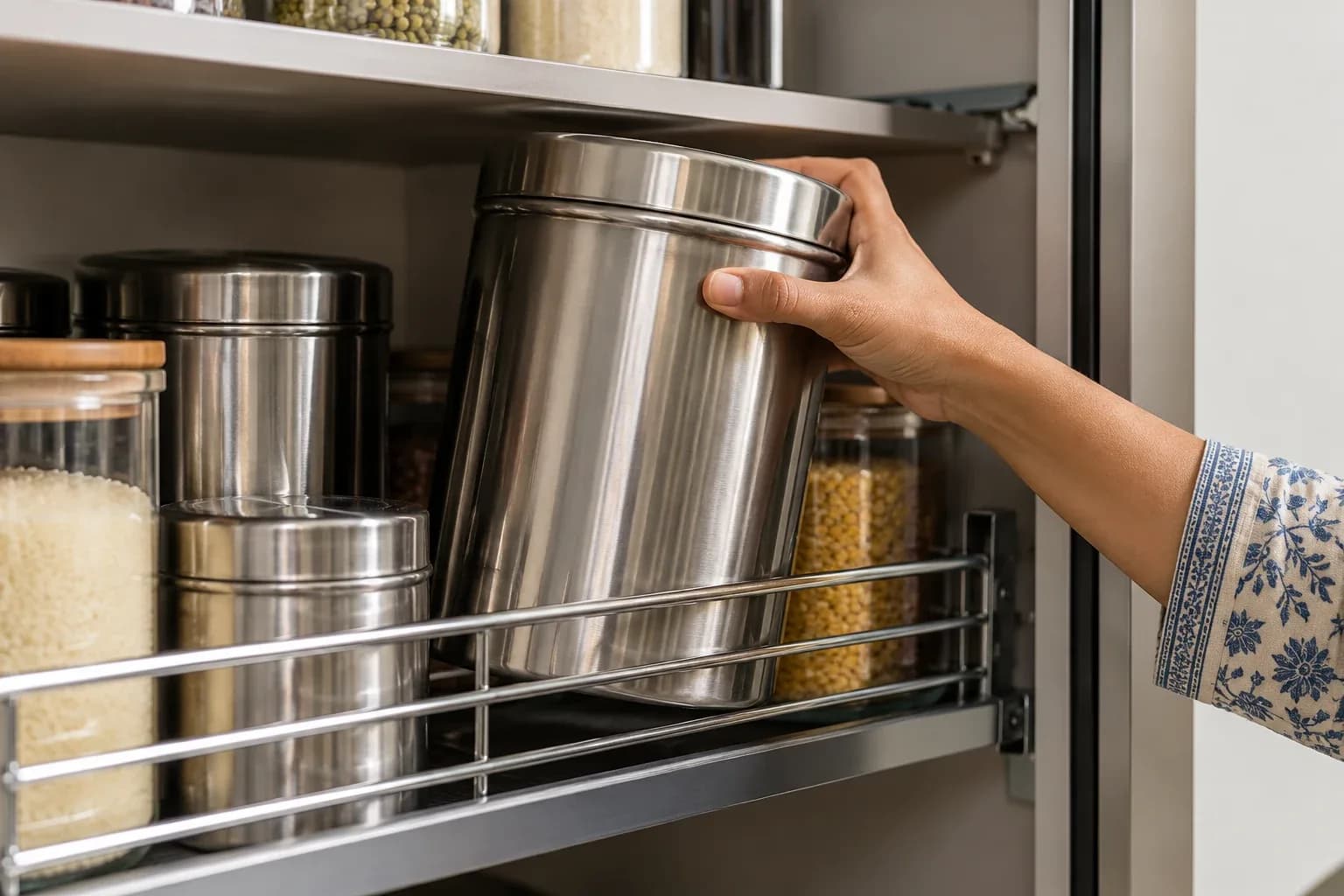
Take the dimensions of your actual rice or flour container. Measure the usable inside of the basket, not the outside cabinet width. A single upright or lip can make a square container awkward to remove even if the measured width seems adequate.
Plan for a jam, a spill and a change in groceries
Ask the installer how to remove an individual basket, clean the base and identify a replacement runner or part. On a single-frame system, one operating fault can affect access to several tiers. On an independent-tray system, one jam may be confined to that tray, although access to the whole unit still depends on its door and hinges. Neither design has a guaranteed lifespan simply because of its format.
Check adjustability before paying for a particular shelf layout. A baby-food shelf today might need to take tall school bottles later. Can the level be moved by the user, does it require tools, and are there restrictions on where the weight goes? Keep the model number, instructions and load information with the kitchen documents instead of relying on a description such as ‘premium tall unit’.
If both fitted options feel excessive, consider ordinary upper shelves and pull-outs only at the lower levels you cannot see into. Spend the hardware budget where access is difficult. The goal is to find and lift the item you came for, with the least unnecessary movement.
Measure both the jar and the opening. If a container is 220 mm tall and a shelf opening measures 225 mm, the nominal fit leaves very little room to lift it over a basket lip. That example does not set a minimum clearance; it shows why a test with the actual lid fitted is worthwhile.
For a comparison of storage at counter height, see Drawers vs shelves: which works better for lower kitchen cabinets?.
Questions people ask us
Which is better for heavy groceries?
Check the rated total and per-level load for the actual hardware. Put bulk items where they can be lifted safely; neither format automatically handles more weight.
Will I lose space with pull-out shelves?
Runners, sides and clearances take some room. Compare usable internal measurements with the containers you plan to store.
Can I retrofit trays behind an existing door?
Sometimes. Have the fitter check hinge projection, opening angle, cabinet width and fixing points before ordering.
Is one tall pull-out always quicker?
It can be quicker for scanning mixed groceries. If you reach for the same breakfast tray daily, opening only that tray may suit you better.
What should I get at handover?
Ask for the exact hardware model, the load limits, shelf adjustment instructions and a demonstration with the adjacent cabinet or appliance open.
Shop these categories
Keep reading
- CompareKitchen island vs peninsula: which layout works better in a compact home?
A peninsula earns its place when attaching one end frees up a useful passage or makes everyday seating possible. An island earns its place when people can use the routes around it, even with a stool occupied and the fridge open. Test both in your own room before deciding.
- CareUneven cabinet-door gaps: is it a hinge adjustment or a fitting problem?
A gap that changes from top to bottom is a clue, not a diagnosis. Before turning a screw, establish whether one door is out of line, several units are misaligned, or the door itself will not lie flat.
- CompareFloating vs floor-standing bathroom vanity: what should decide your choice?
A floating vanity works when the wall can take the specified load and the plumbing fits behind the storage. A floor-standing unit can offer more room below the basin and conceal low pipework. Decide from a measured view of your wall and a drawer opened to its full depth.
- CompareWood veneer vs laminate for bathroom cabinets: which handles moisture better?
For a bathroom vanity, the decorative face is only part of the moisture story. Choose the board, edges, cut-outs and finish together, then keep the assembly away from persistent wetting.
- CompareMagic corner vs carousel: which kitchen corner storage should you choose?
A corner fitting should make your actual pots easier to reach, not just look impressive in a showroom demonstration.
- CompareOpen, semi-open or closed kitchen: which suits Indian cooking?
Think beyond the floor plan: how you cook, talk, store and clean should shape the connection to the living room.