
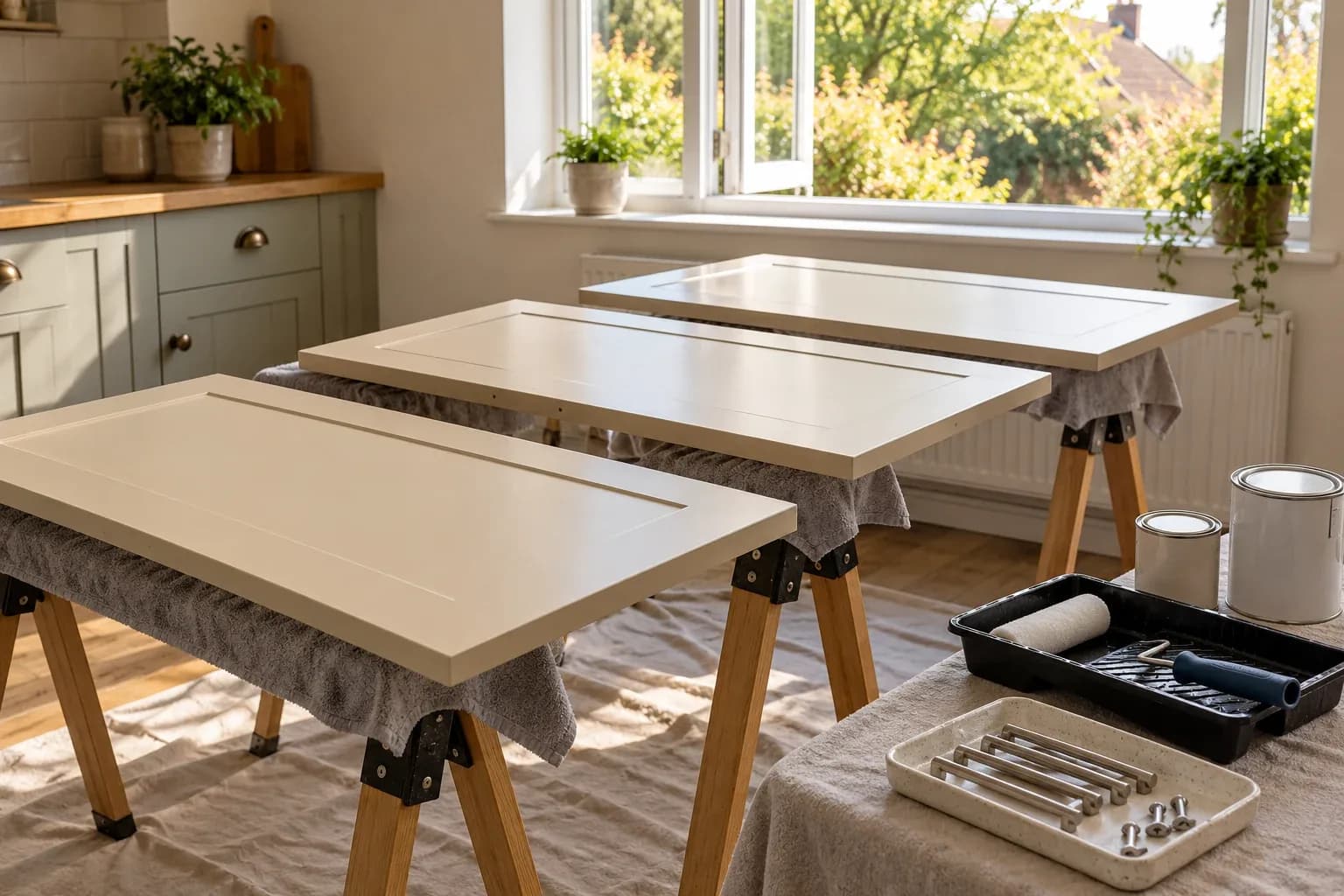
Yes, when the surface is sound and the coating system suits it
Some laminate cabinets can be painted successfully with a preparation, primer and topcoat system approved for the exact surface. Paint is not a repair for a loose face, swollen board or failing edge. Before choosing a colour, identify the existing finish and decide whether the cabinet is a suitable candidate for refinishing.
A glossy door could be laminate, acrylic, lacquer or a flexible film. Those surfaces do not necessarily accept the same primer. Look for the original invoice and product code, and ask the supplier to identify anything uncertain. If the records name Merino, Greenlam or CenturyPly, retain the specific range and finish rather than treating the brand as a complete material description.
Inspect the door edges, reverse face and hinge areas. A firm, stable door with an intact face is a different job from one that is peeling or distorted. Ask a fabricator to resolve damaged construction before a painter covers it. If several doors are failing, compare replacement shutters with repainting rather than assuming paint is the cheapest lasting option.
Keep the goal realistic. A painted finish changes the surface and its care requirements. It may not reproduce the wear characteristics or factory appearance of the original laminate, and it may affect existing warranty coverage. Ask the coating supplier and cabinet maker about those consequences before starting.
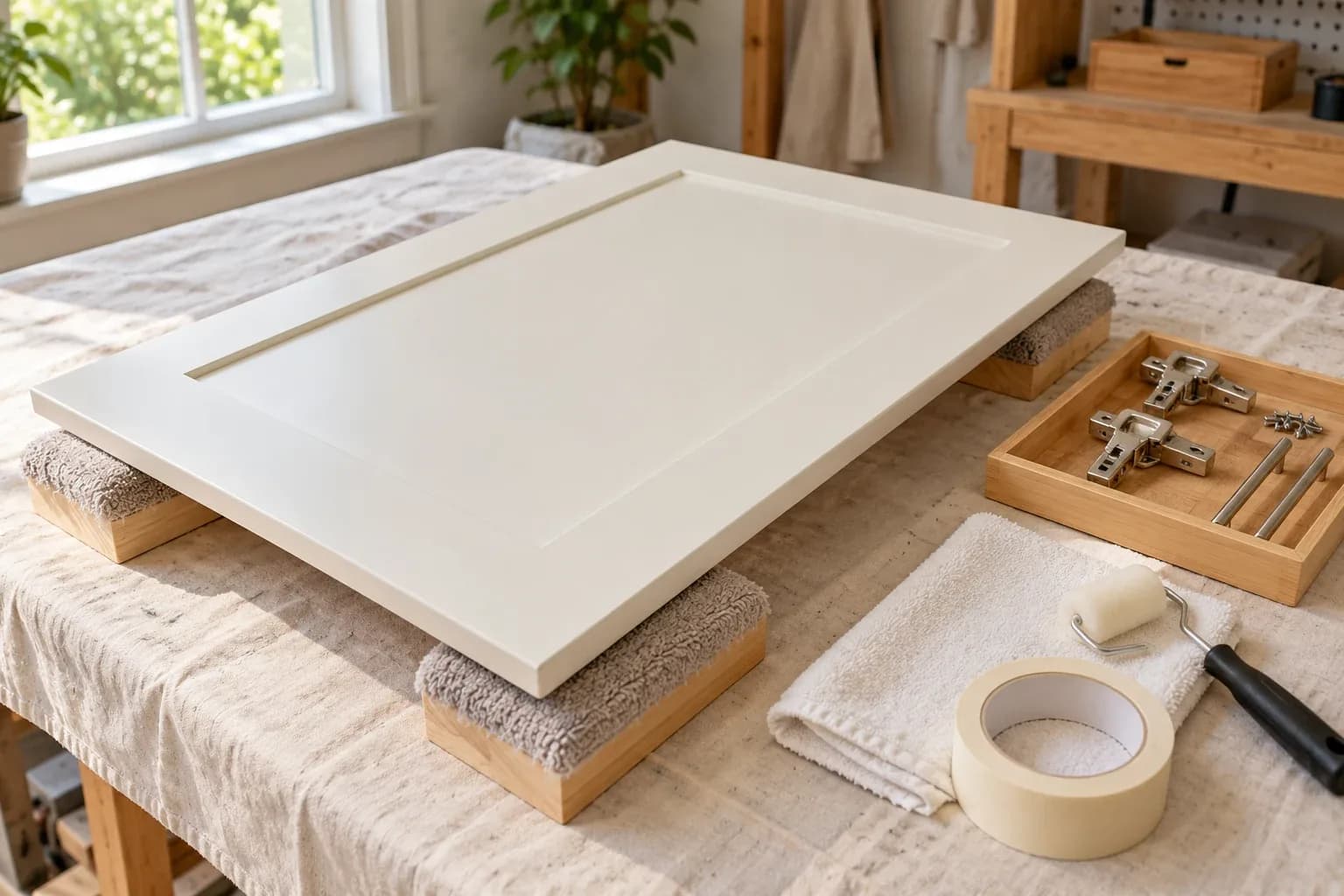
Use one compatible preparation and paint system
Ask the paint supplier for written instructions covering your identified laminate, the primer and the cabinet topcoat together. Benjamin Moore's laminate-painting guide describes cleaning, gentle surface preparation, bonding primer and suitable paint. Its recommendations belong to that coating system; another paint may have different preparation and drying requirements.
For a planned job, remove and label doors and hardware where the installation allows it. Photograph hinge positions and keep each door's screws together. Protect the kitchen and provide the ventilation and protective equipment required by the selected products. Have a professional handle work you cannot carry out safely.
Clean grease and residues before surface preparation. Follow the chosen cleaner's instructions and allow the substrate to dry as required. A fresh coat over contamination can fail even when the primer is sold for difficult surfaces. Ask the painter how hidden greasy areas around handles will be prepared.
If the coating system requires sanding, the aim is controlled surface preparation, not removal of the decorative layer. Avoid aggressive sanding through thin laminate or veneer. Remove dust using the method specified by the coating manufacturer, then apply the approved primer and topcoats within their stated conditions and intervals.
Test the complete system on a discreet area or a matching offcut before committing to all the fronts. Allow the specified cure and assess adhesion and appearance using the manufacturer's recommended method. A coat that feels dry after a short period is not proof that it has reached full service strength.
Even when the original invoice specifies 1 mm decorative laminate, do not treat that full thickness as material you can sand away. The appearance and protective face are part of the sheet, and preparation must preserve the surface required by the coating system.
Plan the downtime and compare the alternatives
Ask the painter to separate preparation time, recoating intervals, curing time and the date when doors can be refitted and cleaned normally. Do not press freshly coated faces together or return heavy use earlier than the product instructions allow. Confirm how the doors will be stored so they are protected while the coating cures.
Choose the sheen with the whole room in mind. A large flat door can reveal application marks differently from a small colour card. Inspect the proposed finish upright beside the countertop and wall colour. Keep the number of colours controlled, especially if some panels will remain in their original laminate.
Get an itemised quotation for removal, cleaning, repairs, preparation, primer, paint, transport if needed and refitting. Identify which faces and edges are included. Ask how existing chips and handle holes will be treated, and what happens if the old finish is found to be unsuitable once work starts.
Compare that total with refacing or replacing the shutters. Browse decorative laminates and matte finishes for alternative looks, then ask a fabricator about compatible construction. The laminate furniture quote guide helps keep the two offers comparable.
At handover, check the door movement, edges and areas around handles. Obtain the paint name, colour, sheen, batch information where available and future cleaning instructions. Keep a record of the primer too. A later touch-up is easier when the original coating system can be identified instead of guessed from the colour.
Questions people ask us
Can I use ordinary wall paint on laminate cabinets?
Choose a coating system whose manufacturer supports the identified laminate and cabinet use. Wall paint is not automatically suitable for frequent handling and cleaning.
Can I skip the primer?
Follow the selected coating system. Laminate often needs a compatible bonding primer; do not skip a required step because the first coat appears to stick.
Should I sand through the laminate before painting?
No. Preparation should follow the paint manufacturer instructions without cutting through the decorative layer. Aggressive sanding can damage the door.
Can I paint a peeling or swollen door?
Resolve the failing face or supporting board first. Paint cannot restore the bond or strength of damaged construction.
How long before I can use the cabinets normally?
Use the exact product drying and curing instructions. Touch-dry, ready to recoat and ready for normal service can be different stages.
Shop these categories
Keep reading
- CompareSliding vs hinged wardrobes: which works better for your bedroom?
Match the door movement to your bedroom layout and the way you use your wardrobe.
- CompareFactory-made vs carpenter-made interiors: what justifies the price?
Compare the complete scope and accountability behind an interior quote.
- CareCan peeling kitchen cabinet coverings be repaired?
Identify the covering and the condition of the board before deciding how to repair a peeling cabinet.
- CareHow to remove fingerprints and grease from laminate cabinets
Clean oily marks without turning a small smudge into a damaged finish.
- GuidesAlternatives to plywood for furniture in termite-prone homes
Choose furniture materials alongside proper pest inspection, moisture control and documented specifications.
- CareHow to repair a chipped laminate countertop edge
Match the repair to the chip, edge construction and condition of the supporting board.