
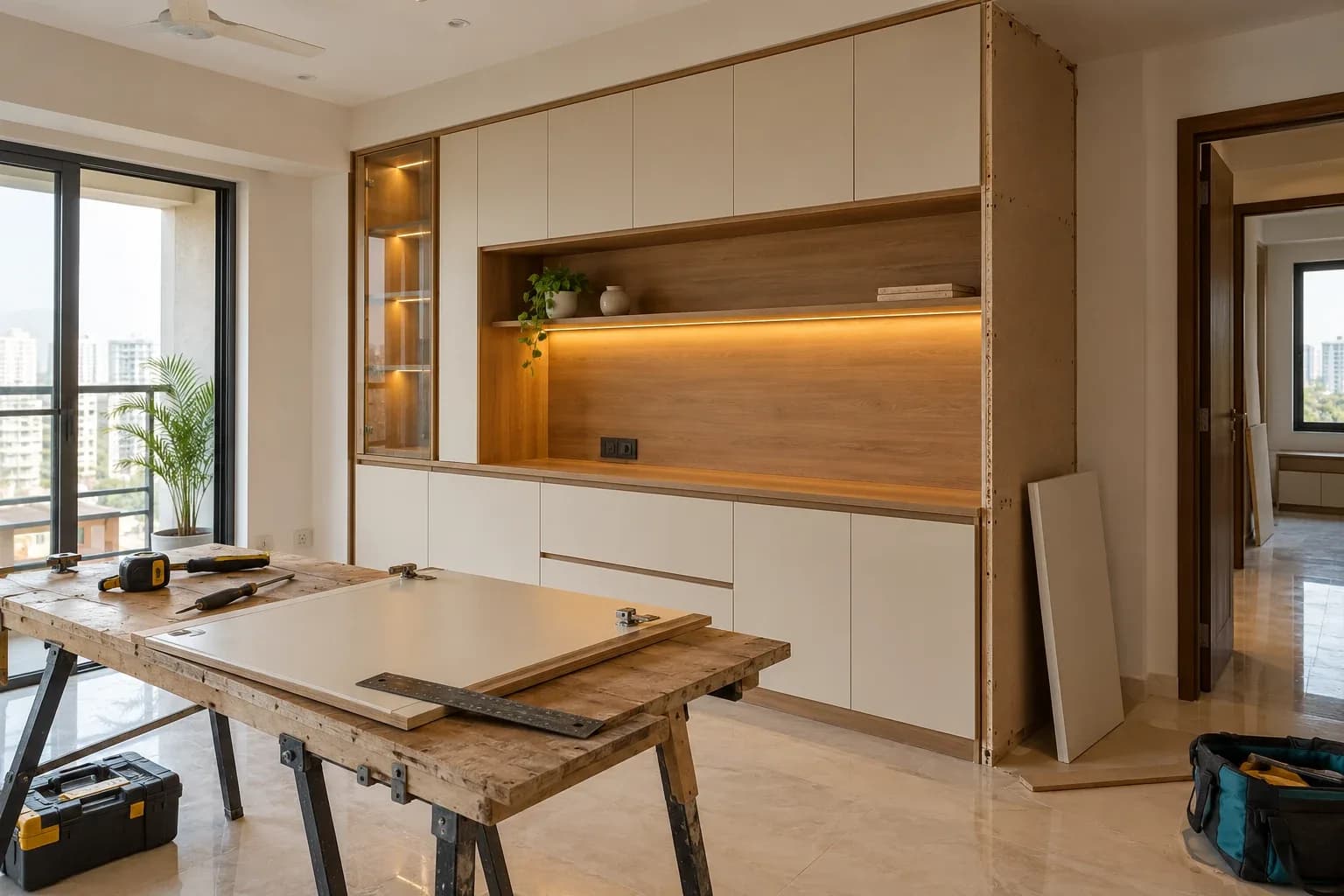
| Factory-made interiors | Carpenter-made interiors | |
|---|---|---|
| What to compare | Named materials, drawings, manufacturing details and site installation. | Named materials, drawings, workshop or site process and installation. |
| Changes | Ask when measurements and production are frozen and how revisions are priced. | Ask how changes affect labour, material waste and the agreed schedule. |
| Aftercare | Identify the company responsible for adjustments and replacement parts. | Identify who returns for adjustments and how materials are documented. |
A higher price needs a clearer scope
A factory-made interior can justify a higher quote when it includes a better-specified product, careful production, reliable installation and meaningful aftercare. The word factory alone does not prove those things. A skilled carpenter can also deliver precise work, while a factory-made cabinet still depends on accurate site measurements and competent fitting. Compare what you will receive rather than the label on the proposal.
Begin with one agreed drawing. The number of cabinets, internal shelves, drawers and exposed panels must match before the totals mean anything. A quote that includes only basic storage cannot be compared directly with one that includes premium runners, accessories and a finished back panel. Ask both suppliers to mark their exclusions on the same room plan.
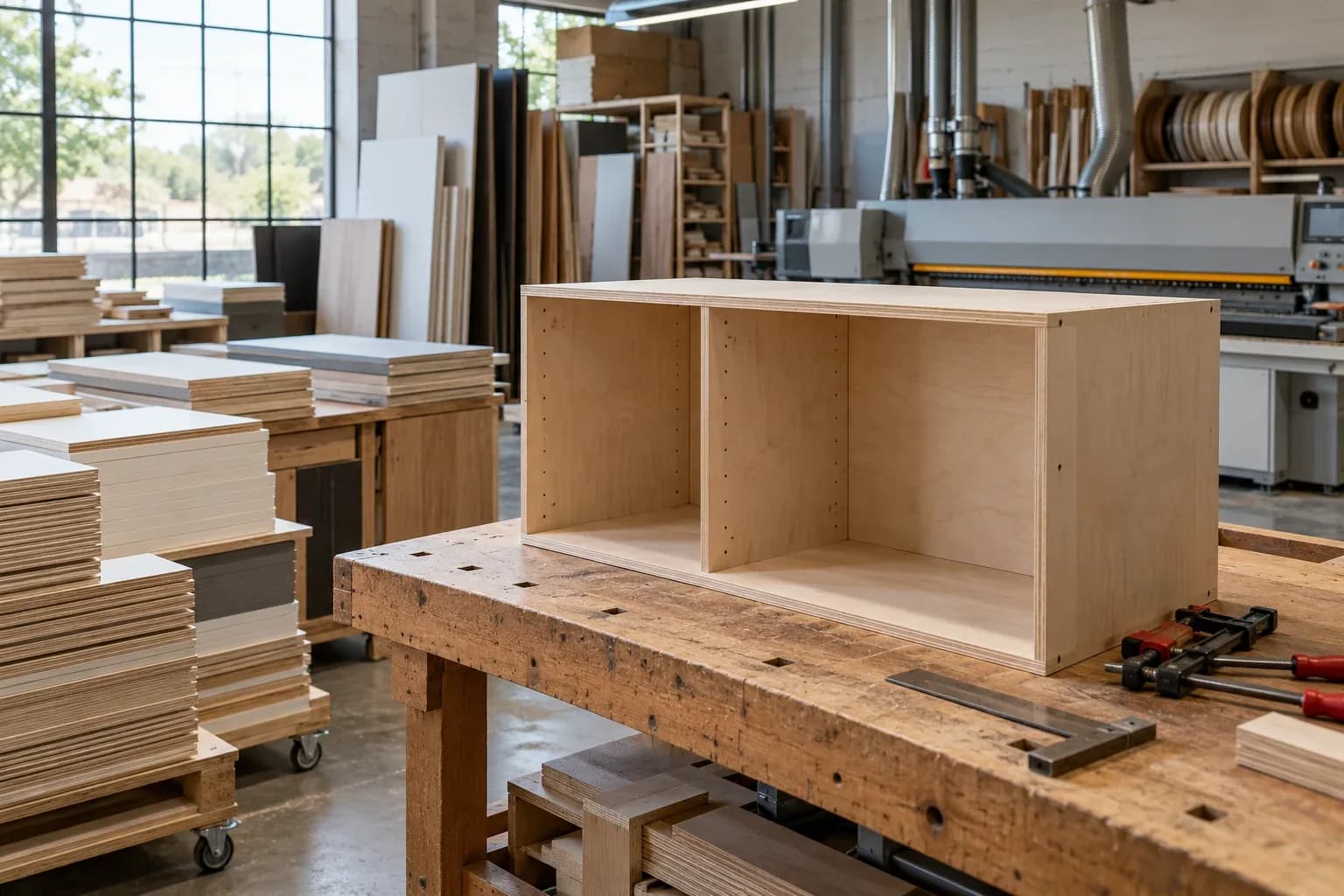
Clarify what factory-made means in that particular offer. Are the panels cut and edged off-site, supplied as assembled cabinets, or brought to the home as parts? Which operations happen at the property? Likewise, a carpenter may use a workshop or outsource selected machining. The real distinction is the documented process and who is accountable for it.
Avoid treating a showroom door as proof of the whole installation. Ask to inspect the type of carcass, edge detail and hardware included in your quote, not an upgraded display. Look at the reverse face of shutters and inside corners as well as the visible finish. A precise specification makes it easier to recognise whether the installed work matches the sale.
The best comparison starts with a simple question: what extra work, material or service am I actually buying with the difference in price?
Check the specification and the site work separately
Write the board manufacturer, range, grade and thickness for each component. A proposal using 18 mm board is not automatically equivalent to one using 19 mm board, nor does a thickness difference alone establish quality. Ask each supplier why the selected construction suits the cabinet dimensions and intended load. Confirm the back panel and shelf specification, which can otherwise remain vague.
Record the decorative face and reverse finish separately. A 1 mm laminate face does not describe the complete shutter, its adhesive, edge treatment or core. Ask how the edges around the sink, plumbing openings and appliances will be finished. Include visible side panels, fillers, skirting or plinth details and the treatment of any exposed cut-outs.
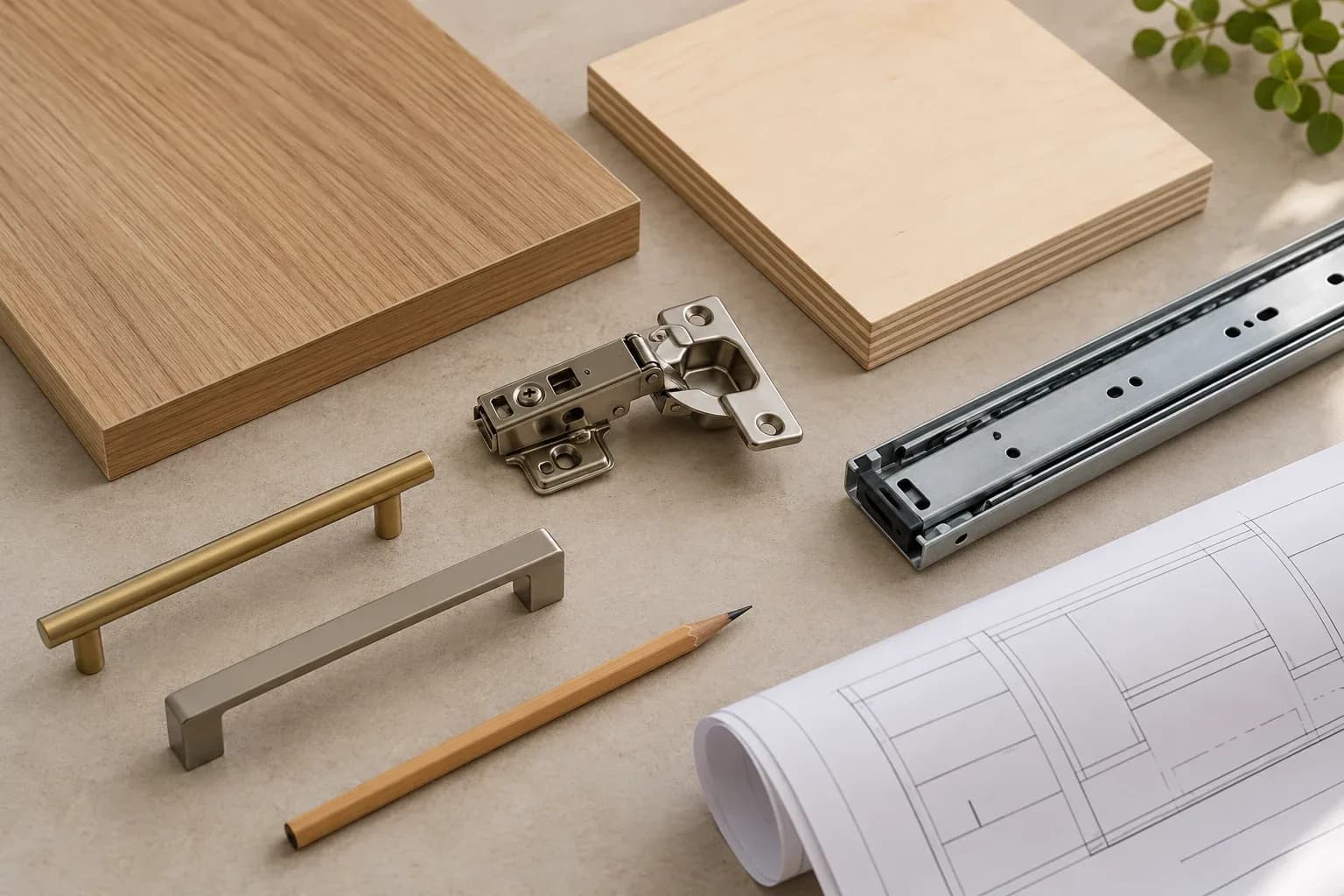
Inspect the hardware specification by model. Soft close is a feature, not a complete product description. Compare hinge opening angles, drawer extension and the manufacturer's supported loading for the exact model. Request the invoice or product identification needed to source a replacement later. Do not accept a brand name with an unrestricted equivalent allowed beside it unless you approve the proposed substitute.
Site preparation can change the final bill substantially. Ask who measures uneven walls, checks floor levels, coordinates sockets and plumbing, and confirms appliance dimensions. Find out whether civil repairs, electrical work, debris removal and protection of occupied rooms are included. Factory production does not remove these responsibilities.
Agree how measurement errors and site changes will be handled before production begins. If a wall moves or an appliance model changes, obtain a revised drawing and written variation cost. For on-site carpentry, make the same rule apply to verbal changes. A clear revision record protects the design and keeps a small alteration from becoming a dispute over the final total.
Judge value through handover and future repairs
Ask for a schedule that separates final measurement, drawing approval, production, delivery and installation. Record any dependencies, such as completed flooring or available power. Do not assume a promised production time is the date you can start using the kitchen. Allow for inspection and correction of outstanding work before agreeing that the project is complete.
Compare payment milestones with visible deliverables. Keep the approved drawings and material schedule attached to the quotation. If a supplier proposes a change, record the replacement product and price before accepting it. This makes both a factory package and a carpenter's proposal easier to manage without relying on memory.
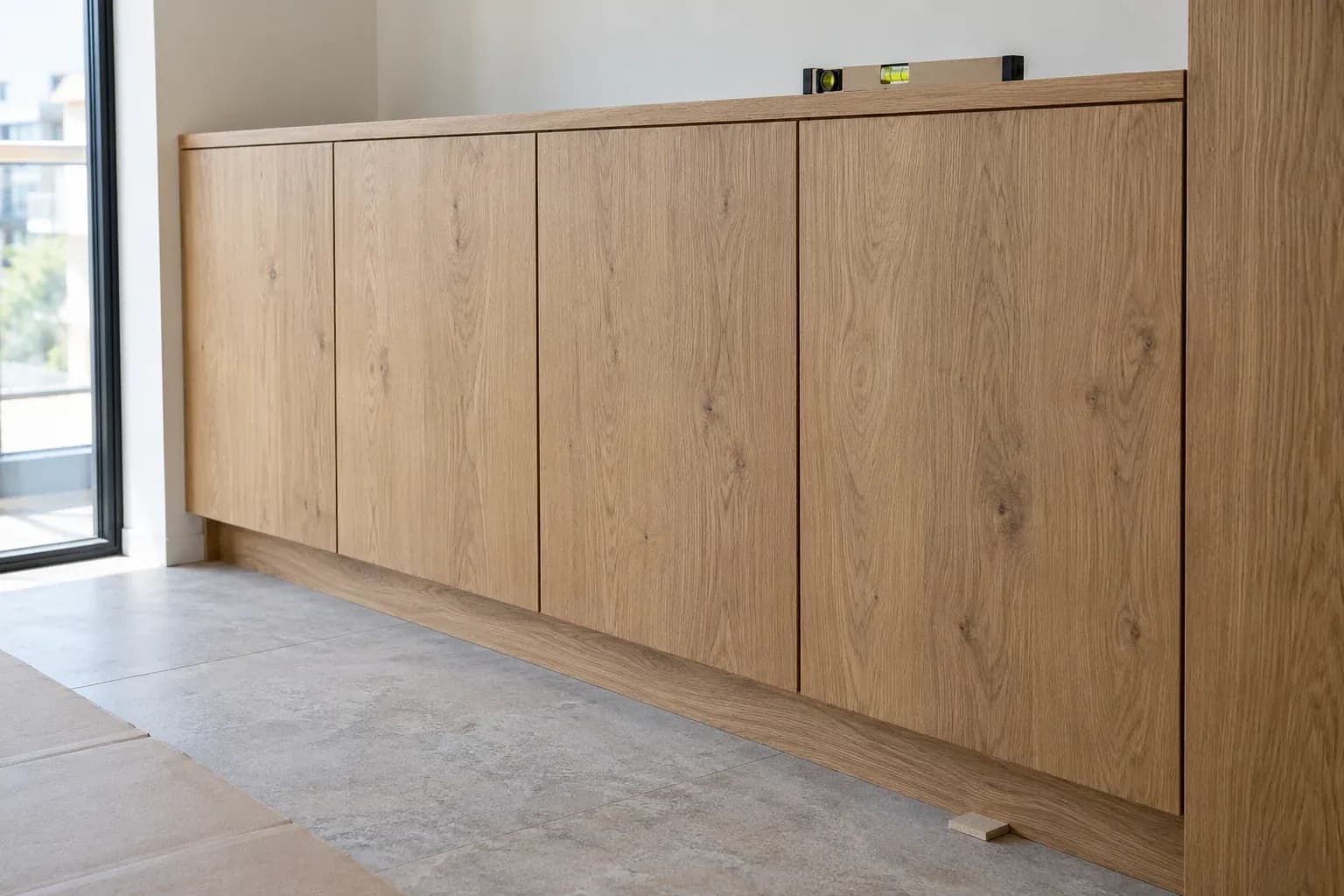
At handover, open every drawer and door, check alignment and inspect edges, corners and accessible cut-outs. Verify that internal accessories work without colliding with shutters. Note any damage or incomplete work in writing, with photographs where helpful. Agree who returns, what will be corrected and how the completion will be recorded.
Aftercare is valuable when it is specific. Ask whether hinge adjustments, faulty hardware, damaged shutters and colour matching are handled by the same contact. Read the warranty to understand material, workmanship and labour coverage. A long headline warranty may have exclusions that matter more than the number of years.
Browse decorative laminates and cabinet hinges to make your choices explicit. Our furniture quote breakdown is useful when a supplier gives only a sheet rate or a single total.
Pay more when you can identify a benefit you need and verify how it will be delivered. Choose a carpenter when the documented construction, workmanship and support meet the same requirements at a better fit for your project. Either route can be sensible. An accountable supplier and a detailed specification are more useful than an automatic preference for one production method.
Questions people ask us
Are factory-made interiors always better quality?
No. Compare the exact materials, finished components, installation details and aftercare. The production location alone does not establish quality.
What makes two interior quotations comparable?
Use the same drawing, dimensions, internal layout, board grades, finish codes, hardware models and installation scope. Mark exclusions and taxes clearly.
Can a carpenter use factory-cut components?
Yes. Ask which work happens in a workshop, factory or on-site. The documented process is more useful than the label applied to the project.
What should I check beyond the laminate brand?
Check the board, reverse finish, adhesive and edge treatment, plus the exact hardware and site installation details.
When is a premium worth paying?
When it buys a documented improvement you value, such as a suitable hardware system, more precise detailing or clearly defined service and correction responsibilities.
Shop these categories
Keep reading
- GuidesAlternatives to plywood for furniture in termite-prone homes
Choose furniture materials alongside proper pest inspection, moisture control and documented specifications.
- CompareBWP plywood vs HDHMR: which should you use for kitchen cabinets?
Choose cabinet boards by location, construction and the exact product specification.
- CompareSliding vs hinged wardrobes: which works better for your bedroom?
Match the door movement to your bedroom layout and the way you use your wardrobe.
- CareCan peeling kitchen cabinet coverings be repaired?
Identify the covering and the condition of the board before deciding how to repair a peeling cabinet.
- CareHow to remove fingerprints and grease from laminate cabinets
Clean oily marks without turning a small smudge into a damaged finish.
- CareHow to repair a chipped laminate countertop edge
Match the repair to the chip, edge construction and condition of the supporting board.