
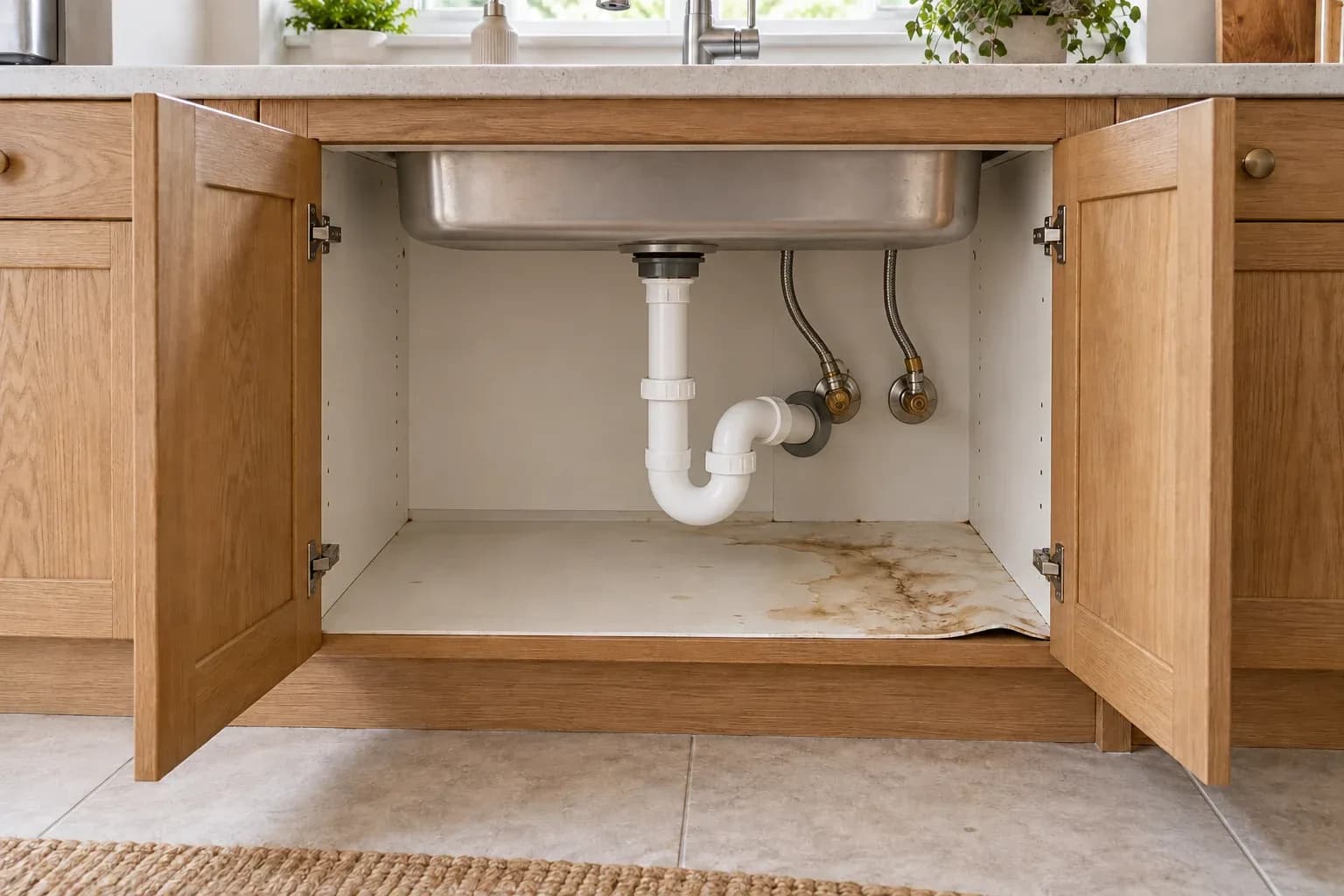
Stop the leak before deciding on the cabinet
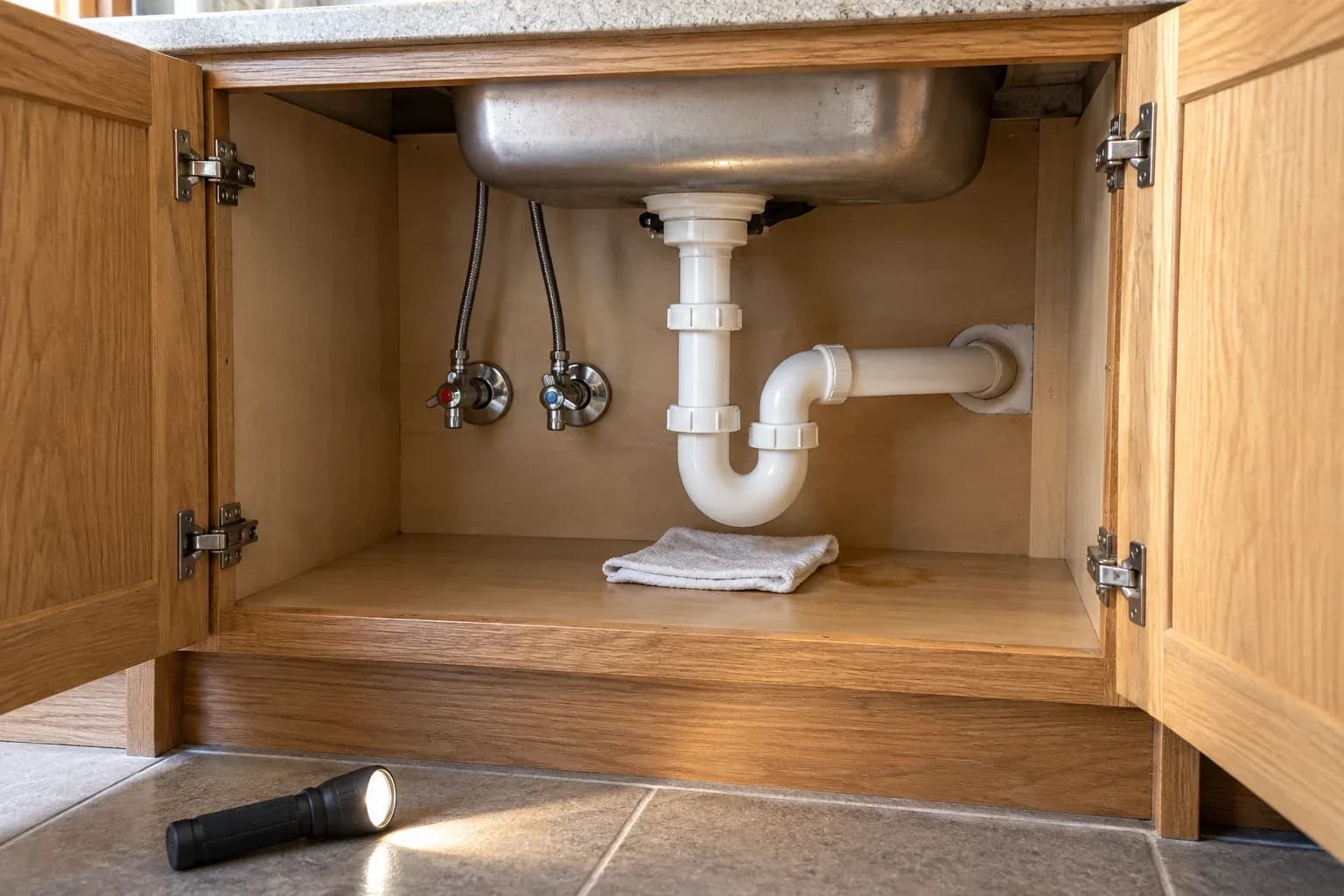
Start with the water source, not a decorative repair. Empty the cabinet if it is safe to do so, protect the surrounding area and arrange for a plumber to identify and repair the leak. Water can come from supply connections, the waste assembly, the basin or countertop junction, or another nearby source. A puddle's location alone does not prove where it began.
If water is close to electrical fittings, avoid touching wet equipment and get appropriate professional help. Take photographs of the affected area and the plumbing before any damaged pieces are removed. Record whether the leak appears recent, recurring or of uncertain duration.
After the source is controlled, drying should begin promptly. The US Environmental Protection Agency's moisture guidance recommends drying water-damaged areas and items within 24–48 hours to help prevent mould. This is a response target, not a promise that an enclosed cabinet will be dry or safe after a fixed time.
Dirty water, sewage, extensive mould or hidden contamination needs a different response from a small clean-water spill. Arrange suitable professional assessment when the source or extent is uncertain.
Separate surface damage from a weakened panel
A stain or a lifted finish does not automatically mean the entire cabinet must be replaced. If the supporting panel is dry, sound and properly fixed, a local finish repair may be possible. Ask the cabinet installer to assess the substrate before choosing a replacement laminate or edging.
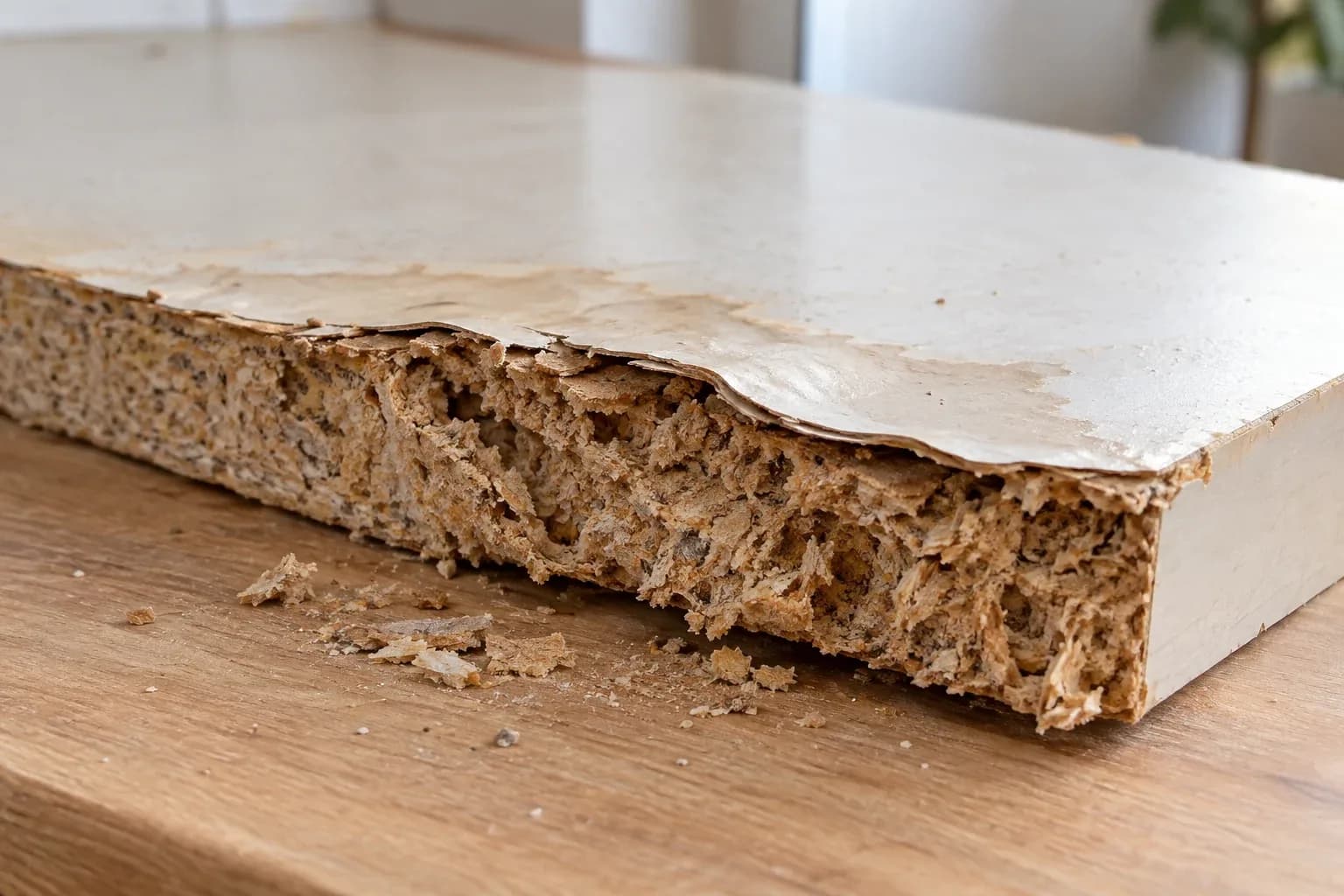
Swelling, crumbling, softness, separating layers or loose fixings suggest a deeper problem. A water-damaged particleboard or fibreboard base should not be assumed to recover its original strength just because it feels dry. Plywood can also be damaged; the board name alone does not settle whether it remains usable.
Have the installer check the base, sides, back, plinth, adjacent cabinets and any support under the countertop. Replacing one damaged component may be practical when the surrounding construction is sound and accessible. Wider damage or loss of reliable fixing points can make a more substantial replacement necessary.
Do not cut out a cabinet side or other potentially supporting part without a plan. The sink, stone top and neighbouring units may depend on that assembly. A repair should restore the required support and access, not simply hide the visible mark.
Repair the cause and make the next leak easier to notice
Ask for a repair quote that separates plumbing work, drying or remediation, panel replacement, finish work and reinstatement. Keep the proposed scope tied to what was inspected. If a concealed area cannot yet be assessed, agree how any additional damage will be documented before the scope changes.
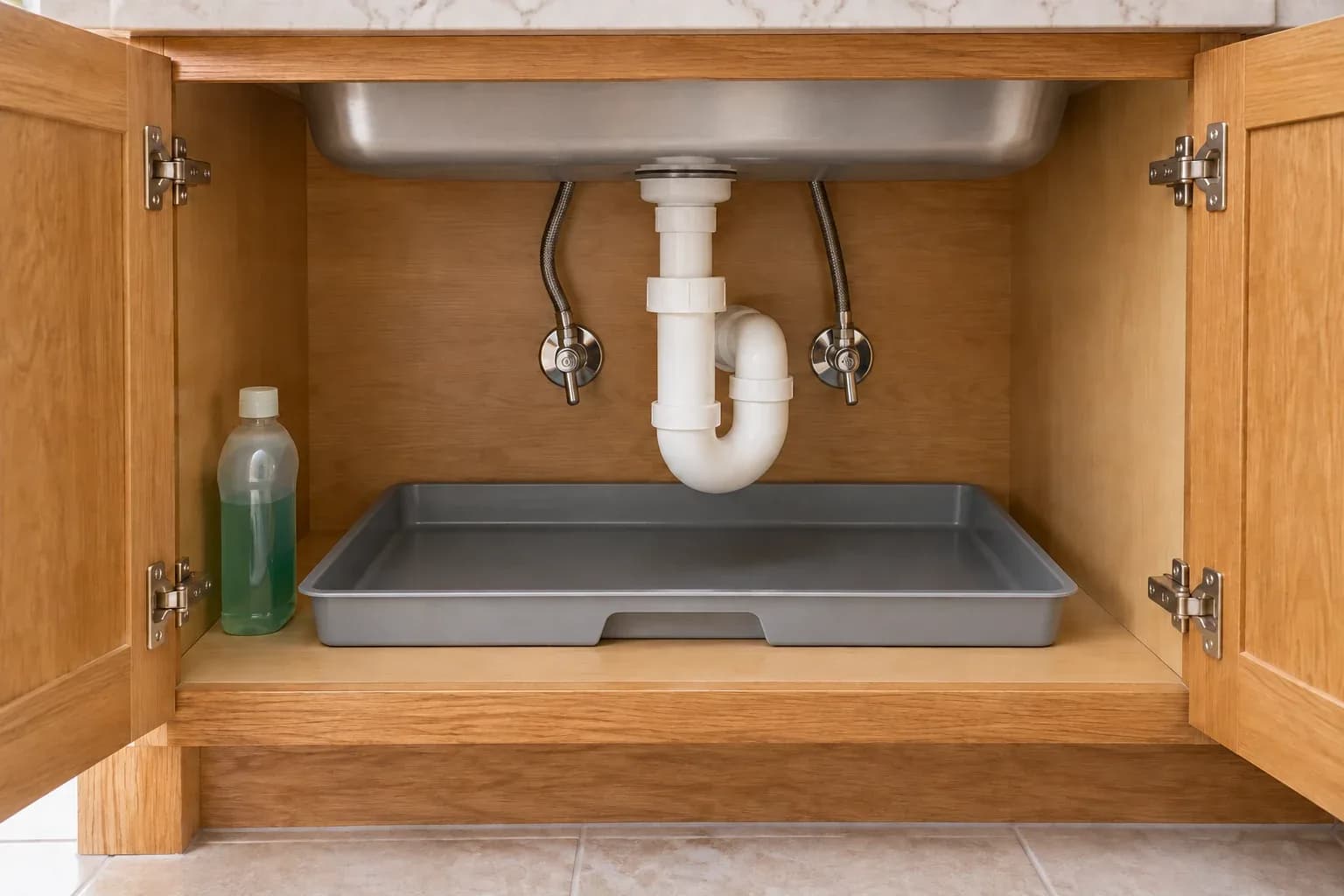
Avoid lining over damp or weakened board with a new sheet, vinyl or a tray. These can conceal damage without resolving it. A removable leak tray may help contain a future small spill once the cabinet is sound, but it should remain easy to inspect and must not hide a recurring leak.
When rebuilding, specify suitable materials and protect edges and plumbing cut-outs according to the chosen system. Retain access to valves and the waste connection. After work is complete, check for fresh moisture during normal use and keep the base clear enough to notice a problem early.
Browse cabinet finishes and 1 mm decorative laminates only after the repair scope is clear. A 1 mm decorative sheet cannot restore a weakened cabinet board. Hinch is in Hafeezpet, Hyderabad 500085; bring photographs and the installer's material list when matching replacement finishes.
If the damage is limited to a peeling surface, also read repairing peeling kitchen cabinet coverings.
Questions people ask us
Can I just put a new board over the damaged base?
Do not cover it before the moisture source and panel condition are assessed. A new layer can hide dampness or weakened material and may complicate future access.
Does every stained cabinet need replacement?
No. A dry, sound panel with limited surface damage may be repairable. Swelling, softness, loose fixings or wider damage require a closer assessment.
Will swollen board return to normal after drying?
Do not assume it will. Drying removes moisture but does not necessarily reverse swelling or restore the original strength.
Can I replace only the cabinet bottom?
Sometimes, if the surrounding cabinet is sound and the construction allows a safe replacement. The installer should check support, fixings and access first.
How quickly should I dry a clean-water leak?
Act promptly after controlling the source. EPA guidance recommends drying water-damaged areas and items within 24–48 hours to help prevent mould; hidden cavities may need professional assessment.
Will a leak tray prevent future cabinet damage?
It may help contain a small spill, but it does not repair plumbing or replace inspections. Keep it removable and check beneath it regularly.
Shop these categories
Keep reading
- IdeasTwo-tone kitchen cabinets: how do you choose a combination that feels balanced?
Choose one finish to carry most of the kitchen and give the second a clear place to begin and end.
- CompareFlat slab vs Shaker cabinet doors: which suits an everyday kitchen?
Choose slab doors if you want broad, uninterrupted surfaces and a quick wipe across each front. Choose Shaker if you like the shadow around a recessed panel enough to take a little extra care at its lower corners. Both styles can have handles; the profile and the opening method are separate decisions.
- CompareKitchen island vs peninsula: which layout works better in a compact home?
A peninsula earns its place when attaching one end frees up a useful passage or makes everyday seating possible. An island earns its place when people can use the routes around it, even with a stool occupied and the fridge open. Test both in your own room before deciding.
- GuidesHow do you verify plywood quality before it disappears under laminate?
Verify two different things: the identity of the material delivered and the condition of the particular pieces going into your furniture. An invoice can help with the first. It cannot explain a loose layer in the panel in front of you.
- CareUneven cabinet-door gaps: is it a hinge adjustment or a fitting problem?
A gap that changes from top to bottom is a clue, not a diagnosis. Before turning a screw, establish whether one door is out of line, several units are misaligned, or the door itself will not lie flat.
- GuidesCabinet refacing or replacement: when is keeping the old kitchen worth it?
Keep the cabinet boxes if they are dry, firm and arranged the way you cook.