
A good choice starts before the colour
It is easy to fall for a finish in a photograph. The harder part is knowing whether it belongs on your wardrobe, beside your flooring and in the budget you have set aside. A useful shortlist answers those questions before the order is placed.
Start with the room and the furniture, then work towards colour, finish and quantity. Keep a simple record of the exact products you like so your carpenter and supplier are discussing the same material. This guide takes you through those decisions in the order they usually become useful.
Your buying checklist
- 1
Describe the job
List the furniture, the surfaces to be covered and anything that may affect material selection, such as frequent handling or nearby water. Share this brief with your carpenter before choosing the sheet.
- 2
Build a small shortlist
Choose a main finish and one alternative. Look at them beside the floor, wall colour and handles. Record the brand, design code and finish name for each.
- 3
Confirm the cutting plan
Have the carpenter check panel dimensions, visible edges, grain direction and the number of sheets needed. Resolve these details before asking for a final quote.
- 4
Approve the complete order
Check the selected product codes, sheet sizes, quantities, installation scope and delivery arrangements together. Keep the agreed specification with the quotation.
Start with the surface you are finishing
A wardrobe door, a desk and a cabinet beside a sink are different jobs. Write down where the laminate will go, which faces are visible and how the furniture will be used. Ask the carpenter to confirm the supporting board, edge treatment and installation method for the chosen product.
For existing furniture, have the condition checked before buying new sheets. Loose edges, damaged board or an unsuitable surface need a plan of their own. Our guide to laminating existing furniture helps you prepare that conversation.
Bring a simple brief: a photograph of the room, a drawing with dimensions and a list of the surfaces you want finished. Mark inside faces separately from outside faces. That small distinction makes it easier to see what the quotation includes, and prevents a beautiful exterior finish from becoming an accidental assumption about the whole cabinet.
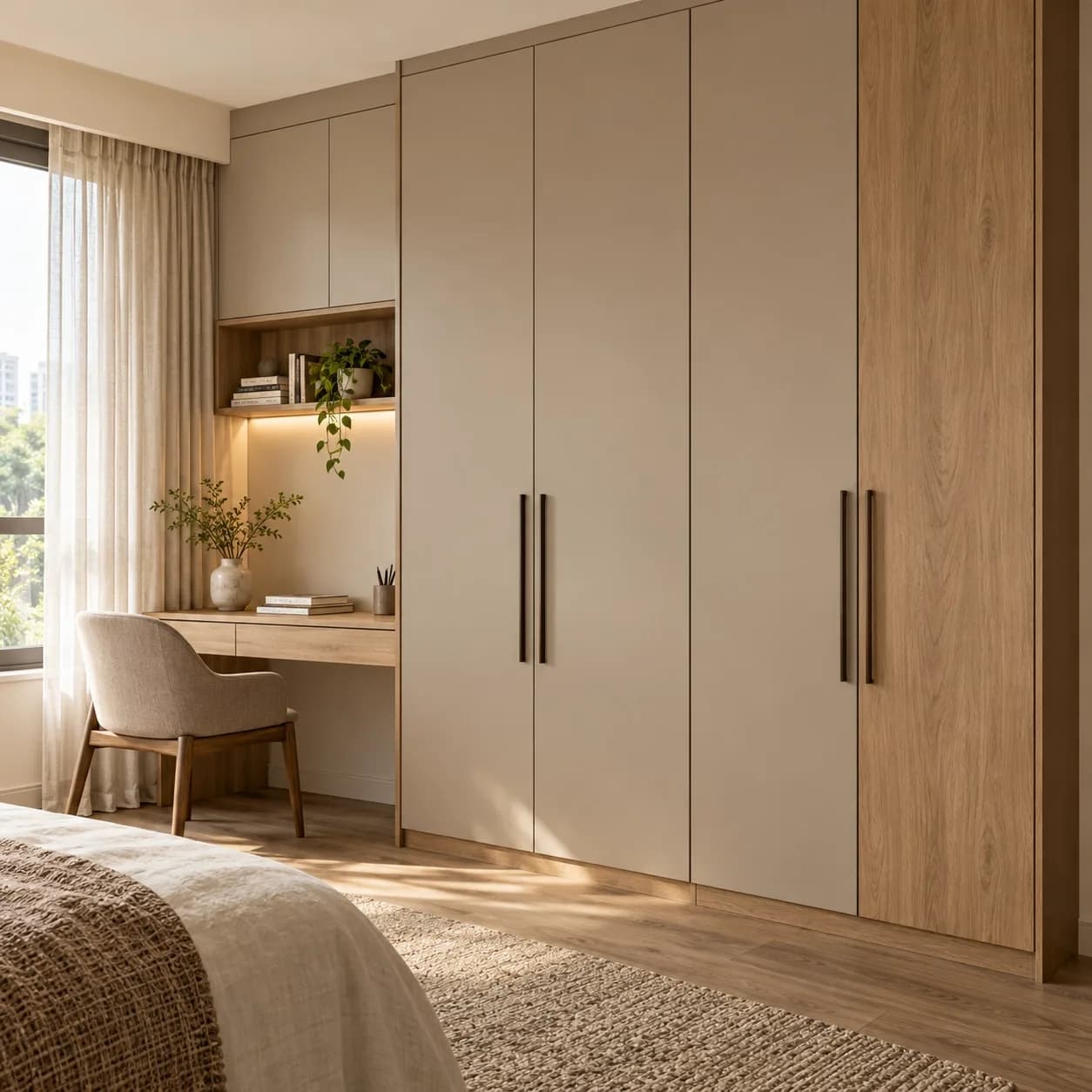
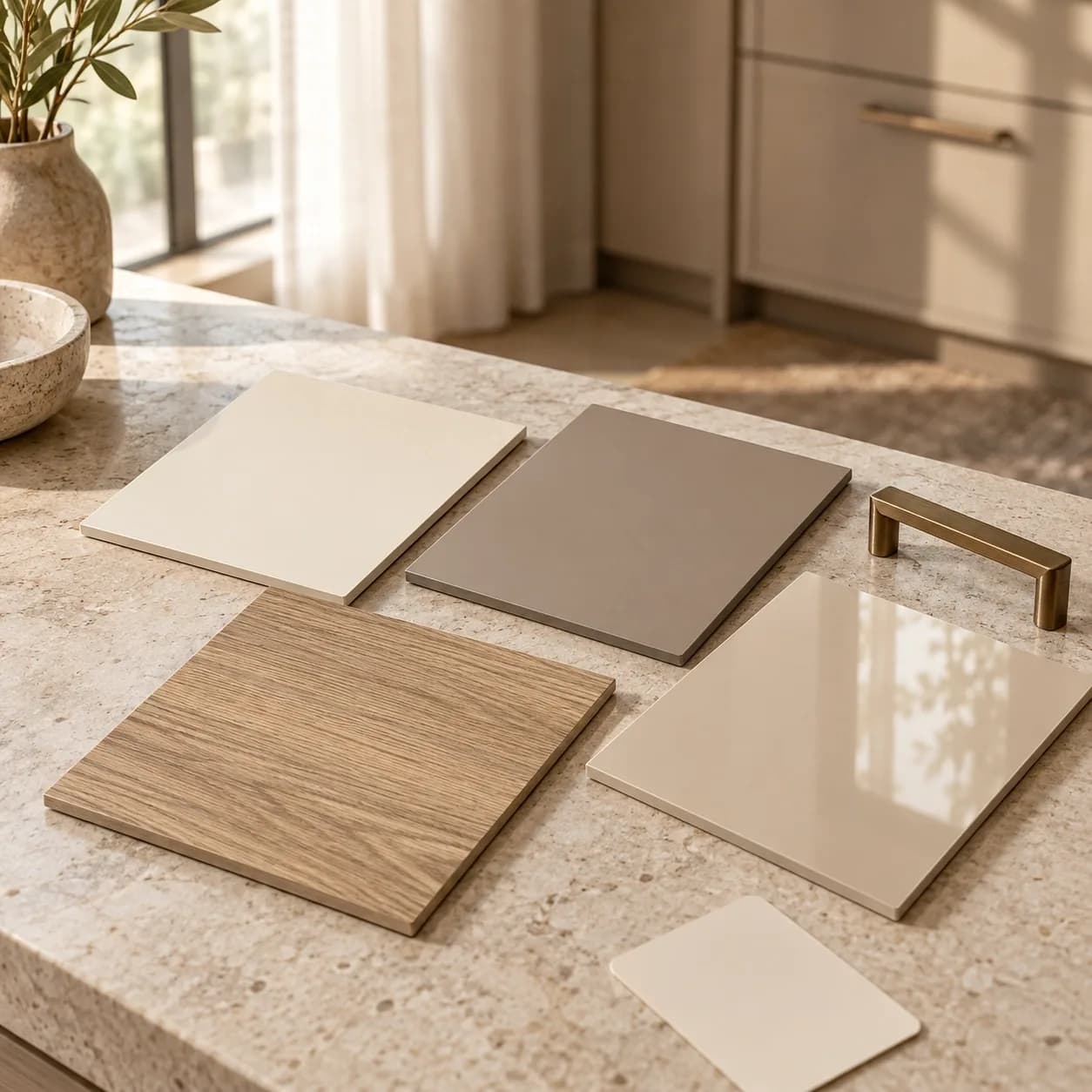
Choose the finish in the room, not just on a screen
Place your shortlisted physical swatches beside the floor, wall paint and handles. Look at them in daylight and again under the lights you actually use in the evening. Hold a wardrobe finish upright, and view a desk finish flat. This gives you a more useful comparison than holding every option under the same showroom light.
Try one quiet main finish before adding an accent. A warm solid colour with a wood look can be a starting point, but the balance should come from your room rather than a fixed formula. If the floor already has a strong pattern, give it space in the scheme.
Compare the same colour in different finishes when possible. Notice reflection, texture and how it feels at arm’s length. Read matte versus glossy laminates if that is your main decision. Keep the exact design code and finish name with each swatch; a colour description alone leaves too much room for confusion.
Turn panel measurements into an order
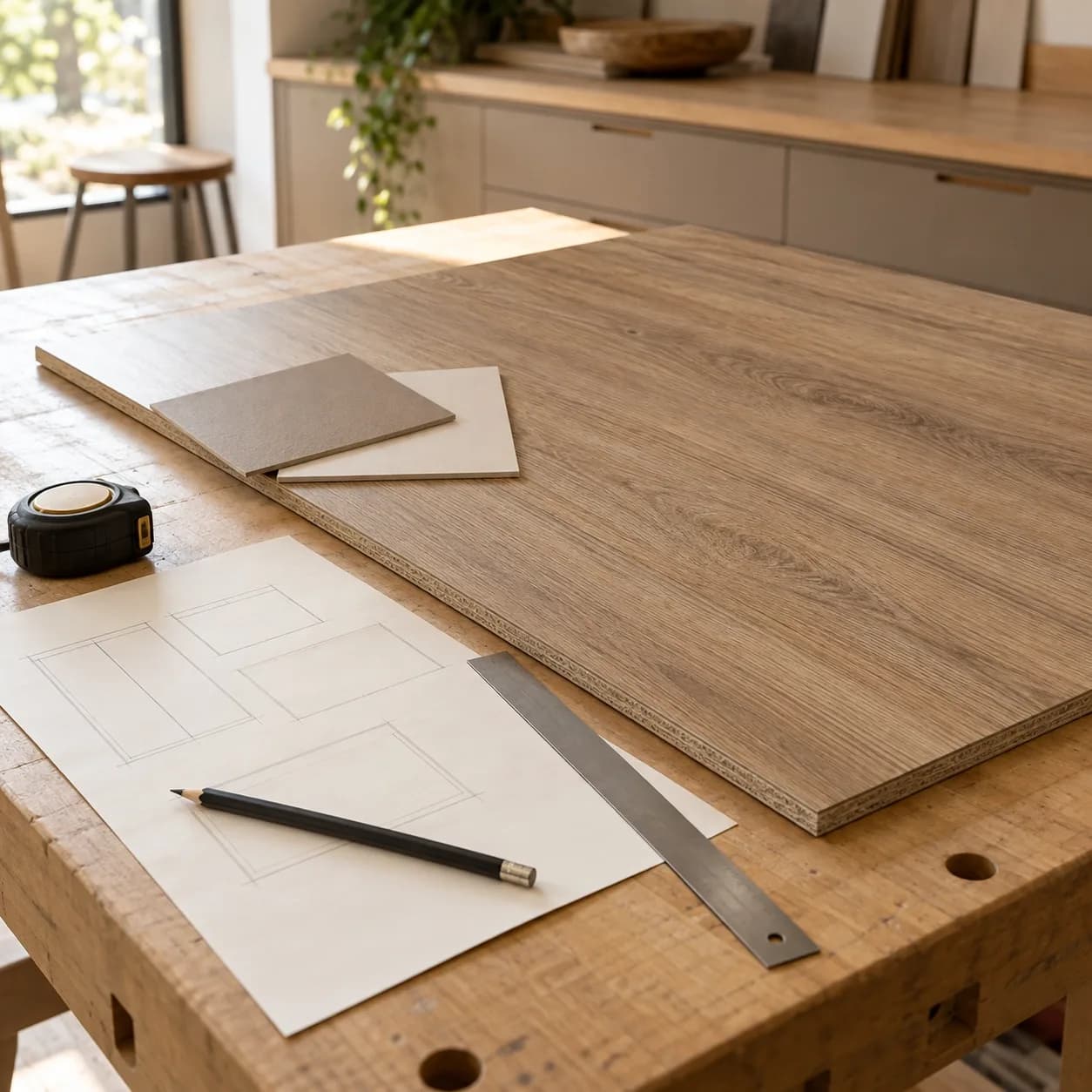
Record each panel in one unit and label its width, height and quantity. Count both faces only where both will actually be covered. For example, a 7 ft by 2 ft door has 14 sq ft on one face; two doors of that size have 28 sq ft across their front faces.
An 8 ft by 4 ft sheet has a nominal area of 32 sq ft. That arithmetic does not prove that all your pieces will fit. Panel shape, cutting allowances, grain direction and the need for continuous patterns can change the sheet requirement. Check the actual sheet dimensions for the selected product instead of assuming every design comes in the same format.
Use the wardrobe measurement planner to organise your figures, then have the carpenter approve a cutting layout. The sheet coverage explanation shows why nominal area and usable pieces are different. Avoid applying one waste percentage to every project without checking the drawing.
Read the whole quote before you approve it
A lower sheet price is only part of the comparison. Ask for a clear breakdown of decorative sheets, supporting board where needed, adhesive, edge finishing, labour and delivery. Confirm how taxes and any carrying or unloading charges are handled. Two quotes are easier to compare when they describe the same work.
Put the brand, design code, finish, thickness, sheet size and quantity together in the written specification. Ask the supplier to confirm availability and delivery timing for those exact items. Agree what happens if the selected finish cannot be supplied; do not leave substitutions to a colour name or a hurried phone call.
Before work starts, check delivered items against the order and raise any discrepancy with the supplier. Keep the invoice, product details and the manufacturer’s care guidance. For a fuller budgeting checklist, read planning the whole laminate budget. It is easier to resolve an unclear line in the quote now than after the sheets have been cut.
Questions people ask us
What should I decide before choosing a laminate colour?
Decide where the sheet will be used, which faces need covering and what board and installation method the carpenter recommends. Then compare colours beside the finishes that are staying in the room. This keeps the visual choice connected to the actual job.
Can I order laminate sheets from a photograph alone?
A photograph can help you shortlist, but check a physical swatch where possible before committing to a large surface. View it in your room and confirm the exact brand, design code and finish. Screen colour and lighting are not a dependable ordering specification.
How do I work out how many sheets to buy?
List the dimensions and quantity of each panel, then ask your carpenter to prepare a cutting layout for the chosen sheet size. Total area is a starting point. Grain direction, panel sizes, cutting allowances and the faces being covered can all affect the final order.
Does a thicker laminate automatically mean it is the right choice?
Choose the thickness specified for the product and application, with advice from the manufacturer or installer. Thickness is one detail alongside the supporting board, finish, edges and installation method. Do not change it solely because another sheet sounds more substantial.
What should the final laminate quotation include?
It should identify the selected products, sheet sizes and quantities, with a clear scope for board, adhesive, edge finishing and labour where applicable. Confirm taxes, delivery arrangements, availability and any substitutions before approving. Keep a copy so the delivered order can be checked against it.
Shop these categories
- 1 mm Decorative Laminates
- Wood Laminates
- Laminates
- Matte Finish Laminates
- Solid Colour Laminates
- Glossy Finish Laminates
Keep reading
- GuidesAre fluted wall panels practical for dust and cleaning?
Enjoy the texture of fluted panels while choosing a detail you can comfortably maintain.
- AnswersCan you use laminates over existing furniture?
Keep the furniture you like, but check the old surface before choosing its new finish.
- ProjectsA calm study corner: a laminate design concept
A concept study in warm wood-look laminate and soft neutral storage, ready to adapt to a real room.
- CalculatorsWardrobe laminate calculator: turn measurements into a plan
Measure the right surfaces, understand the estimate and take a clearer brief to your carpenter.
- BrandsMerino laminates: find the finish that belongs in your room
A considered way to choose Merino designs, compare samples and keep the final specification clear.
- DesignsWarm neutrals for a beautifully balanced home
Ivory, taupe and sand: three considered palettes for rooms that feel warm, connected and easy to live in.