
Yes, some existing furniture can be resurfaced with laminate, but the original finish and supporting board need checking first. The surface must be suitable for the chosen laminate and adhesive system. Loose coverings, swelling or structural damage need attention before you commit. Ask a qualified installer to assess the piece before ordering.
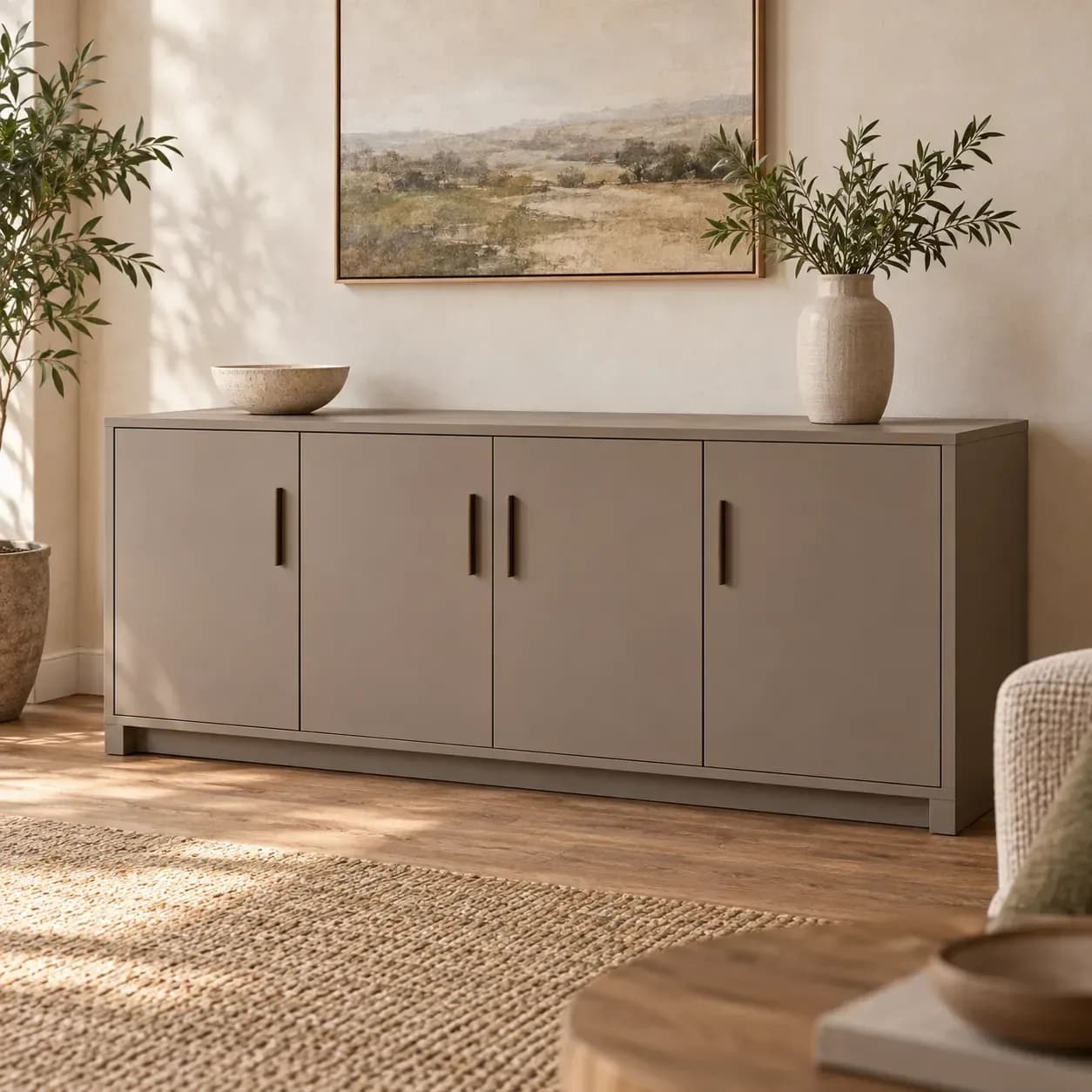
Keep the furniture, assess the surface
A cabinet can be worth keeping even when its colour no longer suits the room. Start by separating the look you want to change from the condition of the furniture underneath. A sound frame and useful storage are a better starting point than a piece that already struggles to open or close.
Photograph the whole unit, its corners, the back and the inside of a door. Show the installer any lifting finish, uneven area or previous repair. A photograph helps explain the job, but an in-person inspection may still be needed.
Keep the design simple while you assess it. For example, plain new door fronts with a wood-look accent can give an older sideboard a different character without changing its entire layout.
When a new finish is not the first fix
Possible to assess: a flat, firm panel with a securely attached existing covering and no obvious movement. The installer still needs to identify the surface and check the laminate manufacturer’s instructions.
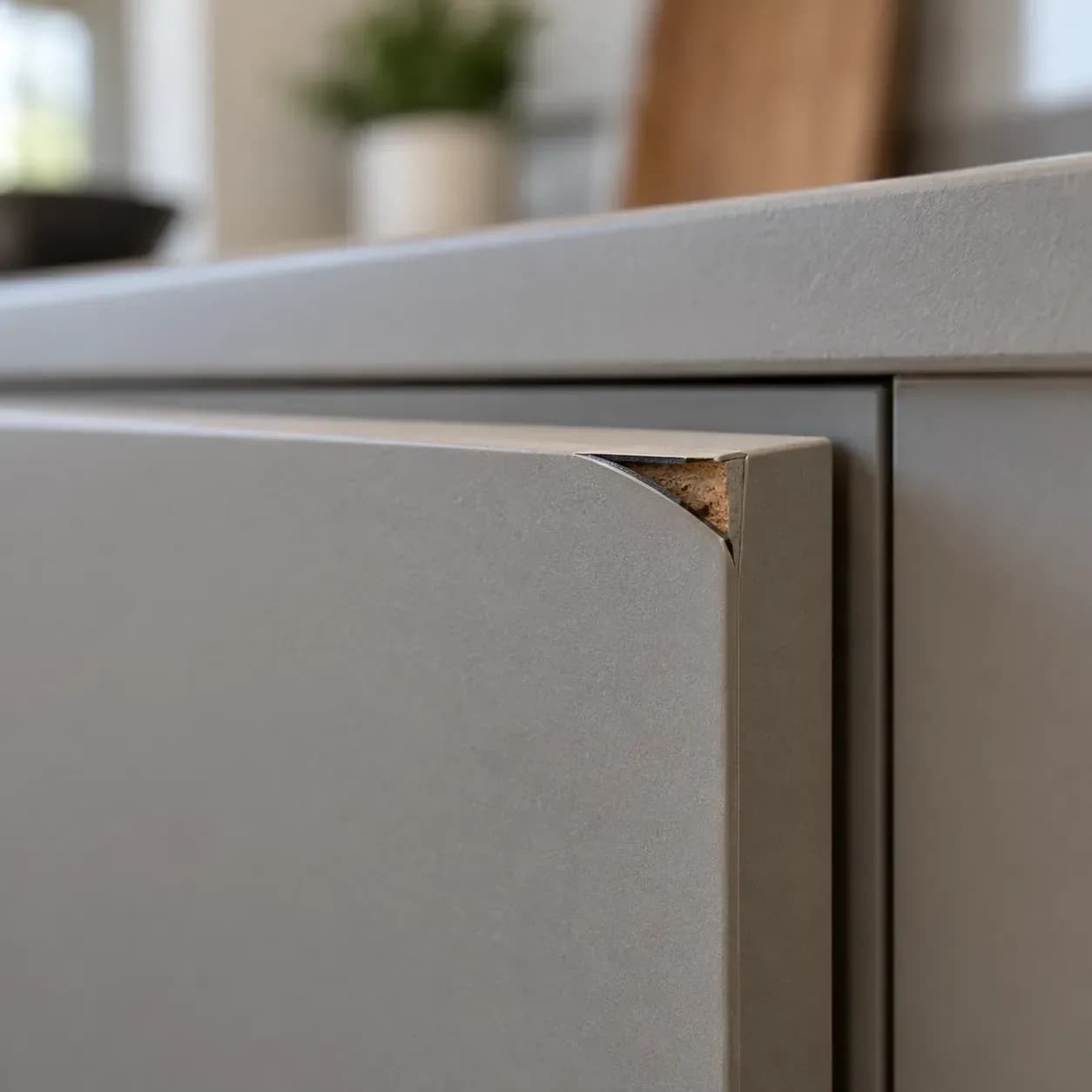
Repair or replace first: a swollen edge, loose layer, uneven patch or damaged supporting board. A fresh finish does not repair the structure beneath it. Ask what caused the damage before deciding how to cover the area.
Do not assume: that sanding and ordinary glue make every old finish suitable. Some specialist resurfacing systems are designed for existing laminate; other products require a different base. The preparation method and bonding instructions must belong to the exact system being used.
What to agree before you order
Ask for a written description of the proposed work before choosing a colour. It should explain which old layers stay, which are removed, and how the exposed edges will be finished.
Discuss door clearances, hinges and handles as well as the visible faces. Adding a layer changes the finished dimensions, so the installer should check that moving parts will still fit. Request a quote that separates preparation, replacement parts, laminate and labour.
Once the installation route is agreed, use our matte and glossy finish comparison to think about the look you prefer. Take the sample back to the furniture before you approve the final choice.
If you are refreshing a wardrobe, use our wardrobe laminate measurement planner to organise the dimensions before the carpenter confirms the cutting plan.
Questions people ask us
Can I cover peeling laminate without removing it?
Do not treat a loose layer as a dependable base. Have the installer establish why it is peeling and whether the covering or supporting panel needs replacement. The new finish needs a suitable, stable surface beneath it.
Will resurfacing always cost less than replacing the furniture?
Not always. Preparation, damaged panels, new edging and hardware adjustments can change the total. Compare a complete resurfacing quote with the cost of replacing the affected parts, rather than comparing the laminate sheet price alone.
Can laminate go over painted or polished furniture?
The installer needs to identify the existing coating and check the preparation and adhesive requirements for the chosen laminate. A smooth-looking finish is not enough to establish that it is a suitable base.
Will adding laminate affect doors and drawers?
It can change the finished thickness and clearances. Have the installer check hinges, handles, drawer movement and exposed edges before agreeing which surfaces will be covered.
What should I take to a resurfacing consultation?
Bring photographs of the whole piece, its edges, the inside of a door and any damaged areas. Include approximate measurements and the look you want, then ask whether an in-person inspection is needed.
Shop these categories
- 1 mm Decorative Laminates
- Wood Laminates
- Laminates
- Matte Finish Laminates
- Solid Colour Laminates
- Glossy Finish Laminates
Keep reading
- ProjectsA calm study corner: a laminate design concept
A concept study in warm wood-look laminate and soft neutral storage, ready to adapt to a real room.
- CalculatorsWardrobe laminate calculator: turn measurements into a plan
Measure the right surfaces, understand the estimate and take a clearer brief to your carpenter.
- BrandsMerino laminates: find the finish that belongs in your room
A considered way to choose Merino designs, compare samples and keep the final specification clear.
- DesignsWarm neutrals for a beautifully balanced home
Ivory, taupe and sand: three considered palettes for rooms that feel warm, connected and easy to live in.
- CareHow to keep your laminates looking beautiful
A soft cloth. A gentle routine. Small habits that keep the finish you chose looking its best.
- CompareMatte vs glossy laminates: find your kind of luxury
Soft, understated surfaces or a polished glow? Find the laminate finish that feels right in your home.