
Start gently and identify the surface
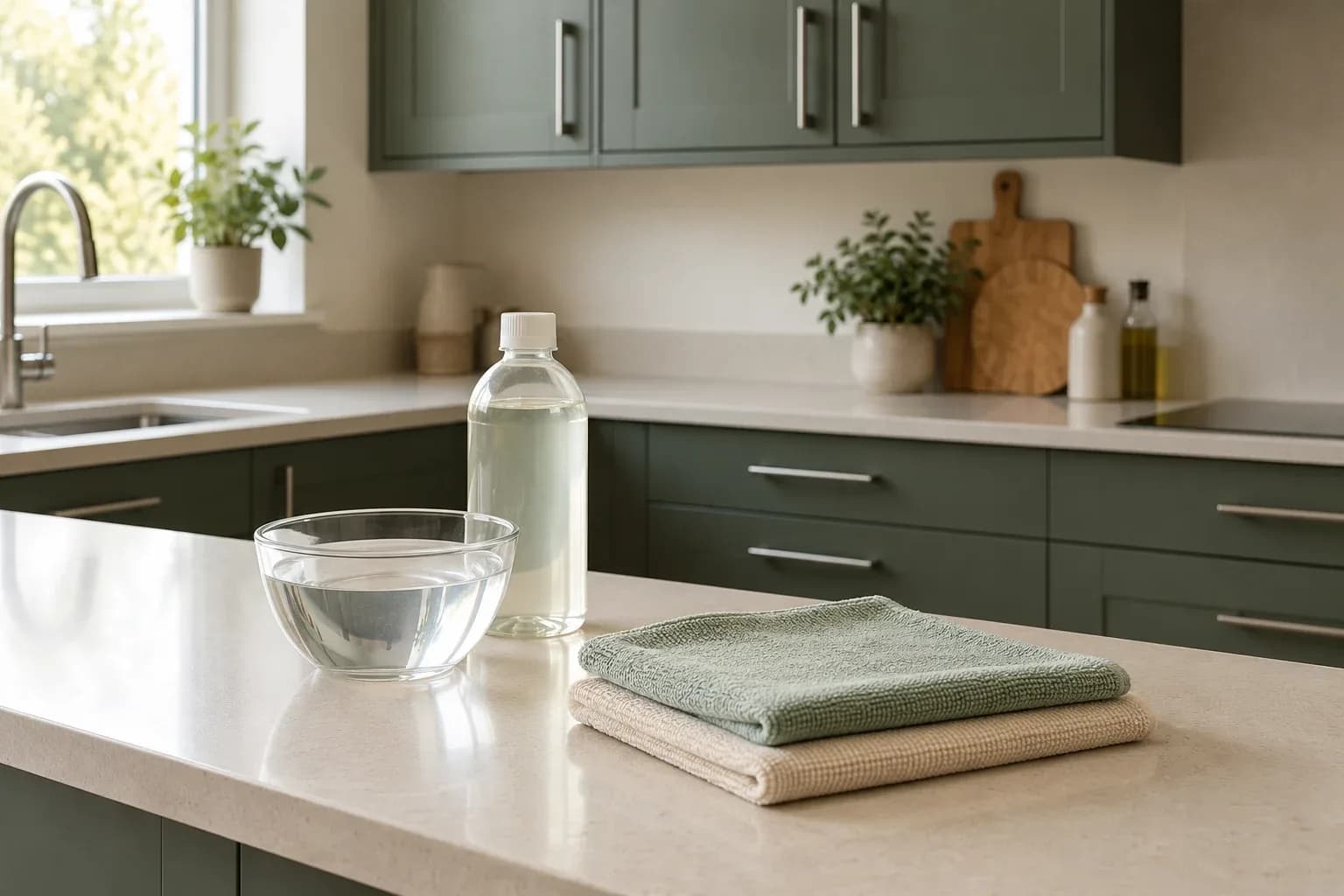
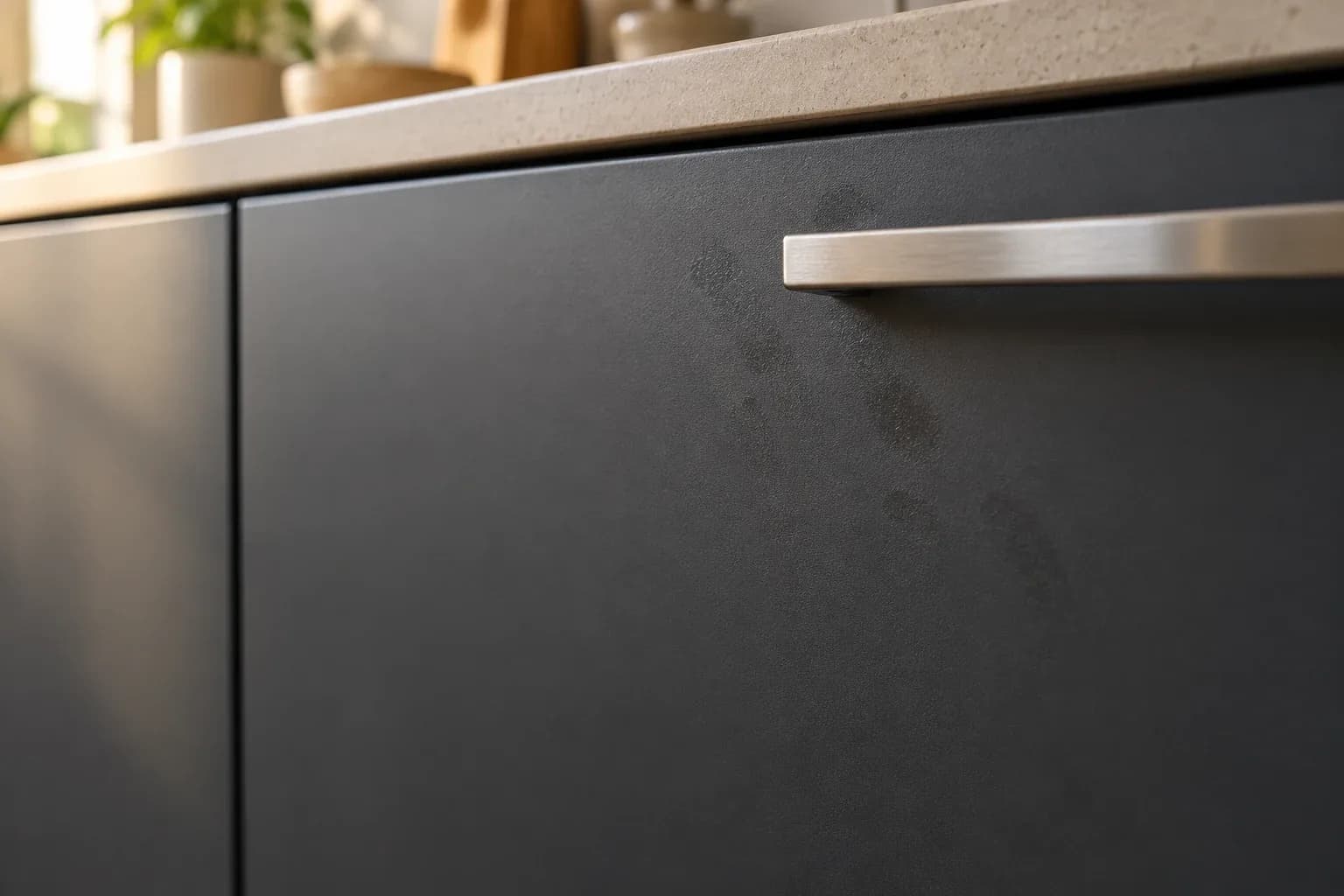
For ordinary fingerprints and cooking grease on decorative laminate, begin with a clean soft cloth, a little mild liquid detergent and careful drying. Use the manufacturer's instructions for the exact finish. Do not start with an abrasive pad, strong degreaser or a polishing compound simply because the mark is easy to see.
Check that the cabinet face really is laminate. Acrylic, paint, lacquer and flexible films can look similar but may need different cleaning products. Find the invoice or product code if you are unsure. If it identifies Merino, Greenlam or CenturyPly, request the care sheet for that particular range rather than applying advice based on the brand name alone.
Look at the mark in daylight before you clean. Oily fingerprints, leftover cleaning product and physical scratches can all become obvious in reflected light. If the surface is already peeling, cracked or swollen, have that damage assessed first. Adding liquid to an open edge can create another problem.
Formica India's cleaning guidance recommends a non-abrasive cloth, mild detergent and avoiding flooding the sheet. Treat that as a starting principle for confirmed decorative laminate, with your own product's instructions taking priority. Keep a dry cloth ready so moisture does not remain around handles, seams and exposed edges.
A careful clean, rinse and dry routine
1. Remove loose dust with a clean, soft cloth. Check the cloth for grit before wiping a glossy face. A cloth used on the cooktop may carry grease or particles that simply spread the mark.
2. Check the detergent label and the laminate care instructions. Prepare only the recommended mild solution. Apply it to the cloth so it is damp rather than dripping, and try a small inconspicuous area first. Do not spray liquid directly into handles, joints or hinge openings.
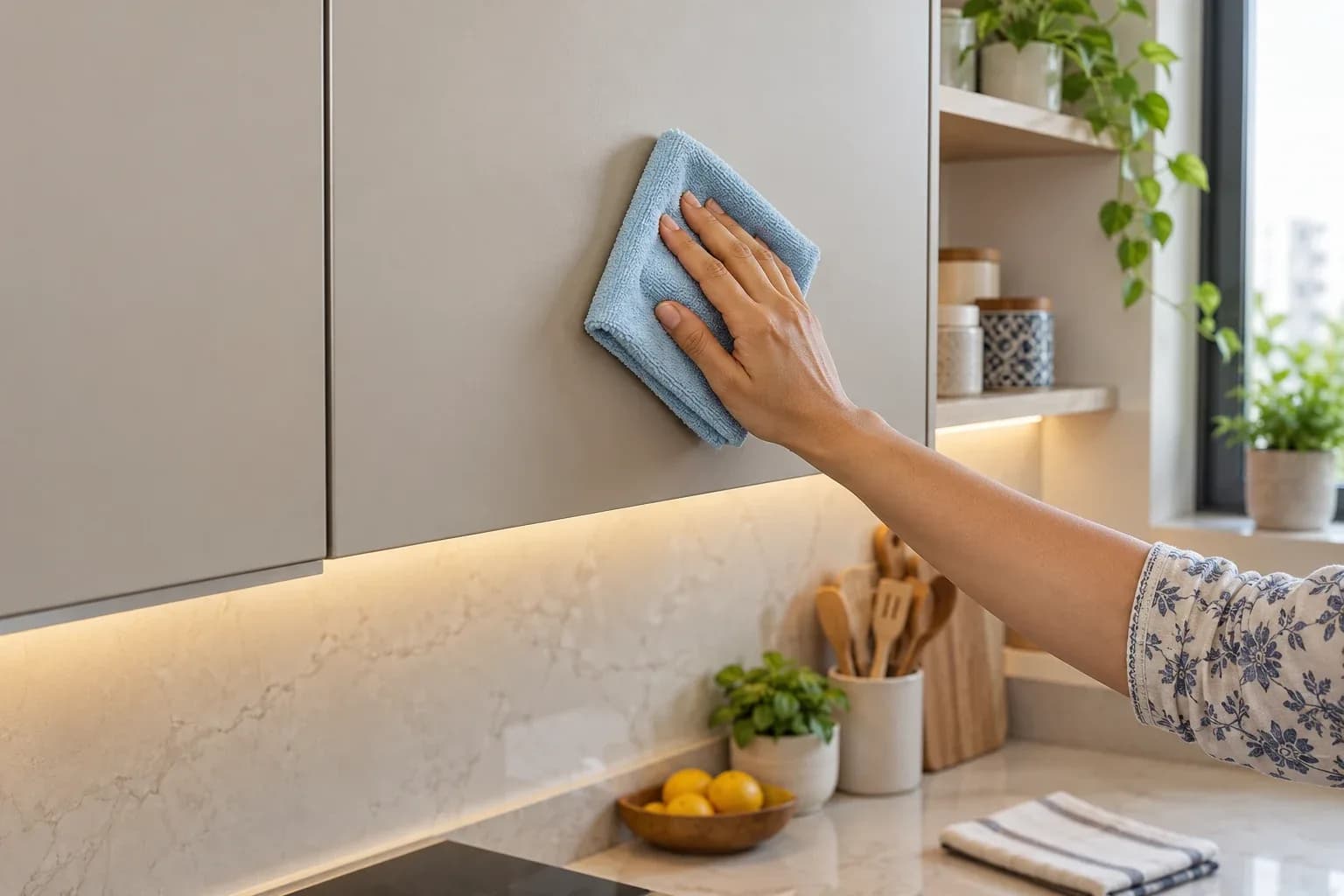
3. Wipe gently across the greasy area. Use a fresh part of the cloth as it picks up residue. Work in manageable sections so the solution does not dry into a film. Avoid repeatedly polishing one small spot, especially on a matte finish.
4. Remove detergent residue with a separate clean cloth lightly dampened with water. Keep liquid away from vulnerable seams and edges. Rinsing means removing residue, not pouring water over a cabinet door.
5. Dry with a fresh non-abrasive cloth and inspect once the face is fully dry. A streak that appears while the surface is wet may be leftover cleaner rather than permanent damage. If the finish changes colour, becomes tacky or loses its sheen, stop and seek product-specific advice.
For stubborn residue, check whether the manufacturer names a stronger cleaner for that exact range. Do not mix products or jump from one solvent to another. Some cleaning guides permit treatments that are unsuitable for another material or finish. Household furniture polish is not a universal solution and can leave an unwanted film.
When the mark remains and how to reduce repeat cleaning
If a gentle clean leaves the same line or dull patch, stop rubbing. A scratch, abrasion or altered sheen will not necessarily disappear with more detergent. Photograph the area under consistent lighting and ask the supplier to distinguish a residue from damage before using a stronger treatment.
Pay attention to the touch points that collect marks: handle surrounds, the edge used to open a handleless door, and cabinets near the cooking area. Use clean handles where fitted and wipe fresh splashes promptly with a suitable cloth. A regular light clean is easier to manage than trying to remove a thick accumulation at once.
For textured surfaces, do not use a hard brush merely to reach the grooves. Follow the product-specific instructions for any brush or specialist cleaner. The texture and surface treatment matter more than whether the sheet is sold as 0.8 mm or 1 mm. Thickness is a buying specification, not permission to scrub harder.
Browse matte laminates and decorative laminates if you are comparing future finishes, but inspect a physical piece under your own lighting before choosing based on fingerprint visibility. No finish should be assumed to need no cleaning.
For an everyday care routine, see keeping laminates looking beautiful. For actual spice discolouration rather than oily marks, use the white laminate spice-stain guide. These are different problems, and the strongest treatment mentioned for one should not automatically become the first step for the other.
Questions people ask us
Can I use dishwashing liquid on laminate cabinets?
A mild liquid detergent may be suitable for ordinary decorative laminate when the product instructions permit it. Use the recommended dilution, remove residue and dry carefully.
Why do fingerprints look worse after cleaning?
A dirty cloth or detergent film may leave streaks. Recheck with a fresh cloth and careful residue removal before assuming the finish is damaged.
Can I use a scouring pad on a matte laminate?
Avoid abrasive pads unless the exact manufacturer instructions explicitly allow the treatment. Scrubbing can alter the sheen and leave a more visible patch.
Are all anti-fingerprint surfaces cleaned the same way?
No. Specialist surface treatments can have their own care requirements. Identify the range and follow its written instructions.
When should I stop cleaning and ask for help?
Stop if the face changes colour or sheen, becomes tacky, peels or still shows a fixed scratch-like mark after gentle cleaning. Ask the supplier to identify the problem.
Shop these categories
Keep reading
- CompareSliding vs hinged wardrobes: which works better for your bedroom?
Match the door movement to your bedroom layout and the way you use your wardrobe.
- CompareFactory-made vs carpenter-made interiors: what justifies the price?
Compare the complete scope and accountability behind an interior quote.
- CareCan peeling kitchen cabinet coverings be repaired?
Identify the covering and the condition of the board before deciding how to repair a peeling cabinet.
- GuidesAlternatives to plywood for furniture in termite-prone homes
Choose furniture materials alongside proper pest inspection, moisture control and documented specifications.
- CareHow to repair a chipped laminate countertop edge
Match the repair to the chip, edge construction and condition of the supporting board.
- CareCan you paint over laminate cabinets? Preparation and limits
Check the existing finish and bond before planning a painted cabinet refresh.