
Beautiful finishes, ordinary days
A kitchen shutter picks up fingerprints. A coffee cup leaves a ring on the desk. Everyday life leaves little reminders on the surfaces we love. Caring for them should feel manageable.
Start gently, remove cleaning residue and finish dry. This page covers decorative laminate on furniture and interior panels; flooring and specialist finishes may need different treatment. Keep the care instructions for your exact brand and finish handy. They take priority whenever a stain needs more than routine cleaning.
The everyday reset
- 1
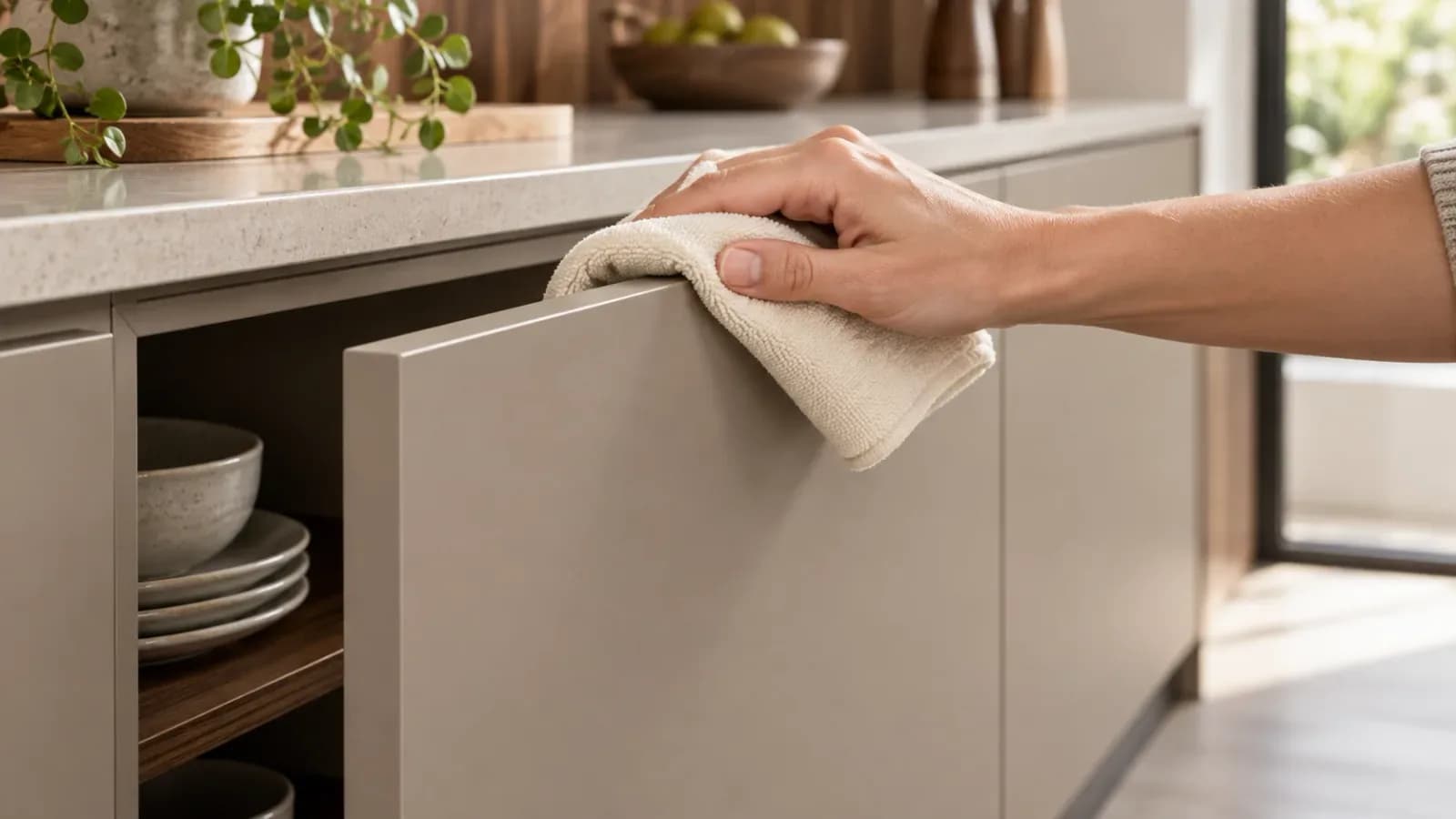
Wipe gently
Use a clean, soft, non-abrasive cloth, lightly dampened. For everyday dirt, use a mild liquid detergent suitable for your finish. Follow the cleaner’s dilution instructions.
- 2
Remove the residue
Wipe again with a fresh cloth dampened with clean water. Keep it well wrung out, especially around seams, handles and exposed edges.
- 3
Finish dry
Use a soft, clean dry cloth to remove remaining moisture. Check the joins rather than leaving water to collect there.
A small mark? Start here.
Fingerprints: try the everyday routine first. Use a clean cloth for the final wipe so you do not spread residue back over the finish.
Fresh tea or coffee: wipe up the spill promptly, then clean gently. A remaining stain needs the method approved for your exact laminate.
Cooking grease: start with a suitable mild detergent, then remove the residue and dry. Do not reach straight for oven cleaner.
An unfamiliar or stubborn mark: pause before trying solvents, bleach or a homemade abrasive paste. Check the manufacturer’s care sheet; advice for one finish may not suit another.
- UseSoft cloth · gentle cleaner
- AvoidScouring pads · harsh chemicals
Look after the edges, too
A surface can look dry while moisture remains along a join. After cleaning, pay attention to edges and seams. Avoid flooding the panel: water that reaches the supporting board can cause swelling.
Keep heat off the finish. Use a suitable trivet or insulated pad beneath hot cookware and heat-producing appliances. Use a chopping board for cutting rather than treating the laminate as a cutting surface.
Know when to stop cleaning. A lifted edge, blister or swollen joint is a repair question, not a stubborn stain. Keep the area dry and ask the installer or manufacturer to assess it before attempting a repair.
Keep the finish you chose
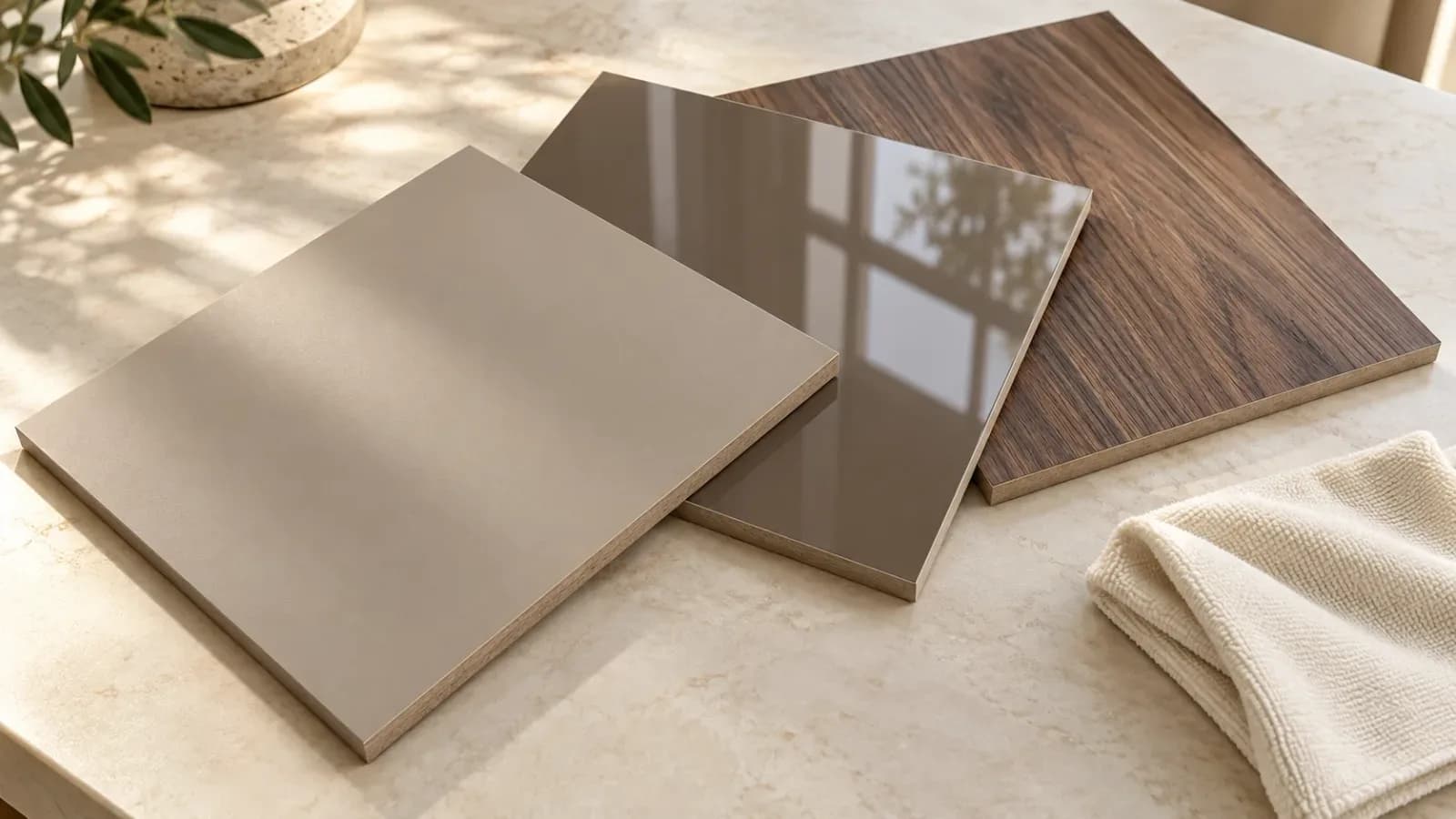
Matte, gloss and textured surfaces do not all respond to the same treatment. Do not use furniture wax or polish as a shortcut to making a surface look new. It can leave a film rather than restore the original finish.
Before a stronger treatment, identify the exact product and read its care guidance. Test an approved cleaner in an inconspicuous area and follow its instructions. If you cannot identify the finish, ask before experimenting.
The routine here draws on Formica care and maintenance and Greenlam care advice. Their specialist stain treatments are not interchangeable across every laminate.
If cleaning is no longer enough and you are considering a new finish, read whether existing furniture can be resurfaced with laminate before planning the work.
Questions people ask us
Can I use the same cleaner on every finish?
Check the exact product’s instructions first. A cleaner recommended for a standard laminate may not suit a specialist coating, metallic finish or another surface material.
What if a mark remains after gentle cleaning?
Stop before scrubbing harder. Photograph the mark and check the manufacturer’s stain guidance for your finish. Tell the supplier which cleaner you have already tried.
Can cleaning fix a swollen or lifting edge?
No. Cleaning will not restore a swollen supporting board or reattach a lifting laminate. Keep the area dry and have the installation assessed before choosing a repair.
What should I do after a spill near a seam?
Wipe it up promptly and dry the area using the care method approved for your finish. Pay attention to seams and edges, and ask the installer to assess any swelling or lifting that appears.
What information should I keep for future care questions?
Keep the brand, design code, finish name and manufacturer’s care instructions with the order details. If a mark appears, record what happened and which cleaner you used before asking for advice.
Shop these categories
- 1 mm Decorative Laminates
- Wood Laminates
- Laminates
- Matte Finish Laminates
- Solid Colour Laminates
- Glossy Finish Laminates
Keep reading
- AnswersCan you use laminates over existing furniture?
Keep the furniture you like, but check the old surface before choosing its new finish.
- ProjectsA calm study corner: a laminate design concept
A concept study in warm wood-look laminate and soft neutral storage, ready to adapt to a real room.
- CalculatorsWardrobe laminate calculator: turn measurements into a plan
Measure the right surfaces, understand the estimate and take a clearer brief to your carpenter.
- BrandsMerino laminates: find the finish that belongs in your room
A considered way to choose Merino designs, compare samples and keep the final specification clear.
- DesignsWarm neutrals for a beautifully balanced home
Ivory, taupe and sand: three considered palettes for rooms that feel warm, connected and easy to live in.
- CompareMatte vs glossy laminates: find your kind of luxury
Soft, understated surfaces or a polished glow? Find the laminate finish that feels right in your home.