
Start gently, and identify the surface
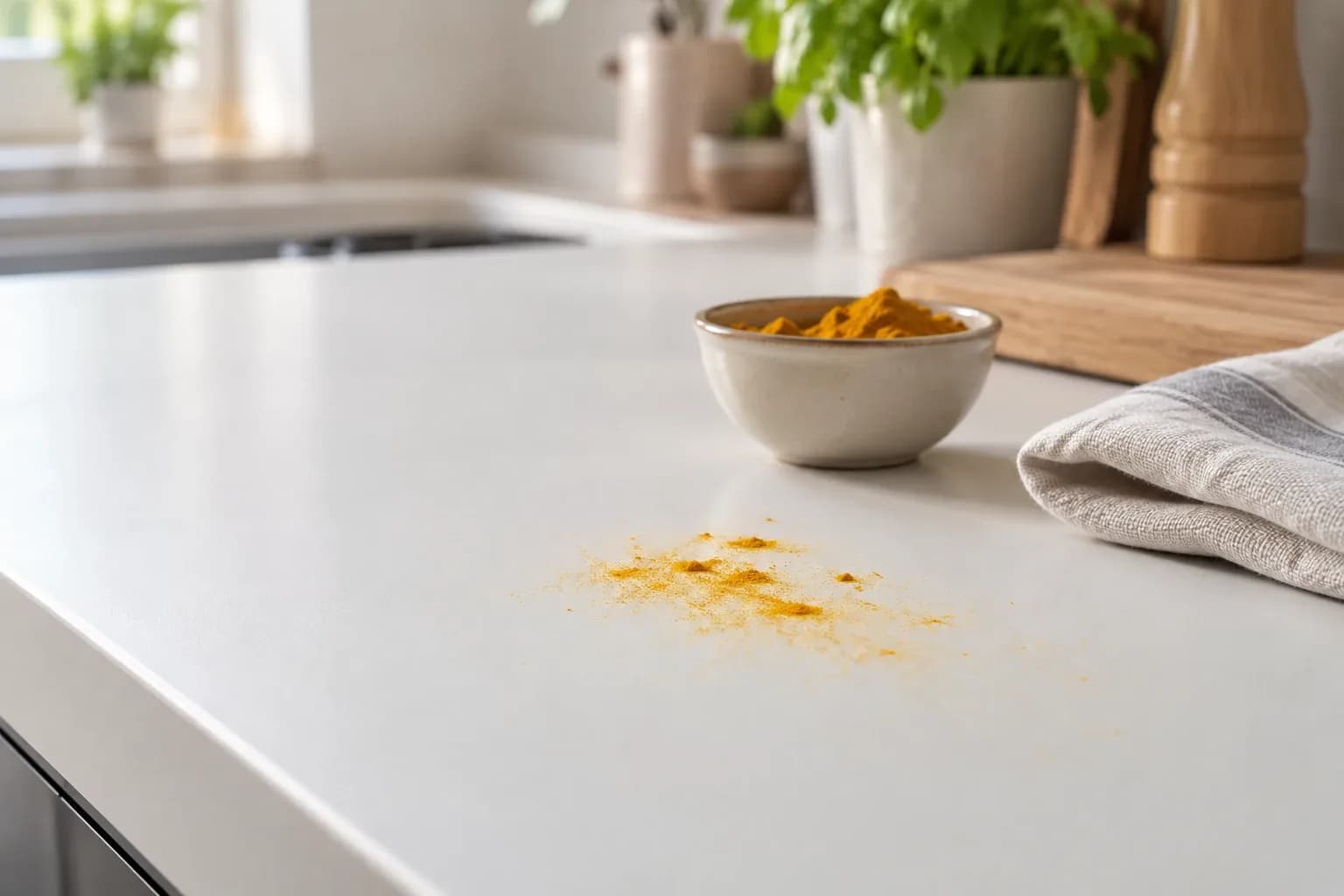
A yellow spice mark on a white surface can make you want to reach for the strongest cleaner immediately. Pause first. Confirm that the surface is laminate and identify the manufacturer and finish if you can. Advice for a laminate countertop may not suit an acrylic shutter, painted panel or a different decorative finish.
For a known laminate, begin with its routine cleaning instructions. Formica's general care process uses a soft nonabrasive cloth, a mild cleaning product, a clean-water wipe and drying. It also warns against flooding seams. That is a sensible reference for the products it covers, not a guarantee that every spice stain will disappear.
If you do not know what was installed, look for the invoice or ask the fabricator for the product code. A photograph of the mark, the full panel and a nearby edge can help the supplier understand the problem. Keep a note of anything already applied, including how long it was left on the surface.
For normal upkeep after the mark is addressed, see our everyday laminate care guide.
A gentle first cleaning pass
- 1
Lift away loose food
Remove loose residue gently with a soft cloth. Avoid dragging gritty particles across the surface. Do not scrape with a knife or a rough pad.
- 2
Use the approved mild cleaner
Follow the product’s care instructions and cleaner label. Work gently with a clean, nonabrasive cloth; avoid repeatedly scrubbing the same spot with increasing pressure.
- 3
Wipe away cleaner and dry
Remove cleaner residue with a clean cloth dampened with water, then dry the surface. Keep water away from seams and edges rather than leaving it pooled on the panel.
- 4
Inspect before doing anything stronger
Look at the dry surface in the same light. If colour remains, stop and check the manufacturer’s stain-removal guidance for that exact finish before trying another product.
If the yellow mark remains
A persistent mark is not an instruction to keep scrubbing. Greenlam's care manual warns that abrasive pads and scouring products can dull or scratch a decorative surface. It also cautions that prolonged bleach exposure can discolour laminate. Product-specific instructions matter, especially with a glossy finish.
Avoid treating a social-media cleaning recipe as universal advice. Baking soda, bleach, solvents and abrasive “eraser” products are not interchangeable, and a method approved for one range may be unsuitable for another. Do not mix cleaners. Ask the manufacturer or supplier what is appropriate for the particular product and follow the stated directions.
If the area looks dull, has a changed texture or has developed an edge problem, stop the cleaning attempt. Describe that change when seeking advice. It may need assessment as surface damage rather than another round of stain removal. Our guide to marks, scratches and lifting edges helps you describe those different problems.
Keep the aim realistic: remove the residue while preserving the finish. There is no promise that every old turmeric stain can be removed completely. For future cooking spills, follow the surface's normal care routine promptly and use suitable protection where the product requires it.
Manufacturer references: Formica care guidance and Greenlam care and fabrication manual. If replacing a damaged panel becomes necessary, compare white laminate shades and solid-colour laminates using the original code as your starting point.
Questions people ask us
Can every turmeric stain be removed from white laminate?
No complete removal can be promised. The result depends on the actual surface, the mark and any previous cleaning or damage. Start with the product’s care instructions.
Should I use bleach on the stain?
Do not use it by default. Check the exact manufacturer’s instructions first; prolonged bleach contact can discolour some laminate surfaces.
Is baking soda always safe on laminate?
No universal method is suitable for every finish. Abrasive cleaning can change the appearance, so follow product-specific instructions instead of an unverified recipe.
Why should I dry the surface after cleaning?
Drying removes remaining moisture. Avoid leaving water around seams and edges, where it can reach the material beneath the decorative face.
What information should I send the supplier?
Send the product code if available, photographs of the mark and surrounding panel, and a list of cleaners already used. Mention any dullness, texture change or lifting edge.
Shop these categories
Keep reading
- AnswersWill glossy wardrobe doors cause distracting reflections?
A simple room check helps you decide whether a glossy wardrobe will feel bright or visually busy.
- IdeasHow to match wardrobe laminates with your floor and wall colour
Three calm colour directions, plus a way to check that your wardrobe belongs in the room.
- CompareWhite, ivory or wood-look laminate inside wardrobes?
Choose an interior that makes the wardrobe pleasant to open, easy to organise and consistent with the room.
- CompareAcrylic vs laminate for kitchen cabinets: which should you choose?
Choose kitchen shutters around the finish you love, the construction behind it and the care you can live with.
- GuidesWhich laminate brand should you choose for a modular kitchen?
A practical way to compare brands without losing sight of the kitchen you are actually building.
- Compare0.8 mm vs 1 mm laminate: what should you check before buying?
The 0.2 mm difference is easy to measure. Choosing the right product takes a few more questions.