
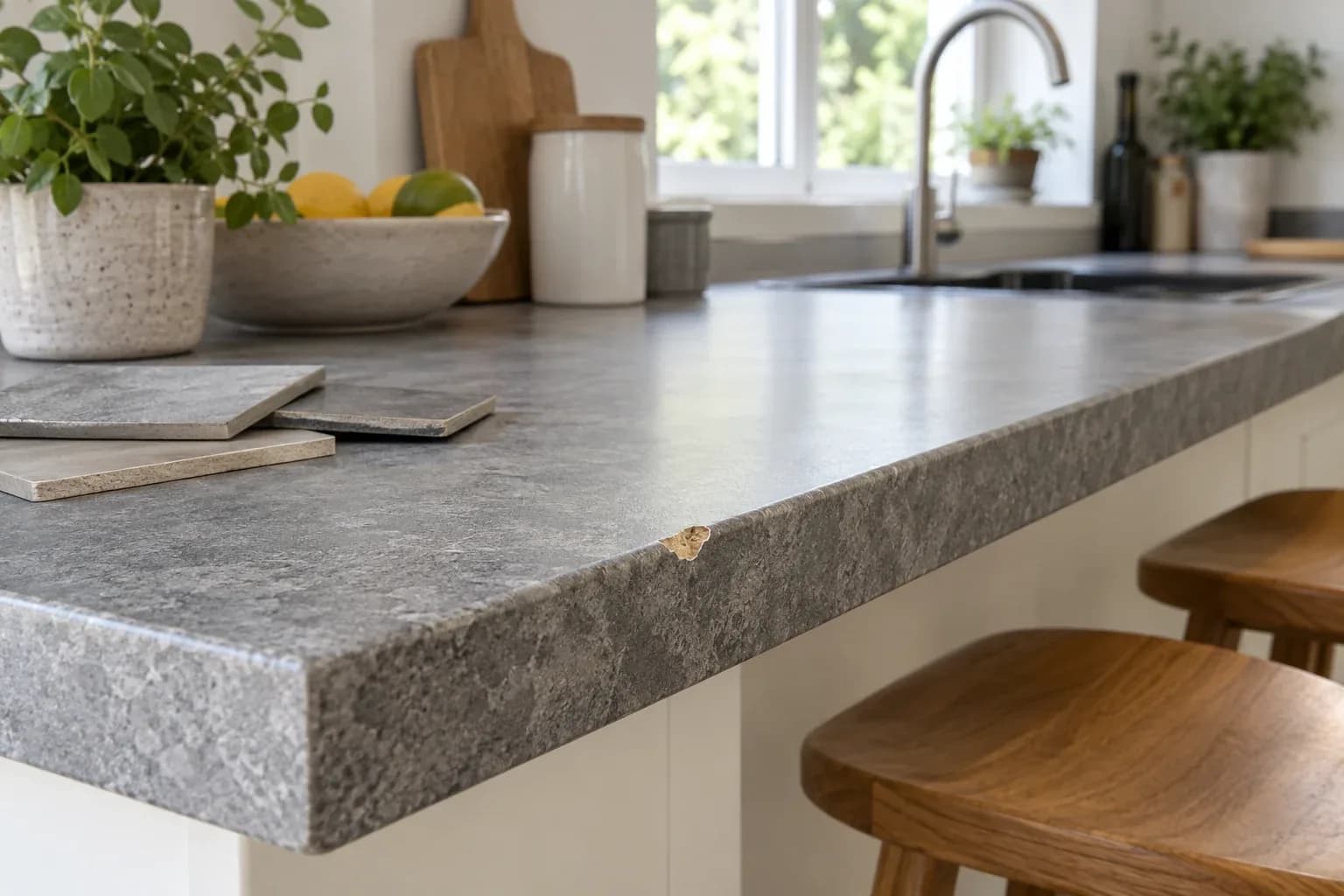
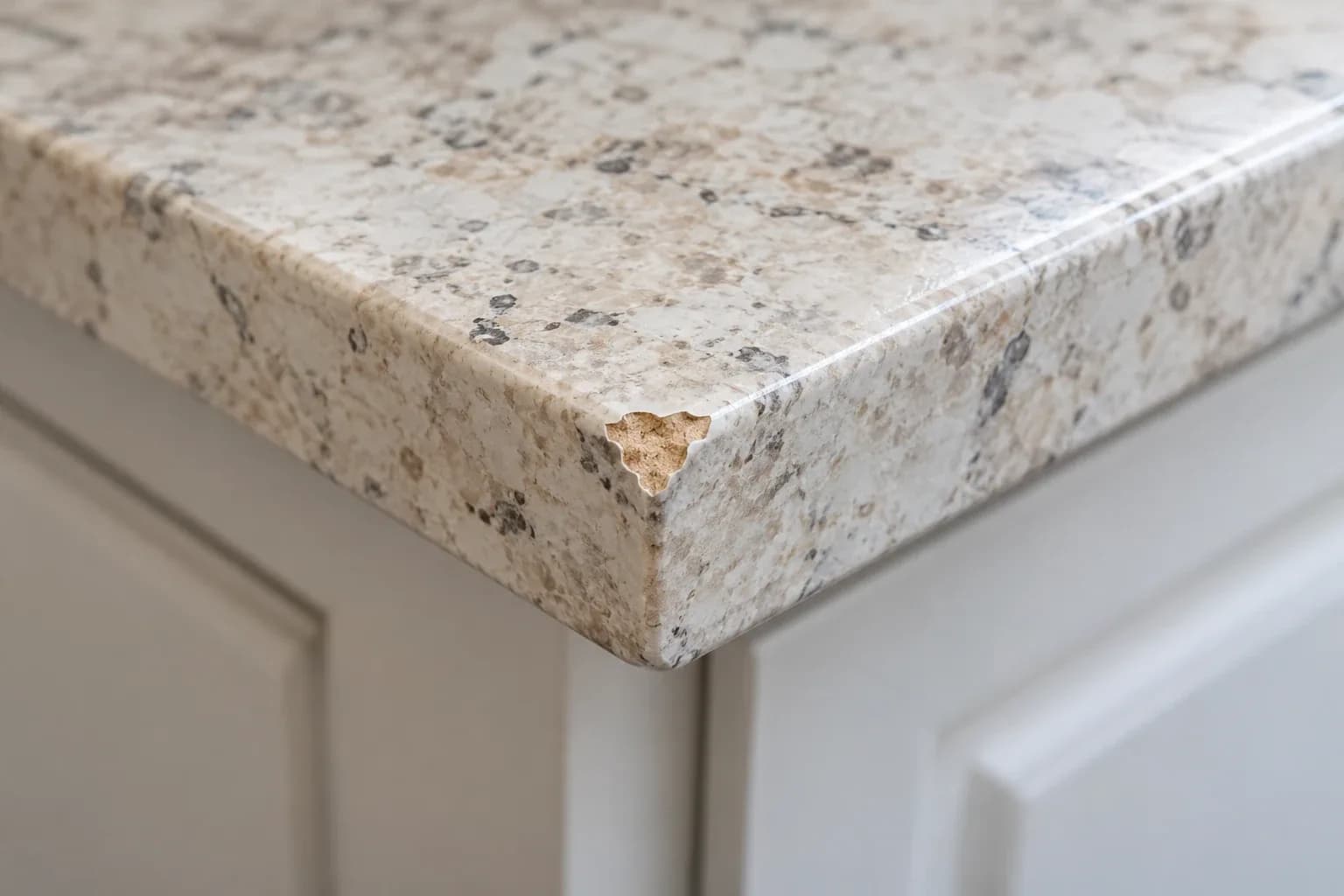
First decide whether the chip is cosmetic or deeper
A small chip in a laminate countertop may be suitable for a compatible repair filler. Damage confined to a separate front edge strip may be better addressed by replacing that strip. If the supporting board is swollen, soft or broken, a cosmetic patch is not enough. Have a countertop fabricator assess the construction before filling the opening.
Keep the damaged area dry and prevent anyone catching a hand or cloth on a sharp edge. Avoid pulling at loose laminate or testing the damage with a knife. Photograph the chip from the front, above and underneath where accessible. Include the whole edge profile so a fabricator can tell whether it is a separate strip or a continuous formed surface.
Find the original laminate code and manufacturer if possible. A Merino, Greenlam or other branded decor name helps identify the face, but it does not identify the adhesive or supporting board. Keep those questions separate. The repair must suit the installed countertop, not just a colour that appears close in a photograph.
This guide focuses on a missing piece at a countertop edge. If the face is lifting without a chip, the problem is bond failure rather than a simple gap. For broader surface damage, see our laminate marks and edge-fix guide.
Choose among filler, replacement edging and a new top
Small chip with sound material beneath: A repair product intended for high-pressure laminate may reduce the visible defect when the damage falls within its stated limits. Kampel's SeamFil information describes a product for chips, seams and other laminate imperfections. This is an example of a specialised system, not a recommendation to use any filler or a claim that Hinch stocks it.
Read the exact product instructions and safety data before application. Check compatible surfaces, damage-size limits, required cleaner, ventilation and curing time. Solvent-based repair systems can affect adjacent PVC, painted or wood-finished surfaces, so protect those areas according to the instructions and use a professional if you cannot control the application safely. Do not substitute an unapproved solvent or general wood putty.
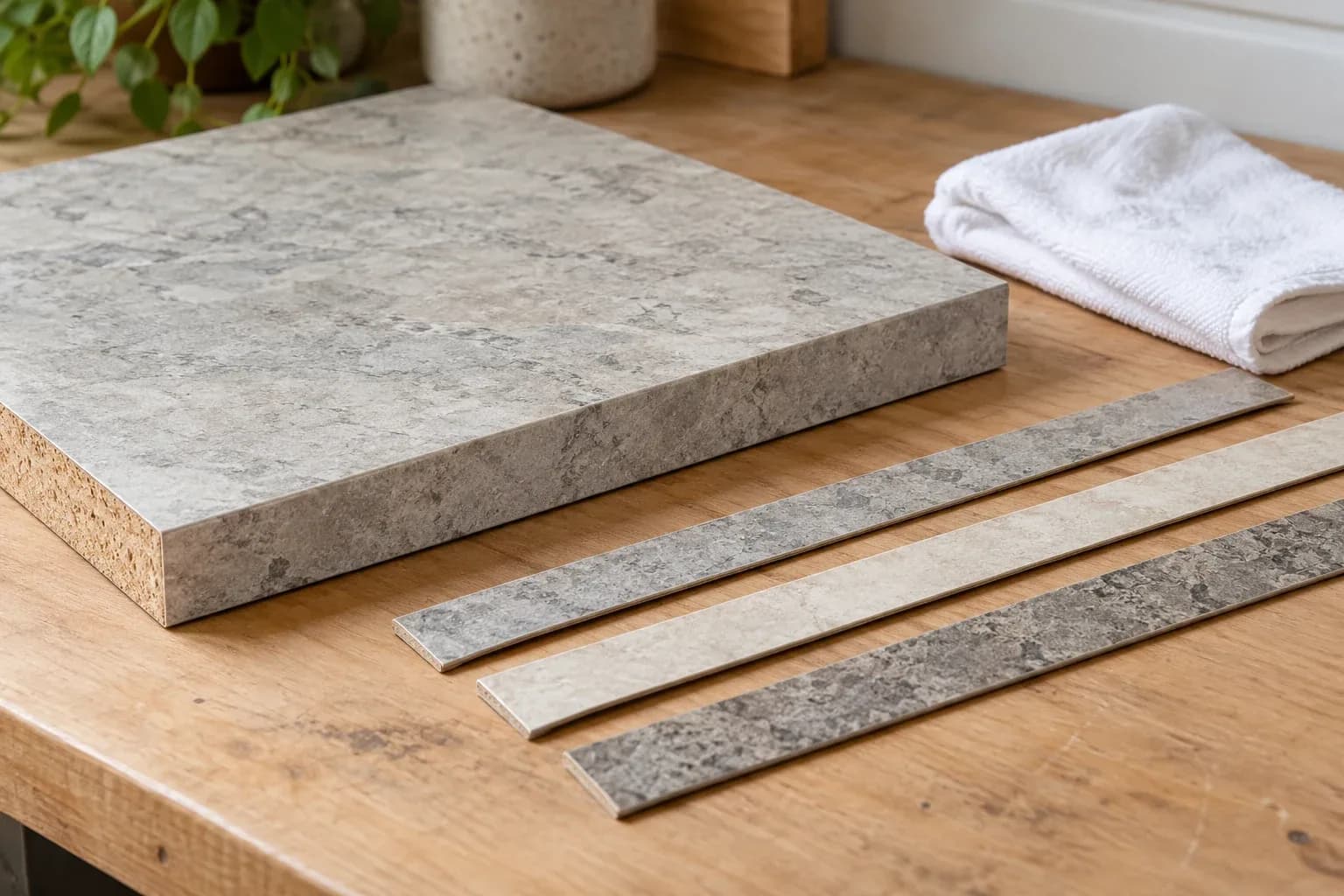
Damage to a separate edge strip: A fabricator may be able to remove and replace the strip if the board is sound and a suitable match is available. Formica's repair guidance describes replacing laminate edging with compatible adhesive. A rounded, continuous postformed edge is a different construction and should not be treated as a detachable strip.
Swelling, movement or missing substrate: Ask for a structural assessment and repair or replacement proposal. Covering a wet or weakened core can conceal continuing damage. Inspect nearby sink joints and other moisture sources before the finish is repaired.
Expect an honest discussion about colour and sheen. A repaired chip may remain visible, especially in a plain colour, glossy finish or strongly directional pattern. Ask to see the proposed colour match before work begins rather than accepting a promise of an invisible result.
Protect the repair and make a replacement decision carefully
Once the repair has cured for the period specified by its manufacturer, resume cleaning according to the countertop guidance. Do not cut directly on the patched area or use it as a place to strike a utensil. Protect edges from repeated impacts and keep water from sitting beside seams. If the chip is beside the sink, have the installer check the joint rather than relying on the filler to solve a separate leak.
Do not sand the surrounding decorative face to blend a repair. Abrasion can remove the protective surface and leave a much larger dull patch. Likewise, household polish cannot replace missing laminate. Stop if the repair opens again, the edge moves or the board continues to swell.
For a replacement, compare the full work: removal, substrate condition, finish, edging, cut-outs and installation. Browse decorative laminates and wood-look laminates for appearance, then have the fabricator confirm the correct horizontal-use grade. A nominal 1 mm decorative sheet describes only the face; it is not a complete countertop specification.
Keep the original code, repair product details and date with your kitchen records. That information is useful if the colour match needs adjustment or another section later requires work. A good decision balances the extent of the damage, the remaining condition of the top and how visible a repair will be in your kitchen.
Questions people ask us
Can every chipped laminate edge be filled?
No. Filler is only an option when the material beneath is sound and the damage falls within the repair product limits. Swollen or broken board needs assessment.
Can a separate laminate edge strip be replaced?
Often a fabricator can assess that option. A continuous rounded edge is different, and replacement depends on its construction and available finish match.
Will the repair be invisible?
Not necessarily. Colour, pattern and sheen differences can remain visible. Review the proposed match before approving the work.
Can I sand the chip smooth?
Do not sand the surrounding decorative face. You can damage the protective layer and turn a small defect into a larger worn area.
Does repair filler fix water damage beneath the surface?
No. Identify the moisture source and have a swollen or weakened substrate assessed before applying a cosmetic repair.
Shop these categories
Keep reading
- CompareSliding vs hinged wardrobes: which works better for your bedroom?
Match the door movement to your bedroom layout and the way you use your wardrobe.
- CompareFactory-made vs carpenter-made interiors: what justifies the price?
Compare the complete scope and accountability behind an interior quote.
- CareCan peeling kitchen cabinet coverings be repaired?
Identify the covering and the condition of the board before deciding how to repair a peeling cabinet.
- CareHow to remove fingerprints and grease from laminate cabinets
Clean oily marks without turning a small smudge into a damaged finish.
- GuidesAlternatives to plywood for furniture in termite-prone homes
Choose furniture materials alongside proper pest inspection, moisture control and documented specifications.
- CareCan you paint over laminate cabinets? Preparation and limits
Check the existing finish and bond before planning a painted cabinet refresh.