

A wood-and-ivory palette can connect rooms without making every piece identical. Choose a small family of undertones, decide where each finish repeats and review the actual materials under each room's light. The strongest link is a coherent relationship between fixed surfaces and furniture.
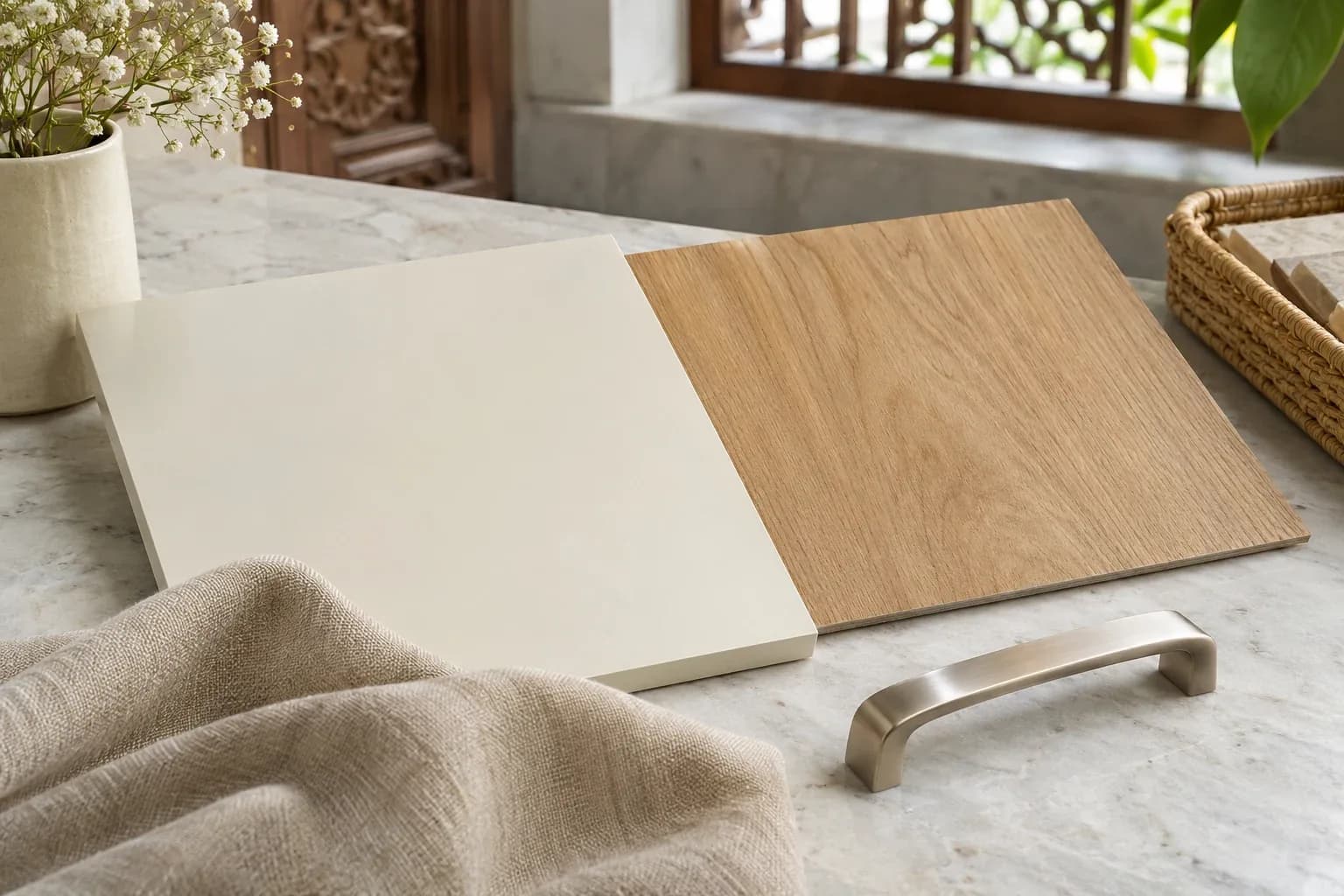
Begin with the elements that remain
List the floor, doors, retained furniture and stone surfaces in each room. Their warm, cool, red or grey tendencies affect which ivory and woodgrain samples feel comfortable nearby. Put the real samples together rather than matching photographs on different screens.
Choose one wood tone to repeat where continuity matters, then identify where another existing timber must remain. A room can contain several woods, but the contrast should look deliberate. Avoid ordering a near-match from a small image and discovering that two adjacent browns have very different undertones.
Give ivory and grain different jobs
Ivory can form a quiet background on larger cabinet faces while woodgrain adds direction or warmth to selected surfaces. The reverse can work when the room needs a stronger timber presence. Draw the boundary on complete elevations, including exposed ends, shelves and door returns.
Check pattern scale and direction. A small oak sample does not reveal how its repeat appears across a tall wardrobe. Mark grain arrows on the cutting plan and decide how adjoining fronts relate. Keep the room's visual emphasis clear rather than adding the same accent to every possible surface.

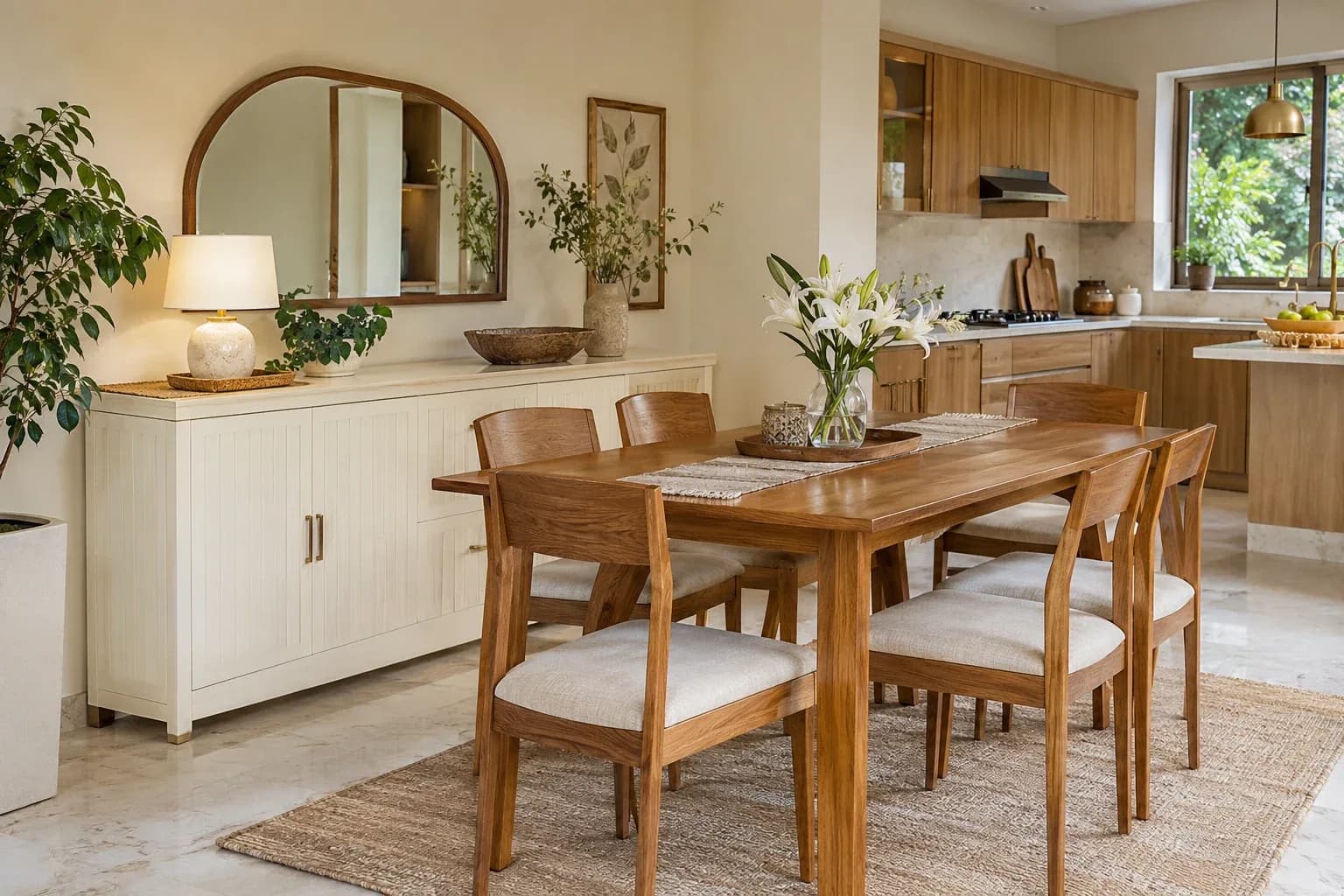
Check each room and preserve the references
The same ivory can look different under a warm bedroom lamp and a brighter kitchen task light. Review samples in both conditions and beside the actual wall colour. Maintain continuity through a few repeated choices while allowing lighting and function to guide the rest.
Record supplier codes, finish, grain direction and the locations where each material is used. Keep signed samples and any batch references supplied. If a product changes during a later room phase, compare the substitute with retained physical material before committing to it.
## A practical check before you decide
Create one small palette board for each room with floor, wall, ivory and wood samples. Place the boards together to judge continuity, then view each in its own room. Mark the repeated material and the intentional exceptions on the finish schedule before ordering the first batch.
## Check the view from the doorway
Stand where the living room and passage are visible together. Hold the ivory sample against the wall beside the doorway and place the wood sample at the height of the cabinet front. Then swap rooms and look back. A wood grain that feels calm on a low console can dominate the view when repeated on a full wardrobe. Try keeping the wardrobe ivory and repeating the wood on a recessed handle or an open niche.
Photograph the samples in each position and label the photos with the room and product code. Return in the evening with the lights you actually use switched on. If one ivory looks pink beside the floor, compare another undertone in that room before changing the finish schedule for the whole home.
Questions people ask us
Must every room use the same woodgrain?
No. Repeat selected tones deliberately and review any contrast against the fixed elements.
Will the same ivory look identical everywhere?
Lighting and surrounding colours can change its appearance.
Should I match a retained timber from a photograph?
Use a physical sample or an in-person comparison where possible.
Why record grain direction?
Orientation changes the way a large surface reads and how adjacent fronts relate.
What should I retain for later rooms?
Keep approved samples, product codes, finishes and the location-based material schedule.
Shop these categories
Keep reading
- White, ivory or wood-look: which laminate should I use inside wardrobes?
- How to identify wood veneer or laminate before refinishing
- Why does wardrobe laminate look different from the showroom sample?
- Wood veneer vs laminate for bathroom cabinets: which handles moisture better?
- Acrylic vs laminate for kitchen cabinets: which should you choose?
- Which laminate brand should I choose for my modular kitchen?