
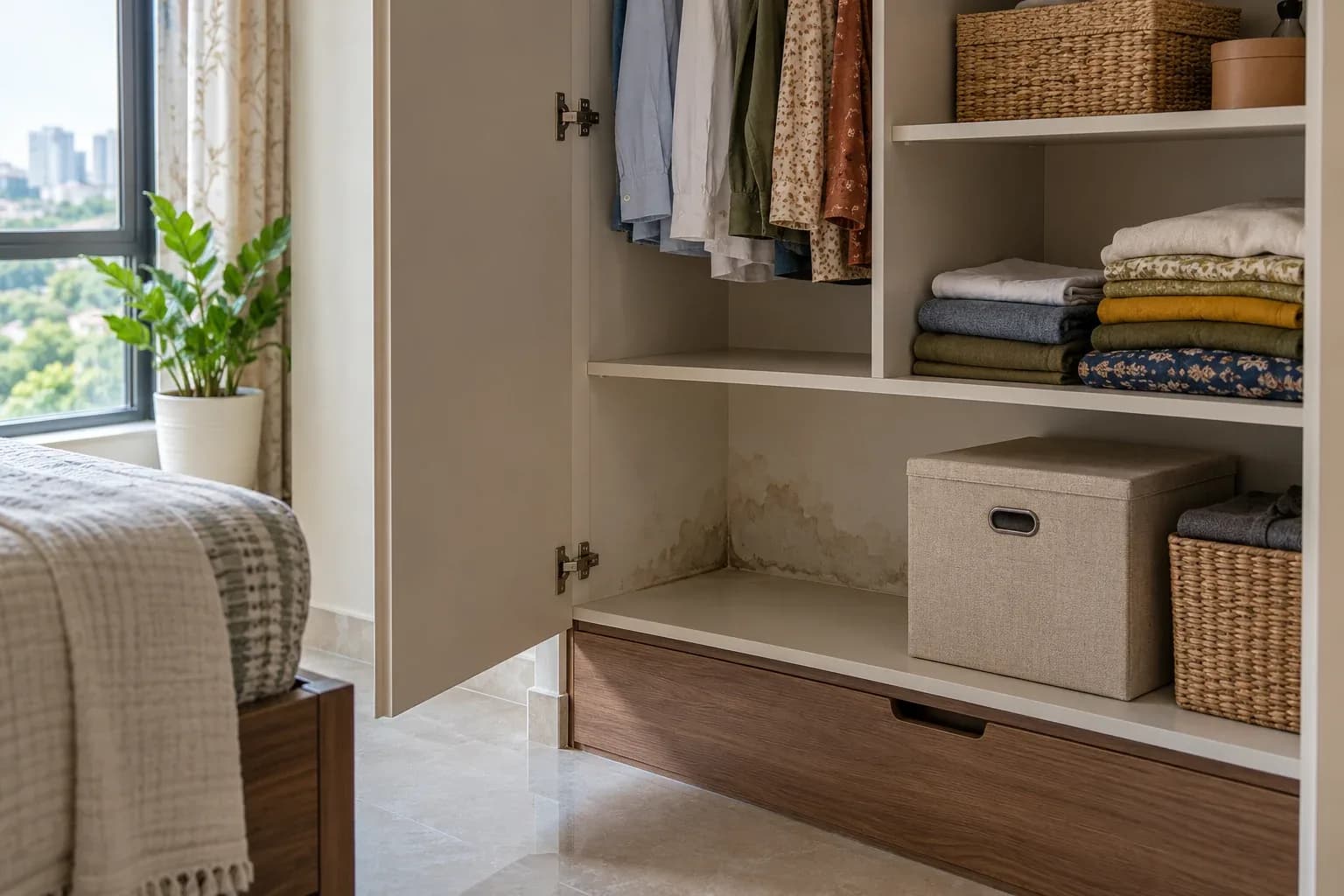
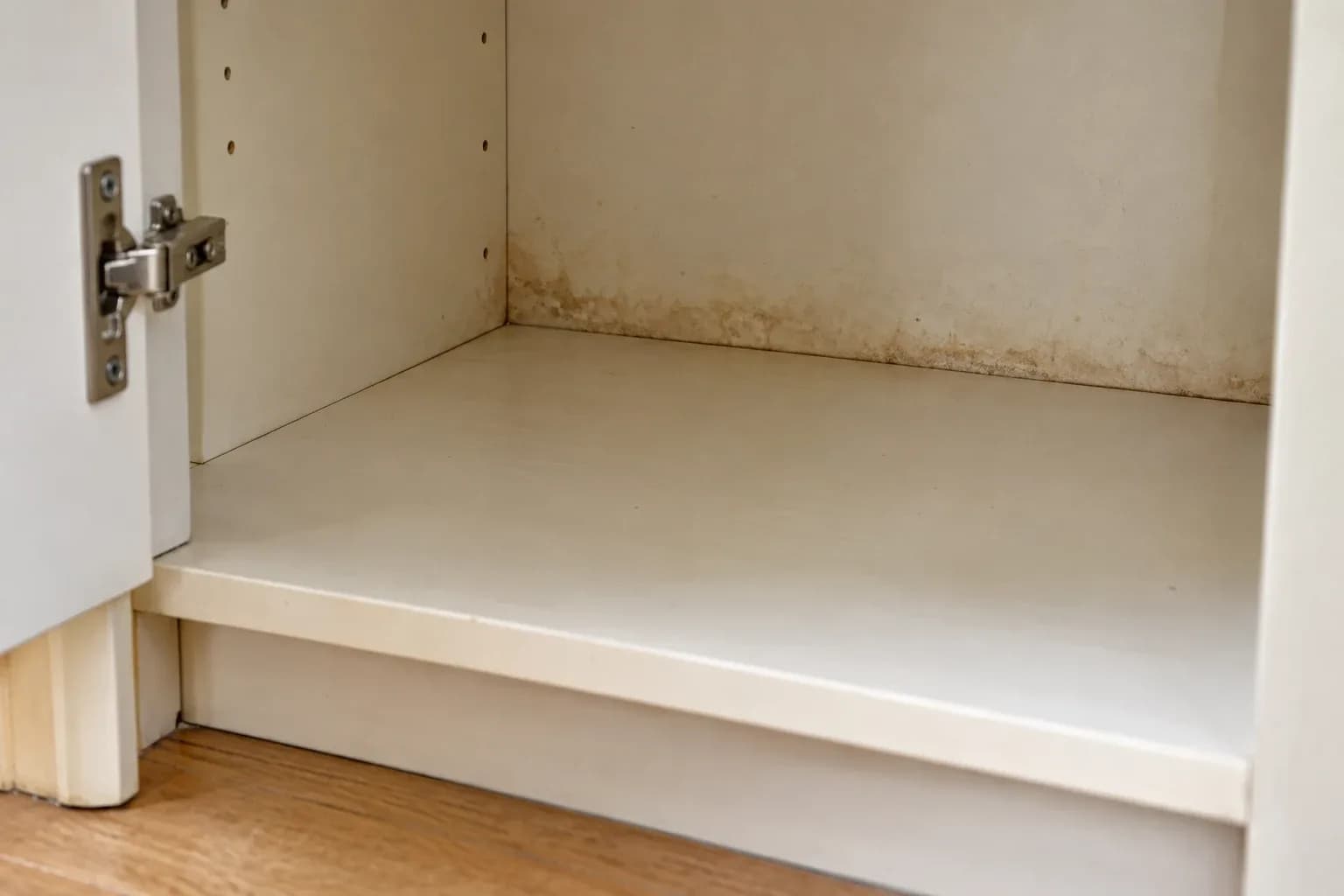
Map the damp before changing the cupboard
Empty the affected shelf and note whether the smell is in the clothes, the shelf lining or the wall behind it. Look for a tide mark at floor level, a patch below a pipe or an area that worsens after rain. Record the date and take a photo. If the wardrobe shares a wall with a bathroom, tell the person inspecting it; do not assume condensation is the cause.
A fitted unit may hide the most useful part of the wall. If the back feels damp or there is a persistent musty smell without a visible source, arrange an inspection rather than cutting into the lining yourself. A tall freestanding wardrobe may be anchored for safety, so do not pull it forward without checking how it is secured.
Give dry clothes and the wall room to breathe
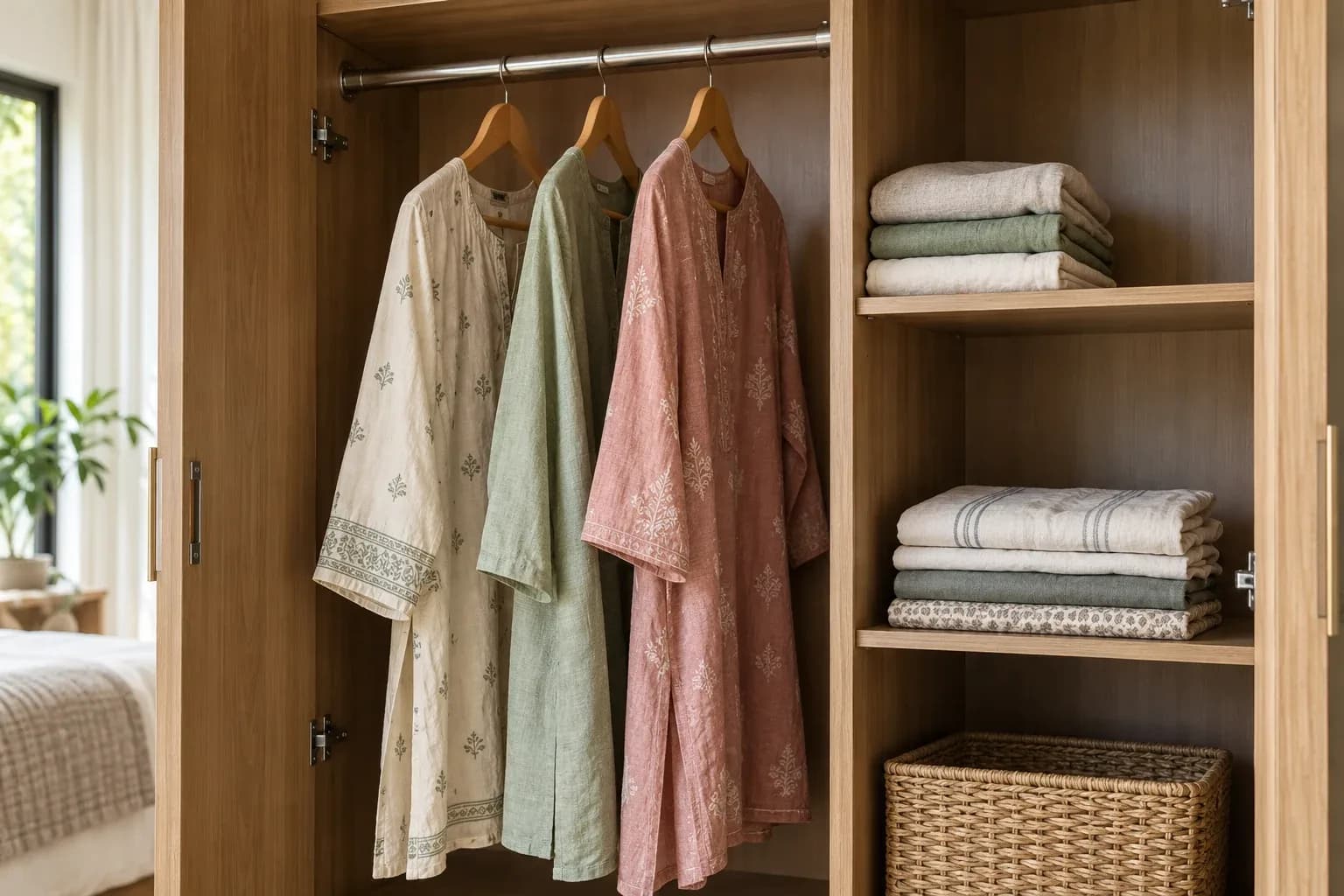
Let laundry dry completely before putting it away. When refilling a dry cupboard, keep a little space behind folded stacks, avoid tightly packed hanging rails and leave planned vents clear. A storage bin pushed against the back can undo the benefit of a ventilation opening. Keep the heaviest seasonal bedding where you can remove it periodically to inspect the shelf.
The room matters as much as the cabinet. Note whether moisture builds up after drying laundry indoors or after showers nearby. Check that existing ventilation is working as intended. A moisture absorber may help with a small enclosed space, but repeatedly emptying it is a reason to investigate the source, not proof that the cupboard is fixed.
Refit only after the cause is addressed
If water is coming through the wall, have the leak or building defect corrected and the area dried before installing a replacement back. For suspected hidden mould, extensive growth or significant water damage, get an experienced professional to assess the area. Avoid sanding affected board or sealing over growth to hide it.
Once the area is dry, agree on how it can be inspected later. A removable access section, accessible services or a revised storage layout may be more useful than covering every surface permanently. Put a small group of clean, dry clothes back first. Check the shelf, wall and clothes again after the conditions that previously triggered the smell.
If a fitter proposes replacing the lining, ask for a sketch of the proposed wall-to-cabinet arrangement. A 6 mm back panel and an 18 mm cabinet side, for example, identify components; neither dimension describes an airflow path. An empty gap behind a panel does not by itself show where air enters and leaves. Mark any vents, maintenance opening and pipe access on the sketch so the next owner can understand the arrangement too.
For a related example of tracing moisture to its source, see Can a water-damaged cabinet under the sink be repaired, or should it be replaced?.
Questions people ask us
Will changing the laminate stop the smell?
Only changing the surface leaves any damp wall, leak or wet contents in place. Find and correct the source before ordering replacement finishes.
Should I drill vents into the back?
Do not drill blindly into a fitted unit or wall. First establish what is behind it and whether the proposed air path leads to a genuinely dry space.
Can I store damp clothes in an open wardrobe?
Dry them outside the storage area first. An open front does not ensure fabric packed into a stack will dry evenly.
Why is the problem worse behind one unit?
That location may have a cooler wall, restricted airflow or local water entry. Compare nearby surfaces and the timing of the damp before diagnosing it.
When should I seek outside help?
Arrange assessment for recurring or hidden growth, a suspected leak, extensive contamination or significant water damage. Keep a record of the affected area and when it changes.
Shop these categories
Keep reading
- CompareBlockboard vs plywood for tall wardrobe doors: how do you reduce bending?
A tall wardrobe door needs a complete panel and hardware specification. Choosing blockboard or plywood is only one part of keeping the shutter straight and usable.
- AnswersWhy does wardrobe laminate look different from the showroom sample?
Lighting, viewing angle and the size of the finished wardrobe can change how a laminate looks. Check the material and the room before deciding it is the wrong finish.
- AnswersHow to identify wood veneer or laminate before refinishing
Check the surface material without damaging it before sanding, staining or repainting furniture.
- GuidesHow do you verify plywood quality before it disappears under laminate?
Verify two different things: the identity of the material delivered and the condition of the particular pieces going into your furniture. An invoice can help with the first. It cannot explain a loose layer in the panel in front of you.
- GuidesCabinet refacing or replacement: when is keeping the old kitchen worth it?
Keep the cabinet boxes if they are dry, firm and arranged the way you cook.
- CompareFloating vs floor-standing bathroom vanity: what should decide your choice?
A floating vanity works when the wall can take the specified load and the plumbing fits behind the storage. A floor-standing unit can offer more room below the basin and conceal low pipework. Decide from a measured view of your wall and a drawer opened to its full depth.