
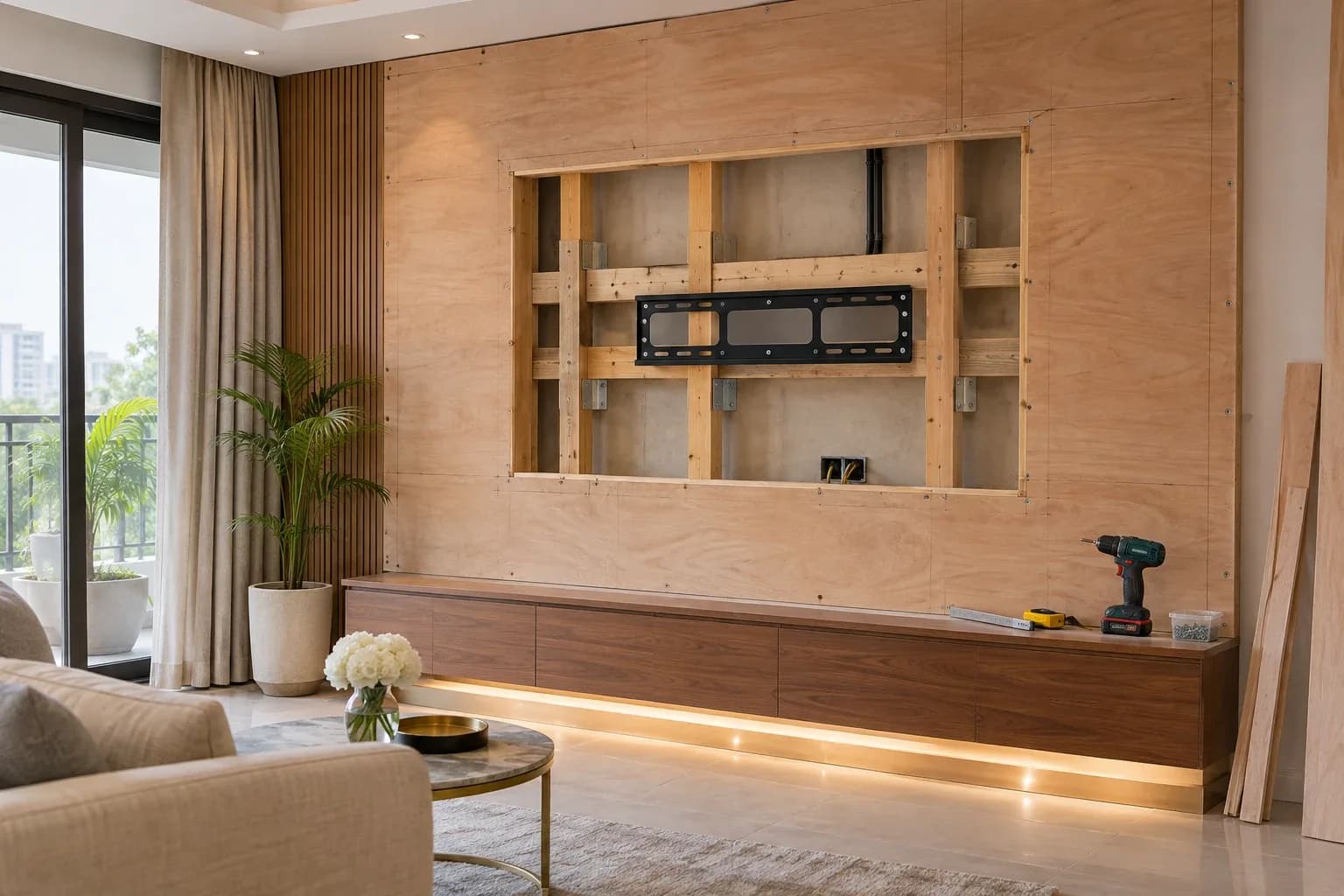
Practical guidance
A TV can be mounted on a feature wall only when the complete fixing system is suitable for the TV, bracket and wall construction. A plywood panel's presence alone does not establish that. Have the installer identify what carries the load before drilling through a finished decorative face.
## Distinguish the finish from the structure
A TV wall may contain decorative laminate, plywood, a framed void, masonry or other materials. The visible panel might be cladding rather than the intended mounting structure. Ask for a section showing each layer and where the bracket fixings engage.
Do not use the television's screen size as the load specification. Record its actual weight, bracket compatibility and any additional attached equipment. An articulating mount also changes the load arrangement as the screen moves away from the wall. The approved mounting instructions must account for that use.
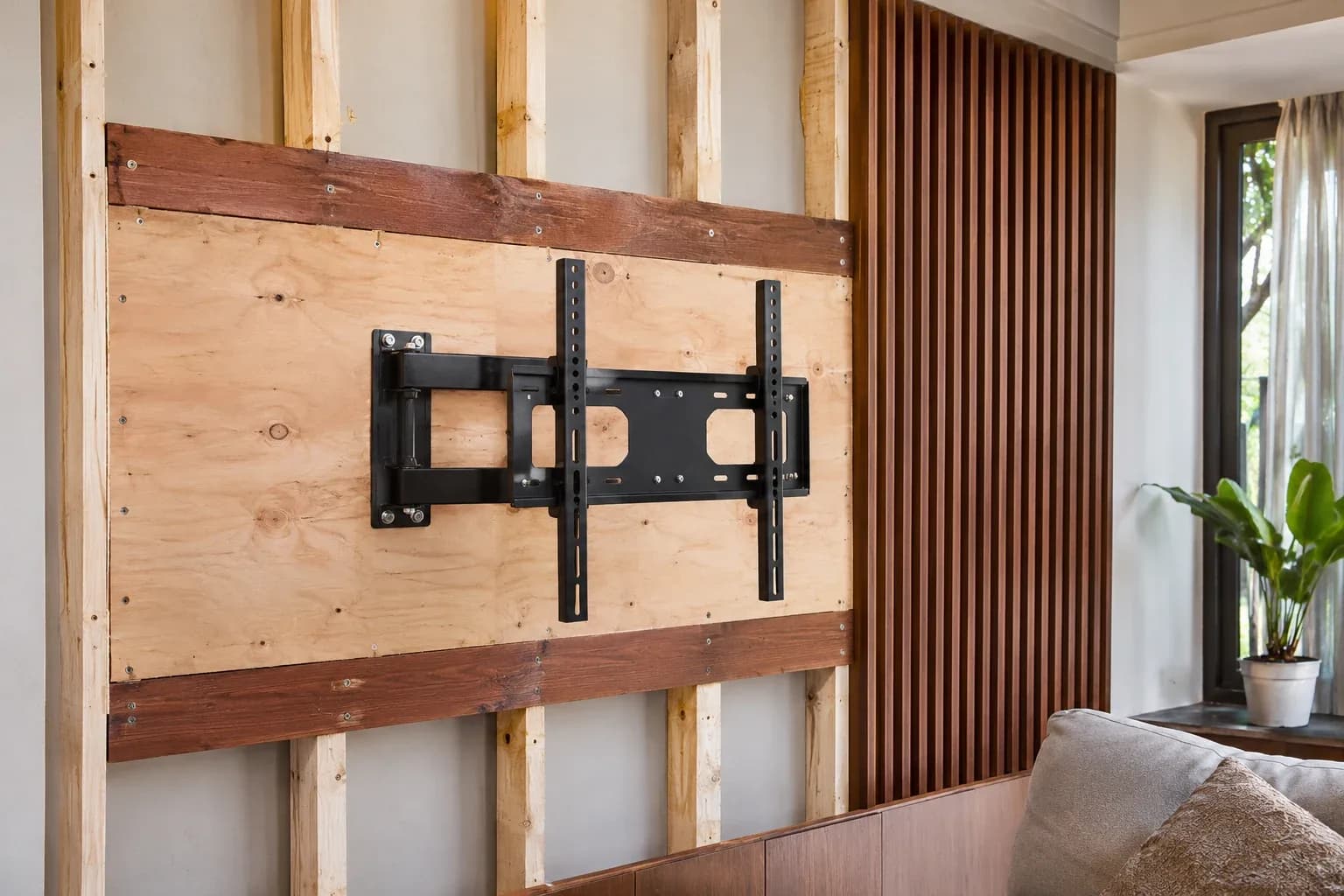
Coordinate bracket, substrate and anchors
Obtain the exact bracket manual and identify the permitted wall types and fixing details. A mounting method intended for timber studs should not be transferred casually to a hollow panel or a different masonry wall. Have a competent installer assess the actual substrate and any reinforcement needed.
Locate concealed cables and pipes before drilling. Keep bracket attachment separate from the cabinet's decorative screw pattern. If the feature panel needs openings for structural fixings, detail those before fitting the finished face so the work does not damage its appearance.
Allow for adjustment and future removal
Check the screen's movement, cable bend space, ventilation and service release. The person installing the TV should be able to reach the bracket locks and connections without forcing the feature panel. Include soundbars and sockets in the layout.
At handover, retain the bracket reference, mounting instructions and photographs of the structural fixing arrangement taken during installation. If the TV is changed later, reassess the new assembly rather than assuming a larger or heavier screen can use the old arrangement unchanged.
## A practical check before you decide
Ask the installer for a section drawing identifying wall construction, reinforcement where needed, bracket, fixings and decorative layers. Attach the TV and bracket model references. Approve that coordinated detail before the panel is closed or drilled, and retain the concealed-condition photographs.
## Require a fixing plan before covering the wall
Record the TV model, its weight and the bracket type, including whether it is fixed, tilting or extends from the wall. Give the installer the manufacturer's instructions. Ask them to identify the wall construction and the complete path by which the load reaches a suitable structure. The decorative panel and its own attachment need to be assessed as part of that system.
Have the installer specify the backing, anchors and fixing positions appropriate to the actual wall and bracket. Do not choose a generic screw length from an online example. Check for concealed services before drilling. If the wall cannot be confidently identified or the panel's support is uncertain, obtain the appropriate assessment before proceeding.
## Coordinate the finish around the bracket
Show the bracket movement, sockets, cables and removable panels on the elevation and section. Check whether an extending bracket pulls against cables or exposes an unfinished area behind the TV. Include enough access for connecting and later removing the equipment without damaging decorative edges.
Keep photographs of the backing and fixing arrangement before the face is closed. At handover, ask the installer to demonstrate the permitted adjustment and confirm that cables remain free through that movement. Retain the TV and bracket instructions with the installation record. A clean-looking feature wall should come from a documented fixing and access plan, rather than an assumption that any plywood face can carry the equipment.
## Do not treat panel thickness as a load rating
An 18 mm plywood reference, such as the section discussed in Greenply’s material guide, identifies a board section. It does not establish that a TV bracket can safely be attached to that panel. The wall, backing, panel attachment, bracket and anchors must be assessed together for the actual equipment and movement.
Questions people ask us
Is plywood automatically strong enough?
Its grade, thickness, support, attachments and the complete load arrangement require assessment.
Does a 55-inch TV define the bracket load?
Use the actual TV weight and compatibility requirements, not screen size alone.
Can a swing-out bracket use the same detail as a fixed one?
Follow the specific bracket's mounting requirements and assess the wall accordingly.
Should hidden services be checked?
Yes, before drilling or fixing through the feature wall.
What should I keep after installation?
Retain model references, fixing details, instructions and photographs of the concealed structure.