
| Laminate | Wood veneer | |
|---|---|---|
| What you are choosing | A manufactured decorative surface made with paper and resin. | A thin layer of real wood applied to a supporting board. |
| The look | A repeatable design; wood effects, plain colours and other patterns. | Natural grain variation; sheet selection and matching affect the result. |
| Everyday care | Usually the simpler choice for routine wiping; follow the product care sheet. | Care depends on the wood and protective finish; ask for written instructions. |
| Scratches and repairs | Resists normal wear, but deep damage cannot be sanded away like wood. | Some finishes can be repaired; thin veneer needs a skilled assessment. |
| What to compare in a quote | Sheet, board, adhesive, edges and fitting. | Veneer, board, matching, finishing, edges and fitting. |
| A useful starting point | Frequently handled furniture where easy upkeep is the priority. | Feature furniture where real wood grain is the priority. |
Two finishes. Two ways to shape your home.
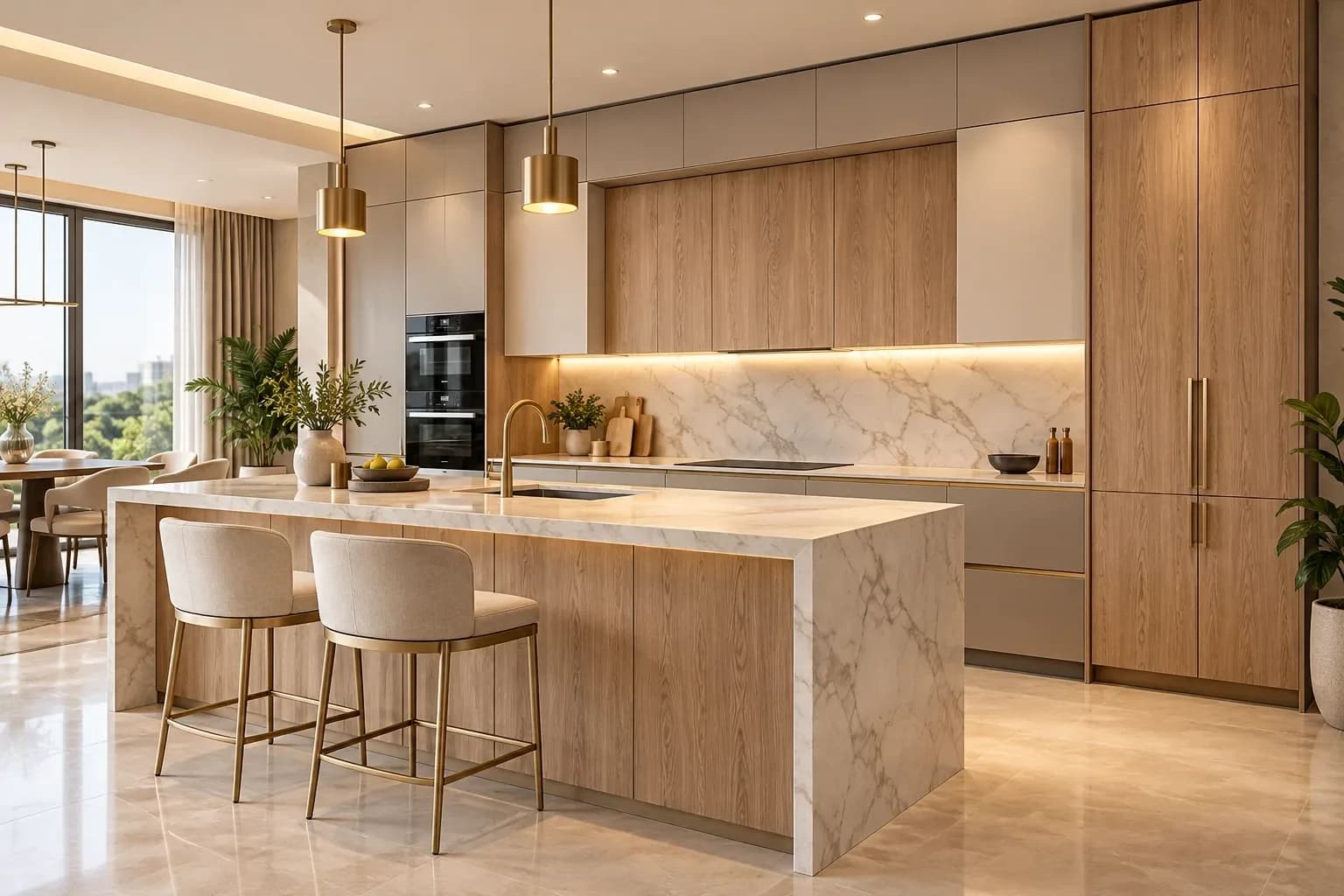
Love a warm wood look in your kitchen? Laminate offers wood-inspired designs and solid colours with straightforward everyday care. You can mix finishes across cabinets and the island to create a coordinated space.
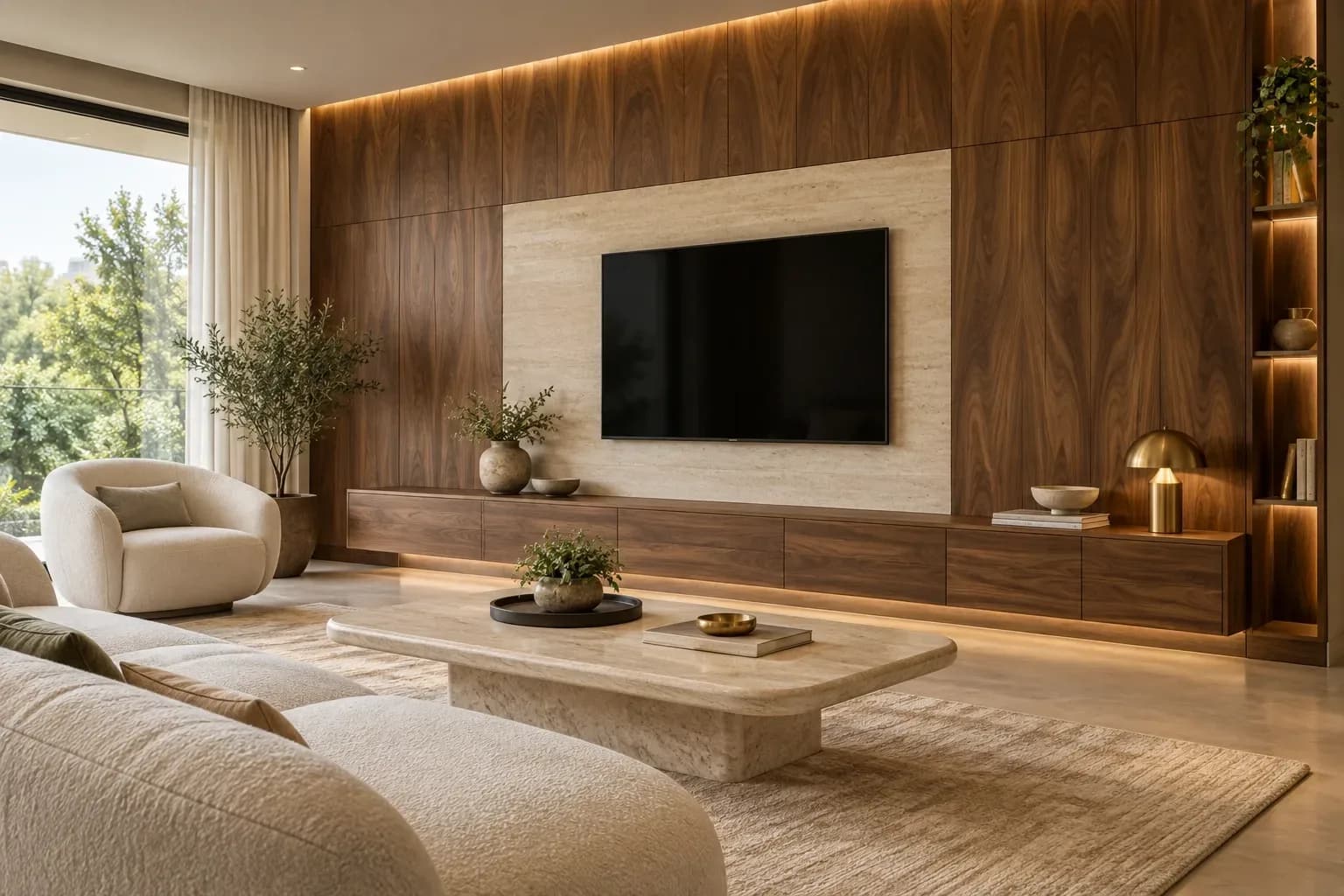
If natural grain is what draws you in, wood veneer is worth a closer look. On a living-room feature wall or cabinet, the choice of sheets and how their grain lines up become part of the design.
Both can look premium. Choose based on where you’ll use the finish, the upkeep you’re comfortable with and the total finished cost.
Choose a finish for each room
A family wardrobe: think about the doors you touch every morning, the handles, and the light across the shutters. Laminate is worth considering when easy upkeep comes first. A wood-look design can give you the colour you want without choosing a natural veneer for every face.
A living-room cabinet: if the grain is the reason you love the piece, look at veneer. Ask to see the selected sheets together, not just one small swatch. The way the grain continues across the doors is part of the design, so agree on the arrangement before cutting.
Kitchen shutters: start with the actual product specification, the board and the edge detail. An attractive face does not make the whole cabinet waterproof. Ask how the installer will handle edges, cut-outs and areas exposed to splashes.
You can use both finishes in one home. For example, put the finish you most want on a visible feature cabinet and choose a simpler surface for storage elsewhere. Compare physical samples together so the colours feel intentional.
Compare the cost of the finished job
Two quotes can look close until you notice that one includes finishing and the other stops at the raw sheet. Before choosing, ask both suppliers to price the same piece of furniture with the same dimensions and underlying board.
For laminate, ask for the brand, design code, finish, sheet size and thickness. Then check whether adhesive, edge treatment, cutting and fitting are included. A price per square foot is not directly comparable with a price per sheet until you convert both to the same basis.
For example, Formica’s Fineline laminate is listed at 1.0 mm thick, in a 2440 × 1220 mm sheet. Use the exact product specification when comparing quotes; other ranges can differ.
For veneer, ask which wood or veneer range is being supplied, how the sheets will be matched, and whether the price includes the specified protective finish. Request a finished sample: the colour you approve should represent the surface you expect to receive, rather than unfinished wood.
Keep hardware separate when comparing finishes. A change in hinges, handles or drawer channels can hide the actual cost difference between the two surfaces.
A useful question: “What is the total for these exact shutters, finished and fitted, and what is excluded?” Put the answer beside each quote. We have left out a fixed price range here because product selection and finishing can change the comparison substantially.
What everyday care really involves
Laminate is usually the less demanding option for routine cleaning. Use a soft cloth and follow the manufacturer's instructions for the specific surface. Formica's general care guidance calls for a mild cleaner, a clean-water wipe and drying. Avoid leaving water around seams; moisture can reach the board underneath.
For veneer, the protective finish matters as much as the wood. Ask the supplier which cleaner is suitable and what to do about spills or marks. Do not assume that a treatment recommended for one polished surface suits another.
Neither material is scratch-proof. With laminate, do not expect a deep scratch to sand out without damaging the decorative layer. A veneer repair may be possible, but its thin wood layer makes sanding a job for someone who knows the product. Get advice before trying it yourself.
If low-effort cleaning is your main concern, say that at the start. It is more useful than choosing from a photograph and discovering the care routine after installation.
Further reading: Formica care guidance, Greenlam on wardrobe laminates and veneers and Formica on veneer and laminate. Follow the care instructions for the product and finish you buy.
Take these five questions to the showroom
1. Can I see a larger sample? Look at the grain or pattern over the size of a door, not only a small chip. 2. What will this look like at home? Compare samples beside your flooring and wall colour in daylight and evening light. 3. What exactly is included? Write down the board, surface, edge detail, finishing and fitting in each quote. 4. What happens if it gets damaged? Ask about repair, replacement and the availability of a matching sheet. 5. What am I approving? Keep the design code or agreed veneer selection, finished sample and written specification together.
Start by browsing laminates and natural veneers. For the cabinet underneath, explore plywood and boards. Choose the complete combination, not just the surface that looks best on screen.
If you are choosing laminate for furniture you already own, read what needs checking before resurfacing an existing piece. The condition of the old surface can change the scope of the work.
Questions people ask us
Is wood-look laminate the same as veneer?
No. Wood-look laminate uses a manufactured decorative design. Wood veneer is a thin layer of real wood. Similar colours can look convincing in a photograph, so compare physical samples before deciding.
Which is cheaper once the furniture is finished?
Laminate is generally the more budget-friendly starting point, but compare actual installed quotes. Veneer selection, matching and finishing can change the total. A premium laminate and a simpler veneer specification may not follow the usual price order.
Does either finish make a cabinet waterproof?
Do not assume that it does. The board, joints, edges, cut-outs and installation all matter. Ask for the water-exposure limits of the complete specified construction, especially around sinks.
Can I mix laminate and veneer in the same room?
Yes. For example, you might choose veneer for a feature cabinet and laminate for nearby storage. Compare the undertones, grain scale and sheen using real samples, and make the change look deliberate rather than trying to achieve an exact match.
What should I ask for when comparing laminate and veneer quotes?
Ask for separate details for the surface, supporting board, edges, labour and any finishing work. Keep the approved samples and exact specifications with the quotes so you compare the complete furniture, not just the decorative sheet.
Shop these categories
- 1 mm Decorative Laminates
- Natural Veneers
- Laminates
- Matte Finish Laminates
- Solid Colour Laminates
- Glossy Finish Laminates
Keep reading
- AnswersCan you use laminates over existing furniture?
Keep the furniture you like, but check the old surface before choosing its new finish.
- ProjectsA calm study corner: a laminate design concept
A concept study in warm wood-look laminate and soft neutral storage, ready to adapt to a real room.
- CalculatorsWardrobe laminate calculator: turn measurements into a plan
Measure the right surfaces, understand the estimate and take a clearer brief to your carpenter.
- BrandsMerino laminates: find the finish that belongs in your room
A considered way to choose Merino designs, compare samples and keep the final specification clear.
- DesignsWarm neutrals for a beautifully balanced home
Ivory, taupe and sand: three considered palettes for rooms that feel warm, connected and easy to live in.
- CareHow to keep your laminates looking beautiful
A soft cloth. A gentle routine. Small habits that keep the finish you chose looking its best.