
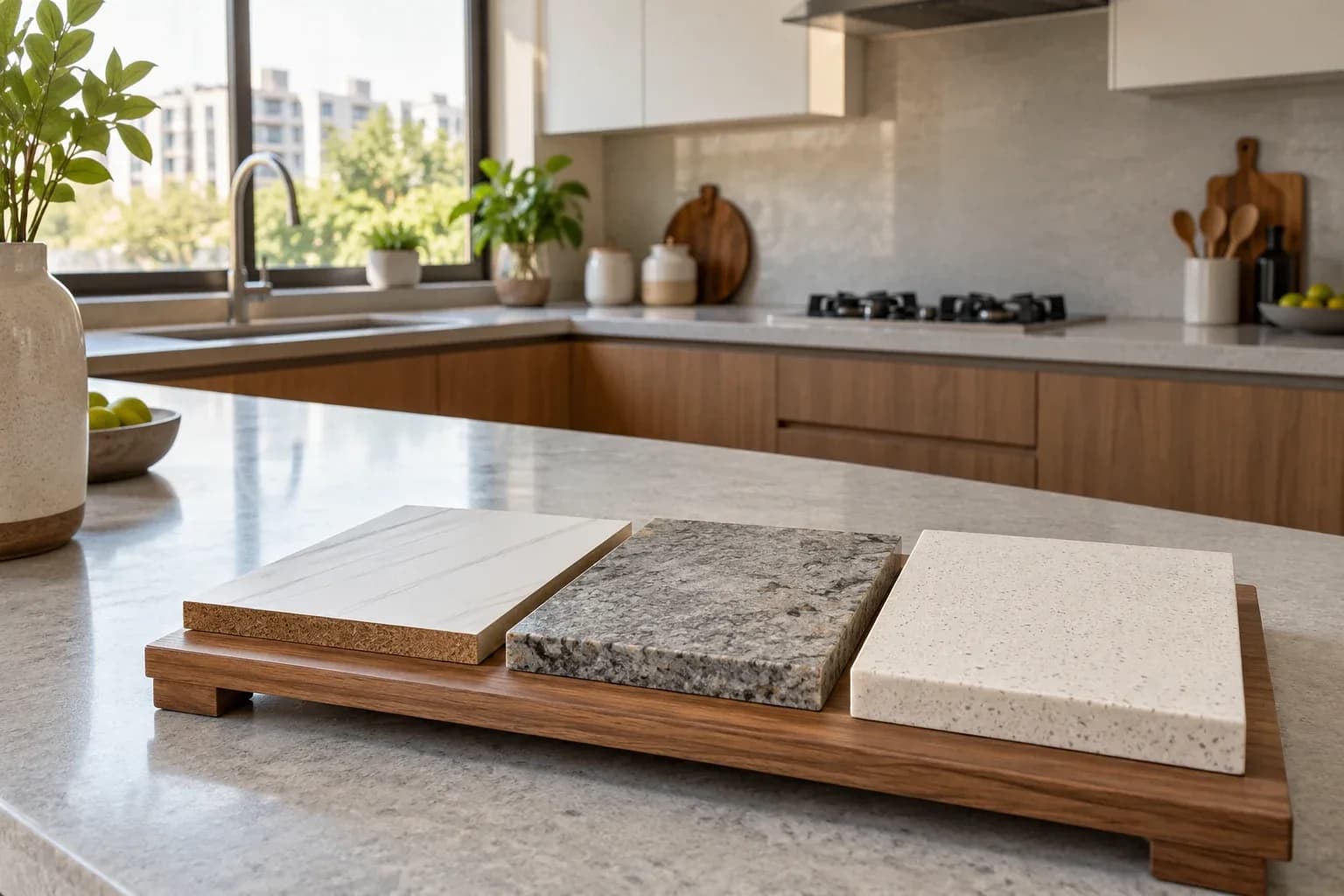
| Laminate countertop | Stone or engineered quartz | |
|---|---|---|
| Construction | A specified decorative surface bonded to a suitable supporting board. | Natural stone is quarried; engineered quartz is a manufactured composite. |
| Heat habits | Use trivets. Hot cookware can burn or damage the surface. | Use the specific supplier’s heat guidance; quartz also needs protection from sudden heat. |
| Water details | Exposed core, sink cut-outs and joints need careful detailing. | Joints, cut-outs and surrounding cabinetry still need sound installation. |
| Maintenance | Gentle cleaning; avoid abrasive scrubbing and standing water at seams. | Care varies by material. Natural stone and quartz do not share one sealing rule. |
| Repair limits | A small edge repair may remain visible; swelling can require replacement. | Chips and cracks need a material-specific assessment by a fabricator. |
Choose the complete countertop system
Laminate can be practical when the selected grade is approved for horizontal worktops, the supporting board and edges are properly specified, and your household is comfortable using trivets and chopping boards. It deserves consideration for a dry preparation area or a kitchen where its care requirements fit everyday use. A decorative sheet chosen only by colour is not enough to specify a countertop.
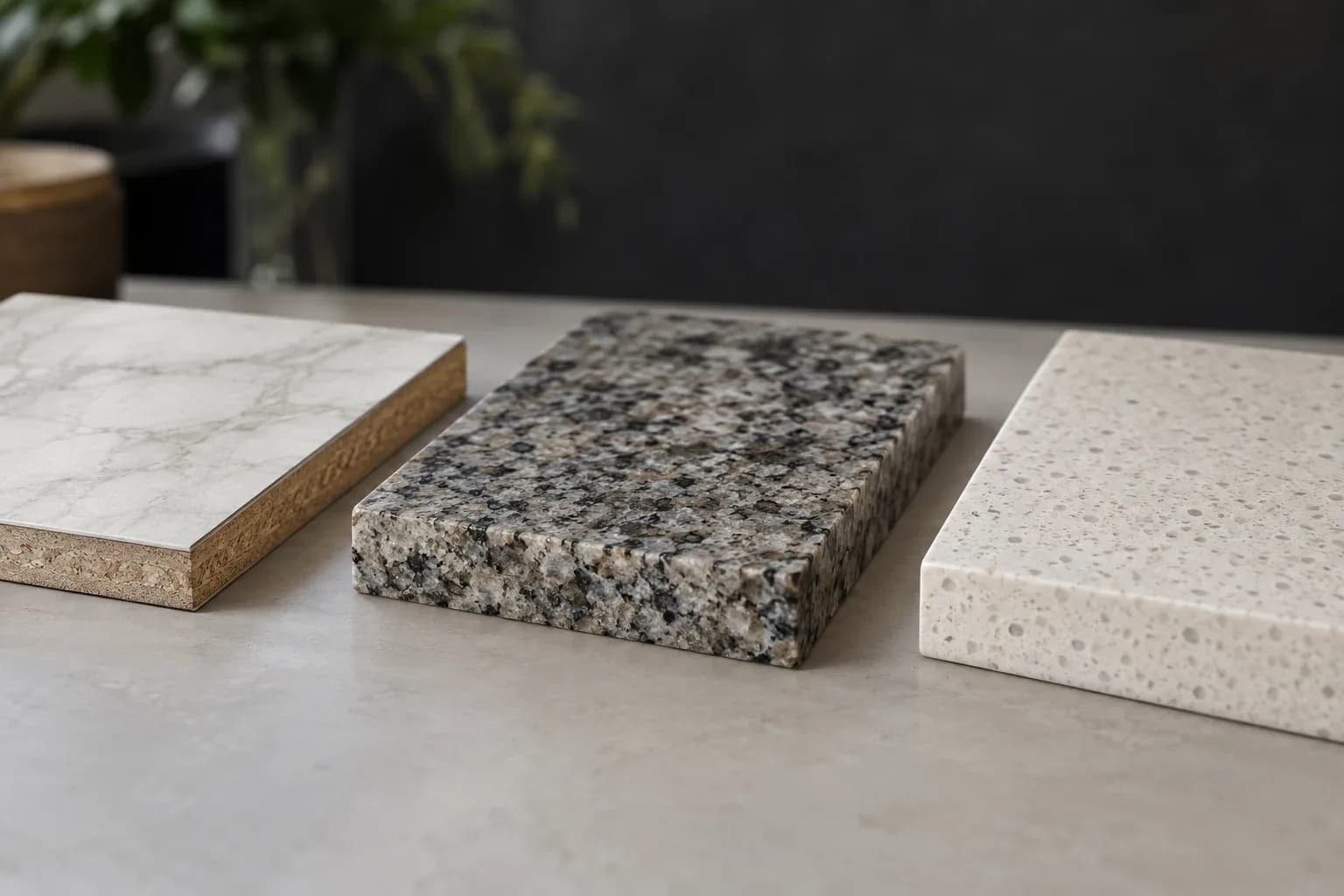
Stone is also not one material. Granite and marble are natural stones with different characteristics, while engineered quartz combines mineral content with a manufactured binder system. Compare a named product and installation proposal rather than assuming every stone-look surface behaves alike. A marble-look laminate, a quartz slab and natural marble may look related while needing very different care.
Start with your actual kitchen routine. Where do you put a hot pressure cooker? Does water collect behind the sink? Will somebody regularly roll dough, chop directly on the top or drag heavy appliances across it? Identify these habits before deciding whether you can consistently protect the surface. No countertop choice removes the need for sensible handling.
Browse countertops to establish the material families, then compare the intended application of decorative laminates. A listing in a decorative category does not by itself establish worktop suitability. Ask for the exact grade’s technical sheet, including its horizontal-use approval, substrate requirements and edge treatment.
Thickness labels need context. A 1 mm laminate describes a facing layer, not the total countertop thickness or its load-bearing capacity. The supporting board, bonding, spans and fixing system remain separate decisions. If a supplier proposes a Merino or Greenlam design, record the exact product code and grade; a brand name alone does not answer whether that particular sheet is suitable for your worktop.
Heat, water and cleaning: decide by the weak points
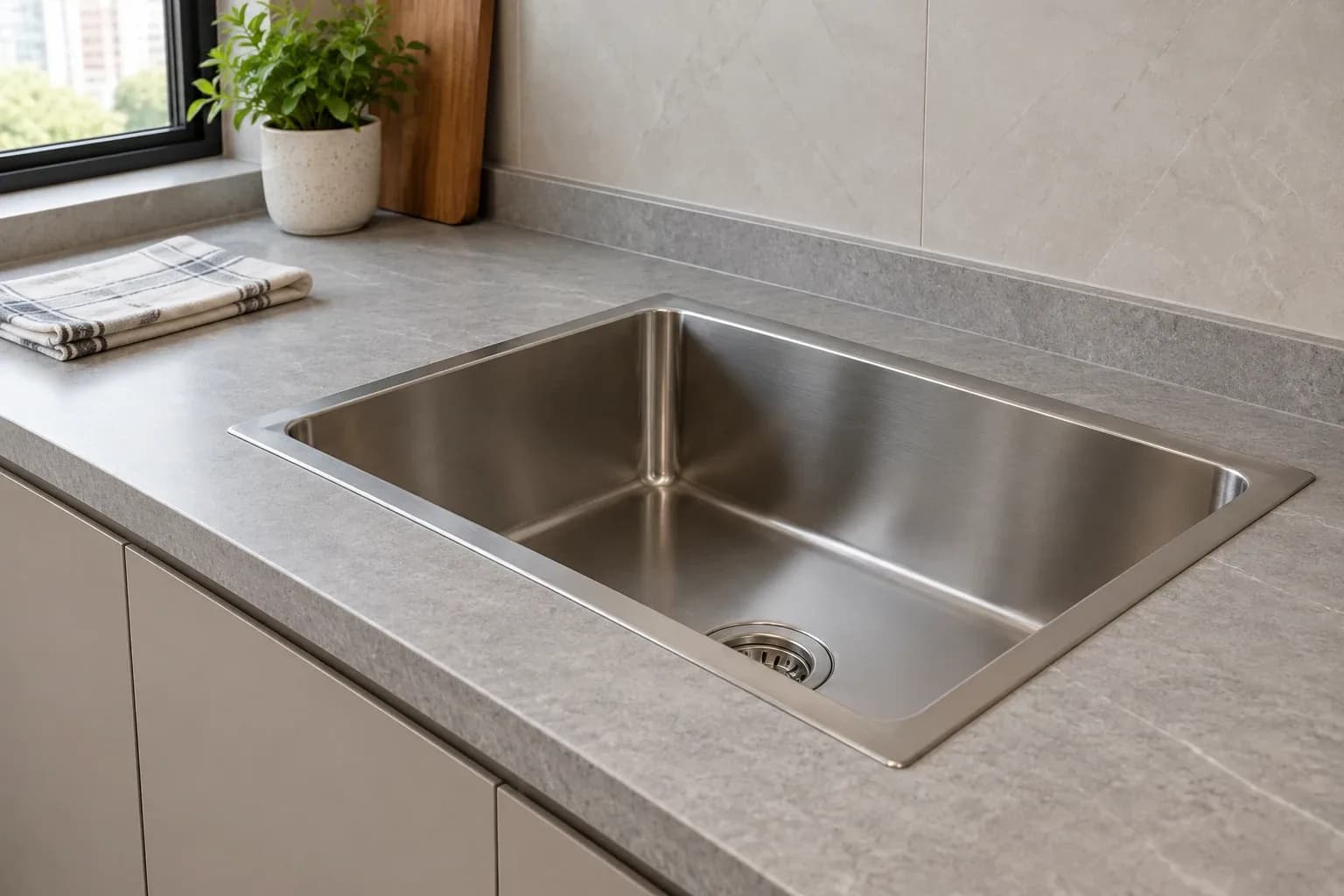
For laminate, the exposed core and joints deserve as much attention as the decorative face. Ask how the installer will protect sink and tap cut-outs, the back edge, appliance openings and any joint near a wet area. A wipeable face cannot protect an unfinished edge beneath it. If the supporting board has already swollen, covering it with another sheet does not correct the cause or restore a flat base.
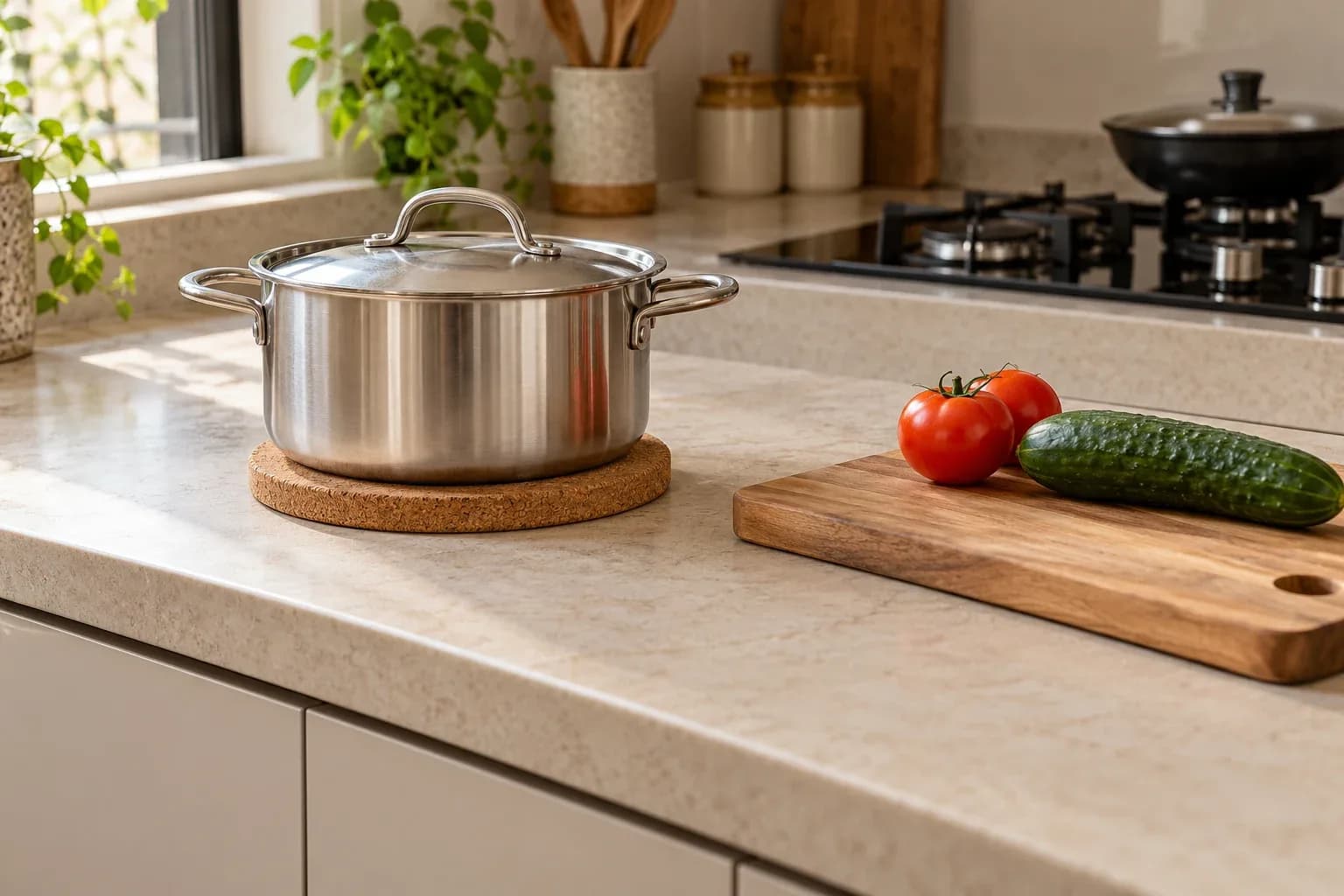
Use a trivet under hot cookware and a chopping board for cutting. Formica’s countertop burn guidance explains why hot pots can permanently damage laminate. Put protection where people will actually use it, beside the hob rather than hidden in a drawer. A countertop that requires habits your household will not follow is a poor fit regardless of the initial saving.
Natural stone needs material-specific advice. The Natural Stone Institute’s care guidance explains that sealing improves stain resistance but does not make stone stainproof, and that not every stone needs sealing. Ask the fabricator what your selected slab needs, which cleaning products to avoid and how to recognise when maintenance is due. Do not transfer a neighbour’s granite routine automatically to marble.
Engineered quartz has its own care instructions. Caesarstone’s quartz maintenance guidance should be checked for the selected product, including heat precautions. Do not interpret a nonporous surface as permission to place very hot cookware directly on it. For every material, keep joints and surrounding cabinetry dry and address leaks promptly.
Inspect a physical finish under your kitchen lighting. Gloss can emphasise reflections and surface marks, while a textured finish can require more deliberate wiping. Our matte versus glossy laminate comparison helps with that visual decision, but the finish choice comes after confirming the grade is appropriate for the application.
Compare installed quotes and realistic repair options
Ask every supplier to price the same layout. Include the finished dimensions, slab or sheet quantity, support, fabrication, edge profile, sink and hob cut-outs, joint locations, transport, installation and removal of an old top if needed. Ask separately about plumbing or electrical work. Two quotes cannot be compared fairly when one covers raw material and the other includes fitting and cut-outs.
An economical-looking surface can become less attractive if a complex layout creates several vulnerable joints or requires extensive support changes. Equally, a premium material does not justify an unclear installation scope. Request a drawing showing seams, overhangs and cut-outs before approving fabrication. Ask who is responsible if measurements change after cabinets are installed.
Discuss damage before buying. Small laminate chips may be disguisable with a compatible repair product, but the repair can remain visible; large burns, loose facing or a damaged core may require replacement. Stone and quartz chips or cracks need a fabricator’s assessment rather than a universal filler recommendation. Ask whether a damaged section can be replaced without disturbing the sink, backsplash or adjacent cabinets.
Choose laminate when a suitable grade and well-detailed installation meet your use pattern and complete budget. Choose a particular stone or quartz surface when its appearance, care requirements and fabrication proposal suit the kitchen better. Keep the final decision attached to a written specification, not a broad promise that one material is always waterproof, maintenance-free or indestructible.
Questions people ask us
Can any decorative laminate be used as a kitchen countertop?
No. Confirm the exact grade is approved for the intended horizontal worktop application and follow its substrate, bonding and edge requirements. A design name or sheet thickness alone is not sufficient.
Is laminate waterproof around the sink?
The face and the complete countertop assembly are different things. Cut-outs, joints and exposed supporting board need suitable protection. Repair leaks and avoid leaving water standing at seams.
Does every natural stone countertop need sealing?
No. Sealing needs vary by stone and finish. Ask the fabricator for advice on the selected slab; a sealer improves stain resistance but does not make stone stainproof.
Can hot pans go directly on quartz or laminate?
Use trivets and follow the selected manufacturer’s instructions. Laminate can burn, and engineered quartz can be damaged by sudden or excessive heat.
Which is cheaper once installed?
Compare written quotes for the same dimensions, edges, cut-outs, supports, transport and installation. A raw sheet or slab price is not the installed total, so there is no reliable universal saving to promise.
Shop these categories
Keep reading
- CompareSliding vs hinged wardrobes: which works better for your bedroom?
Match the door movement to your bedroom layout and the way you use your wardrobe.
- CompareFactory-made vs carpenter-made interiors: what justifies the price?
Compare the complete scope and accountability behind an interior quote.
- CareCan peeling kitchen cabinet coverings be repaired?
Identify the covering and the condition of the board before deciding how to repair a peeling cabinet.
- CareHow to remove fingerprints and grease from laminate cabinets
Clean oily marks without turning a small smudge into a damaged finish.
- GuidesAlternatives to plywood for furniture in termite-prone homes
Choose furniture materials alongside proper pest inspection, moisture control and documented specifications.
- CareHow to repair a chipped laminate countertop edge
Match the repair to the chip, edge construction and condition of the supporting board.