
Before you reach for a quick fix
You notice a line on a cabinet, a dull patch on a desk or an edge that no longer sits flat. The first question is simple: is something on the surface, or has the surface itself changed?
Use the three starting points below to decide what to do next. This page is for decorative laminate on furniture and interior panels. It does not cover laminate flooring, and any specialist finish needs its own care instructions.
- MarkStart with gentle cleaning
- ScratchCheck before treating
- EdgeKeep dry · arrange an assessment
01 / A mark on the surface
A fingerprint, dried splash or greasy smear is a reason to start gently. Remove loose dust first, then use a soft, non-abrasive cloth and a mild cleaner approved for your finish. Wipe away the cleaner with a well-wrung cloth and dry the area.
Look again once it is dry. If the mark remains, check the exact product’s stain instructions before trying anything stronger. Do not keep increasing pressure or switching between household chemicals.
Your next step: identify the finish and the likely cause of the mark. A cleaner suitable for one laminate may not suit another.
02 / A scratch that stays
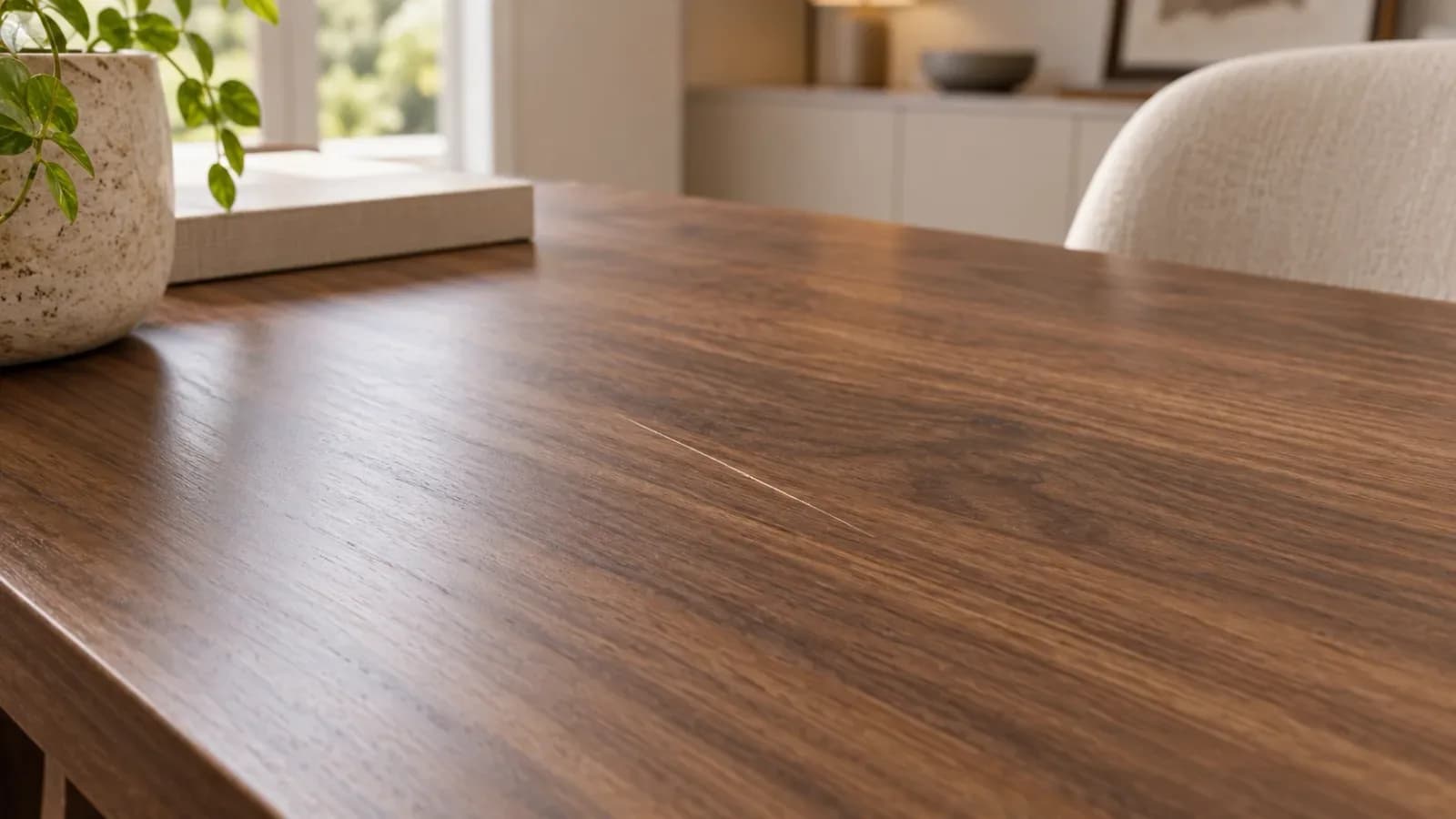
A line that remains after gentle cleaning may be damage to the decorative surface. Stop scrubbing: abrasive pads and powders can dull the surrounding finish and make a small area more noticeable.
Before using a repair kit, ask about compatibility. Colour, texture and sheen all affect how a repair will look. A filler or touch-up may disguise a defect without recreating the original finish. Ask the manufacturer or installer what is suitable for your exact panel and whether a small trial is possible.
Your next step: photograph the scratch in ordinary daylight and from an angle. Avoid sanding, polishing or applying a generic wax treatment while you are still identifying the finish.
03 / An edge that has changed shape
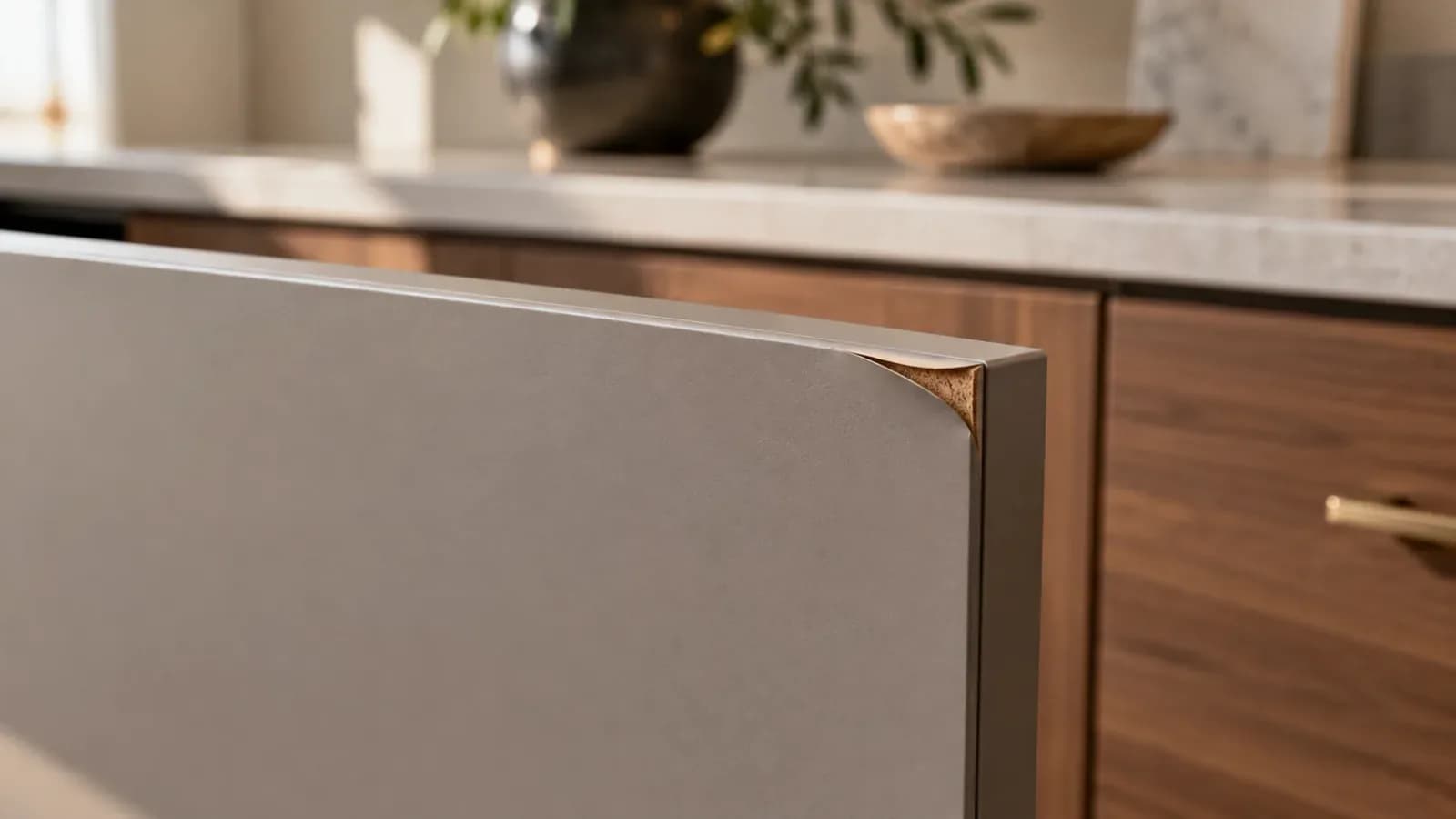
A lifting corner, raised seam or swollen board needs a closer look. Moisture entering a join can swell the supporting board; cleaning the top will not undo that change. The cause and condition of the board matter when choosing a repair.
For now, keep the area dry. Avoid soaking the joint, pulling the loose laminate or trying to flatten it with an iron. Leave glue and clamping decisions to an installer who can assess the materials and the damage.
Your next step: arrange an assessment, especially if the edge is sharp, the panel is unstable or the affected area is growing. Ask whether a local repair or replacement is appropriate.
Make the repair conversation easier
- 1
Capture the whole picture
Take one photograph of the whole panel and one close-up in daylight. Include the nearest edge or join, without filters that change the colour.
- 2
Find the product details
Gather the brand, design code, finish name and invoice if available. Note where the panel is installed and when you first noticed the change.
- 3
Explain what happened
List cleaners or treatments already used and any recent spill, heat exposure or impact. Ask what result is realistic before agreeing to a repair.
Questions people ask us
Will a repair make the damage invisible?
That cannot be promised. A repair may remain visible because of differences in colour, texture or sheen. Ask the repairer to explain the likely appearance in your room’s lighting before proceeding.
Does a lifting edge mean the whole unit needs replacing?
Not necessarily. An installer needs to check the laminate, adhesive bond and supporting board. The extent and cause of the damage determine whether a local repair, a replacement panel or wider work makes sense.
Can I use a repair method I saw for another laminate?
Check first. Specialist coatings and decorative finishes can need different treatment. Use the care sheet for your exact product and ask the manufacturer before trying heat, solvents, sanding or a repair compound.
Should I keep using a surface with a lifting edge?
Keep moisture away from the affected area and avoid pulling or pressing the loose layer. Ask the installer to inspect the bond and supporting board before deciding whether a local repair is suitable.
What details help someone assess laminate damage?
Share the brand, design code, finish, order reference and clear photographs of the damage and surrounding panel. Explain when it appeared and which cleaning or repair products have already been used.
Check the guidance for your finish
For cleaning guidance, see Formica’s care and maintenance advice and Greenlam’s cleaning dos and don’ts.
These are useful starting points, not interchangeable instructions for every surface. Follow the current care sheet for your exact laminate. Repair decisions also need an assessment of the installed panel.
If you are considering covering the damaged surface, read what needs checking before resurfacing existing furniture with laminate. A new finish does not repair the board beneath it.
Shop these categories
- 1 mm Decorative Laminates
- Wood Laminates
- Laminates
- Matte Finish Laminates
- Solid Colour Laminates
- Glossy Finish Laminates
Keep reading
- AnswersCan you use laminates over existing furniture?
Keep the furniture you like, but check the old surface before choosing its new finish.
- ProjectsA calm study corner: a laminate design concept
A concept study in warm wood-look laminate and soft neutral storage, ready to adapt to a real room.
- CalculatorsWardrobe laminate calculator: turn measurements into a plan
Measure the right surfaces, understand the estimate and take a clearer brief to your carpenter.
- BrandsMerino laminates: find the finish that belongs in your room
A considered way to choose Merino designs, compare samples and keep the final specification clear.
- DesignsWarm neutrals for a beautifully balanced home
Ivory, taupe and sand: three considered palettes for rooms that feel warm, connected and easy to live in.
- CareHow to keep your laminates looking beautiful
A soft cloth. A gentle routine. Small habits that keep the finish you chose looking its best.