
Introduction
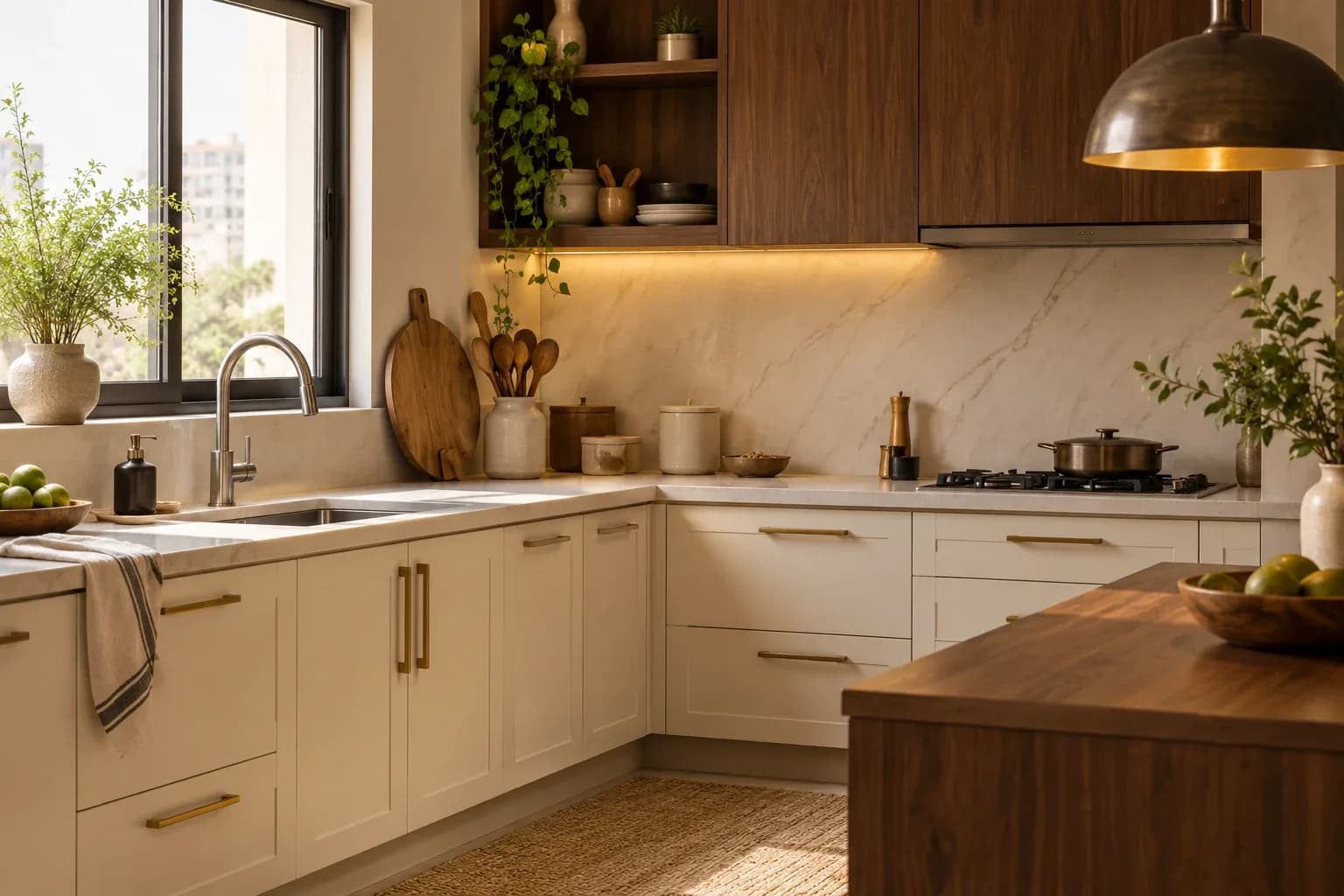
A mixed-metal kitchen works best when each finish has a clear job and appears in a deliberate location. Start with the tap or another fixture that is already fixed, then use cabinet hardware and lighting to build a small, repeatable combination around it.
## Inventory what the room already contains
List the visible metals on taps, appliance trims, handles, hinges, pendants and socket plates. Note which are prominent from the doorway and which disappear during normal use. You may have more variation already than the design drawing suggests.
Keep the comparison under the room's actual lighting. Brushed nickel, chrome and stainless steel differ in reflectivity as well as colour. Antique brass may lean brown beside a yellow polished brass. Product names do not form a reliable matching system between manufacturers, so handle real samples together before placing the order.
Assign the second finish a repeatable role
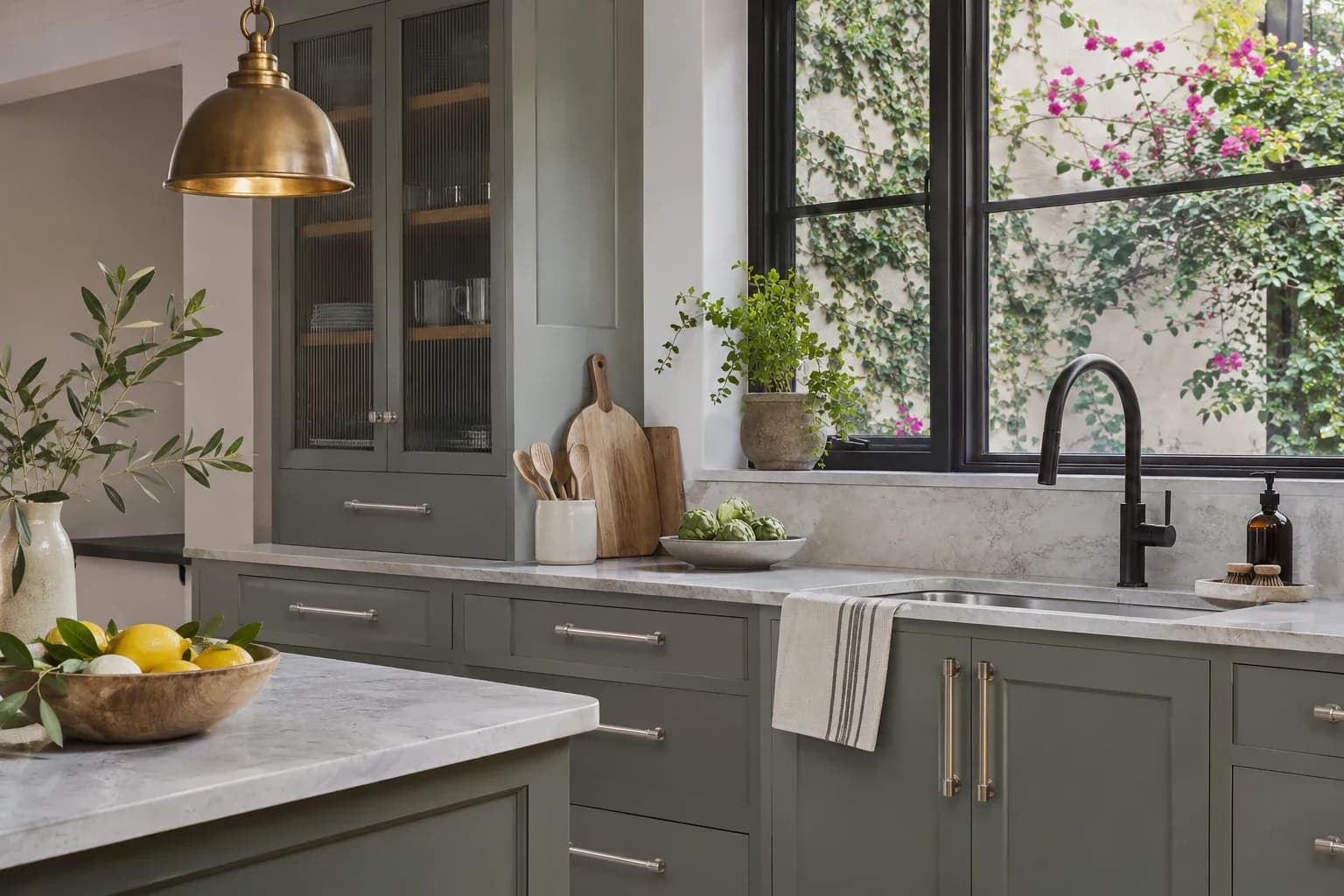
A practical starting point is one finish for frequently touched cabinet handles and another for the tap and a small number of lights. You can also keep the tap with the appliances and use handles as the warmer accent. Choose the arrangement that looks coherent from the entrance and from the working side of the room.
Avoid making every small fitting compete for attention. If the backsplash has busy movement and the fronts have strong grain, quieter hardware may be easier to live with. This is a visual judgement rather than a rule that certain metals are forbidden together.
Check appearance alongside use and replacement
Some finishes change with handling or are designed to develop a patina. Others have a coating with specific cleaning instructions. Ask the seller which finish you are buying, how it is maintained and whether later replacement pieces are likely to match.
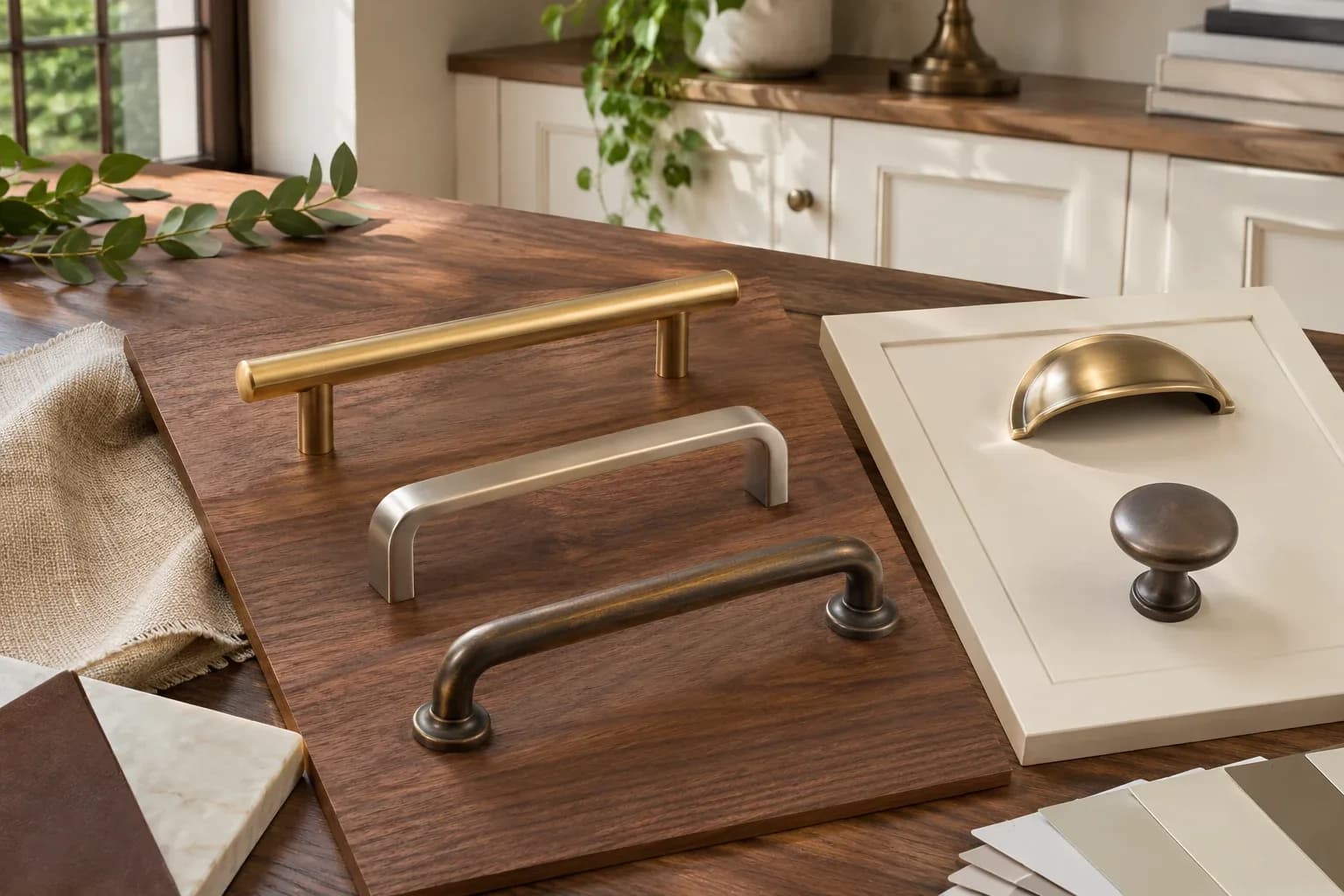
Order a complete sample handle, not just a colour chip. View its curved areas and edges beside the tap, because reflected light changes across shapes. Keep the sample and product code after approval. If the preferred handle is available only in an awkward fixing size, solve the placement and replacement question before choosing it for the entire kitchen.
## A practical check before you decide
Place the two metal samples on a cabinet-finish sample beneath the planned light. View them with the tap or its sample in daylight and after dark. Remove one item at a time if the combination feels crowded. Photograph the final group for reference, then record the actual product codes rather than approving the photograph alone.
Review the palette from the main viewpoints
Stand at the kitchen entrance, the sink and the adjoining living area before approving the combination. Some fittings will appear together only from one direction. Photograph the samples in those groups so you can judge the repeated finish rather than remembering each sample individually. Check them under the lighting that will actually be used in the evening as well as in daylight.
If the cabinet front is a 1 mm laminate, use the exact colour and texture sample in this comparison; thickness alone does not describe its appearance. Keep the product codes for both the laminate and the hardware finish. A similar name on a later order does not establish an exact visual match.
Questions people ask us
Can brass and stainless steel appear in one kitchen?
They can. Balance their placement and judge the physical samples together.
Should every light match the handles?
Only if you like that result. Repetition can come from shape or location as well as identical metal.
Will two products called brushed gold match?
Not necessarily. Colour, texture and sheen vary between ranges.
Should I mix more finishes in a small room?
Consider how many distinct surfaces are already visible before adding another accent.
What should I keep for future replacement?
Retain a sample fitting, finish description, product code and supplier details.