
Introduction
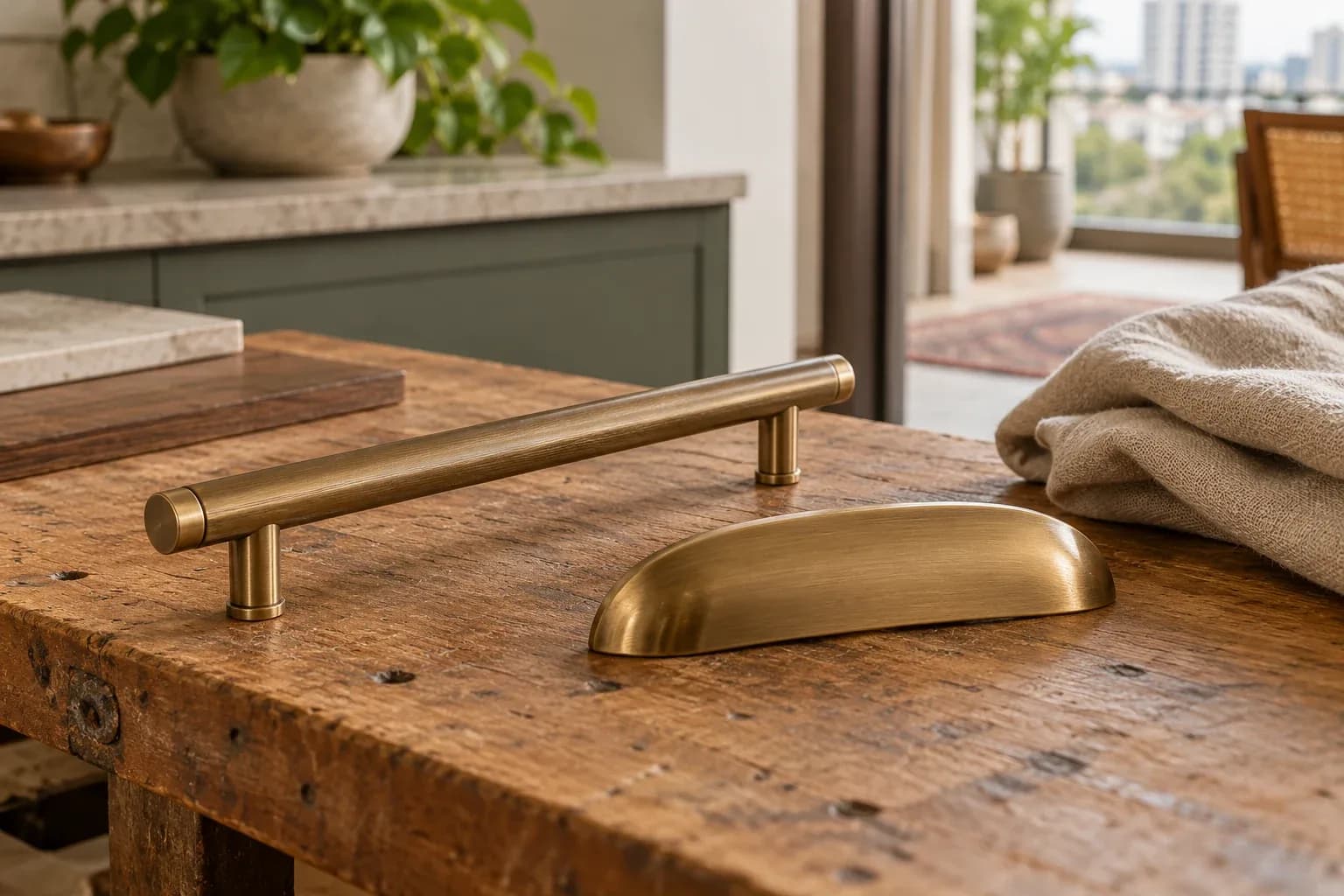
Exposed bar ends, sharp projections and handles that sit directly in a narrow walking route can catch clothing. Test the actual shape on the furniture before drilling. A pull can be comfortable to hold while still being irritating every time you walk past it.
## Find the snag point in your room
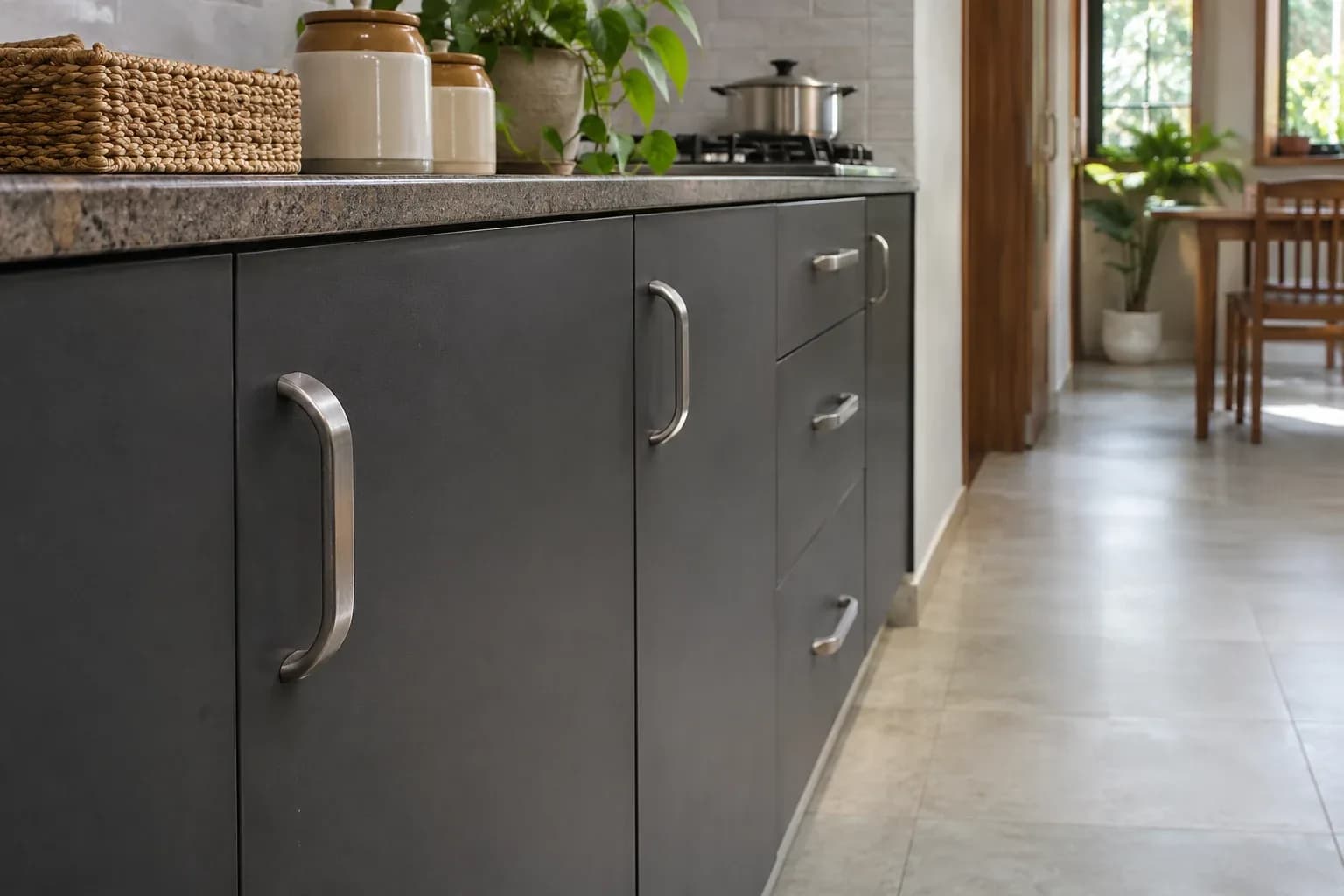
Walk the route between the hob, sink, fridge and pantry with doors closed. Notice which handles sit at hip or apron height. Repeat with the dishwasher open and someone standing beside the counter. A handle that is harmless in a broad showroom aisle can become prominent in a compact kitchen.
Look at the ends of the bar and the space between them and the fixing posts. Some designs leave an exposed hook-like projection. Rounded enclosed pulls offer a different passing profile, but they still need testing for finger room and neighbouring-door clearance.
Mock up alternatives on the actual front
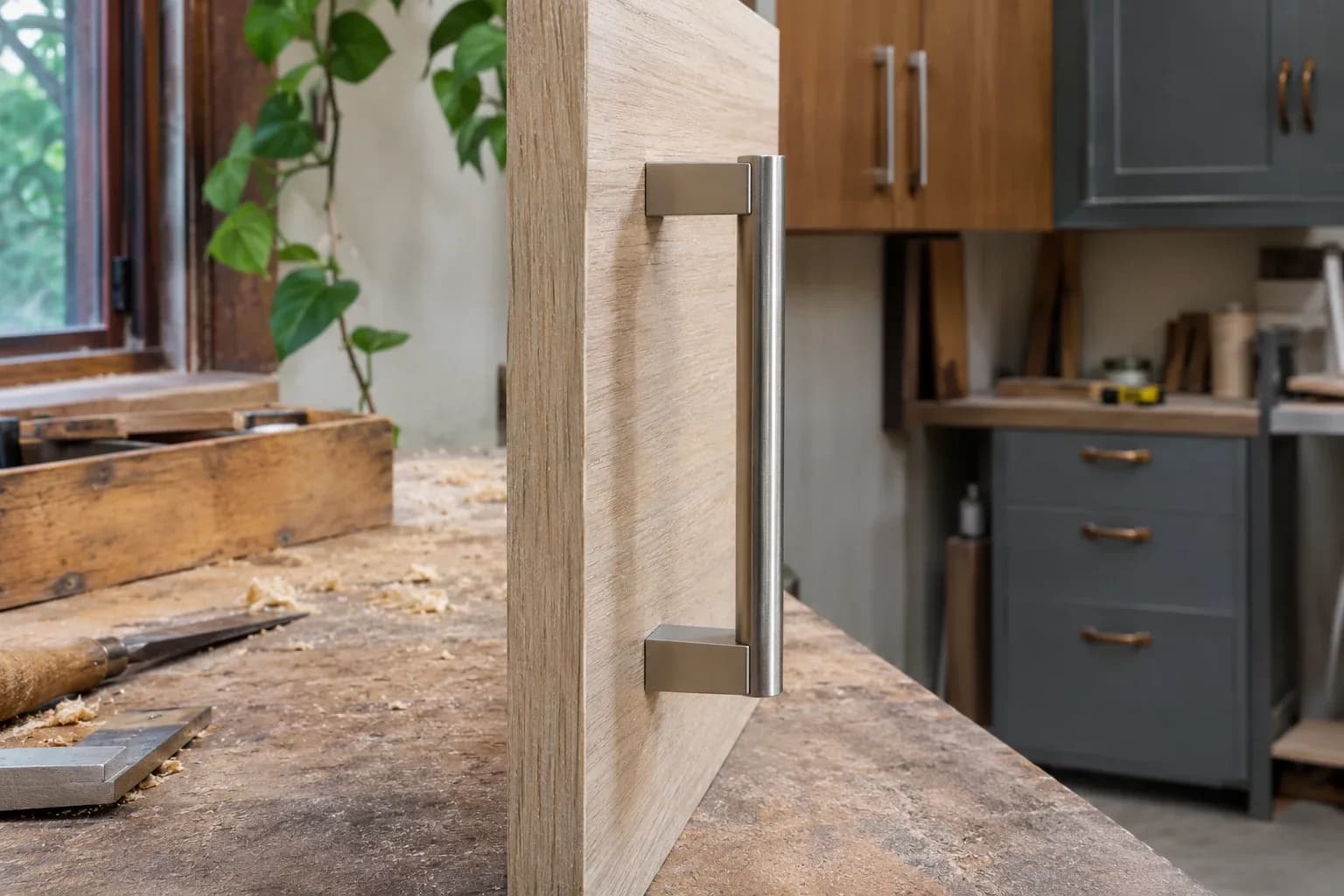
Use a temporary sample board to compare a closed-end pull, rounded knob and recessed option. The last of these can change the drawer or door construction, so ask about its fitting requirements rather than treating it as a simple swap.
Check the smallest drawer as well as the main pan drawer. A broad handle can dominate a shallow front, while a very small one may demand an uncomfortable fingertip grip. Take account of hand size and who uses the room. Comfort is better judged through repeated ordinary openings than by pulling on a loose display sample.
Plan replacements around existing holes
Measure old fixing centres and the visible footprint before buying replacement handles. A new pull with the same centre spacing may still expose marks from the old bases. Ask the maker whether the front needs refinishing or replacement if you change the layout.
For new fronts, mark the chosen position only after the complete opening sequence has been checked. Doors at a corner can bring two handles into contact even when each looks fine alone. Keep one approved handle as a reference and order the remaining quantity from the same range and finish description.
## A practical check before you decide
Hold a cloth loosely at your side and walk past a securely mounted sample at its proposed height. Do not drag it deliberately over the fitting. Follow with a normal opening test and a corner-clearance check. Record overall length, fixing centres and projection as three separate dimensions in the hardware schedule.
Recreate the movement that causes the snag
Identify the door or drawer where clothing catches most often. Notice whether it happens while passing through a narrow gap, turning away from the worktop or carrying a tray. Mark the point on a photograph rather than repeatedly catching clothing on the fitting. This shows whether the issue concerns an exposed end, a projecting corner or the position of the handle in the walking route.
Try the proposed replacement on a mock-up before changing the whole kitchen. Use the same height and orientation as the original. Check the route with a door or dishwasher open as well as with every front closed. A smoother shape can be a sensible option, but it still needs a comfortable gripping space and an appropriate fixing arrangement.
Check what the old fitting will leave behind
Measure the existing fixing centres and the marks covered by the current handle base. Ask the fitter whether the proposed replacement covers the old footprint without relying on an oversized screw or an improvised fixing. Keep appearance and secure attachment as separate checks. A handle that hides the old holes may still need a different preparation.
If the shutter has 1 mm laminate, ask about the complete finished thickness and the condition of the material around each fixing. The decorative layer does not establish the screw length or the ability of the underlying material to hold the fitting. Avoid buying a full set before one replacement has been fitted successfully.
Check the whole group before accepting it
After the trial fitting, open the drawer from a normal standing position and check the neighbouring front for contact. Look at the alignment across the elevation. Run a cloth around the shape to judge how easy it will be to clean without placing fingers near a sharp edge. Keep the approved handle reference, dimensions and finish code so any later addition can be matched deliberately.
Questions people ask us
Are all bar handles prone to catching clothes?
No. Their end shape, projection, height and position in the room make the difference.
Will a knob automatically solve snagging?
A projecting or angular knob can also catch fabric. Test its profile.
Can I rotate an existing handle?
Repositioning changes the fixing holes and may affect clearances or leave visible marks.
Should narrow aisles use recessed handles?
They may help, but the complete door construction and grip must suit the household.
What should go on the drilling drawing?
Specify the exact handle, fixing centres, orientation and position for each type of front.