
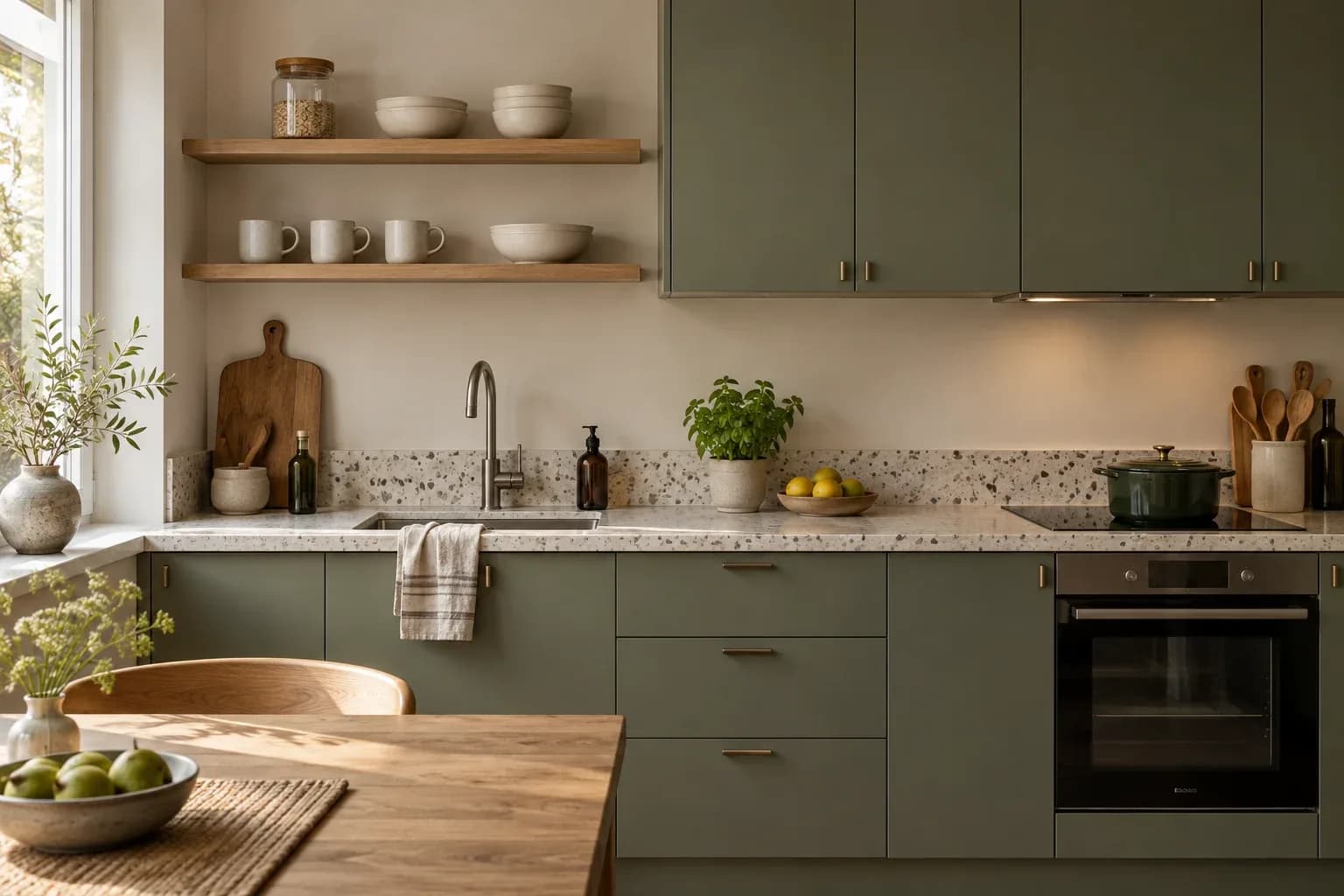
| Open shelves | Closed cabinets | |
|---|---|---|
| Appearance | Contents become part of the room. | Fronts conceal mixed household items. |
| Cleaning | Shelf and stored objects remain exposed. | Doors and interiors still need routine care. |
| Storage | Useful for selected items within easy reach. | Useful for bulk storage and less tidy contents. |
| Planning | Confirm shelf span, load and wall fixings. | Confirm door swing, shelves and hardware. |
Decide what you want to see when you walk in
Open shelves can make a section of wall feel visually lighter and keep a few everyday items easy to reach. Closed cabinets conceal mixed packaging and protect stored items from some settling dust and cooking residue. Neither option is automatically right for a small kitchen. A measured mix can work better than turning every wall into either shelving or cupboards.
Try a simple inventory. Which objects would you be happy to see all day? A few matching bowls and favourite mugs may look welcoming. Spare containers, packets, bottles and mismatched lids need a different kind of storage. An inspiration photograph rarely shows all the things a working kitchen has to hold.
Then count capacity in usable shelf space. Removing an upper cupboard can mean losing multiple protected shelves, even if the replacement looks spacious. Work out where those contents will go before approving a change. A kitchen that looks open but leaves the worktop permanently crowded has not necessarily become easier to live with.
If you already have cabinets, simulate the visual effect temporarily without making structural changes. Look at the contents with the doors open and notice what you would need to reorganise. This is an appearance exercise, not a substitute for the installer checking a proposed shelf design and its fixings.
Be honest about grease, dust and routine cleaning
Open shelving exposes both the shelf and what sits on it. Dust and airborne cooking residue can settle on those surfaces, particularly where the position and cooking routine make that likely. Extraction helps manage cooking emissions, but it should not be treated as a promise that open dishes will stay clean.
Choose a location with care. A small display shelf away from the hob may be more manageable than a broad bank directly beside frequent frying. Keep any shelf or cabinet outside the appliance manufacturer's required clearances. Do not use a decorative arrangement to conceal an unsafe or inaccessible installation.
Closed cupboards still need cleaning. Door fronts, handles and the interiors can collect marks and spills. The difference is that fewer stored surfaces are continuously exposed to the room. For decorative laminate, follow the care instructions for the exact product and avoid allowing water to sit at joints or edges.
Glass-fronted cupboards can be a useful middle ground when you like seeing the contents but want an enclosure. They still reveal clutter and need cleaning of their own. Choose them because the combination suits your routine, not because glass eliminates maintenance.
For any shelf, specify the supporting construction, span, fixing method and safe load with the installer. A thin shelf in a photograph does not prove it can safely hold a stack of crockery. Wall condition and suitable fixings matter as much as the visible finish.
Create a deliberate mix rather than a compromise
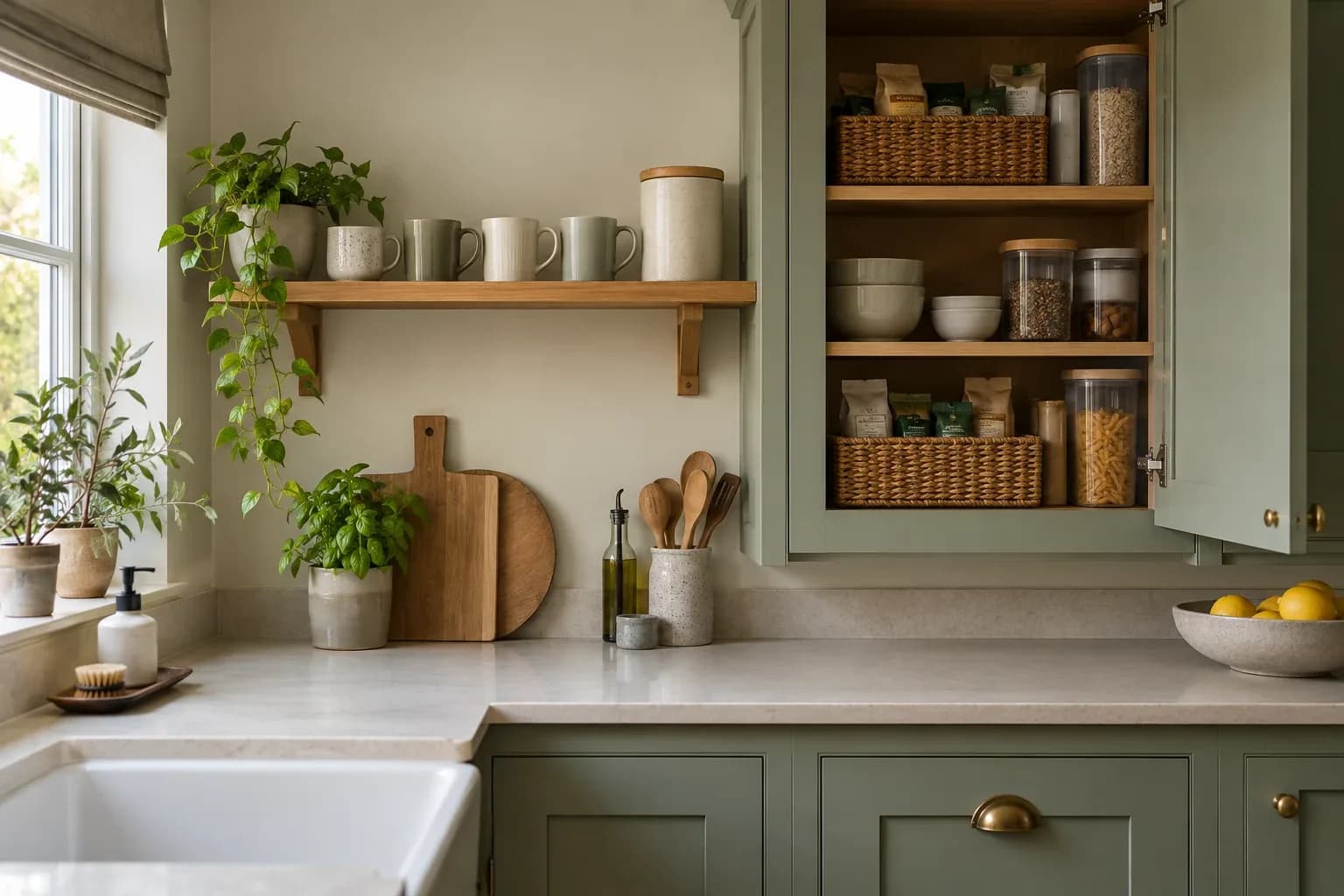
Give open shelves one clear job. They might hold the mugs you use every morning, a small tea station or a few objects you enjoy looking at. Let closed cupboards handle bulk storage and the items that rarely look tidy. Keeping the display area limited makes it easier to maintain without turning the kitchen into a showroom.
A restrained palette helps the two forms belong together. Repeat a cabinet colour or a wood tone, and align the shelf with an intentional feature rather than placing it at an arbitrary height. Keep the countertop below useful for work. Too many decorative objects can occupy the very space that made the shelf appealing.
Check the view from the living or dining area if the kitchen is visible from another room. Open shelving puts the contents into that wider composition. A closed run can create a quieter backdrop, while one small open area adds character. Our laminate finish guide can help you compare samples in the room's light.
Ask for the same construction details you would request for cabinets: substrate, exposed-edge treatment, underside finish, supports and installation. Compare the complete shelf and fitting cost, not only the price of a board. If you want the option to add doors later, discuss that during design; dimensions and construction may limit a later conversion.
Choose mostly closed cabinets if you value concealed storage and a simpler cleaning routine. Choose a limited open section if you will use and maintain it. The best small kitchen is the one that stays pleasant when dinner is being cooked, not only when everything has been arranged for a photograph.
Browse 1 mm decorative laminates and wood-look cabinet finishes to compare surfaces. The 1 mm figure is the sheet thickness, not the finished cabinet thickness. For a visit to Hinch Hafeezpet in Hyderabad 500085, bring your layout and shortlist; confirm sample availability first.
Questions people ask us
Do open shelves make a kitchen feel larger?
They can reduce the visual bulk of a wall, but exposed contents can also add clutter. Review the arrangement with the items you actually own.
Will a chimney keep open shelves grease-free?
No system should be treated as a guarantee. Cooking habits, extraction design and shelf position affect cleaning needs.
Are closed cabinets maintenance-free?
No. Fronts, handles and interiors still need cleaning, although stored items are less directly exposed to the room.
Can I mix open shelves and cabinets?
Yes. Give the open section a specific purpose and keep enough enclosed storage for bulk items and mixed packaging.
Are glass doors a useful alternative?
They provide an enclosed display but still show the contents and need cleaning. They work best where you want visibility without fully open storage.
Can a shelf hold a heavy crockery collection?
The installer must confirm its construction, span, fixings and load limit. Appearance alone cannot establish its capacity.
Shop these categories
Keep reading
- IdeasTwo-tone kitchen cabinets: how do you choose a combination that feels balanced?
Choose one finish to carry most of the kitchen and give the second a clear place to begin and end.
- CompareFlat slab vs Shaker cabinet doors: which suits an everyday kitchen?
Choose slab doors if you want broad, uninterrupted surfaces and a quick wipe across each front. Choose Shaker if you like the shadow around a recessed panel enough to take a little extra care at its lower corners. Both styles can have handles; the profile and the opening method are separate decisions.
- CompareKitchen island vs peninsula: which layout works better in a compact home?
A peninsula earns its place when attaching one end frees up a useful passage or makes everyday seating possible. An island earns its place when people can use the routes around it, even with a stool occupied and the fridge open. Test both in your own room before deciding.
- GuidesHow do you verify plywood quality before it disappears under laminate?
Verify two different things: the identity of the material delivered and the condition of the particular pieces going into your furniture. An invoice can help with the first. It cannot explain a loose layer in the panel in front of you.
- CareUneven cabinet-door gaps: is it a hinge adjustment or a fitting problem?
A gap that changes from top to bottom is a clue, not a diagnosis. Before turning a screw, establish whether one door is out of line, several units are misaligned, or the door itself will not lie flat.
- GuidesCabinet refacing or replacement: when is keeping the old kitchen worth it?
Keep the cabinet boxes if they are dry, firm and arranged the way you cook.