
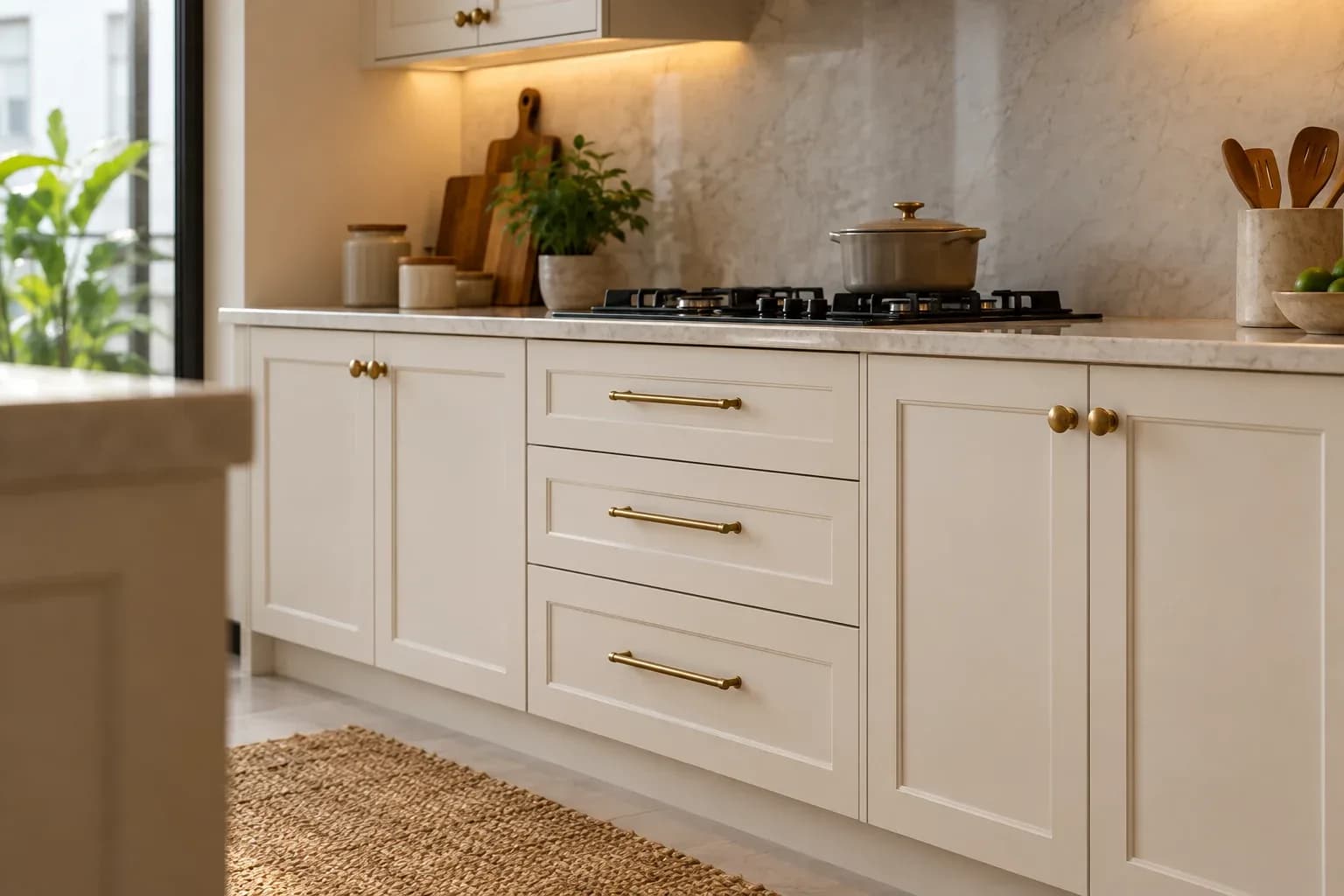
| Grip | Small concentrated grip; shape and size matter | Longer gripping area; rear clearance matters |
|---|---|---|
| Fixing | Commonly one fixing point | Commonly two specified fixing centres |
| Drawer appearance | Can look restrained on narrow fronts | Can provide a clear horizontal line |
| Snagging check | Inspect projecting or angular shapes | Inspect exposed ends and projection |
| Replacement | Match base coverage and screw fixing | Match hole centres as well as overall dimensions |
Introduction
Choose knobs or pulls by testing the grip on real doors and drawers. Both can suit a kitchen, and a consistent mix can be practical. The most useful choice is the one your household can open comfortably without catching clothing or rubbing fingers against the front.
## Try the hand movement on each front
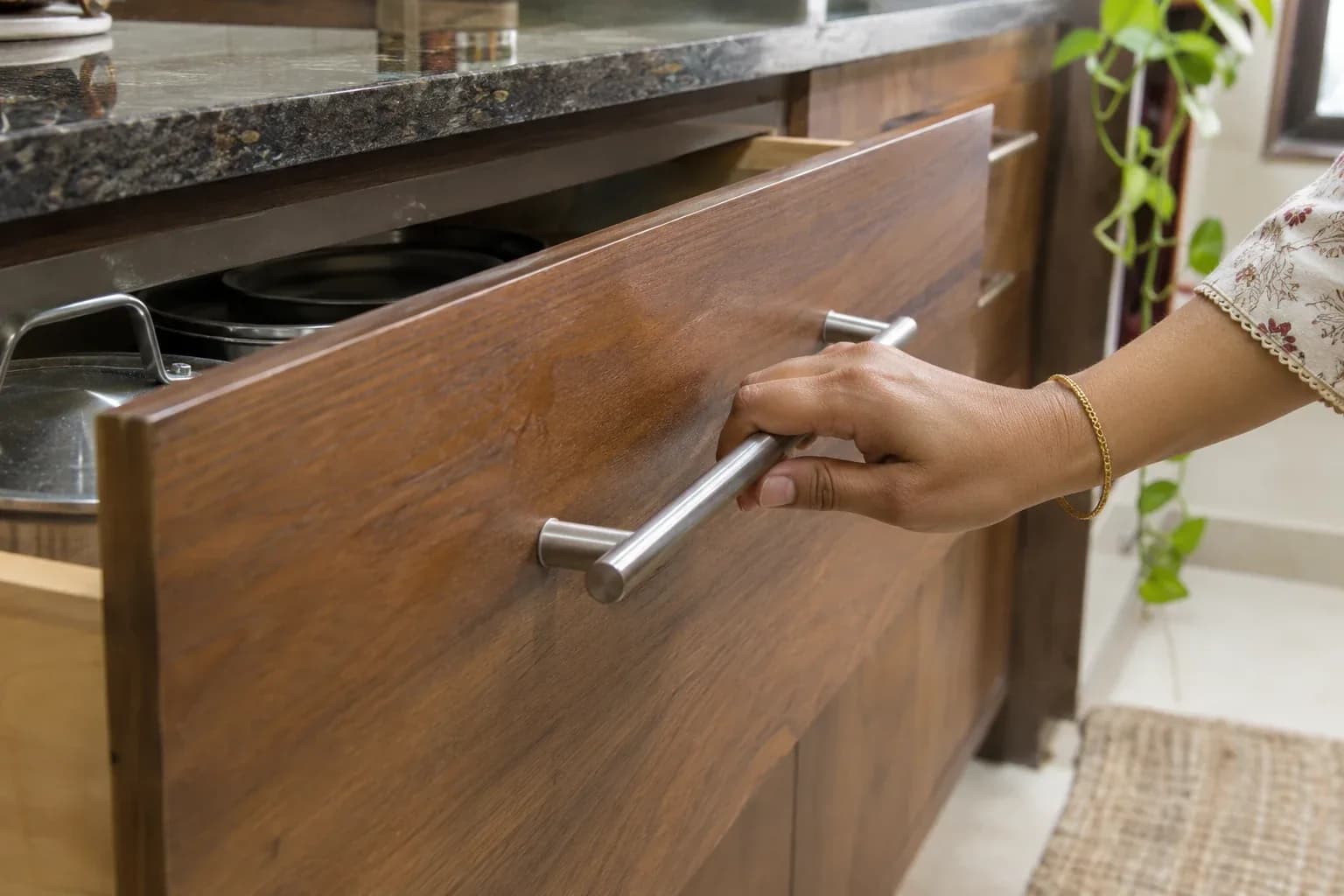
A knob offers a small, focused grip and usually needs one fixing point. A pull gives several fingers a longer gripping area but requires suitable clearance behind it. Shape matters as much as the label. A smooth rounded knob feels different from a small sharp-edged one, just as an enclosed pull differs from an exposed-end bar.
Test with dry hands and imagine the movement after cooking. Ask someone else in the household to try it too. A sample that looks elegant on a board may feel cramped when mounted on a thick drawer front or close to a countertop overhang.
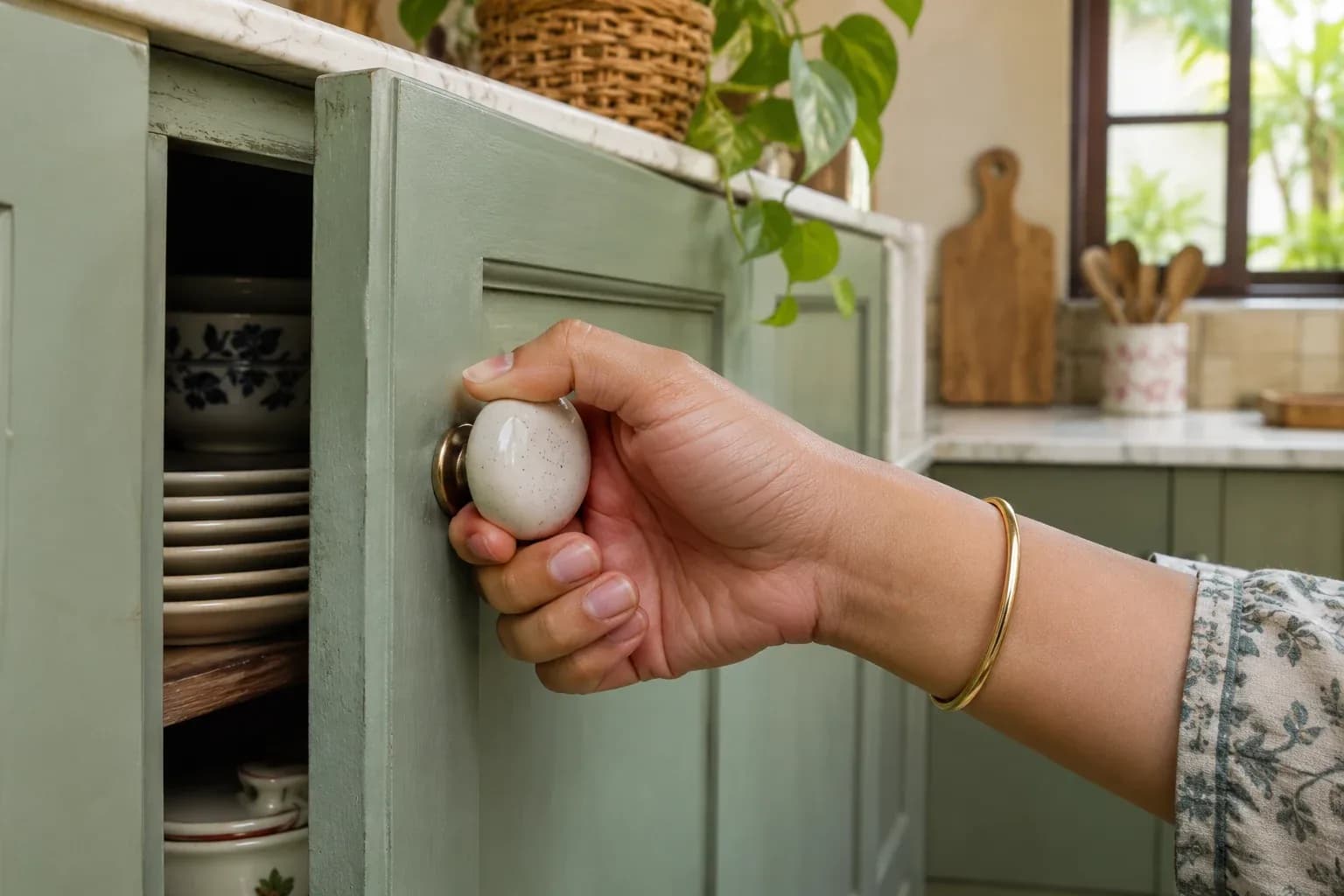
Use a deliberate rule across the elevation
One workable arrangement is knobs on doors and pulls on drawers. Another uses the same pull family throughout, with sizes chosen for front width. Neither rule is compulsory. Sketch the positions on the smallest drawer and tallest cupboard before ordering a whole set.
Check neighbouring openings. A pull on one door can meet the next handle in a tight corner. A long bar may also catch an apron when you pass a narrow aisle. Keep fixing centres distinct from overall handle length. A replacement ordered using the wrong measurement can leave visible holes in an otherwise sound front.
Compare maintenance and future replacements
Wipe a sample, inspect its underside and check whether fingers can reach the screws and corners. Complex shapes can demand more careful cleaning. Finish names vary between brands, so compare actual samples beside the tap and appliances rather than assuming two products called brushed brass will match.
For replacement work, measure existing holes centre to centre and photograph the back of the front. If filling or re-drilling is needed, agree how the visible finish will be repaired. A 128 mm fixing-centre pull is an example of a hole-spacing specification. It says nothing about whether that particular shape fits your hand or clears the adjacent door.
## A practical check before you decide
Mount two shortlisted handles on a spare board or test front at the expected height. Repeat opening with one hand, walking past the end and reaching to a neighbouring drawer. Put the chosen fixing centres and drilling positions on the signed elevation, so the installer has a repeatable rule.
Test the choice before drilling
Place the proposed handle or knob on a spare front or a mock-up held at the height where it will be used. Try it with the hand movement you naturally make when cooking. Check whether fingers fit comfortably, whether the wrist has to turn awkwardly and whether the grip remains useful when hands are damp. Include everyone who regularly uses the kitchen in the trial. A handle that feels convenient to one person may be uncomfortable for another.
Compare the placement as well as the shape. On a wide drawer, notice whether you reach for the centre or instinctively pull from one end. On a tall door, check whether the chosen position is comfortable without stretching. Inspect the nearby appliance and cabinet fronts with each door open so the projection does not create a collision.
Keep replacement details with the drawing
For a bar pull, distinguish the fixing-centre measurement from the overall length. For a knob, record the base size and the fixing requirements. If the front has a 1 mm laminate finish, the fitter still needs the complete finished-front thickness when confirming the screw and fixing arrangement. Do not order screws from the decorative layer thickness alone.
Photograph the approved sample against the actual front and retain one product reference for each handle size. Before accepting the installation, check that repeated handles line up, that every fixing feels secure in normal use and that there are no sharp or unfinished contact edges. This provides a practical way to judge the finished work beyond the appearance of a single showroom sample.
Questions people ask us
Must doors and drawers use identical hardware?
No. A clear repeated placement rule can make a mix feel intentional.
Does a longer pull always open more easily?
Grip clearance, runner resistance and hand position also affect comfort.
What measurement matters for replacement pulls?
Measure fixing-hole centres separately from overall length and projection.
Can metallic finishes be mixed?
Yes, but compare physical samples and repeat the choices deliberately.
When should holes be drilled?
After the final fronts, hardware and placement drawing have been approved.