
Introduction
A drawer that stops before closing is giving you a symptom, not a diagnosis. Start with contents and visible interference, then have the fitting checked. Forcing it shut repeatedly can conceal the cause and make the front or fixings work harder.
## Find out when the stopping began
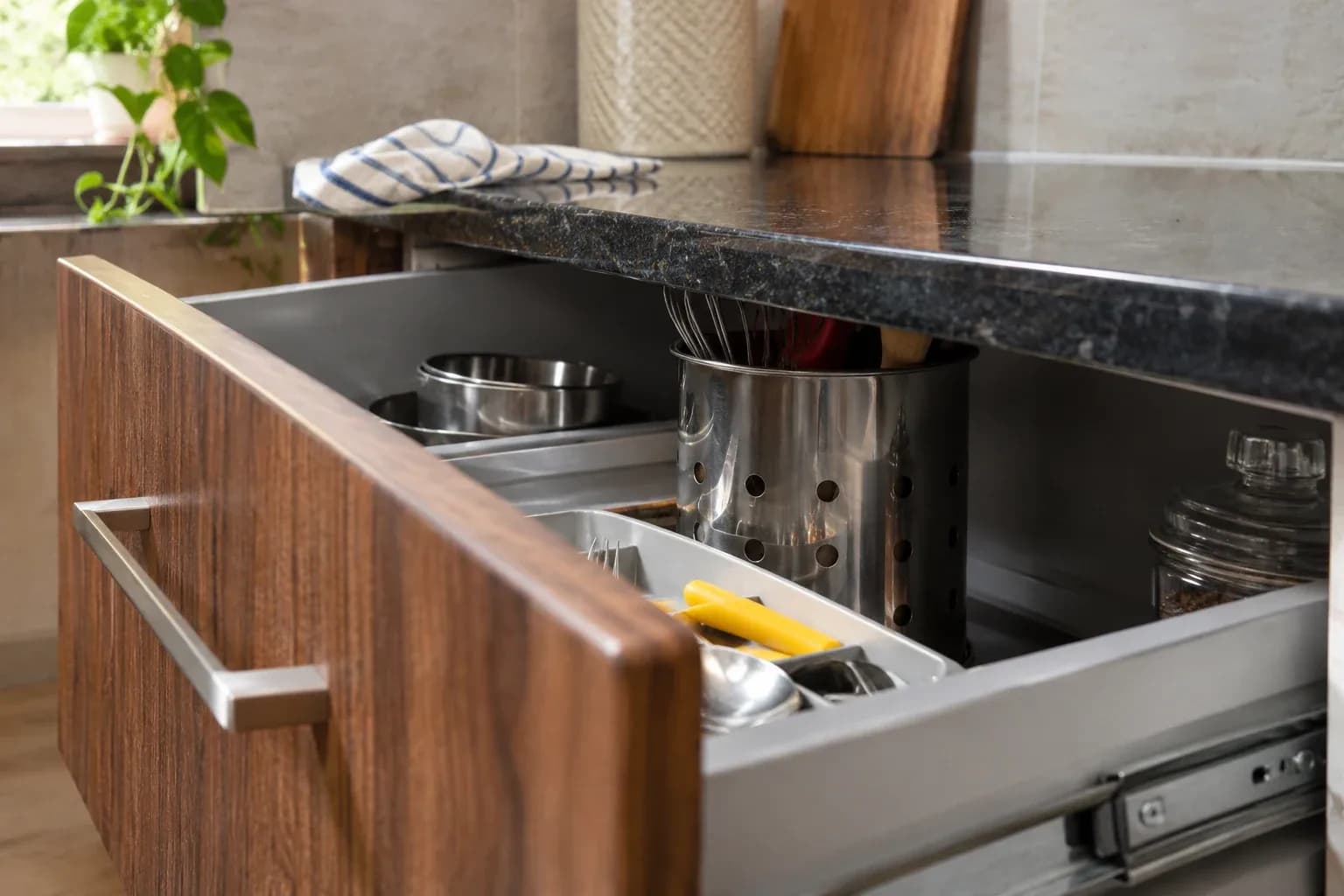
Empty the drawer and check for a utensil projecting above its sides, a liner folded underneath or an item dropped behind the box. Look from the side while moving it gently. Stop if the drawer twists, leaves its support or makes a scraping noise.
Compare the behaviour empty and with its normal contents. Note whether the fault started after cleaning, removal, a load change or fitting a new front. If the drawer was recently removed, a technician should check that both sides are engaged correctly. The removal and locking method varies between systems.
Watch the front and the final travel
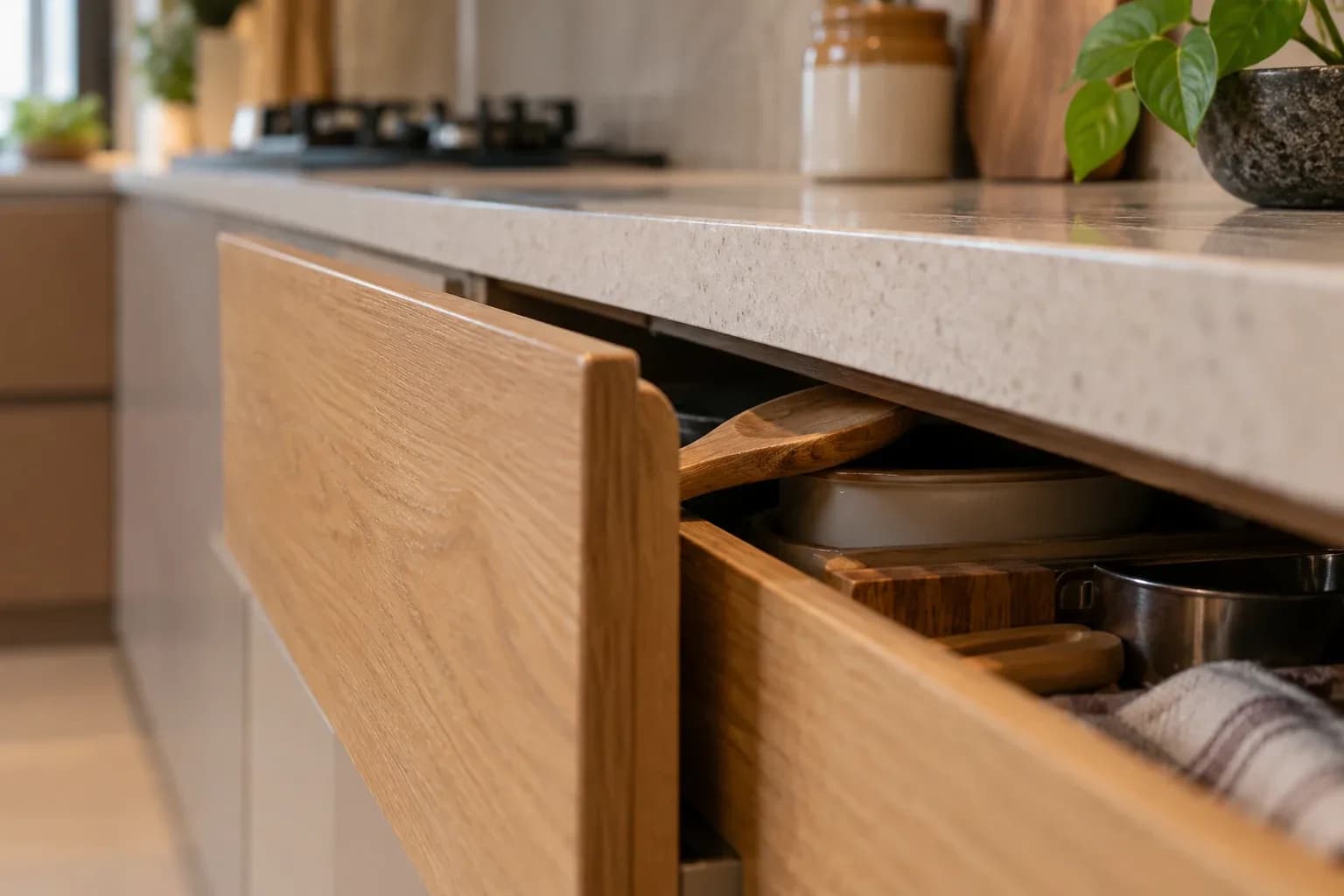
A front can touch the neighbouring drawer, a projecting handle or an end panel before the closer finishes its movement. Photograph the contact point with the drawer almost closed. Also inspect whether the two sides reach the closed position together.
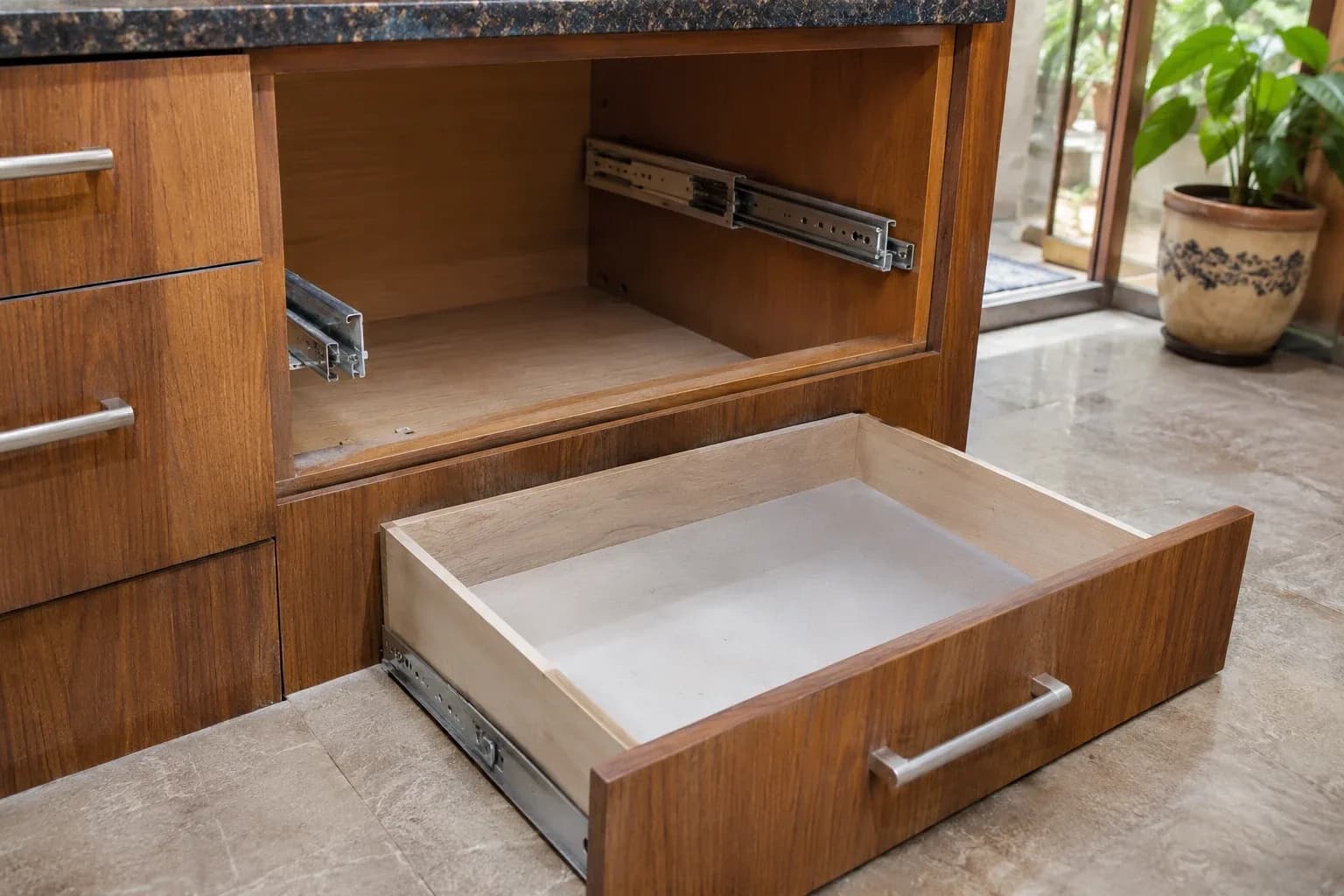
The cabinet opening, runner position and drawer dimensions need to suit one another. Improvised shims or extra force are not a diagnosis. Ask the installer to measure the relevant clearances against the manufacturer's drawing. A nominal 450 mm runner, for example, is a product length description. It does not specify every dimension required for the drawer box.
Decide whether it needs adjustment or a part
Some systems have front adjustments and separate closing components. Others require a different repair. Identify the model before ordering a generic damper or turning unfamiliar screws. A damaged runner should not be disguised by moving the front to hide its resting position.
At the service visit, demonstrate the fault before unloading the contents. Ask the fitter to explain the cause, record what changed and repeat the full travel test afterward. If the problem returns with an ordinary load, the installation still needs attention. Keep the before-and-after video so a second visit starts with the same evidence.
## A practical check before you decide
Make a short fault record with three observations. Does it stop at the same point every time? Does the front touch anything? Does the empty drawer behave differently? Include a close photograph of the runner marking and a wider view of the whole cabinet run. This is more useful than buying replacement hardware from appearance alone.
Questions people ask us
Should I push harder to engage the closer?
Use normal gentle operation. Repeated resistance should be investigated rather than overcome with force.
Can a drawer liner cause the problem?
Yes, if it folds into a moving gap or allows contents to project beyond the drawer.
Will adjusting the front repair a damaged runner?
Front adjustment changes alignment. It does not restore a broken moving component.
Can both runners be replaced with one different model?
A replacement must suit the drawer and cabinet as a matched installation.
What if it only fails when loaded?
Record the actual contents and have the load, drawer construction and fitting checked together.