
Practical guidance
Compare an aluminium-and-glass pooja-room door as a complete assembly, including frame, glass, hinges, handles and installation. A picture of a slim profile does not reveal its support or detailing. Start with the opening and the household's privacy and use preferences.
## Choose the visual and functional role
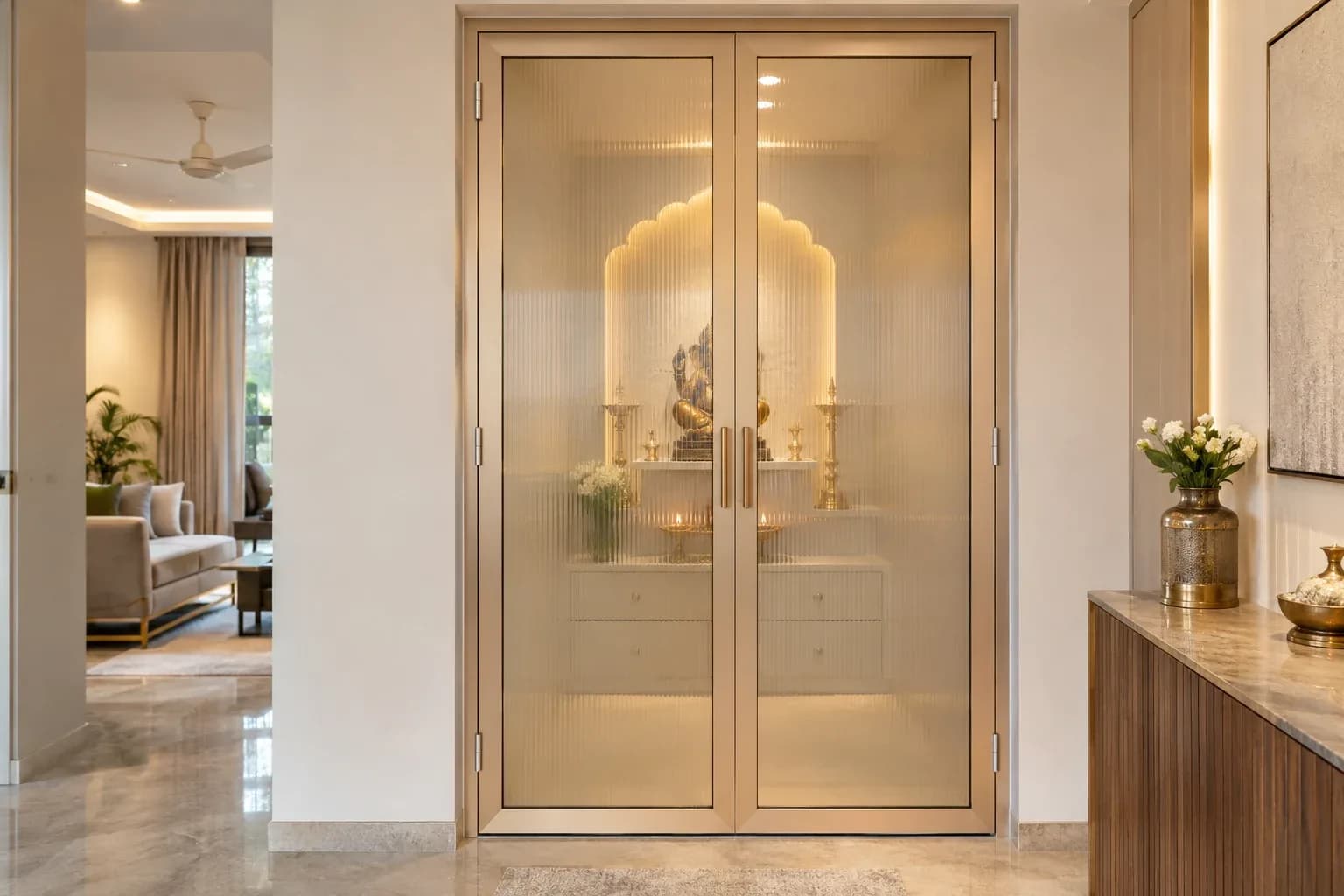
Decide how much view into the room you want. Clear, patterned, fluted and other glass finishes produce different levels of screening and reflected light. View a sufficiently large sample from both sides before approving it.
Mark the opening direction and where the door rests when open. Check passage width, nearby furniture and floor variation. If the room is used with incense or a flame, discuss that use and any ventilation or clearance needs with the designer rather than relying on the door material alone.
Specify the whole assembly
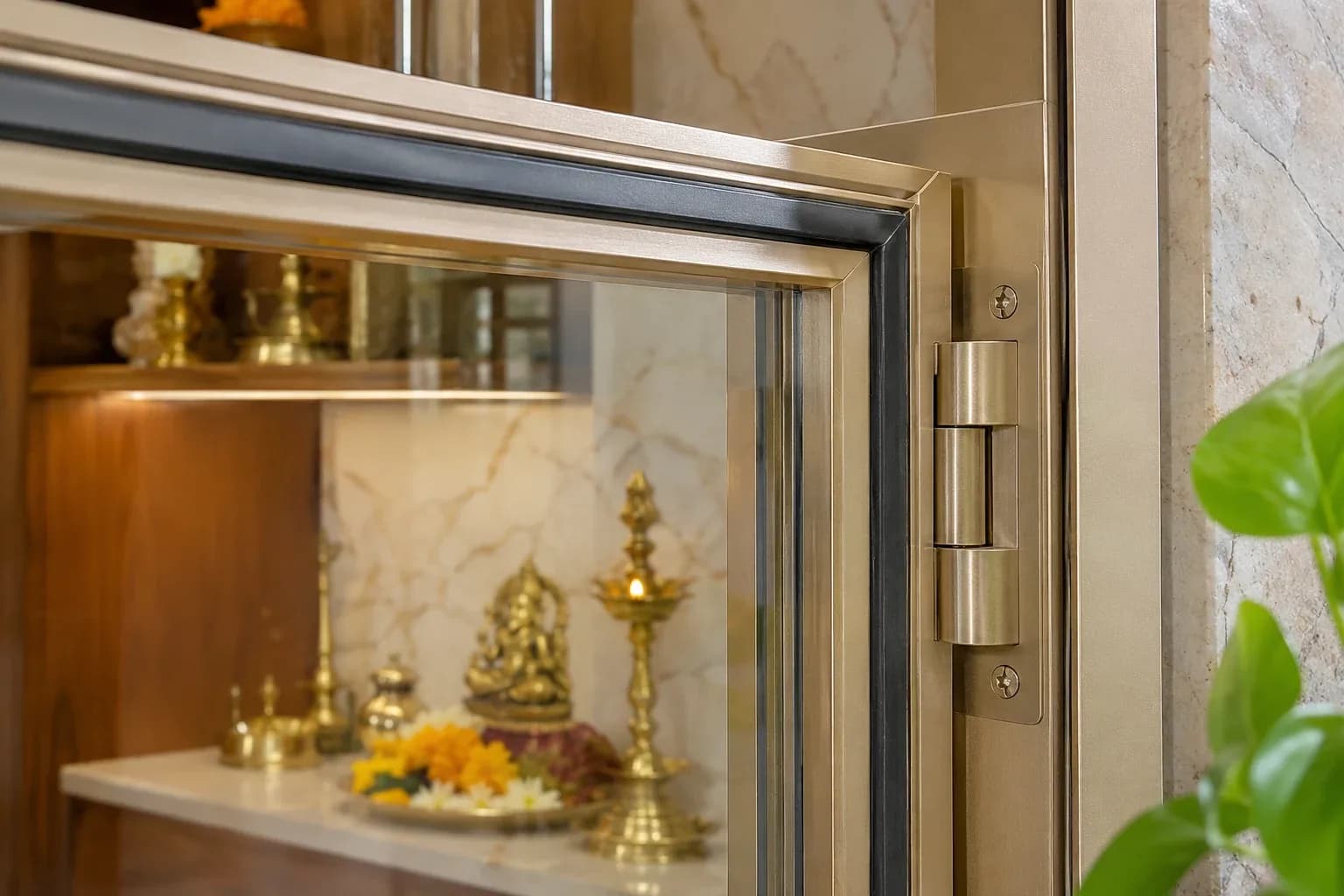
Ask the fabricator to identify the aluminium profile, finish, glass specification and hardware. Glass suitability depends on the application and applicable requirements. Include edge protection, retention and the frame's attachment to the actual wall opening.
Check whether the sample door has the same dimensions and hardware as the proposed installation. A narrow showroom leaf may feel very different from a wide heavy door. Ask about the handle, latch, stops and any floor or overhead fittings needed for the movement.
Compare complete fitted quotations
Include measurement, fabrication, glazing, transport, fixing, finishing around the opening and adjustment after installation. Clarify what happens if the existing walls are out of square. An attractive profile rate does not describe the full completed door.
Keep the approved sample and exact finish reference. At handover, operate the door slowly through its full movement, inspect exposed edges and check the agreed clearances. Obtain cleaning and servicing information for the glass, coated frame and hardware together.
## A practical check before you decide
Ask two fabricators to quote the same dimensioned opening, glass and hardware schedule. Review a full-size sample or comparable completed door where possible. Photograph the glass appearance in daylight and evening light, and record the finish code rather than approving from a compressed phone image.
## Compare a complete door schedule
Give every supplier the same opening information and ask who carries out the final site measurement. Record the frame, leaf arrangement, glass specification, finish, handles, hinges or sliding hardware and installation method. A slim profile photograph does not establish which assembly is included in the quote. Ask to see a completed corner and the exposed edge detail.
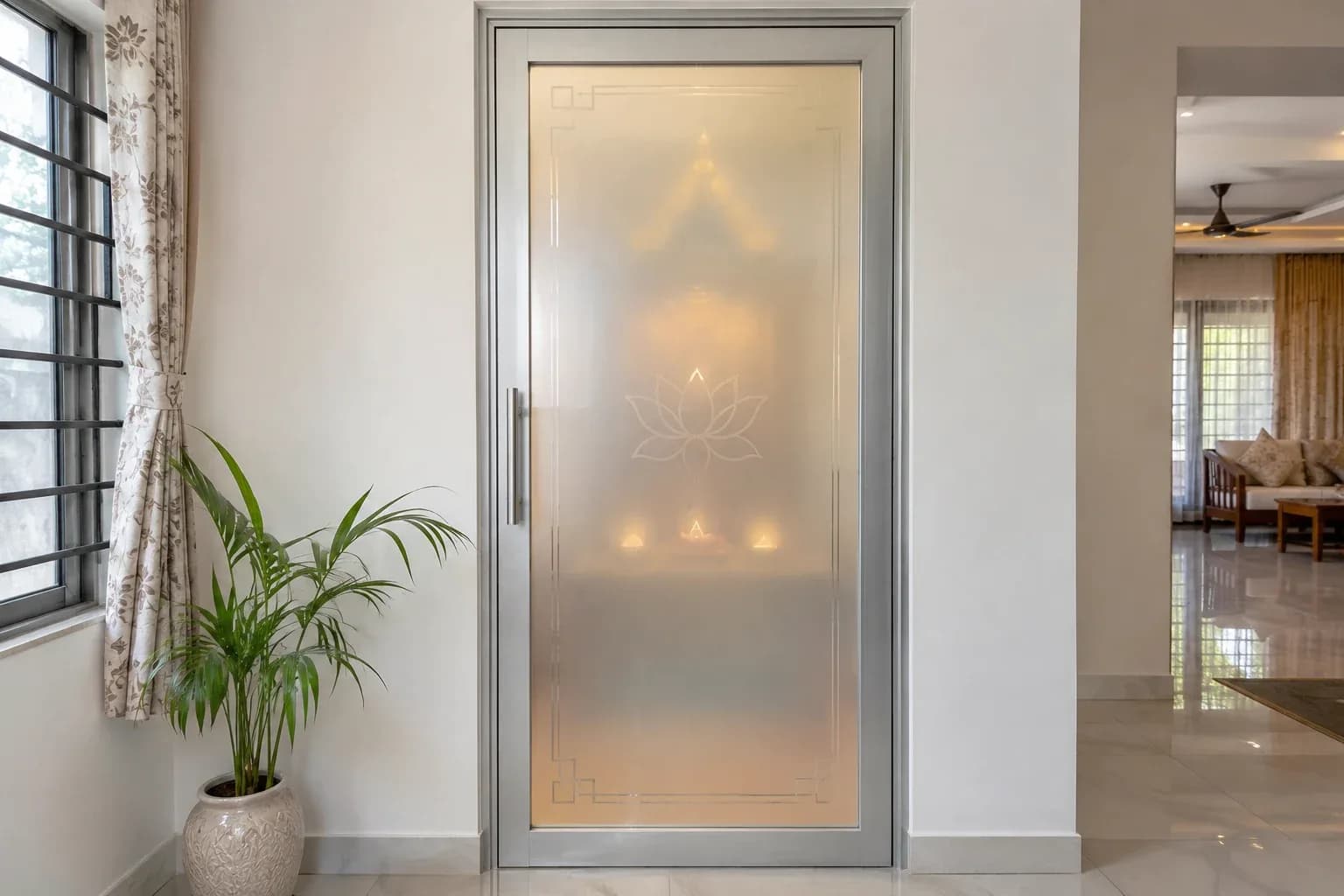
Let the glass supplier specify appropriate safety provisions for the proposed location and use. Confirm the glass type, edge treatment and attachment with the installer. Do not select thickness from appearance alone. If the door has a decorative film, pattern or screen, review the actual privacy effect from both sides under different lighting.
## Check opening and maintenance in the room
Draw the complete door movement with nearby furniture and the space used in front of the pooja area. Check handle clearance and access for cleaning both glass faces. For a sliding design, ask how the track is cleaned and how a leaf can be serviced. For a hinged design, confirm the opening stop and adjacent surface protection.
Keep the final measured drawing with the order and approve substitutions before fabrication. At handover, inspect alignment, movement, edge finish and the agreed privacy treatment. Ask the supplier to demonstrate permitted adjustment and provide cleaning instructions. Compare complete fitted proposals, including making good the surrounding opening, rather than choosing between frame rates that cover different work.
## Require more than a thickness-only description
Saint-Gobain’s SECURIT environmental declaration includes a 6 mm SECURIT DIAMANT example. That identifies a particular glass product and section; it is not approval for your proposed door. Ask the supplier to specify the glass, processing, edge details, frame compatibility and hardware together for the actual opening. A thickness written in a quotation cannot establish the suitability of the complete moving assembly.
Questions people ask us
Is fluted glass fully private?
Test the actual sample at the expected distance and lighting. Patterned glass can still reveal silhouettes.
Does aluminium remove the need for maintenance?
The coating, glass and moving hardware still need appropriate care.
Can any glass be used in a door?
Have the fabricator specify glazing suitable for the application and applicable requirements.
What should be included in the rate?
Frame, glazing, hardware, transport, fitting and making good should be identified.
When should the opening be measured?
Agree measurement against the completed surrounding surfaces before fabrication.