
Practical guidance
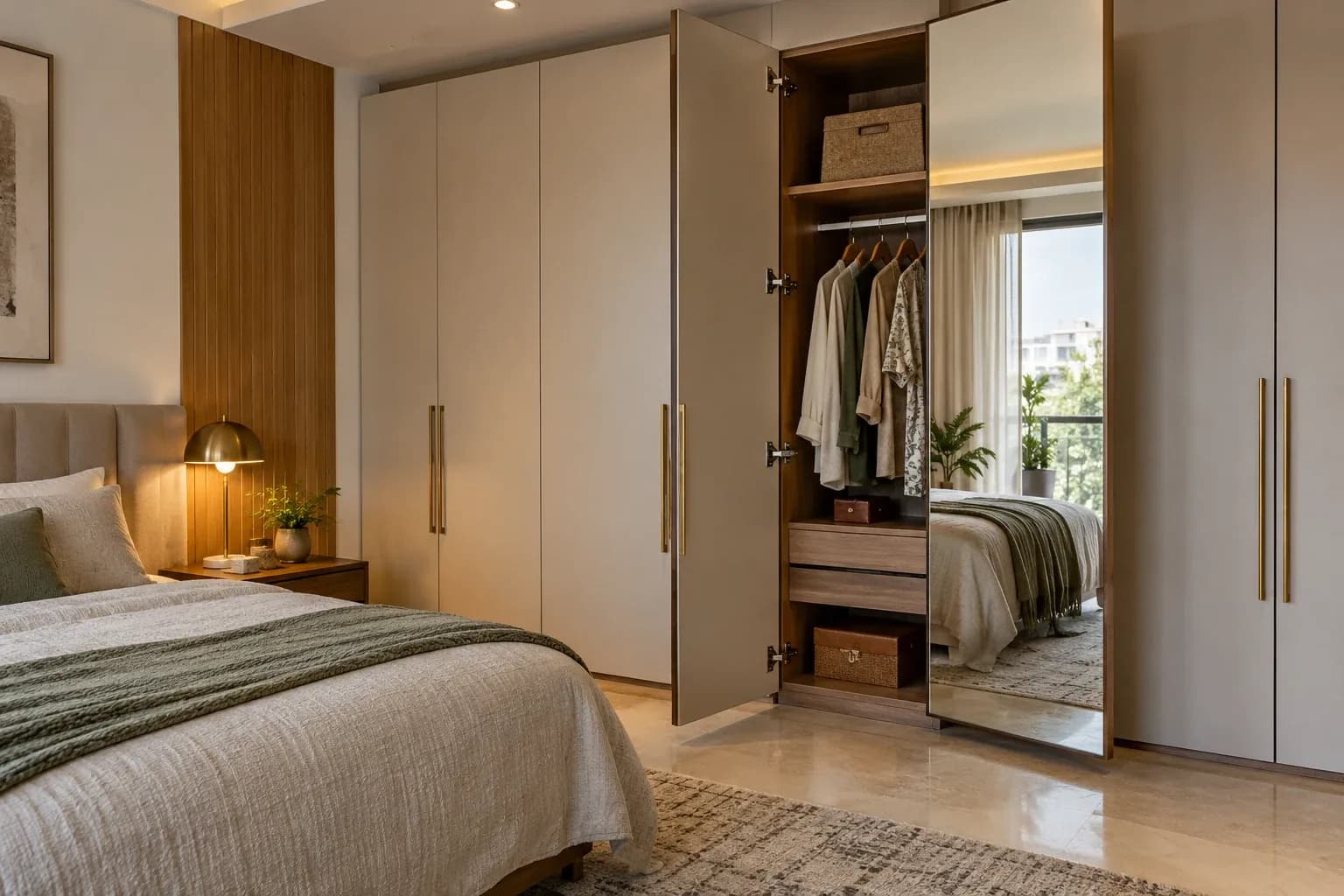
Adding a mirror changes a wardrobe door's weight, attachment requirements and everyday use. Check the door construction, hardware and appropriate mirror specification before ordering. A mirror that fits the visible face is not necessarily suitable for that moving shutter.
## Assess the existing door first
Record the substrate, finished thickness, size and condition. Check how the door is attached and whether its hinges or sliding system permit the extra completed weight. Include handles and any backing or frame in that calculation.
Ask the wardrobe maker and mirror specialist to coordinate. A glass supplier who cuts the mirror may not be responsible for judging the shutter's structure or hardware. Identify who will confirm the entire assembly before fitting begins.
Specify glass and attachment together
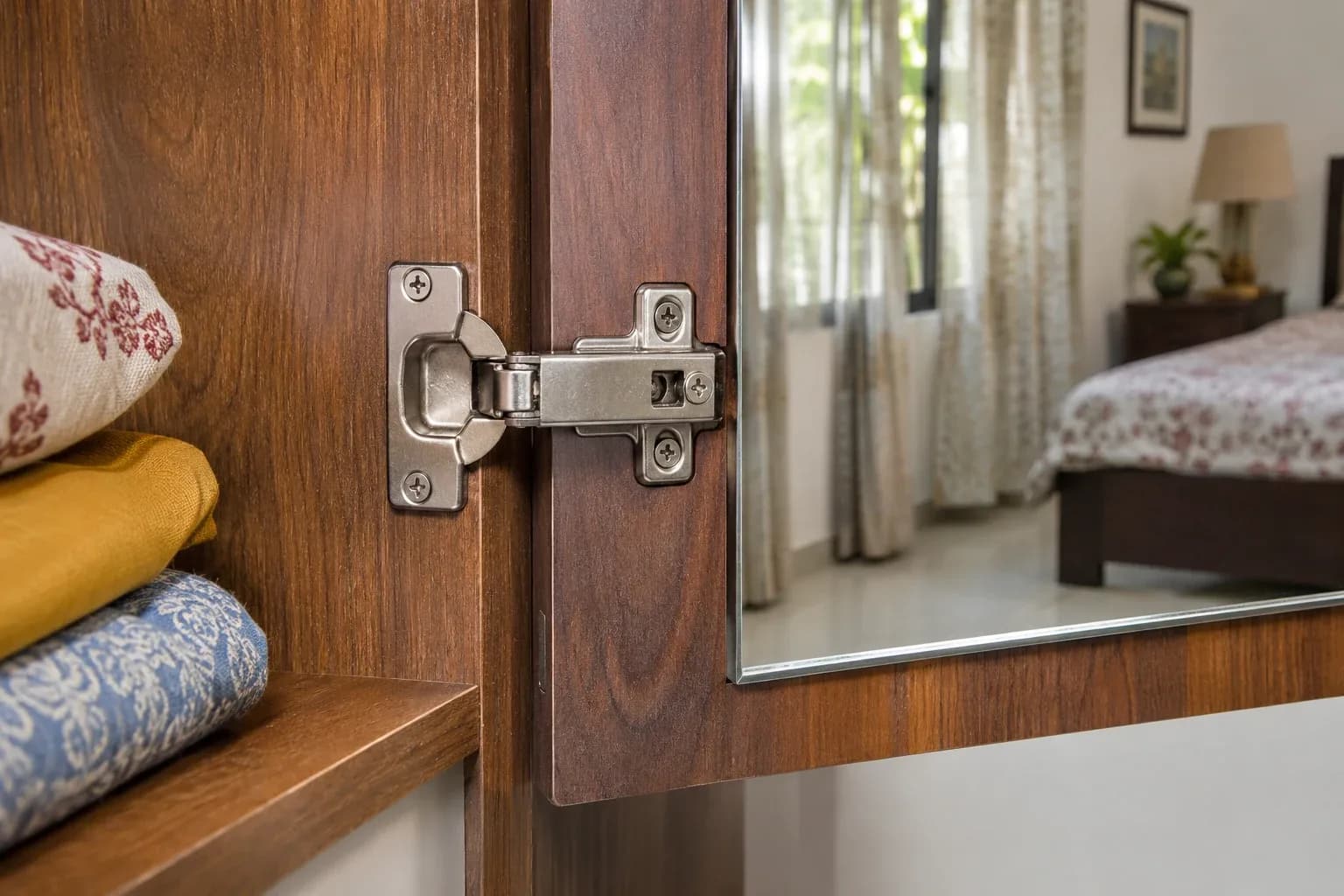
Use a mirror suitable for the application and obtain guidance on safety backing or other required protection. The fixing or adhesive system must be compatible with the mirror backing and the prepared door surface. Do not assume that an arbitrary construction adhesive is appropriate.
Check edge finishing, exposed corners and the relationship to handles. For framed mirrors, include the frame's depth and attachment. For a full-face mirror, decide how the edge is protected when the door approaches a wall or adjacent shutter.
Test the moving front in the room
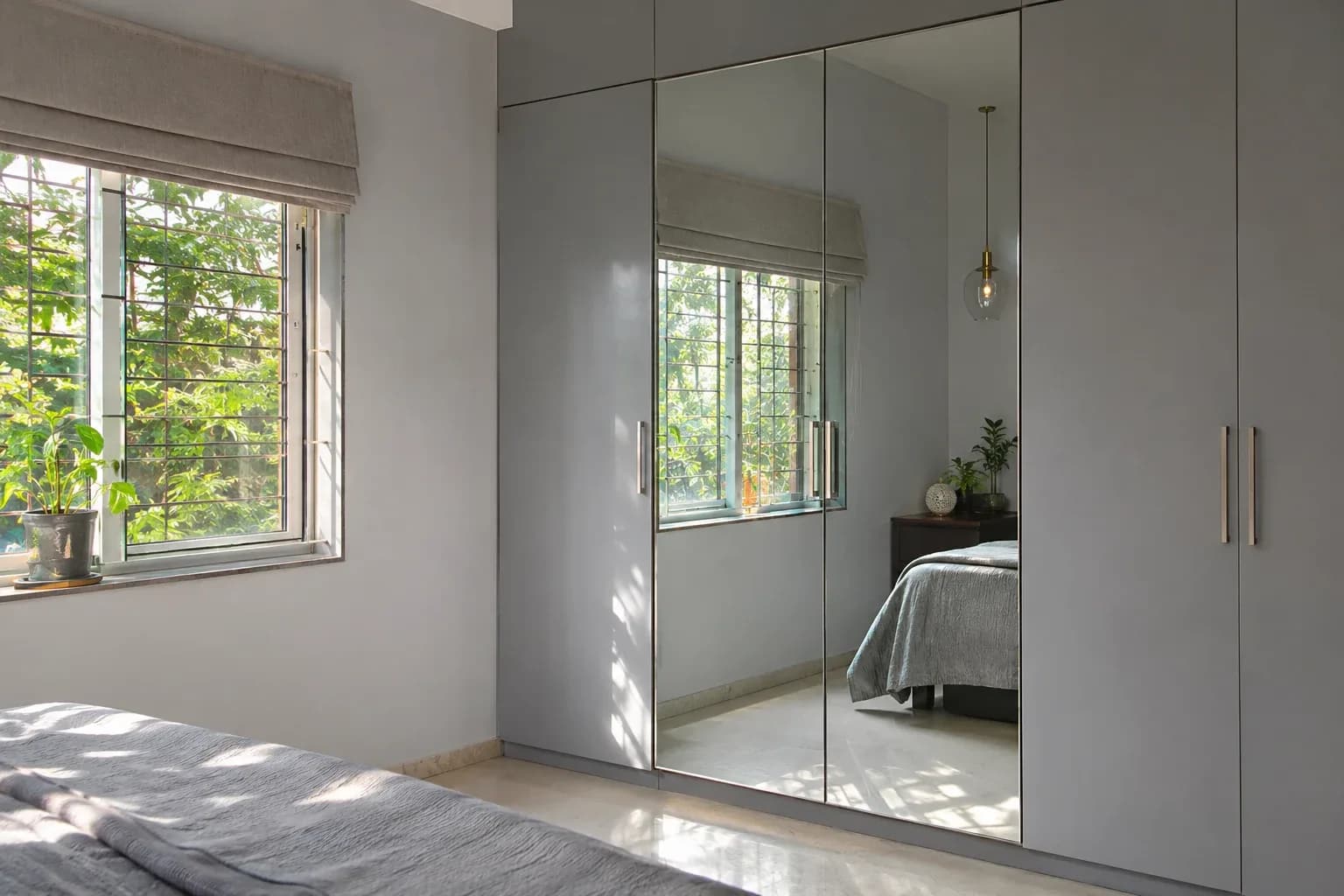
A hinged door can bring a mirrored corner into a narrow passage, while a sliding door needs compatible weight, thickness and clearance. Check reflections from the bed and doorway too, because the visual effect changes across a large moving surface.
At completion, have the installer check movement, attachment and any stops or controls. Keep the mirror specification, fitting method and hardware references. If the door is damaged or loose, correct that before adding a new glass face.
## A practical check before you decide
Use a lightweight reflective mock-up or full-size paper outline to test the mirror area visually. Then obtain written confirmation of the completed door weight and attachment method from the responsible installers. Approve the edges, handle position and opening clearance together.
## Ask for an assessment of the whole moving door
Give the maker the existing door dimensions, construction and hardware references. Include the proposed mirror size, position and attachment system. Ask who takes responsibility for confirming that the complete front is suitable. A door that operates acceptably before the addition may behave differently afterwards, particularly if it is already warped or its fixings are loose.
The glass supplier should specify the appropriate mirror and any safety provisions for its location. The attachment method must suit the mirror backing and the door surface. Ask for written compatibility information rather than choosing an adhesive simply because it holds another type of glass. Keep the supplier and installer responsibilities clear.
## Test use and reflections in the room
Use a temporary outline to judge the mirror position and sight lines. Check what it reflects from the bed, doorway and dressing position in daylight and evening light. Open the proposed front on the plan and confirm that handles, adjacent doors and furniture will not strike the mirrored face.
Before installation, record the edge treatment, handle position and cleaning instructions. At handover, ask the installer to check alignment and operation, then inspect the mirror edges and surrounding finish. Keep the product and attachment references for future maintenance. If the existing front cannot be suitably assessed, compare a purpose-made replacement door or a separate wall mirror instead of adding weight to an uncertain assembly.
## Specify the mirror separately from the door
Saint-Gobain lists Diamant Mirror in 4 mm, 5 mm and 6 mm options in its product information. These are product options, not approval for attachment to your existing shutter. Have the glass supplier and door maker agree the appropriate glass, safety provisions, attachment and complete moving-door weight before ordering.
Questions people ask us
Can any wardrobe door take a mirror?
No. The door construction, hardware and attachment must suit the added assembly.
Is ordinary adhesive enough?
Use a system compatible with the mirror backing, door surface and application.
Should sliding-door hardware be checked?
Yes. Added weight and thickness can affect the whole system.
Can a cracked mirror be covered with another?
Have the damaged assembly assessed and repaired appropriately before adding material.
Who should approve the installation?
The wardrobe maker and mirror installer should agree their responsibilities for the complete front.