
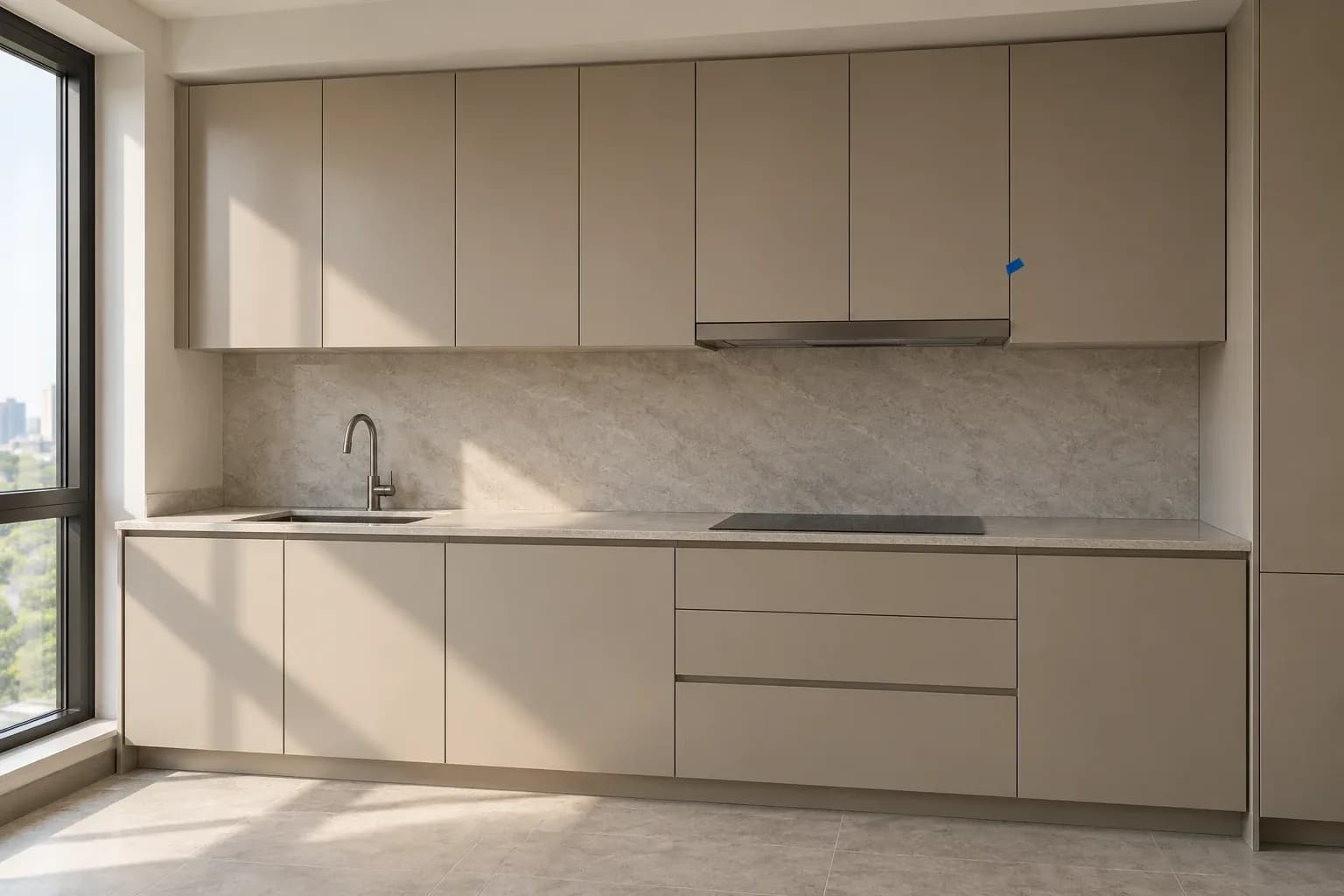
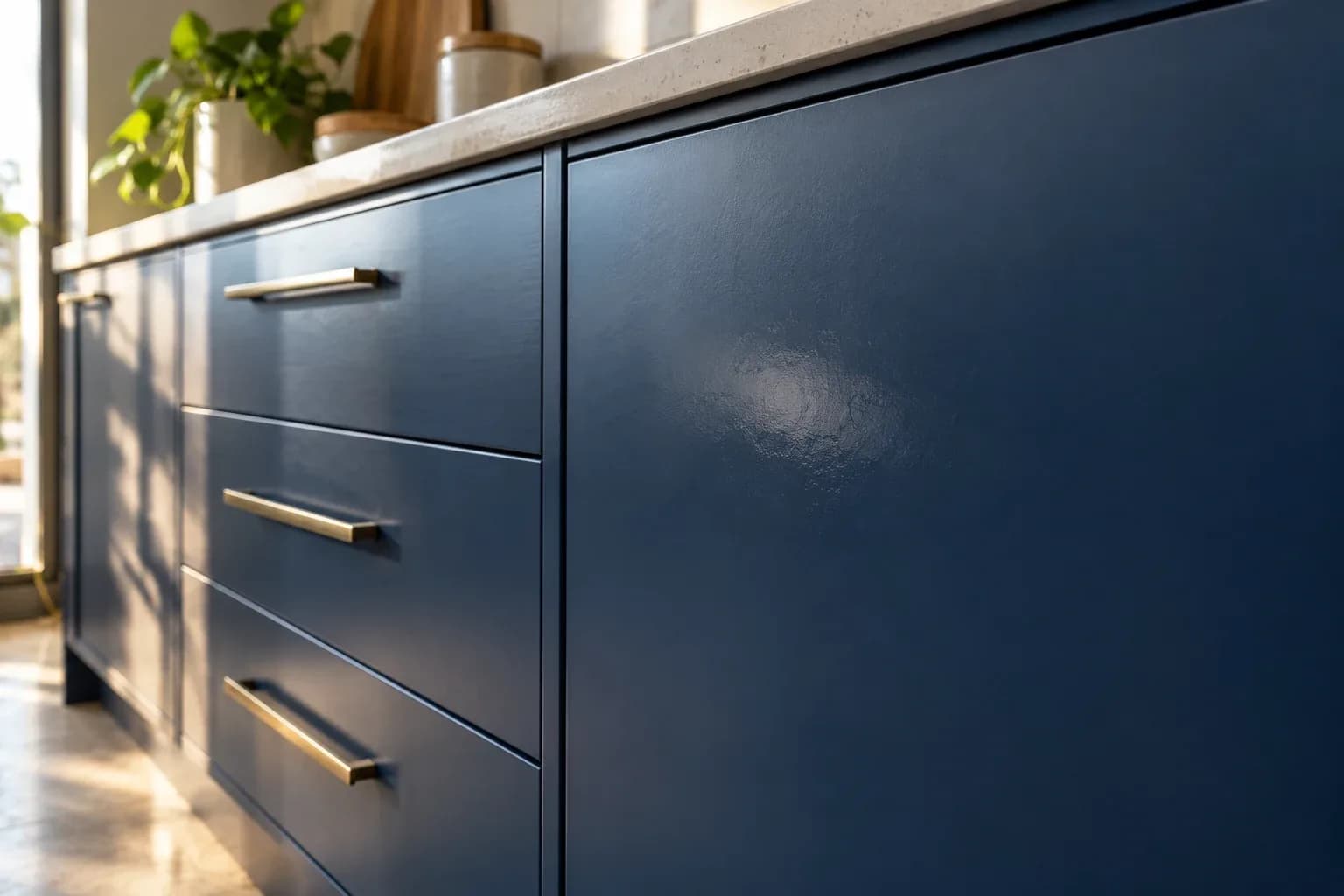
Inspect the complete run before the close-ups
Stand where you normally enter the room and switch on the lights you will use every day. Compare the installed fronts with the approved sample and drawing. Look for a door facing the wrong grain direction, a mismatched end panel or a handle set at a different height. Open the doors to check the returns and edges that disappear when the kitchen is closed.
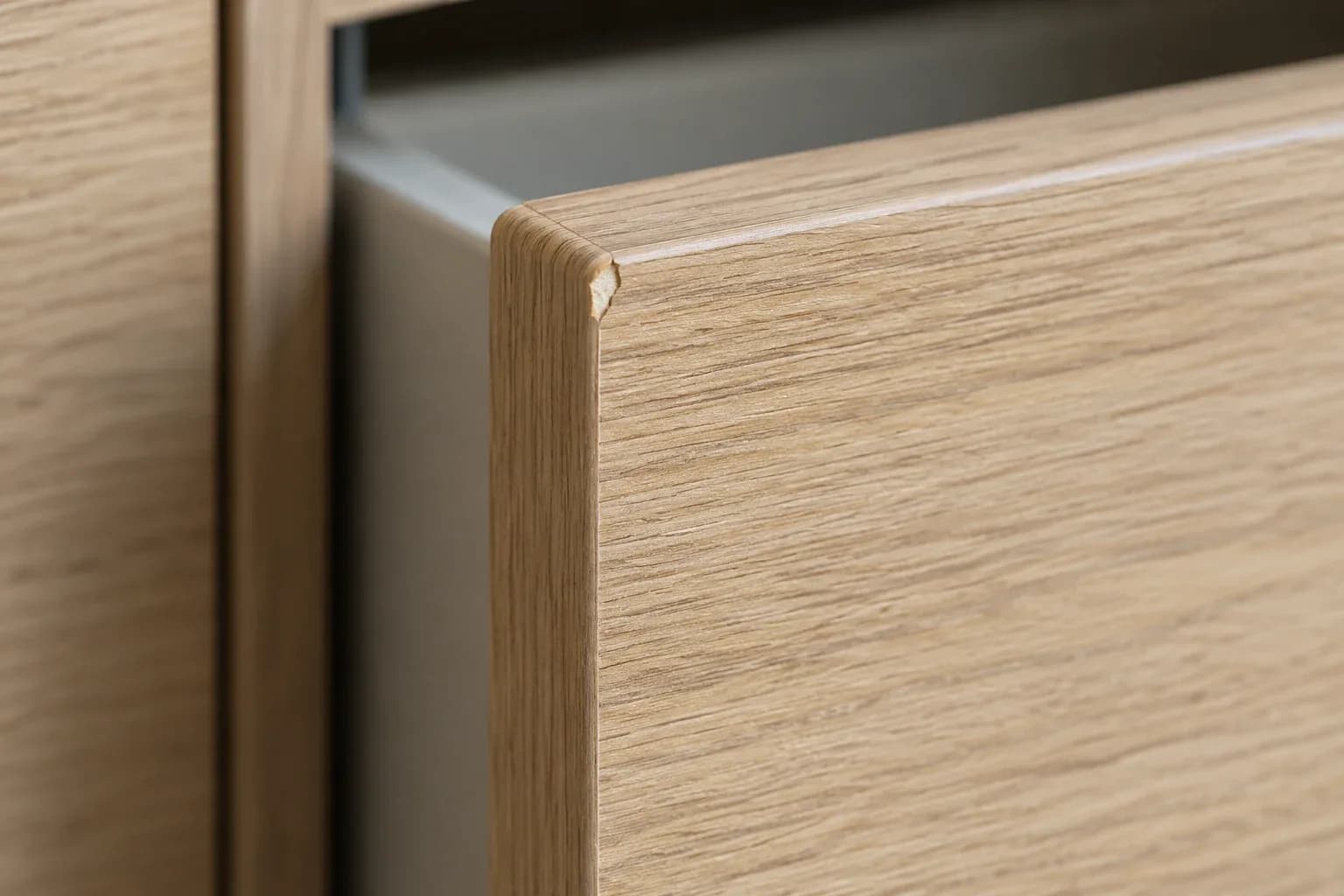
Then move closer. A line where an edge band meets the face is not automatically a defect. Check whether the junction is continuous, lies flat and looks like the approved sample. A lifted strip, chip exposing the core or sharp proud corner is a specific issue you can show the installer. Do not peel or lever the edge to make the point.
Separate the finish from the fitting
Test each door and drawer through its normal travel. If two fronts rub, photograph them shut and partly open; the problem may be alignment rather than a damaged finish. If a mark stays in the same place on one panel when it moves, record that separately. Look around handle fixings, hinge-side corners and freshly cut openings. These small areas are easy to miss during a quick tour.
Ask the installer to demonstrate any proposed cleaning or touch-up on a spare piece first. Solvent or abrasive rubbing can alter the sheen and turn a removable mark into a permanent patch. On new work, pause your own repairs until you have agreed what the supplier will do.
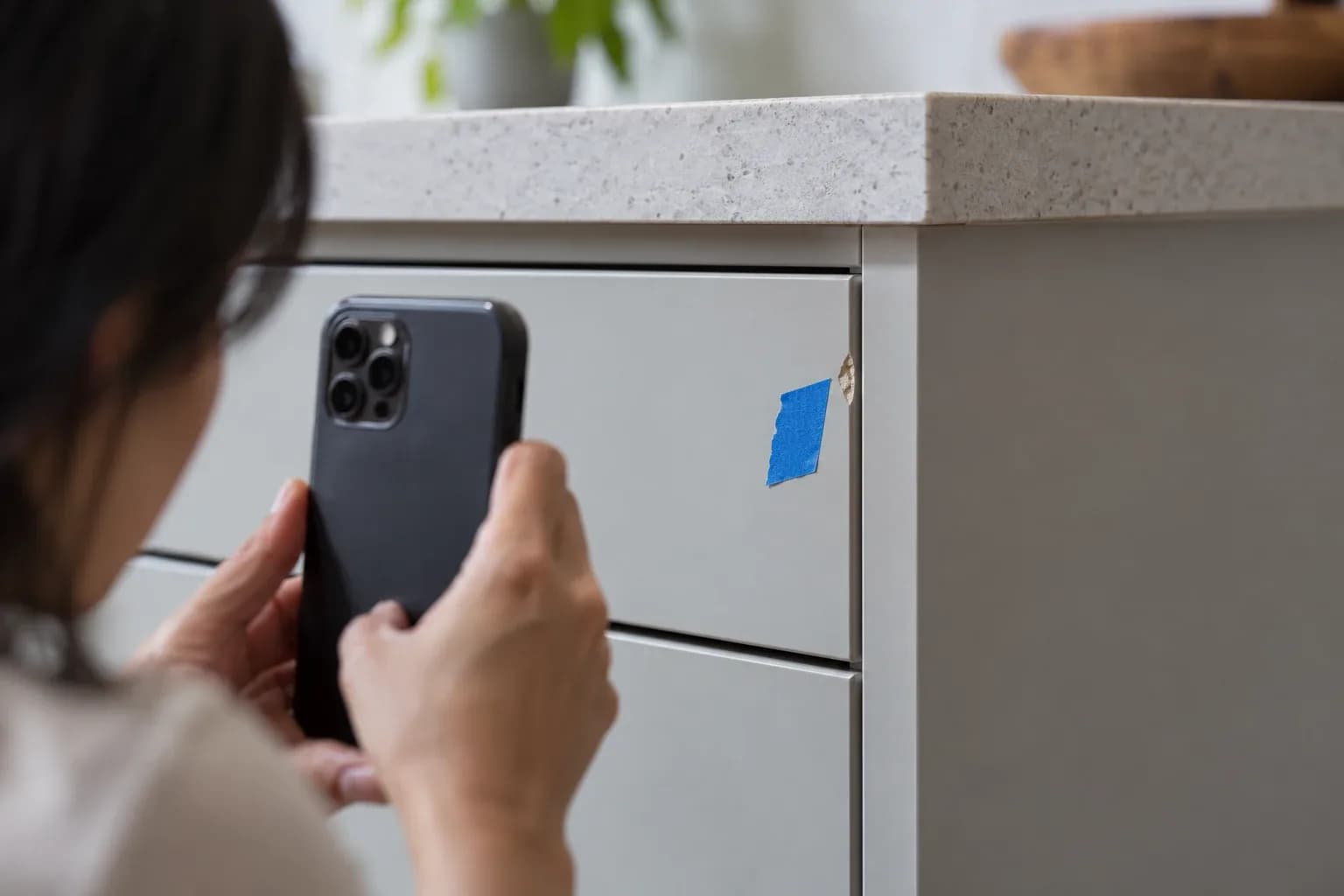
Turn the walk-through into a short snag list
Give each issue a location, a description and two photos: one showing the cabinet in the room and one showing the detail. Put a ruler beside a gap if scale matters. Number issues rather than sending twenty unlabelled close-ups. For example: ‘B3, drawer below hob, chip at top left, visible when closed.’
For every item, record the proposed remedy and a date to inspect it again. A replacement door should be checked beside its neighbours for colour, pattern and fit. A realigned drawer should be opened and closed with the adjoining front in use. Keep the original sample, list and final photos together so everyone is looking at the same job.
Use an agreed sample to separate a design choice from a fabrication fault. A 1 mm decorative face and a 2 mm edge band, for example, describe different components; their numbers do not tell you whether the join is well finished. Compare the edge profile on the job with the sample signed off for that location. On a patterned door, note whether the pattern direction follows the elevation and whether a matching neighbour was made from a noticeably different part of the print.
Give operating faults their own line in the record. If the drawer face looks chipped where it touches the next door, a cosmetic repair alone may fail on the first busy evening. Ask the installer to correct the interference before repairing the face and repeat the opening test together. That sequence connects the visible mark with the behaviour that caused it.
If a covering has already lifted, see Can peeling kitchen cabinet coverings be repaired?.
Questions people ask us
Does visible edge banding mean the panel is poor?
Not by itself. Inspect whether the edge is even and secure, and compare it with the detail agreed before fabrication.
Should I accept a chip on a concealed edge?
Record its location and ask how the edge is meant to be finished. Exposure to handling or splashes and the agreed specification matter.
How do I photograph a gloss defect?
Take one normal front view, then a second from the angle where the defect appears. Keep a fixed nearby feature in frame so the fitter can locate it.
Is a touch-up always enough?
Ask to see the proposed result on an offcut. A small cosmetic repair and a lifting edge need different remedies.
When should I recheck?
After the agreed work, with normal room lighting and adjacent doors and drawers operating. Tick off each numbered issue individually.
Shop these categories
Keep reading
- IdeasTwo-tone kitchen cabinets: how do you choose a combination that feels balanced?
Choose one finish to carry most of the kitchen and give the second a clear place to begin and end.
- CompareFlat slab vs Shaker cabinet doors: which suits an everyday kitchen?
Choose slab doors if you want broad, uninterrupted surfaces and a quick wipe across each front. Choose Shaker if you like the shadow around a recessed panel enough to take a little extra care at its lower corners. Both styles can have handles; the profile and the opening method are separate decisions.
- CompareKitchen island vs peninsula: which layout works better in a compact home?
A peninsula earns its place when attaching one end frees up a useful passage or makes everyday seating possible. An island earns its place when people can use the routes around it, even with a stool occupied and the fridge open. Test both in your own room before deciding.
- GuidesHow do you verify plywood quality before it disappears under laminate?
Verify two different things: the identity of the material delivered and the condition of the particular pieces going into your furniture. An invoice can help with the first. It cannot explain a loose layer in the panel in front of you.
- CareUneven cabinet-door gaps: is it a hinge adjustment or a fitting problem?
A gap that changes from top to bottom is a clue, not a diagnosis. Before turning a screw, establish whether one door is out of line, several units are misaligned, or the door itself will not lie flat.
- GuidesCabinet refacing or replacement: when is keeping the old kitchen worth it?
Keep the cabinet boxes if they are dry, firm and arranged the way you cook.