

Introduction
An in-cabinet dish-drying rack can free worktop space, especially near a small sink. Its success depends on drainage, ventilation, mounting and the size of the dishes. Hiding wet plates in a cupboard is only practical when the whole arrangement is designed for that use.
## Understand where the water goes
Ask to see the rack and its drip arrangement together. Some designs drain toward the sink, while others use a removable tray that must be emptied and cleaned. Check how water is kept away from panel edges and fixings.
A decorative cupboard with a generic wire basket added later may not provide the same detailing. Discuss the complete cabinet with the maker, including the bottom, exposed edges and air movement. Persistent moisture or swelling is a reason to investigate the installation rather than add another absorbent liner.
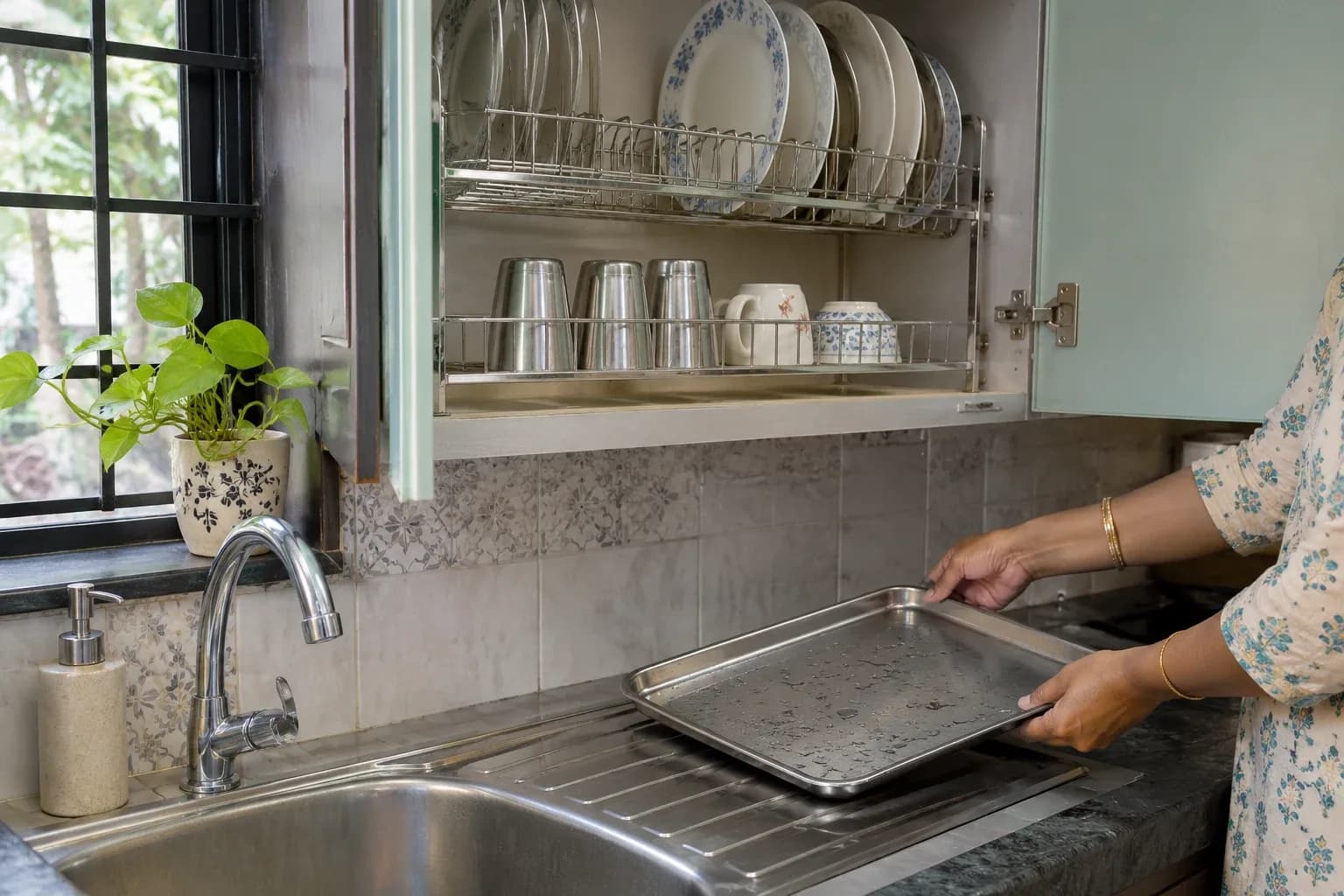
Try the plates you actually own
Take a dinner plate, steel thali and a large serving bowl to the demonstration. Check slot spacing, usable height and the route in and out. A rack that holds small flat plates neatly may handle deep steel dishes differently.
Reach matters too. A high rack full of wet heavy crockery can be uncomfortable for a shorter user. Test loading from the sink position without stretching over the tap. Ask the fitter about the load rating and how it is transferred into the cabinet sides, then keep everyday items in the most accessible positions.
Plan the cleaning routine
Remove the tray and inspect its corners. Confirm you can wipe beneath the rack without taking out a permanent cabinet part. Look at how the metal components are finished and what maintenance the manufacturer recommends for your water conditions.
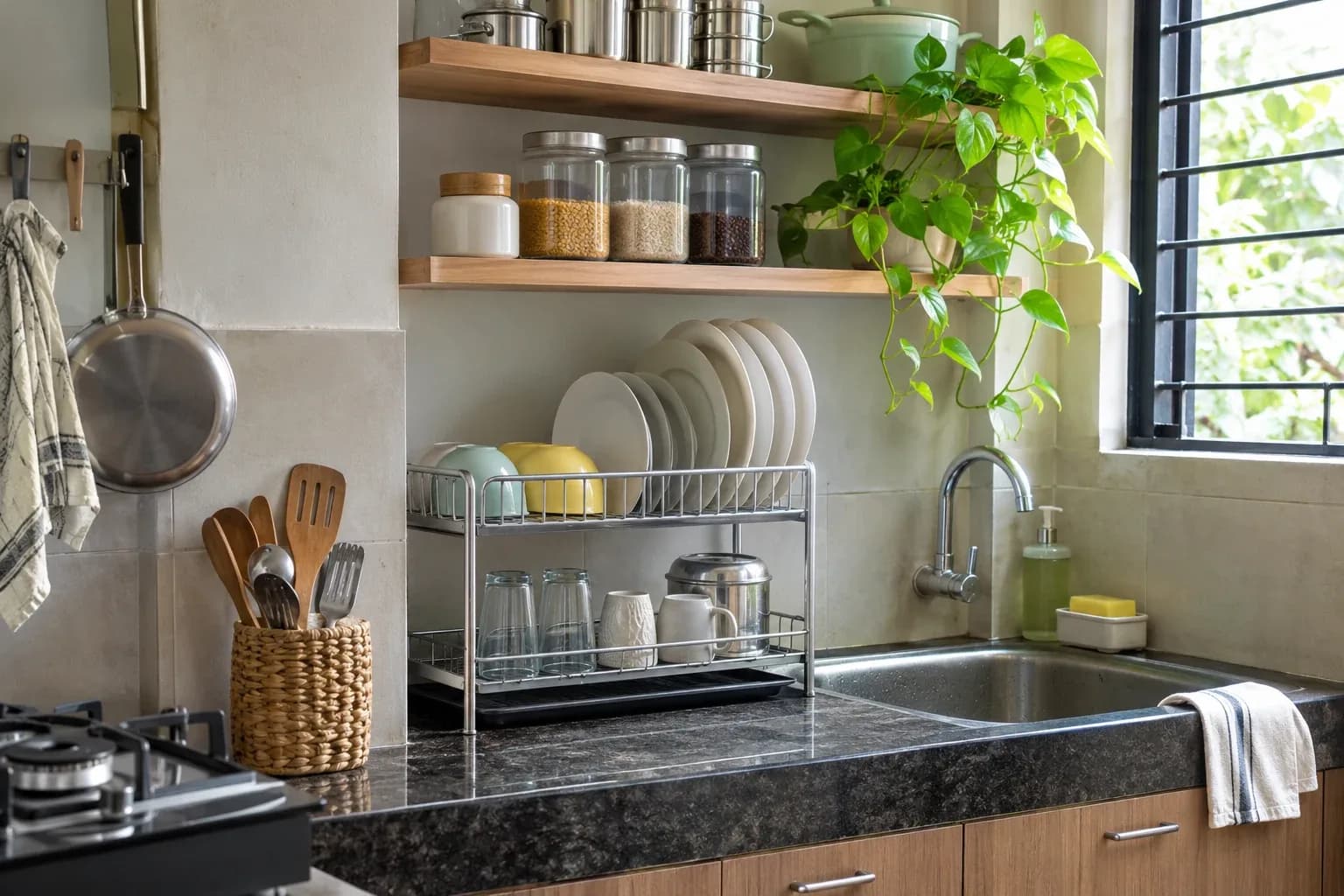
Compare the arrangement with a removable counter rack. One saves visible worktop area; the other is easy to move, inspect and replace. The choice should suit how many dishes you wash at once and how often you are willing to empty the drip tray.
## A practical check before you decide
Stage one normal meal's washing-up rather than testing a single plate. Load the proposed rack, remove the largest dish and empty the tray. Check whether the tap, cabinet door or next shelf obstructs any of those movements. Put the final rack model and cabinet detailing on the drawing.
Rehearse a complete washing-up session
Lay out the crockery from a normal family meal before choosing the rack. Include the steel thalis, bowls, cups and lids that would all need space at the same time. Check which items fit the slots and which would have to sit elsewhere. A rack that looks spacious with matching showroom plates can leave you short of a place for everyday cooking vessels. Keep the route from sink to rack clear enough to transfer wet items comfortably.
Ask every regular user to try the loading position on a mock-up. Notice whether a large plate can enter without hitting the door, shelf above or tap. Do the same test when removing it. Reaching around a stored dish while holding another wet item can be awkward even if the dimensions on the drawing appear sufficient.
Put the tray and cabinet on the same drawing
Mark the tray-removal route, supports and exposed panel edges. For an opening shown as 450 mm or 600 mm on a drawing, ask whether that number describes the outer cabinet or the actual usable opening; neither label alone confirms a particular rack will fit. Have the maker use the measured opening and the chosen product's fitting requirements together.
Check where the tray can be put down while it is emptied and cleaned. Ask how the area beneath it will be reached and what can be removed without tools. A tray that can be withdrawn in a showroom may become obstructed by a nearby tap or cabinet front in the final arrangement.
Decide what successful use looks like
At handover, repeat the loading, unloading and tray-cleaning sequence with your own dishes. Look for trapped drips, inaccessible corners and contact between moving parts. Keep the model reference, fitting instructions and a photograph of the arrangement with the kitchen records. If you later find persistent dampness, investigate the drainage and ventilation rather than assuming the decorative finish makes continued moisture harmless.
Questions people ask us
Does every rack drain directly into the sink?
No. Confirm the drainage route or removable tray arrangement.
Can I add one to an existing cupboard?
Only after assessing dimensions, support, moisture detailing and access.
Will it take Indian steel thalis?
Test your actual dishes because rack slots vary.
Does a cupboard rack eliminate cleaning?
The rack, tray and surrounding cabinet still need regular inspection and cleaning.
What should be included in the order?
Specify the rack model, load rating, tray, cabinet preparation and fitting responsibility.