
Introduction
Choose a runner for the loaded drawer, including the drawer's own weight, and verify how the manufacturer defines the rating. Heavy cookware also tests the bottom panel, joints, cabinet fixings and opening width. Hardware capacity is one part of the assembly.
## Weigh what will actually live there
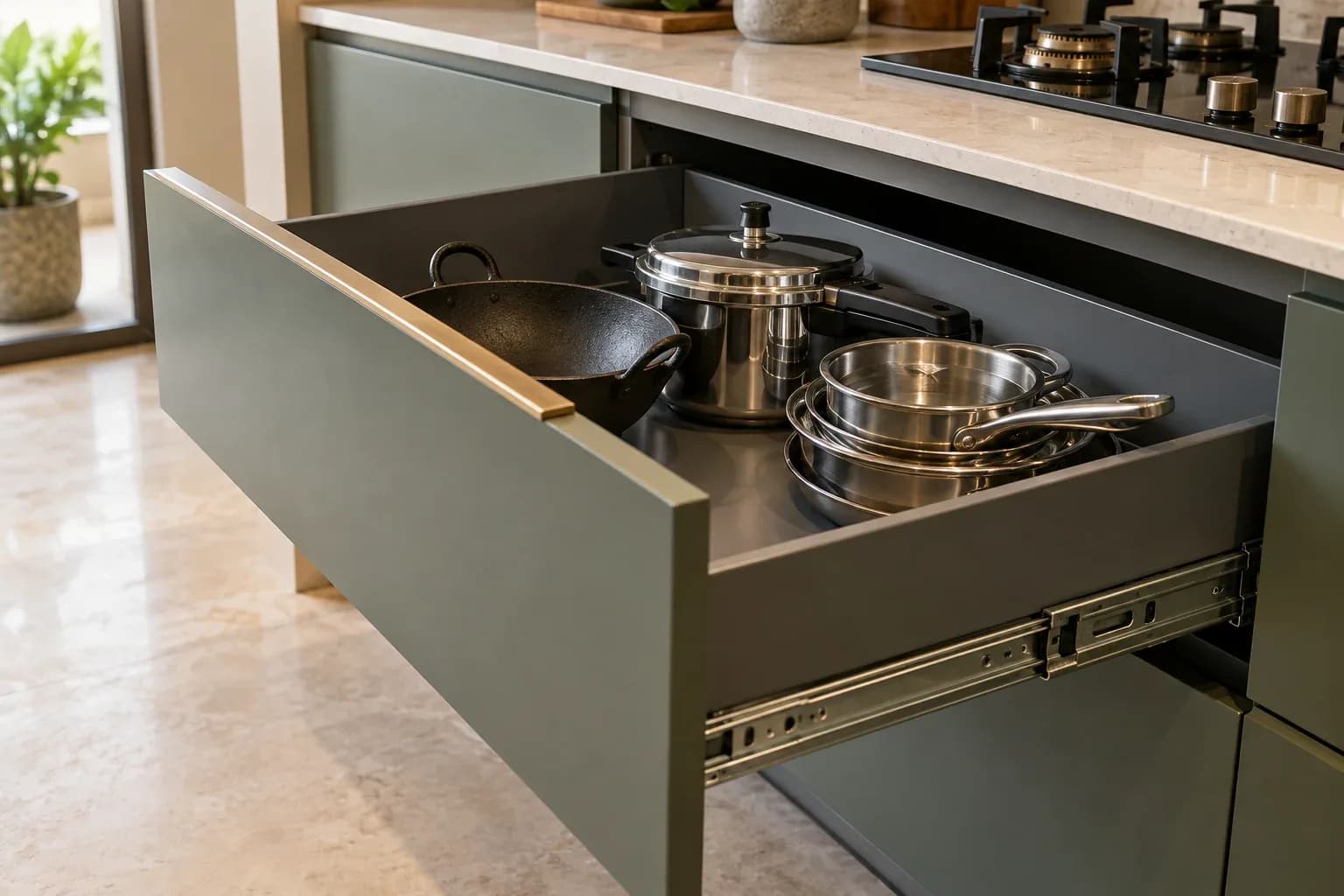
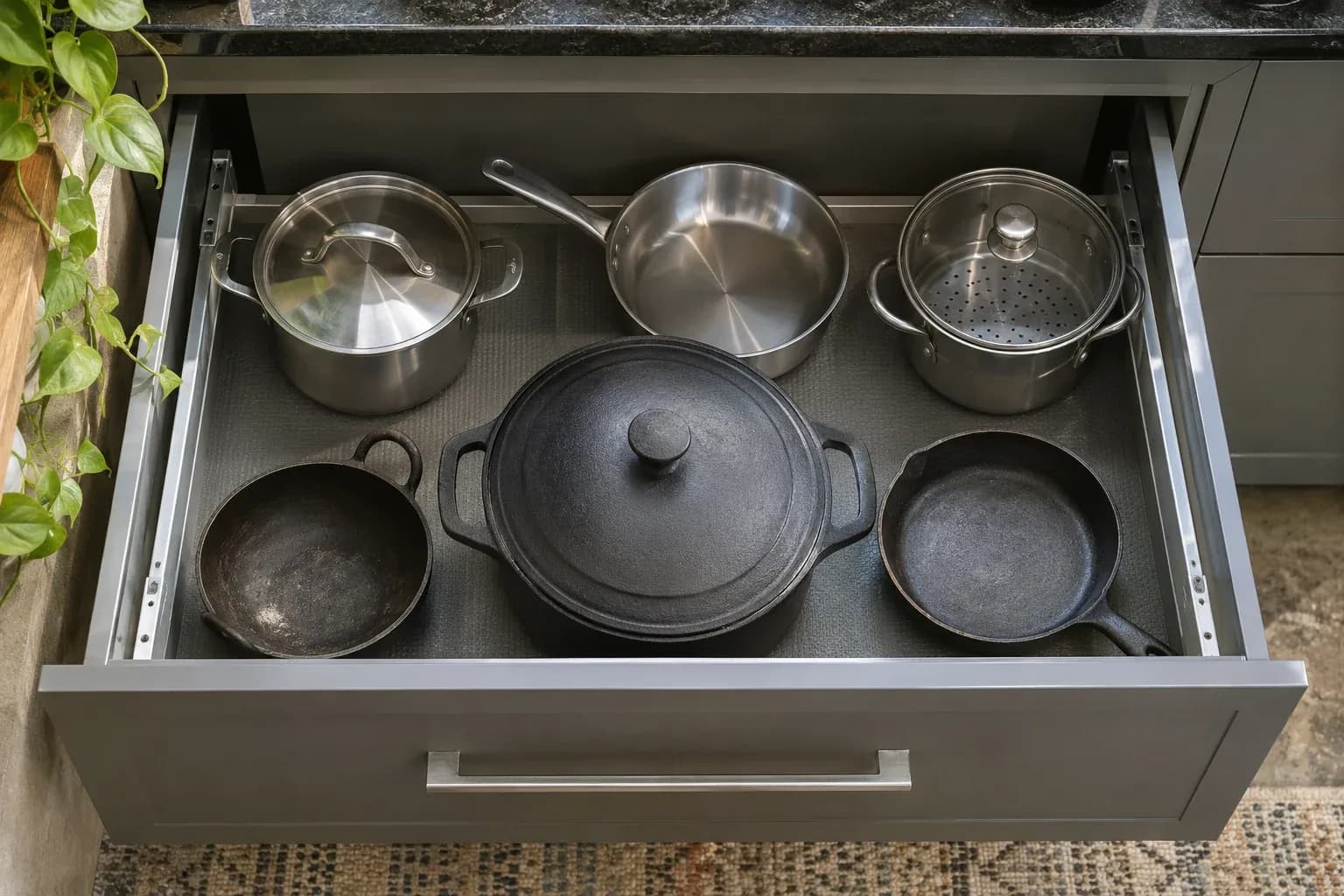
Put the usual pots, lids, pressure cooker and inserts together before designing the drawer. Weigh them with a household scale in manageable groups. Add the drawer box, front and internal organisers to the calculation. Keep the figures rather than substituting an impression that the load is fairly light.
Avoid designing around an empty display. A drawer that carries stainless cookware today may gain a cast-iron pan later. Discuss reasonable future use with the maker and select a product suited to that application. Leave the final rating and safety margin to the product instructions and cabinet designer.
Read the exact rating and geometry
Check whether the published figure applies to the runner pair or another defined assembly, and whether it includes the drawer's weight. Also confirm nominal length, permitted drawer width, extension, mounting method and any conditions attached to the test rating. These details vary.
Blum's Indian TANDEM range, for example, includes 30 kg and 50 kg classes. Those numbers describe options within that range, not a universal classification for every concealed runner. A load figure copied from another brand's online listing should not be used to approve the hardware being delivered.
Check the structure carrying the hardware
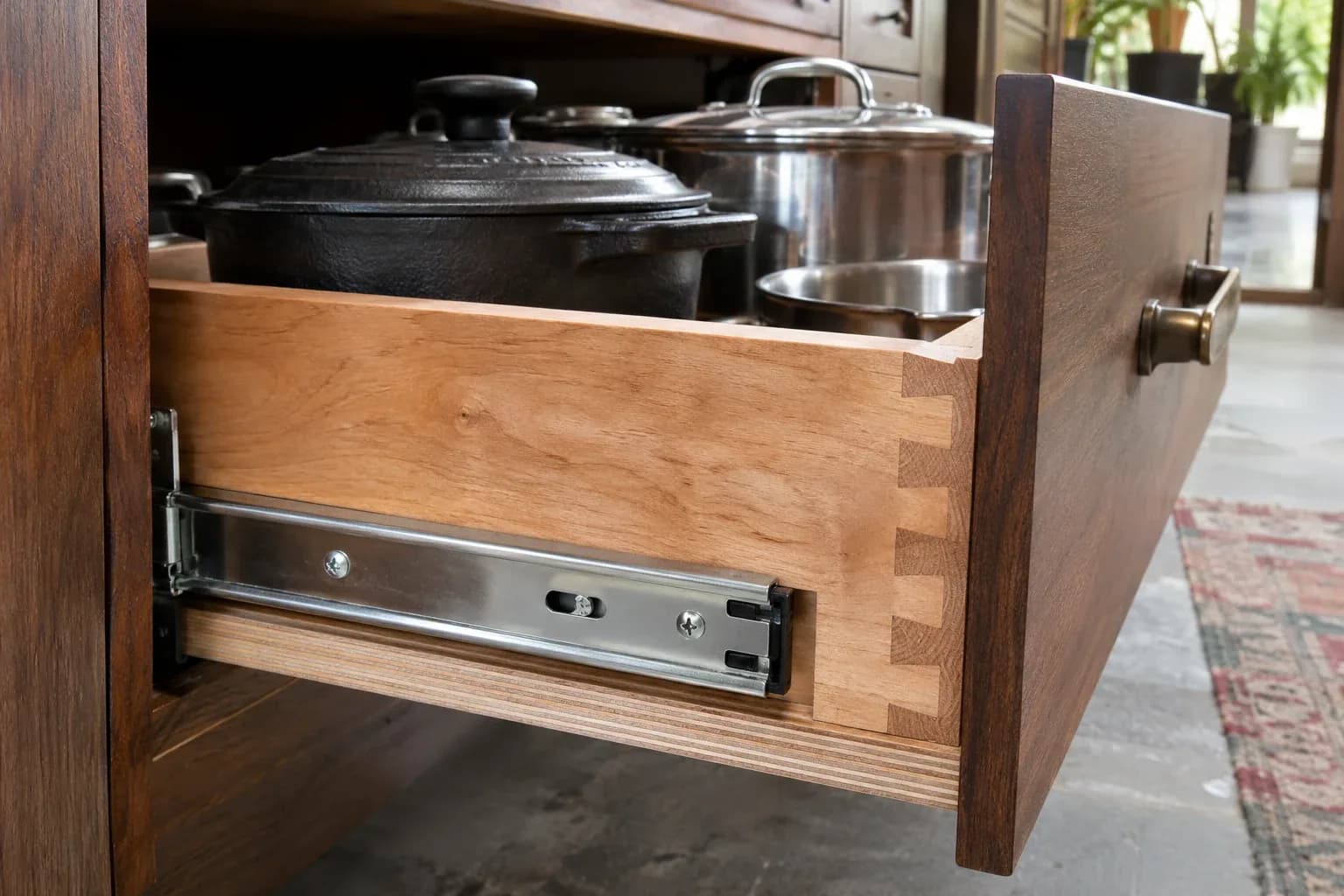
Look at the drawer-bottom span and how it joins the sides. A highly rated runner cannot stop an inadequately supported bottom from bowing. The cabinet side must also hold the prescribed fasteners in sound material. Ask the carpenter to explain both details before fabrication.
At handover, load the drawer normally and observe full travel, resting position and front alignment. Test access to the heaviest item from where you will lift it. If the proposed drawer becomes too wide or cumbersome, dividing the storage may be a better result than buying a higher number on the runner label.
## A practical check before you decide
Make a load list with cookware, accessories, box and front recorded separately. Keep a photograph of the manufacturer's rating and the complete part code. Ask the fitter to demonstrate the loaded drawer, then record the removal method so you can clean behind it without lifting against its locks.
Make a load list that the carpenter can use
Group the cookware by the drawer where you intend to keep it. Include lids, nesting pans, pressure-cooker parts and any organiser that remains inside the drawer. Weigh the group rather than estimating from the size of the largest pot. Keep the drawer box and front separate in your record, and ask the supplier what the stated hardware rating includes. That distinction avoids comparing two quotations that use different definitions of load.
Think about the routine that creates the heaviest condition. You may normally keep a large vessel elsewhere, but place it in this drawer after washing. Record that possibility. Leave room to lift items out without tipping a stack against the front. A high nominal rating does not make an overfilled drawer convenient to use.
Compare the exact drawer, not a showroom substitute
Ask the installer to demonstrate the proposed width, depth and opening arrangement with a representative load. Watch whether the front stays level, whether the box appears to twist and whether the bottom remains properly supported. Note any rubbing or change in effort during the travel. Treat an unusual noise or visible movement as something to investigate before accepting the fitting.
For a front specified with 1 mm laminate, provide the complete finished construction rather than counting the laminate as the whole front. The maker should match the box, bottom, front and runner as an assembly. Keep the finished internal dimensions on the same drawing as the hardware reference.
Agree what will be checked at handover
Repeat the demonstration after installation with your normal cookware. Ask the installer to show the intended release method, explain any routine care and identify the information required for a replacement. Keep the invoice and model reference together. If operation changes later, compare it with this original loaded test before deciding that a stronger runner is the answer. The cause could instead involve an obstruction, a loose fixing or the drawer construction.
Questions people ask us
Does the drawer's own weight count?
Confirm the manufacturer's rating definition and include the box, front and fittings in your planning.
Is the runner rating always for a pair?
Read the specific product documentation. Do not infer the unit from a reseller's abbreviated title.
Will stronger runners fix a sagging bottom?
No. The bottom and its supports need an appropriate structural design.
Can I use a longer runner to gain capacity?
Length, capacity and mounting geometry must all suit the actual cabinet.
What if the drawer twists with normal cookware?
Stop overloading it and ask the installer to check the box, fixing points and runner selection together.