
Practical guidance
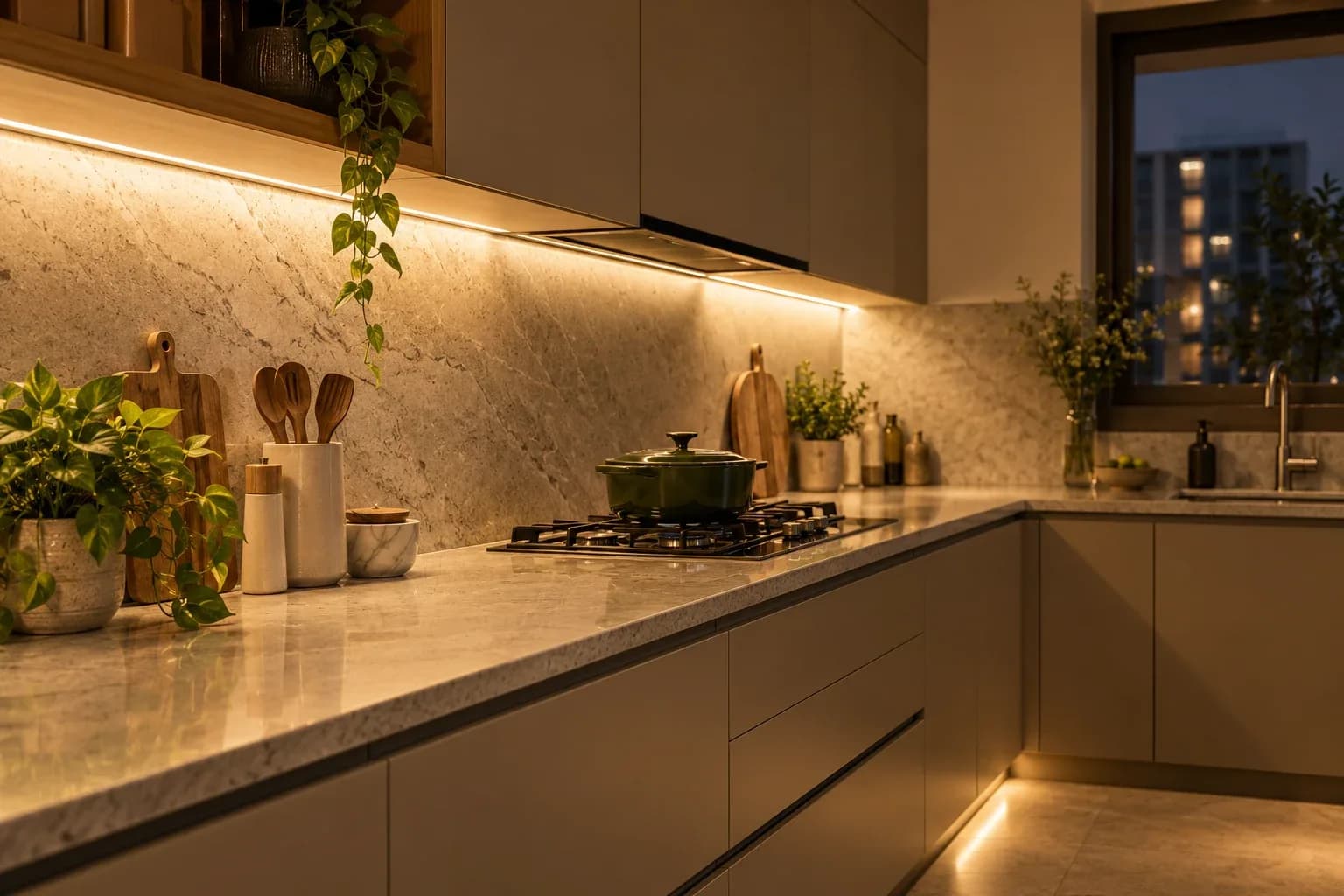
Visible LED dots can come from the strip itself, its diffuser or reflections on a polished worktop. Test the complete strip-and-profile assembly in the room's sight lines before routing channels into finished cabinets. A diffuser sample viewed on a desk cannot reproduce every reflection.
## Look from the seated position
Check the proposed lighting from the dining table, doorway and the place where you prepare food. A fitting hidden when standing close to the worktop may be visible when seated farther away. Note whether you see the strip directly or only its reflection on the surface below.
Those are different problems. A front lip may conceal a direct view but leave the reflected dots unchanged. Moving the fitting within the manufacturer's mounting requirements, changing the profile or choosing a different strip may be needed.
Test strip, channel and cover together
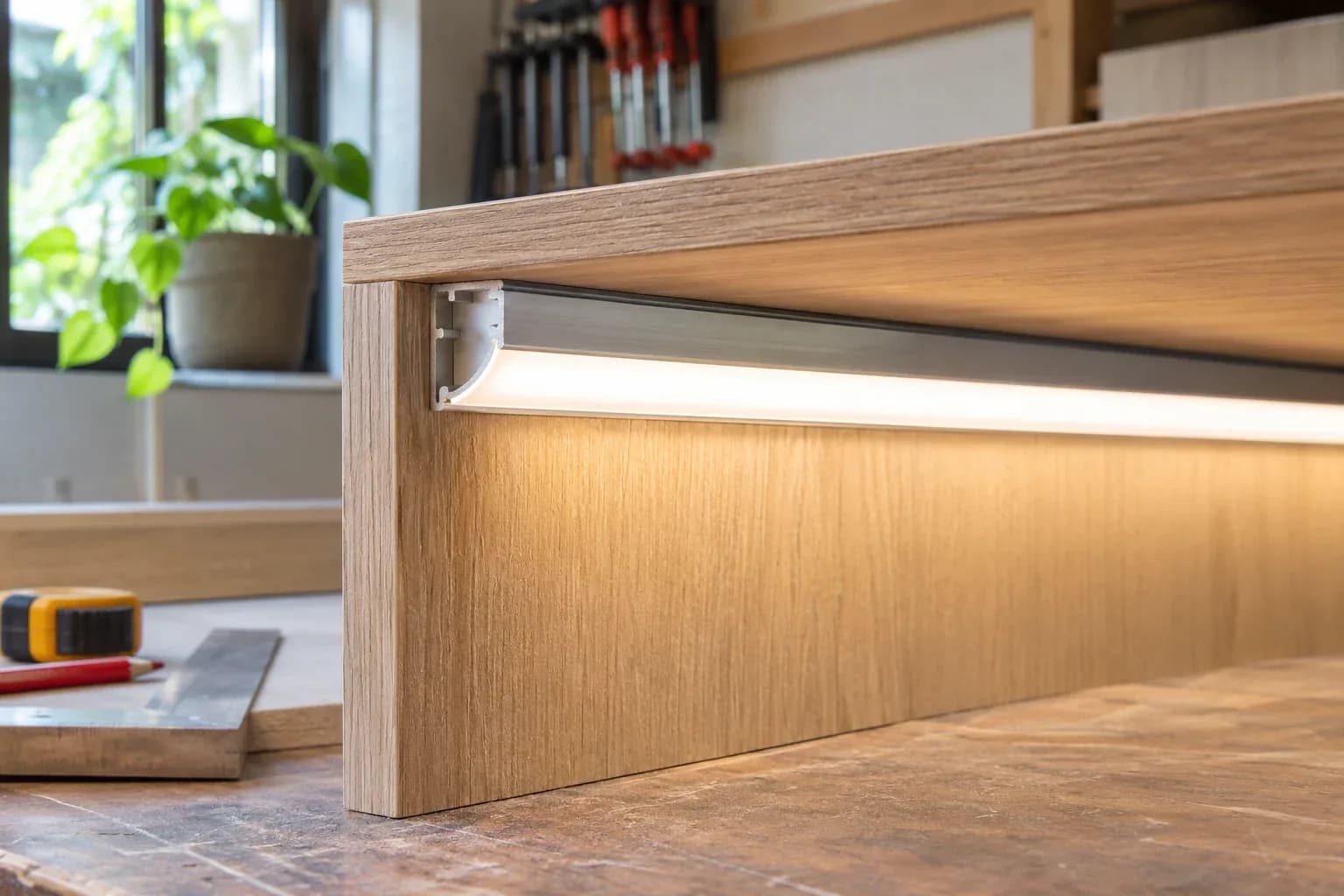
The spacing of light sources, distance to the cover and diffuser material affect the appearance. Ask the lighting supplier for a working assembly rather than selecting each component from separate photographs. A COB strip may appear more continuous, but still needs suitable mounting, power and installation.
Set the sample at the intended height above the real worktop finish. A glossy dark surface can reveal reflections that barely appear on a pale matt sample. Test dimming as well, because a setting that looks good at full brightness may behave differently at the evening level you use.
Resolve the cabinet detail before cutting
Have the carpenter and electrician agree the profile position, concealment, cable route and access to the driver. Follow the chosen product's heat-management and mounting instructions. Do not bury a serviceable electrical component in a permanently closed void.
Check the path across cabinet joints and corners. A clean appearance should not depend on improvised cuts through finished structural parts. Approve one short installed section before continuing along the full run, then retain the strip, profile, diffuser and driver references together.
## A practical check before you decide
Borrow or buy a short demonstration assembly and hold it safely at the proposed cabinet position. View it from seated and standing points with the intended worktop sample below. Record whether dots are visible directly, in reflection or both before deciding which component to change.
Judge a complete lighting sample
Ask to see the proposed strip inside the actual channel with the actual diffuser. Switch it on over a surface similar to your chosen worktop and view it from normal standing and seated positions. A strip shown on its own does not tell you how the final combination will look. Look for visible points, bright reflections and a line of glare at the front edge as well as the general amount of light.
Compare samples under the room's usual evening lighting. A bright showroom can make an uncomfortable light source less obvious, while a glossy worktop may reveal reflections that were absent on a matte display board. Record the exact component references used in the approved sample.
Mark the position on the cabinet drawing
Ask the maker to show the channel, any front concealment detail and the cable route together. An example drawing marked 10 mm or 20 mm should identify what is being measured; neither number alone establishes a suitable channel position or depth. Use the actual product requirements and the cabinet construction when deciding the detail.
If more than one cabinet run is involved, check corners and interruptions rather than approving only a single straight length. Ask where each accessible connection and power component will be placed. Electrical work should be handled by the appropriate installer.
Verify the result before closing access
Test the fitted lights before removable covers are finally refitted. View the worktop from the normal cooking position and from the adjoining room. Compare the result with the approved sample and investigate an unexpected bright point or dark interruption before accepting the work. Keep the strip, channel, diffuser and power-component references together so a later repair is matched to the complete combination.
Questions people ask us
Will any diffuser remove every dot?
No. The strip, profile depth, cover and viewing angle work together.
Does a continuous-looking strip still need a profile?
Follow its manufacturer's mounting and thermal requirements.
Can a glossy counter show dots that are hidden overhead?
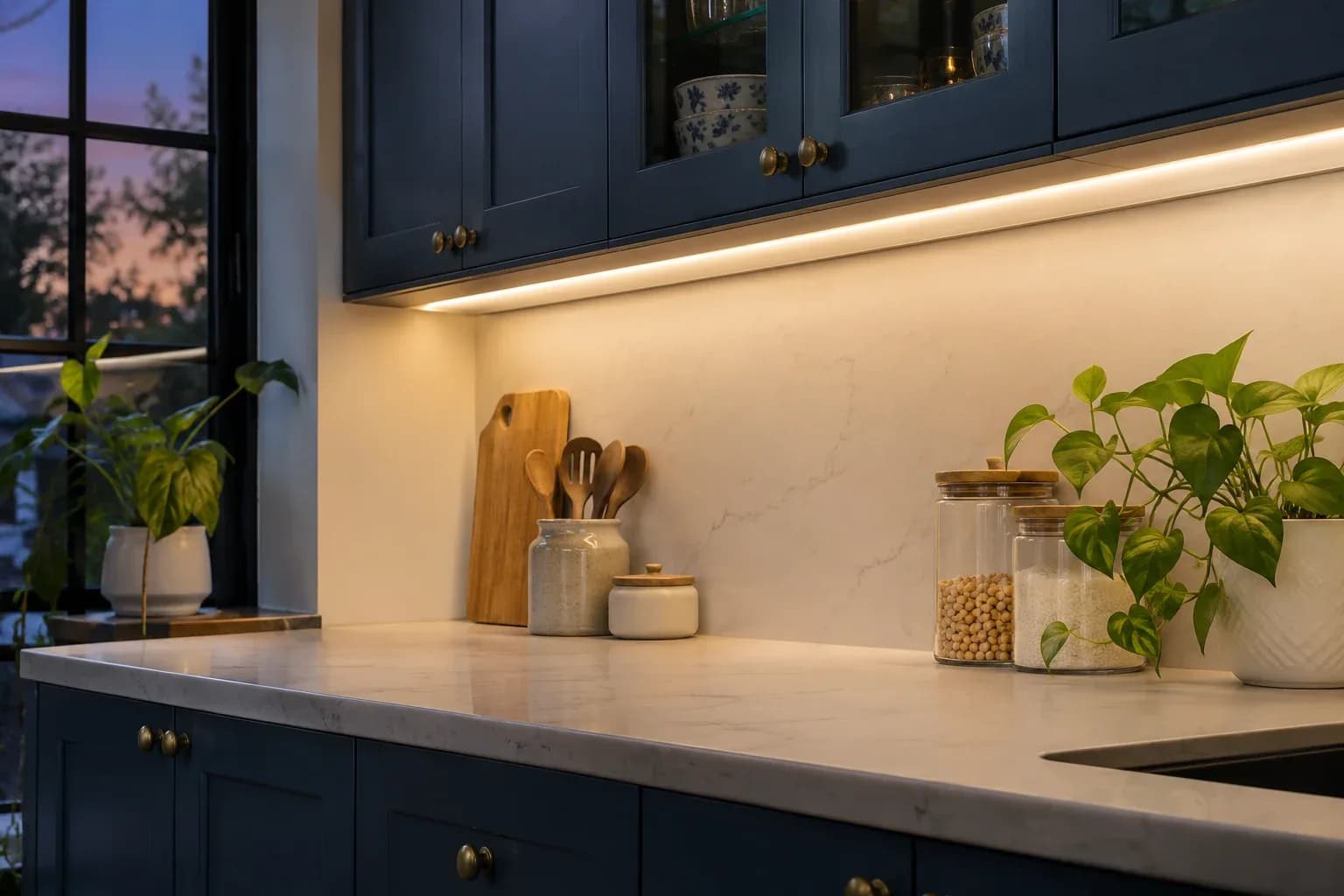
Yes, reflections can reveal the light sources from a different sight line.
Should I choose lighting before cabinet fabrication?
Resolve any routed recesses, concealment and access before the relevant panels are made.
What should I approve?
A powered sample of the actual strip, channel, cover and dimming arrangement.