
Introduction
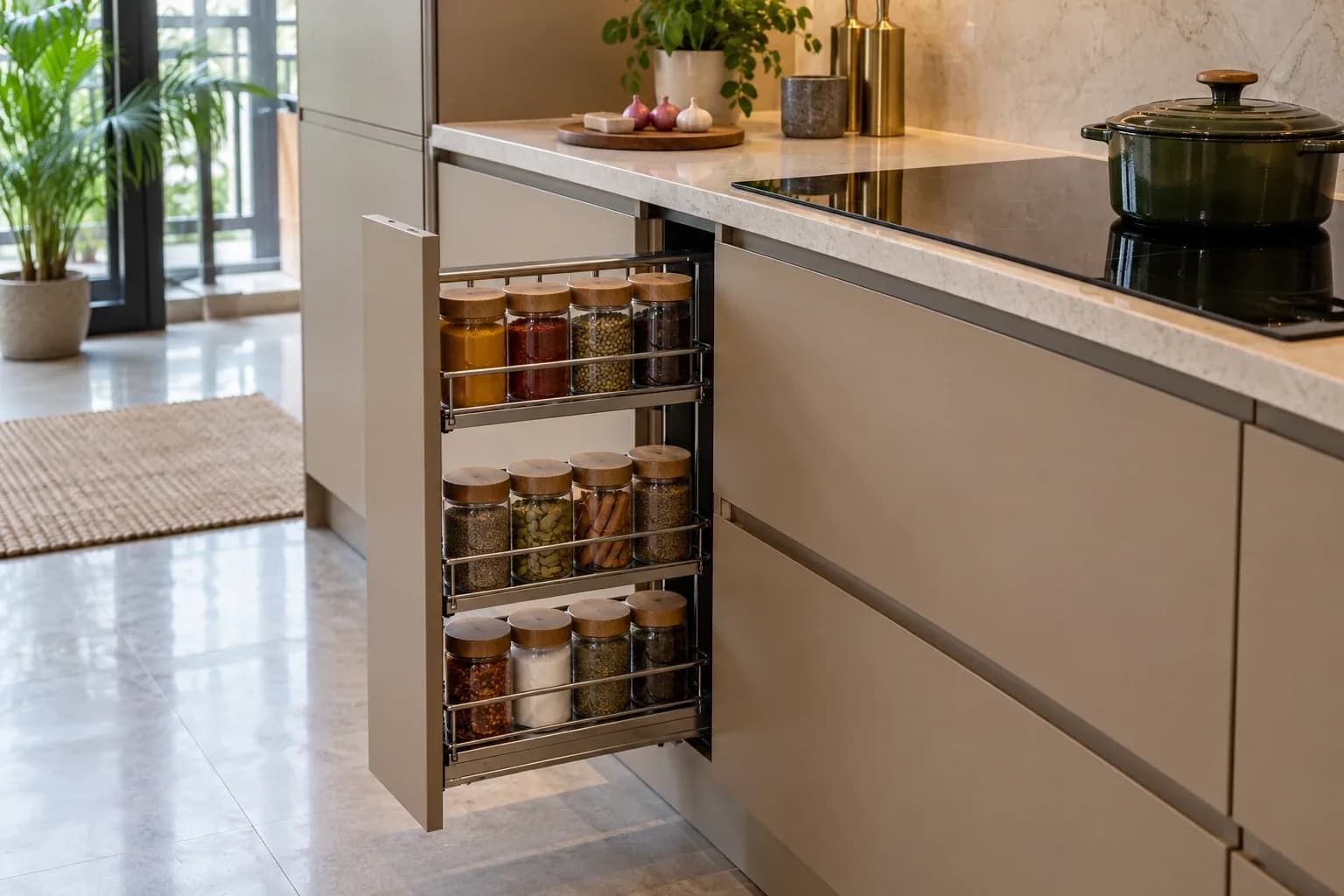
A narrow spice or utensil pull-out can make a small gap useful, but its outside width tells you little about what fits inside. Compare your real jars, oils and tools with the basket dimensions, lifting clearance and cleaning access before ordering.
## Measure containers with lids and handles
Line up the bottles and jars you buy regularly. Measure the widest body and lid, then note how much room you need to lift them over a retaining rail. Tall oil bottles and spice jars may need different shelf spacing.
The usable basket can be considerably narrower than the nominal cabinet. For an illustrative 150 mm cabinet module, ask for the actual internal storage width rather than expecting a 150 mm bottle to fit. Confirm that shelf adjustment will accommodate the mix you use, not just the containers on the showroom display.
Think about heat, grease and daily reach
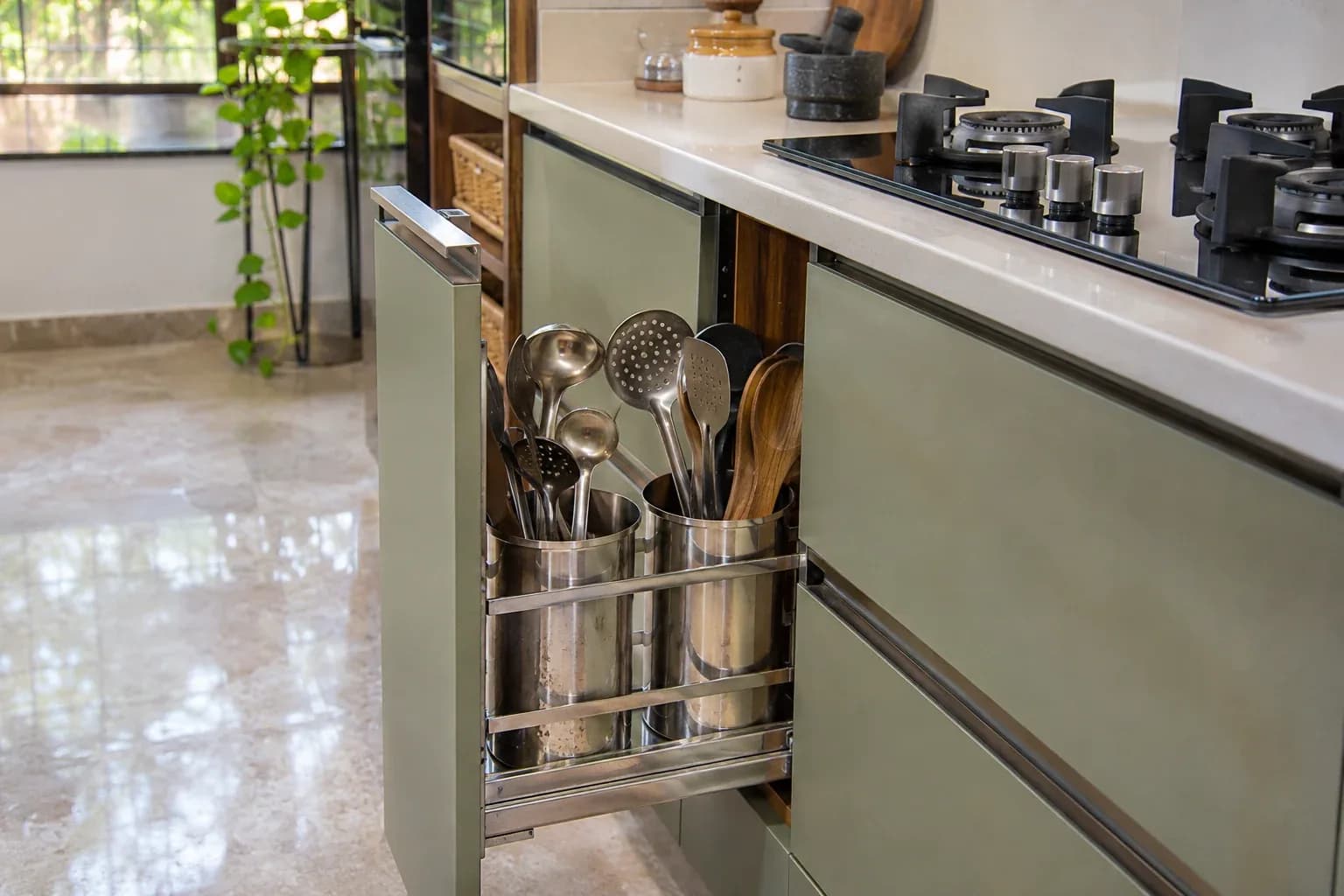
A position beside the hob is easy to reach, but it can also be a busy area for splashes and handling. Follow the appliance clearances and product care instructions. Keep frequently used items accessible without reaching across active cooking.
For utensils, check the height of ladles and spatulas and whether they can be removed without turning sideways. For spices, make sure labels are readable from the standing position. A pull-out that reveals several rows is less helpful if everything remains hidden behind the front row.
Compare it with a simple drawer or shelf
Put the same containers into a shallow drawer footprint. A plain drawer with removable organisers may be easier to clean or adapt as your cooking changes. A narrow pull-out can still be valuable where a full drawer bank would not fit.
Ask how the basket detaches, where drips collect and which runners or retainers can be replaced. Check the loaded movement and front alignment. Avoid paying for a specialist accessory simply because the leftover cabinet width happens to match its catalogue size.
## A practical check before you decide
Take your tallest oil bottle and three common spice containers to the fitting demonstration. Lift each one out from every proposed shelf level. Check the back row, the basket lip and the clearance beneath the next shelf, then try removing the empty basket for cleaning.
Build a container list before choosing the fitting
Collect the bottles, jars and utensils you expect to store in the pull-out. Include the tallest lid, projecting handle and any wide container that does not fit a neat row. Measure the usable shelf space shown for the exact fitting rather than the outside width of the cabinet. Place the containers in that footprint on a table to see whether the proposed arrangement is useful.
Notice what happens when you remove an item from the back. If the front row must be unloaded first, compare the result with a shallow drawer or a simple accessible shelf. A narrow opening is valuable only when the storage works for the things you actually use. Leave enough space to return each container without pushing its neighbour against the frame.
Check the position with the appliance plan
Place the pull-out on the same drawing as the hob, worktop and adjacent cabinet fronts. Ask the kitchen maker to confirm the appliance requirements and the fitting instructions together. Do not assume that a photograph of a similar kitchen establishes the required clearances. Check whether a projecting bottle or utensil could catch during travel, and whether the handle can be reached comfortably from the normal preparation position.
If the front is finished in 1 mm laminate, provide the full panel construction and finished thickness to the fitter. That surface description does not establish the front weight or the fixing arrangement.
Test cleaning and replacement access
Ask to see how shelves, trays or containers are removed for cleaning where the design permits it. Inspect the bottom area and the route to any accessible fixings. At handover, repeat the movement with the intended contents and check that items remain stable. Keep the exact model reference and the internal layout drawing. If the arrangement later becomes difficult to use, that record helps distinguish a storage mismatch from an alignment or hardware problem.
Questions people ask us
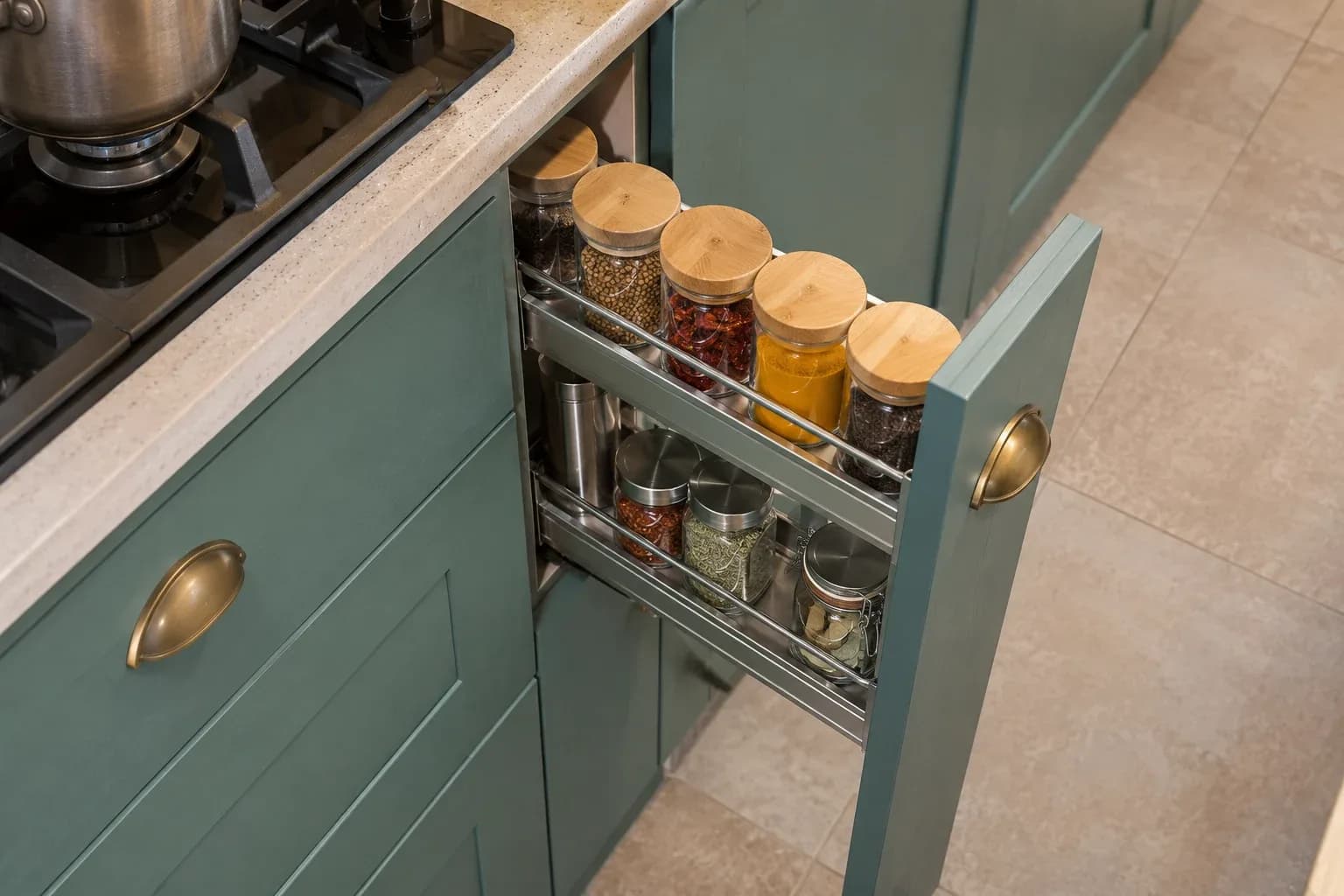
Can any narrow gap take a spice pull-out?
The opening and fixing arrangement must suit the particular fitting.
Should oils and spices share one basket?
Only if their heights, weights and access needs work with its shelf layout.
Are pull-outs better than drawer inserts?
Compare them using the same containers and available cabinet footprint.
Can the shelves be moved later?
Check the exact system's adjustment range before purchase.
What makes cleaning awkward?
Fixed rails, inaccessible corners and parts that cannot be removed easily deserve attention.