
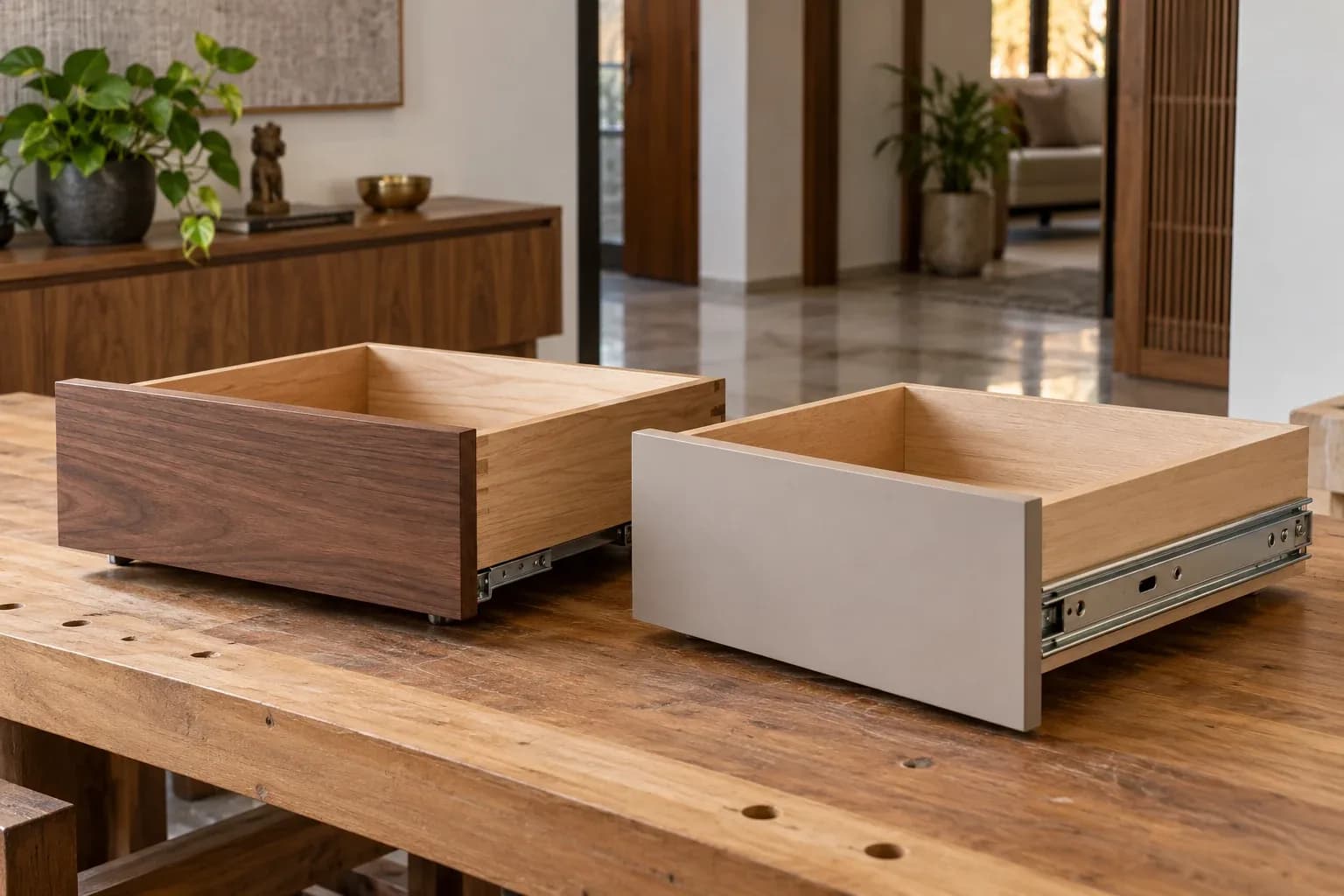
| Undermount | Side-mount | |
|---|---|---|
| Location | Below the drawer box | Along the drawer sides |
| Space to compare | Bottom detail and system-specific side deductions | Side clearances and finished box width |
| Existing-box conversion | May require a different bottom or rear preparation | Must match the existing mounting and clearance |
| Visibility when open | Usually concealed beneath the box | Runner components normally visible at the sides |
| Servicing check | Demonstrate locking and release components | Demonstrate the particular slide-release method |
Introduction
Undermount runners sit beneath a drawer box, while side-mount runners occupy space beside it. The useful comparison is the drawer you can build inside the same cabinet opening, together with its opening behaviour and removal method.
## Compare the same cabinet opening
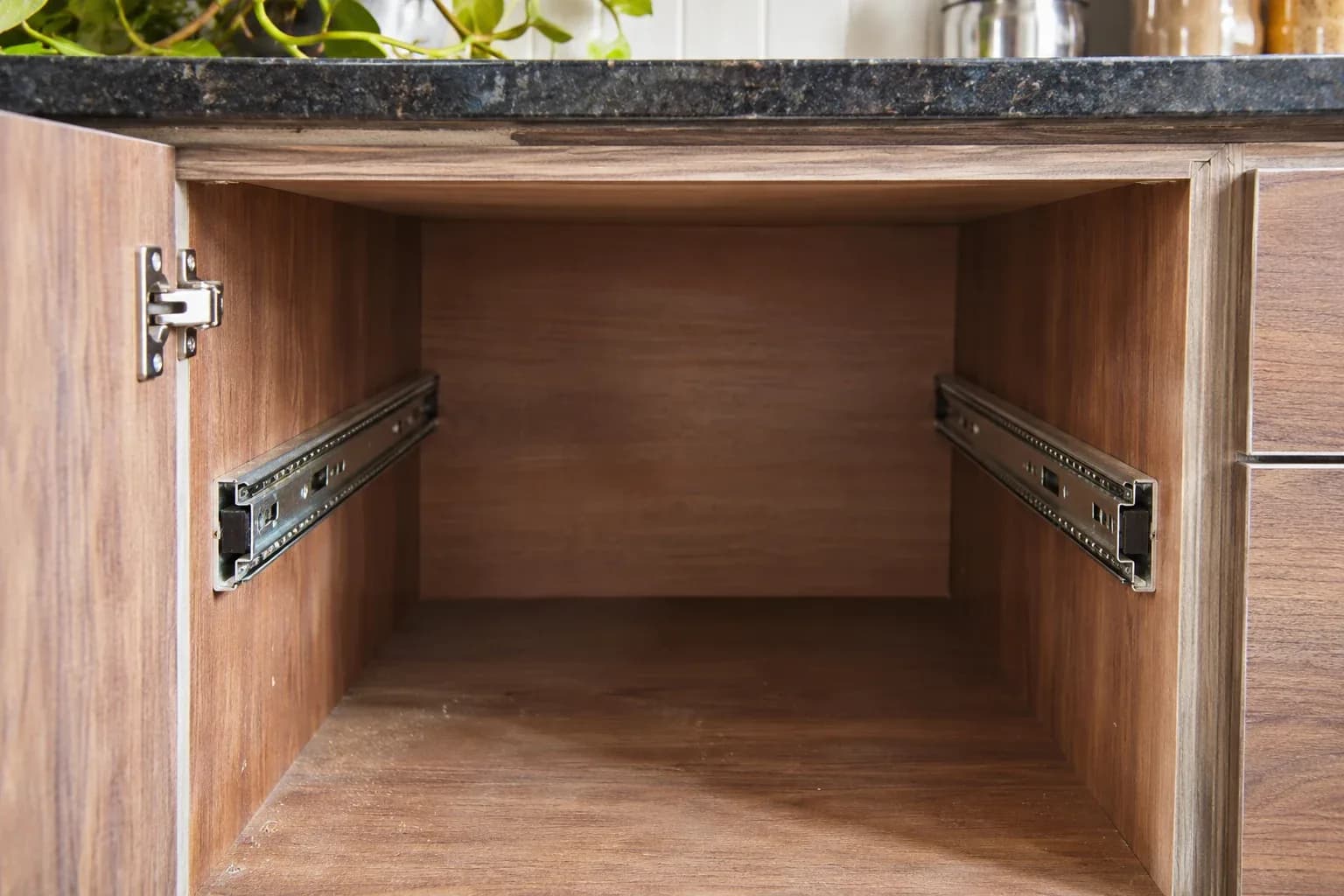
Ask each supplier to draw a section through the proposed drawer. Mark the cabinet's clear internal width, finished drawer width, usable inside width and space below the bottom. A runner hidden underneath does not make every part of its required clearance disappear.
If you are replacing existing hardware, record the current drawer construction first. A drawer made for side mounts may not accept an undermount pair without changes to its sides, bottom, rear details or depth. A brochure photograph of an apparently similar drawer is not enough to approve a swap.
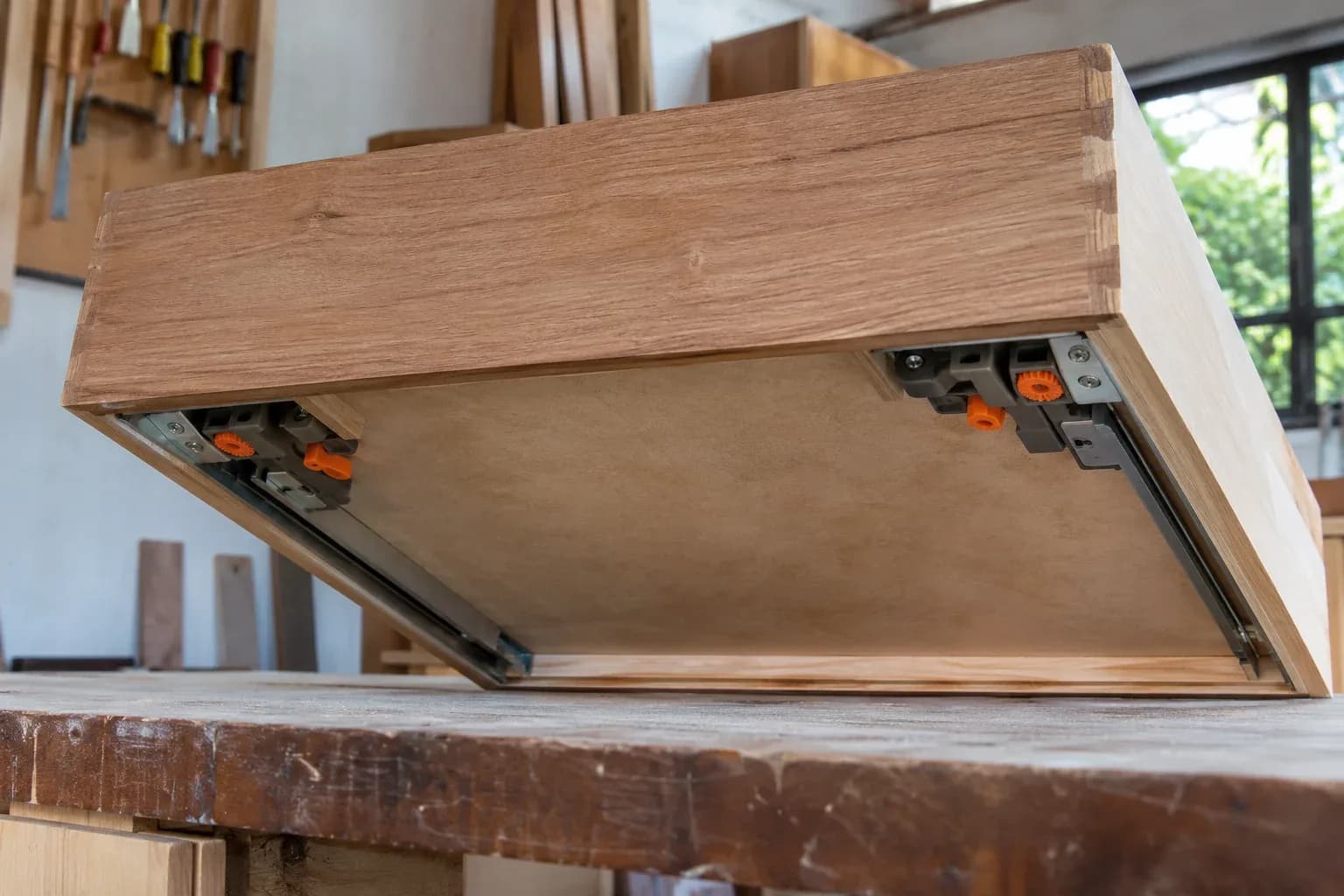
Evaluate access and movement separately
Either mounting style can be offered in different lengths, extension types and closing arrangements. Compare actual products rather than assuming that concealed hardware always means full extension or soft-close. Test whether you can lift a pan from the back without removing the front row.
Check the loaded drawer from the front and side. A wide box that racks or a bottom that flexes needs attention to its construction and support, regardless of where its runners sit. Ask how the selected fitting behaves at its intended load and whether any extra stabilising components are required for the specified width.
Plan for removal and repair
Have the installer demonstrate releasing and reinstalling the drawer. Some concealed systems use locking devices near the front. Side mounts may use release levers or another method. You should know how to remove a drawer for cleaning without pulling against the mechanism.
Record the full part reference, not simply the brand. Two runners from one manufacturer can have different mounting requirements. Ask whether replacements are sold as a pair, whether the closing components are serviceable and whether the supplier expects the original drawer box to remain usable. Compare this information alongside the fitting charge.
## A practical check before you decide
Use one real cabinet opening as the comparison case. Ask for two dimensioned drawer sections and place your widest pan in each usable footprint. Include the handle, finished front and rear service space. For a 600 mm outer cabinet, use the actual internal opening in the drawing rather than assuming the runner calculation begins at 600 mm.
## Compare the finished installation
For a fair quotation, ask both suppliers to work from the same cabinet drawing and intended contents. Compare the usable drawer width, depth and height after all fittings are allowed for. Include the finished front, handle and any internal organiser. A small difference in internal width can decide whether a particular tray or pan sits flat, even when the two cabinets look identical from the outside.
If the front is specified with 1 mm laminate, record the full finished-front thickness separately. The decorative layer does not establish the drawer construction or the runner clearance. Ask the carpenter to confirm the proposed box against the exact hardware drawing before cutting panels.
Finally, compare what the installer will hand over. You should have the runner reference, any locking-device reference, fitting instructions and a clear explanation of how the drawer releases. Ask who will handle a later service request and what information they need. A concealed appearance may be your preference, but an accessible replacement and a well-built box are useful ownership considerations for either mounting style.
Questions people ask us
Which gives more usable storage?
Compare internal drawer dimensions for the same opening. Mounting style alone cannot answer that.
Can side mounts be soft-close?
Yes, products are available with that function. Check the quoted model.
Are undermount runners always stronger?
Load ratings are product-specific and must be considered with the drawer construction.
Can I reuse all the existing screw holes?
Only if the replacement instructions permit the same fixing pattern and substrate condition.
Which is easier to service?
The release method, part availability and access matter more than the mounting label.