
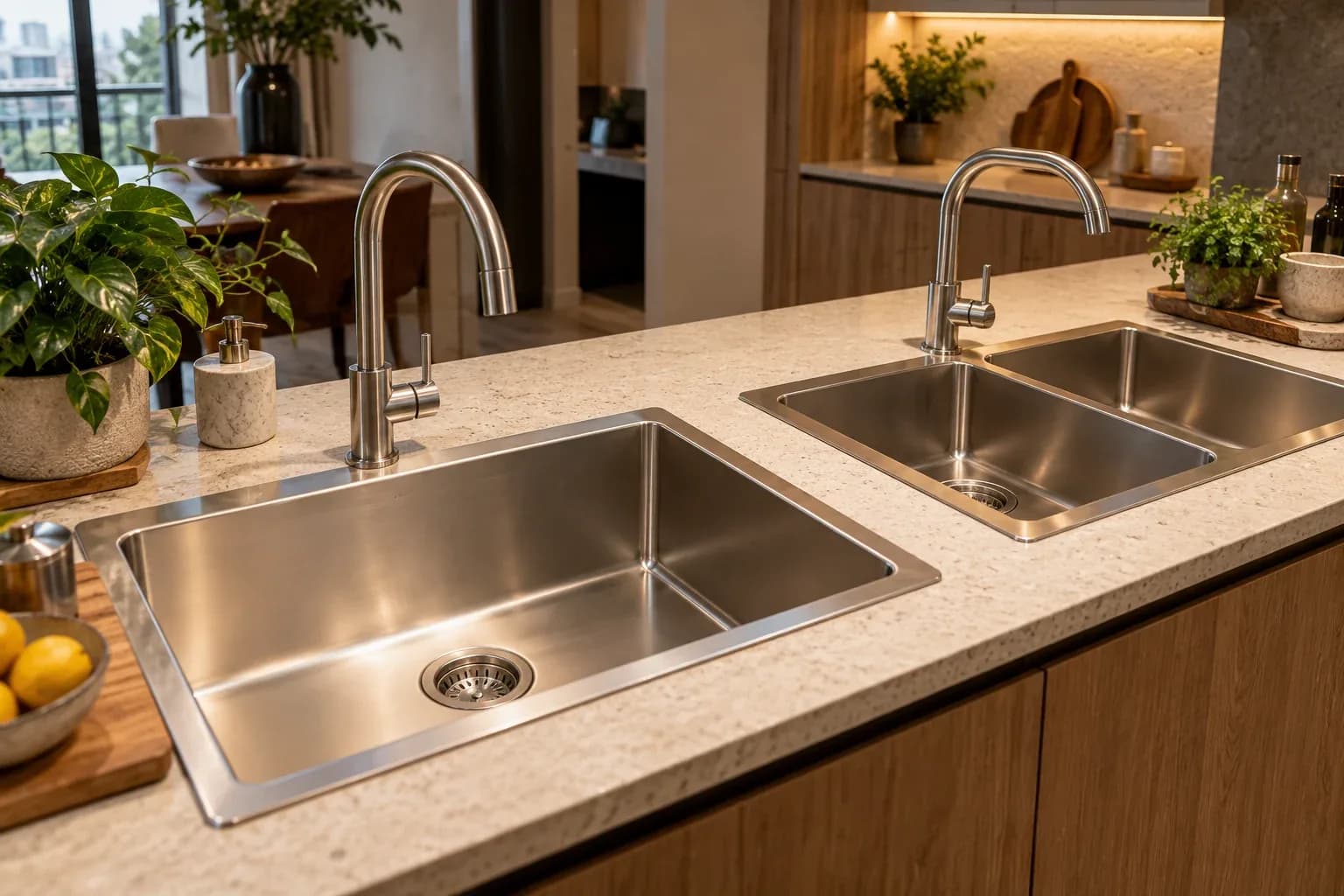
| Single bowl | Double bowl | |
|---|---|---|
| Large items | Uninterrupted bowl space | Divider may restrict wide cookware |
| Parallel tasks | May use a removable tub or accessory | Separate bowls can divide activities |
| Usable capacity | Check actual internal dimensions | Check each bowl rather than outside width |
| Under-sink space | Coordinate waste and accessories | Coordinate the additional bowl and waste layout |
| Replacement | Must fit the existing or revised cut-out | Must fit the existing or revised cut-out |
Practical guidance
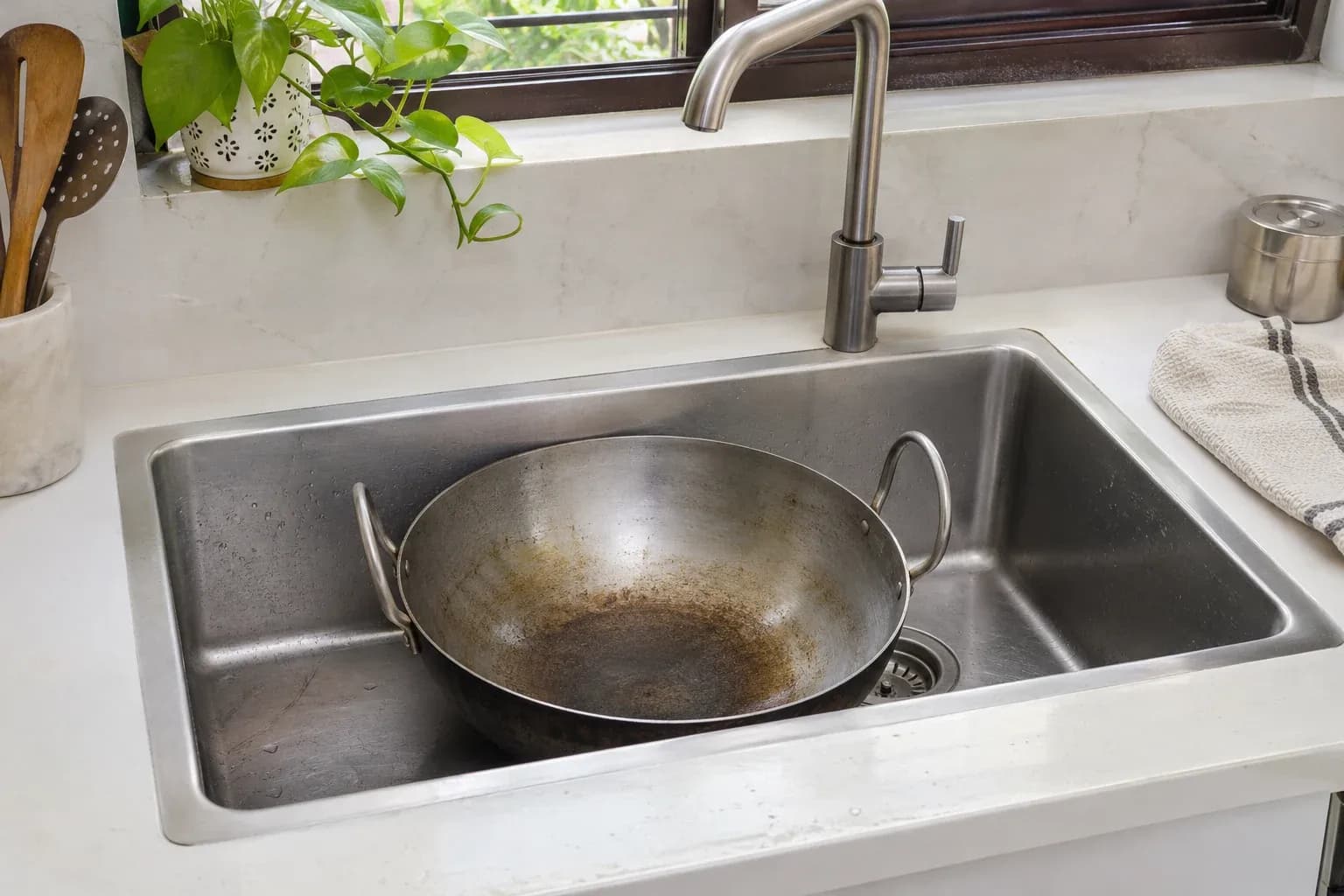
Choose a single or double bowl sink by testing the largest items you wash and the tasks you do together. Bowl count does not describe usable bowl size. A large outside dimension can still leave neither side wide enough for your kadai or baking tray.
Rehearse the washing routine
Bring the widest pan, pressure-cooker pot and everyday thali to the comparison. Set them inside each bowl and check whether you can turn and rinse them without knocking the tap or surrounding counter. Include where a wet lid or chopping board will rest.
A single bowl offers an uninterrupted space, while a double bowl separates activities such as washing and rinsing. A low divider or unequal bowls create further variations. Decide which of those arrangements actually matches the way your household uses water and handles dishes.
Consider accessories and drainage
A removable tub can create a temporary washing zone within a single bowl. A compatible rack or colander may also change how useful the surface feels. Check that accessories belong to the selected sink and do not obstruct the tap or drainage.
For double bowls, assess the smaller side honestly. It may be valuable for rinsing vegetables, or it may be too small for the tasks you expected. Inspect the waste arrangement underneath as well, because plumbing, a filter or a waste unit can affect cabinet storage.
## Coordinate the sink with its cabinet and worktop
Use the exact sink template and installation instructions. Check minimum cabinet size, rim or cut-out detail, supports and tap-hole position. Do not order the sink solely from the visible opening in the countertop plan.
If replacing an existing sink, have a fabricator assess the current cut-out and fixing access. A change from double to single may require a different opening and cannot always be solved by choosing a slightly larger outside dimension. Compare the complete replacement scope before purchasing.
## A practical check before you decide
Load each shortlisted sink with the largest item you wash regularly and one ordinary meal's crockery. Rehearse washing, rinsing and setting items down. Compare the same worktop footprint and cabinet opening, then record which accessory or bowl division genuinely helps.
## Compare the space inside the bowl
Take the dimensions of the largest tray, pan and chopping board you regularly wash. Compare them with the internal bowl drawing, including rounded corners and the position of the waste outlet. The overall sink width includes its rim and any divider, so it cannot establish whether a large item will lie flat. If possible, try the item in a showroom bowl without forcing it against the finish.
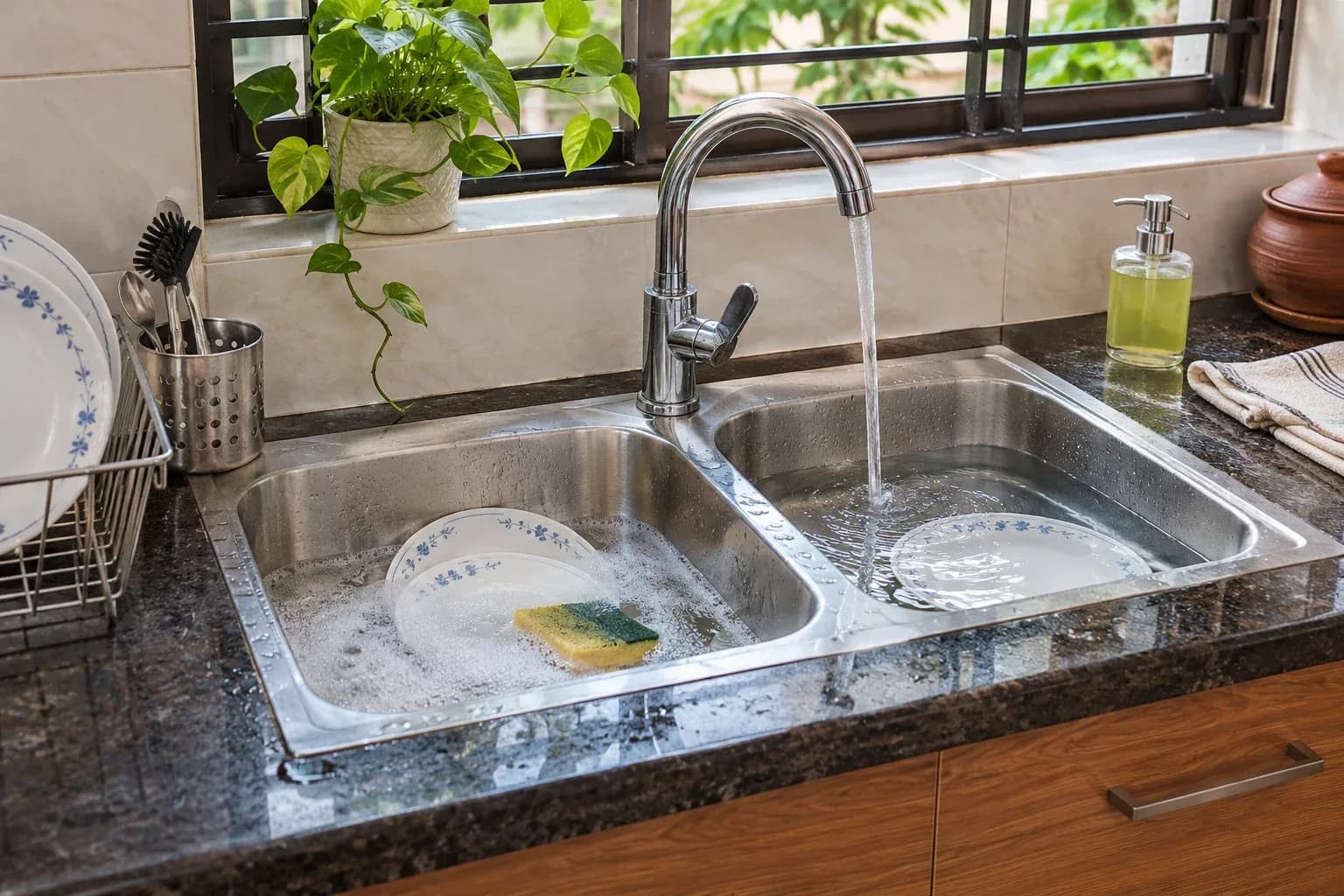
Rehearse a normal meal cleanup. Decide where dirty dishes wait, where vegetables are rinsed and where washed items drain. A double bowl can separate tasks, but each compartment must still be useful. A single bowl may suit large cookware, while accessories can occupy some of that same space. Compare the real arrangement with the accessories fitted.
## Check the cabinet below before ordering
Ask the installer to show both waste connections, the trap, water filter and any bin or drawer in the base cabinet. A second bowl changes the space available underneath. Include access for tightening fittings and clearing a blockage, rather than drawing only the visible plumbing outline.
Keep the exact sink model, mounting instructions, tap position and worktop template together. Confirm who checks the cabinet and who signs off the cut-out before fabrication. At handover, inspect drainage, tap reach and the agreed accessories as a working assembly. Choose the arrangement that improves your routine without leaving an inaccessible cabinet below.
## Read internal dimensions as well as the model name
BLANCO lists the SUBLINE 500-U example with an internal bowl length of 500 mm, width of 400 mm and depth of 190 mm. These are bowl dimensions, not a template for your counter. Compare the same internal measurements for both shortlisted models using their exact drawings. See the manufacturer data; confirm the local variant and availability with the supplier.
Questions people ask us
Is a double bowl always more functional?
Only if both bowls support tasks your household actually performs.
Can a single bowl still provide a separate rinse area?
A suitable removable tub or accessory may help.
Should I choose by overall width?
Compare each bowl's usable dimensions and the complete installation requirements.
Can I replace a double with a single?
Have the current cut-out and mounting assessed before buying.
What is the best sample to bring?
Your largest commonly washed pan is more revealing than a small cup.