
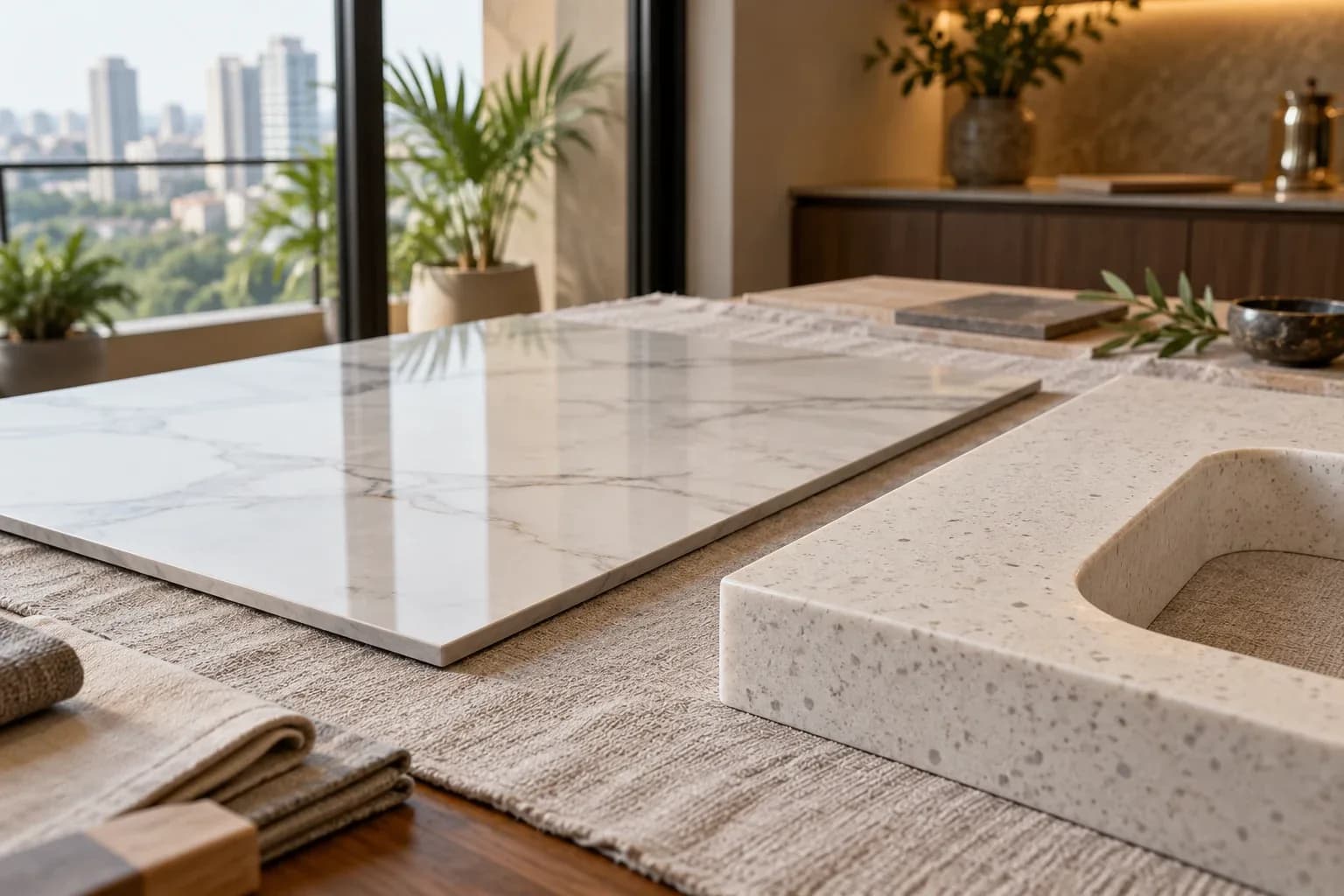
| Porcelain worktop | Engineered quartz worktop | |
|---|---|---|
| Product identification | Confirm slab range, thickness and technical sheet | Confirm range, composition guidance and technical sheet |
| Exposed edge | Inspect face-to-edge appearance and finishing | Inspect the selected pattern through the finished edge |
| Cut-outs | Use the product's fabrication and support rules | Use the brand's fabrication and support rules |
| Damage discussion | Ask about edge-chip assessment and repair visibility | Ask about impact damage and repair visibility |
| Installed cost | Include specialist fabrication and access | Include all openings, edge work and fitting |
Practical guidance
Porcelain and quartz worktops should be compared at the details that see the most handling, particularly sink openings, corners and exposed edges. Ask for samples of the finished construction and a fabrication proposal for your layout before judging the choice from a flat surface swatch.
## Understand the complete product
Porcelain worktops and engineered quartz are different product families, with variations in thickness, finish, pattern and installation requirements. Obtain the actual product reference and current technical information from the supplier. Avoid using a general online label as the installation specification.
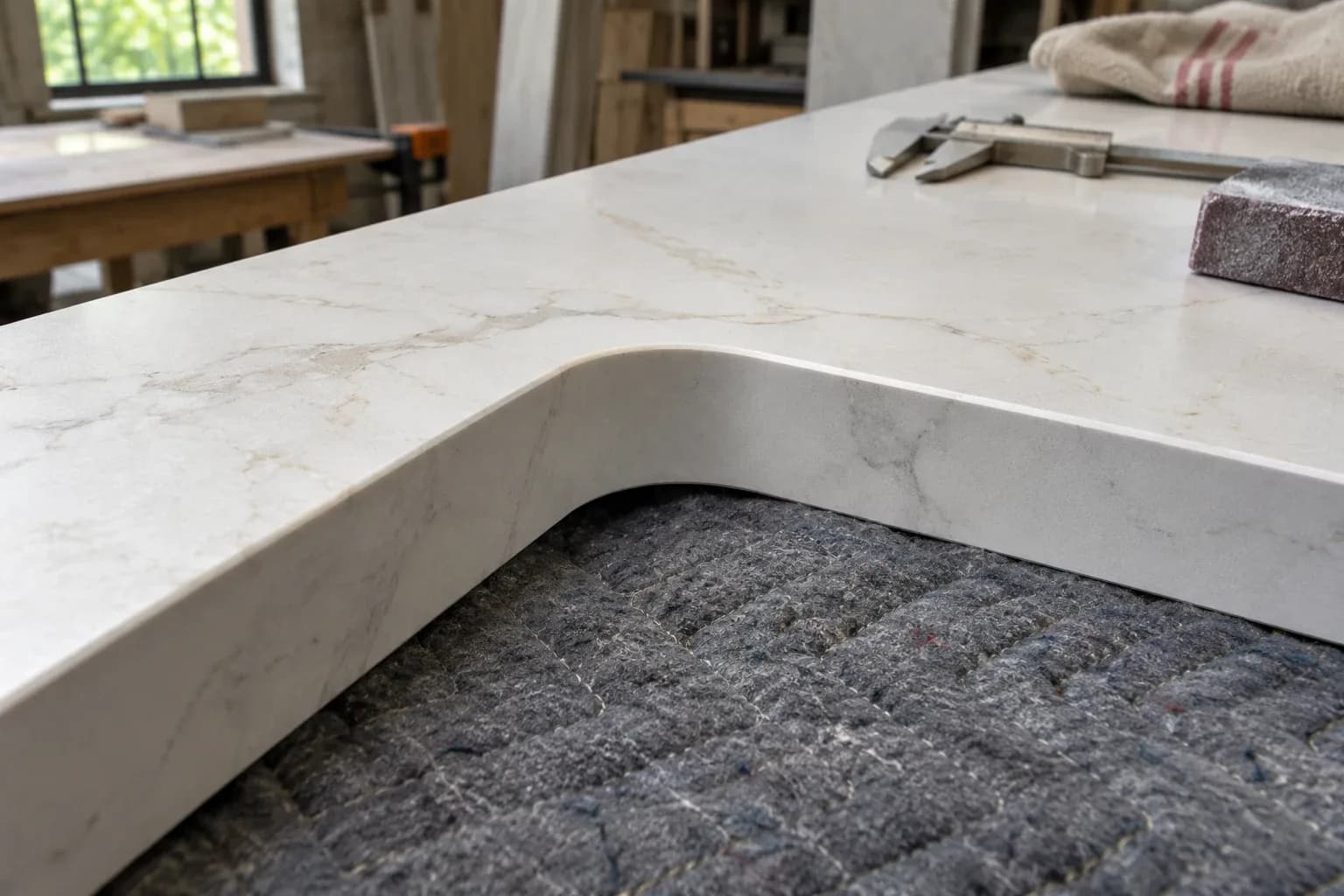
Look at both face and edge. A printed face may not resemble the material through its thickness. A mitred or built-up edge can change that appearance and introduce joints that need skilled fabrication. Ask to see a completed sample rather than assuming the edge will match the showroom face.
Study the sink and hob details
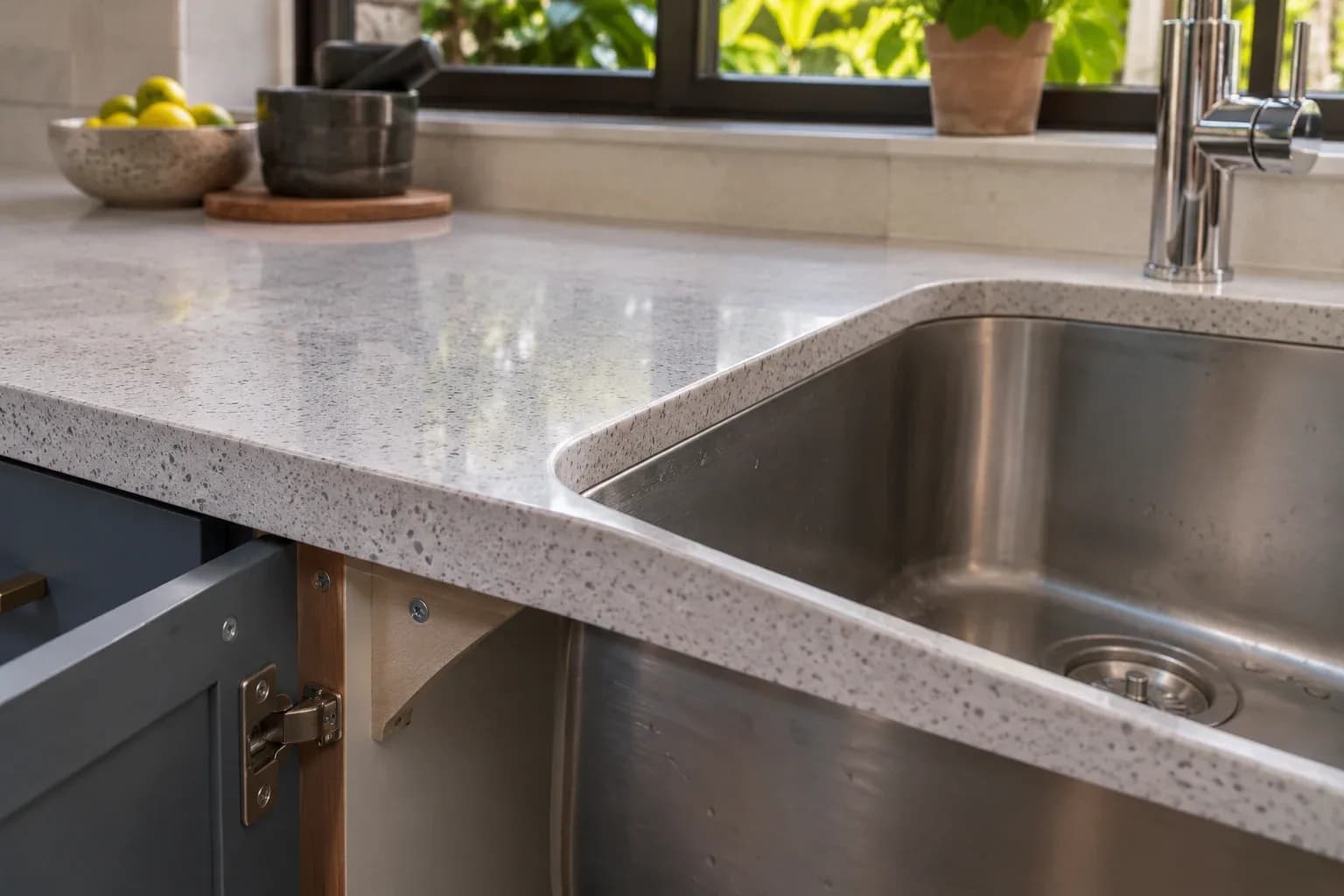
Bring the exact sink and hob models into the discussion. Cut-out geometry, clearances, support and mounting requirements must suit both the surface and the appliance or sink. These are coordination details for the fabricator and installer, not dimensions to estimate from a photograph.
Inspect the way the exposed edge will be finished around an undermount sink. This area is visible during cleaning and exposed to cookware handling. Compare how a small corner or edge impact would be assessed and repaired, and ask whether a repair would remain visible.
Compare installation capability and care
Choose a fabricator experienced with the particular material and proposed detail. Ask who is responsible for assessing cabinet support, making cut-outs, transporting the pieces and coordinating fit. A striking slab is only one part of a reliable finished counter.
Request care instructions for everyday stains, heat and cleaning products. Check whether your chosen finish has different maintenance guidance from another finish in the same range. Price both options with the same edge, opening count, backsplash scope and installation access, then keep the approved drawing with the material record.
## A practical check before you decide
Ask each fabricator for a sink-edge sample and a section through the proposed front edge. Compare those samples beside the cabinet finish in daylight. Record the sink mounting method and planned support. A 12 mm or 20 mm product reference is meaningful only with the rest of its approved construction.
## Make the edge sample represent your own order
Ask for a sample with the same surface, nominal thickness, edge treatment and sink-opening finish as the quotation. A showroom sample with a built-up front can conceal the material's actual section. Cosentino lists Silestone at 12 mm, 20 mm and 30 mm; confirm the exact selected product using its specification. Obtain equivalent instructions for the chosen porcelain rather than transferring the quartz detail to it.
Inspect the sample from the front and above. Look at where the face pattern ends, where an adhesive line becomes visible and how the underside will appear from a seated position. If a mitred edge is proposed, ask the fabricator to show a completed corner, not just a straight strip. Keep the approved sample or a clearly identified photograph.
## Coordinate responsibility at openings
Give the fabricator the exact sink template and appliance installation instructions before fabrication. Ask who checks that the cabinet rails, sink support, tap position and service connections leave enough working room below. A cut-out that fits the bowl can still conflict with its clips or the available plumbing space.
At handover, compare the exposed sink edge and corners with the approved sample. Note any chip, residue or changed detail before nearby fittings make it harder to inspect. Ask the material supplier to provide the applicable care instructions and a contact for assessing damage. A repair may remain visible, so clarify the proposed remedy before another trade attempts polishing or filling. Judge the two materials through this complete process rather than assuming that a stronger-looking face removes the need for careful handling.
Questions people ask us
Can the same cut-out detail be used for both?
Only if both product instructions and the sink or appliance requirements allow it.
Does the pattern continue through every edge?
No. Inspect the exact product and finished edge.
Is one material impossible to chip?
No surface should be selected on an assumption of immunity to damage.
Who should approve the cabinet support?
Coordinate the countertop fabricator and cabinet installer before fitting.
How should I compare samples?
Use the actual face, finished edge and proposed sink detail for each option.