
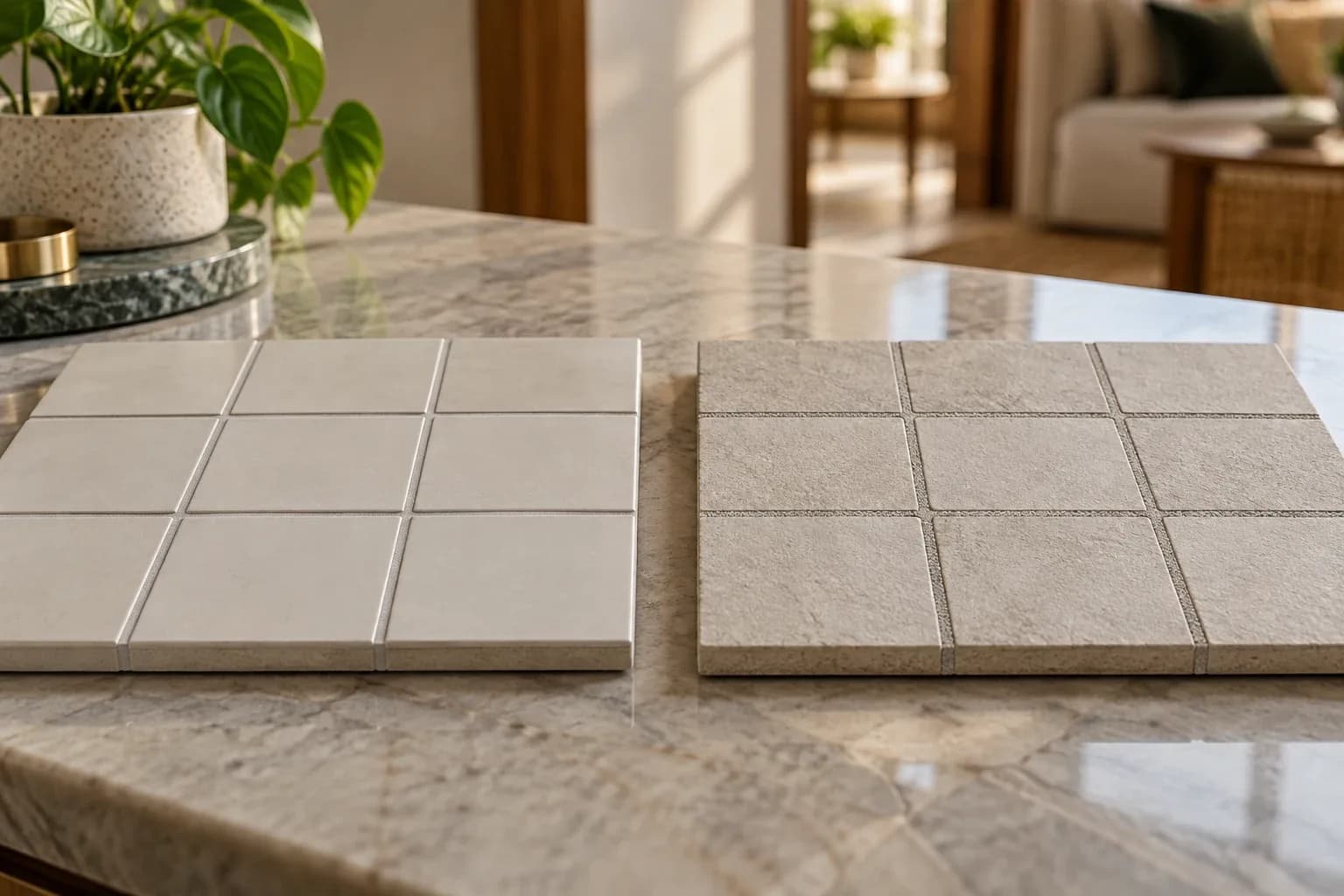
| Epoxy grout | Cement-based grout | |
|---|---|---|
| Product selection | Check resin-system instructions and tile compatibility | Check the particular cement-based formulation |
| Application | Installer must follow mixing, timing and cleanup requirements | Installer must follow its own mixing and curing instructions |
| Colour review | Approve a cured sample joint | Approve a cured sample joint |
| Movement locations | Use the required movement-joint detail separately | Use the required movement-joint detail separately |
| Cost | Compare material plus installation and cleanup | Compare product grade plus labour and maintenance |
Practical guidance
Epoxy and cement-based grouts differ in composition, application and maintenance requirements. Compare the exact products with the tile, joint width and installation area. A more expensive grout is useful only when it is suitable for the assembly and the installer can apply and clean it correctly.
## Choose for the actual tile and location
Identify whether the grout is for a backsplash, floor or shower wall. Include tile material, texture, size, joint width and exposure. Some surfaces need special precautions against residue or staining during application. Ask the grout and tile suppliers to confirm compatibility.
Cement-based products vary, and epoxy products also have their own instructions. Do not assume that one broad category always requires sealing or that another will solve every maintenance issue. Check the selected product's technical and care information before comparing claims.
Discuss installation and cleaning before work starts
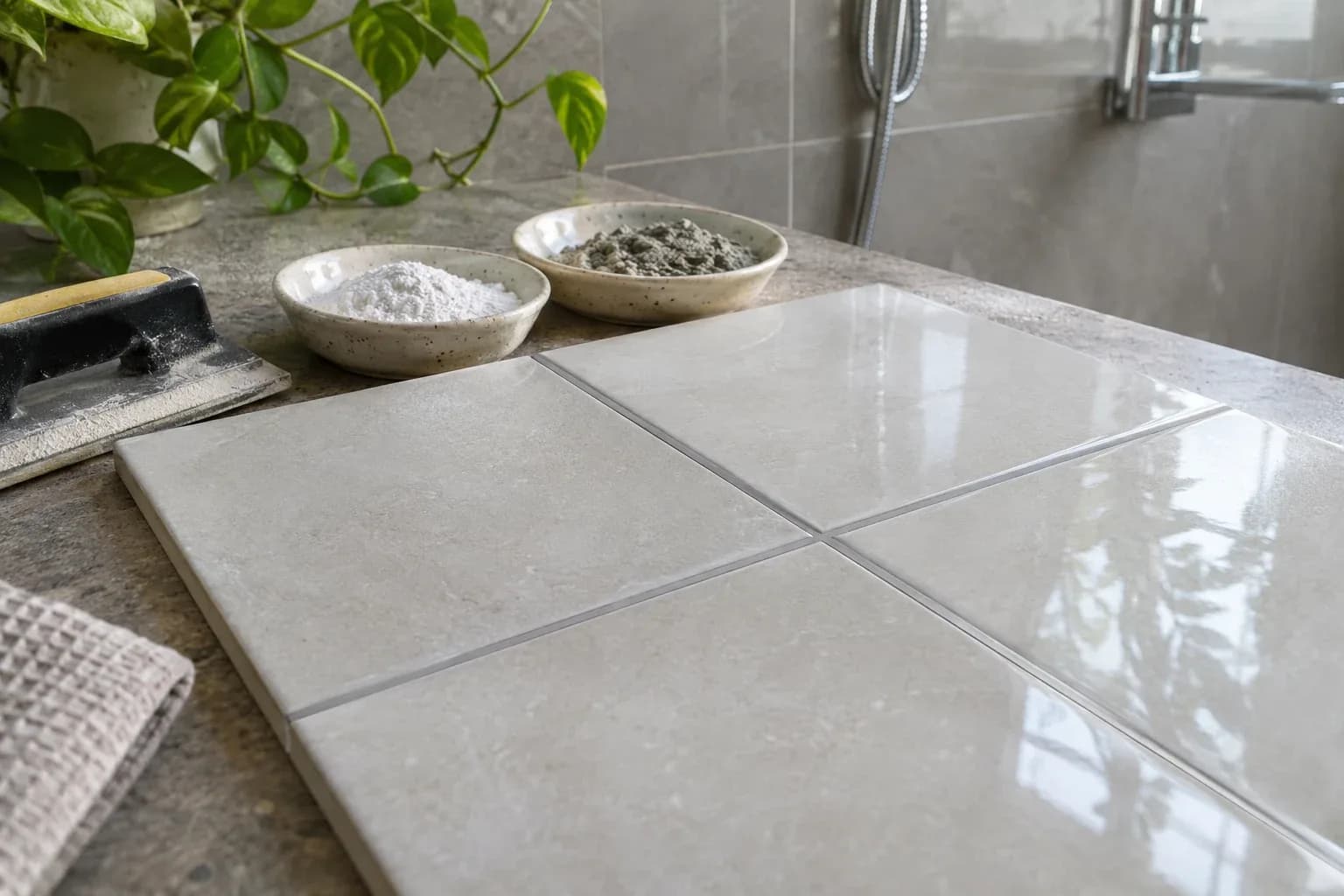
Ask the installer which product they intend to use, how the area will be staged and how residues will be removed within the permitted working process. A textured tile that traps material can make cleanup particularly important.
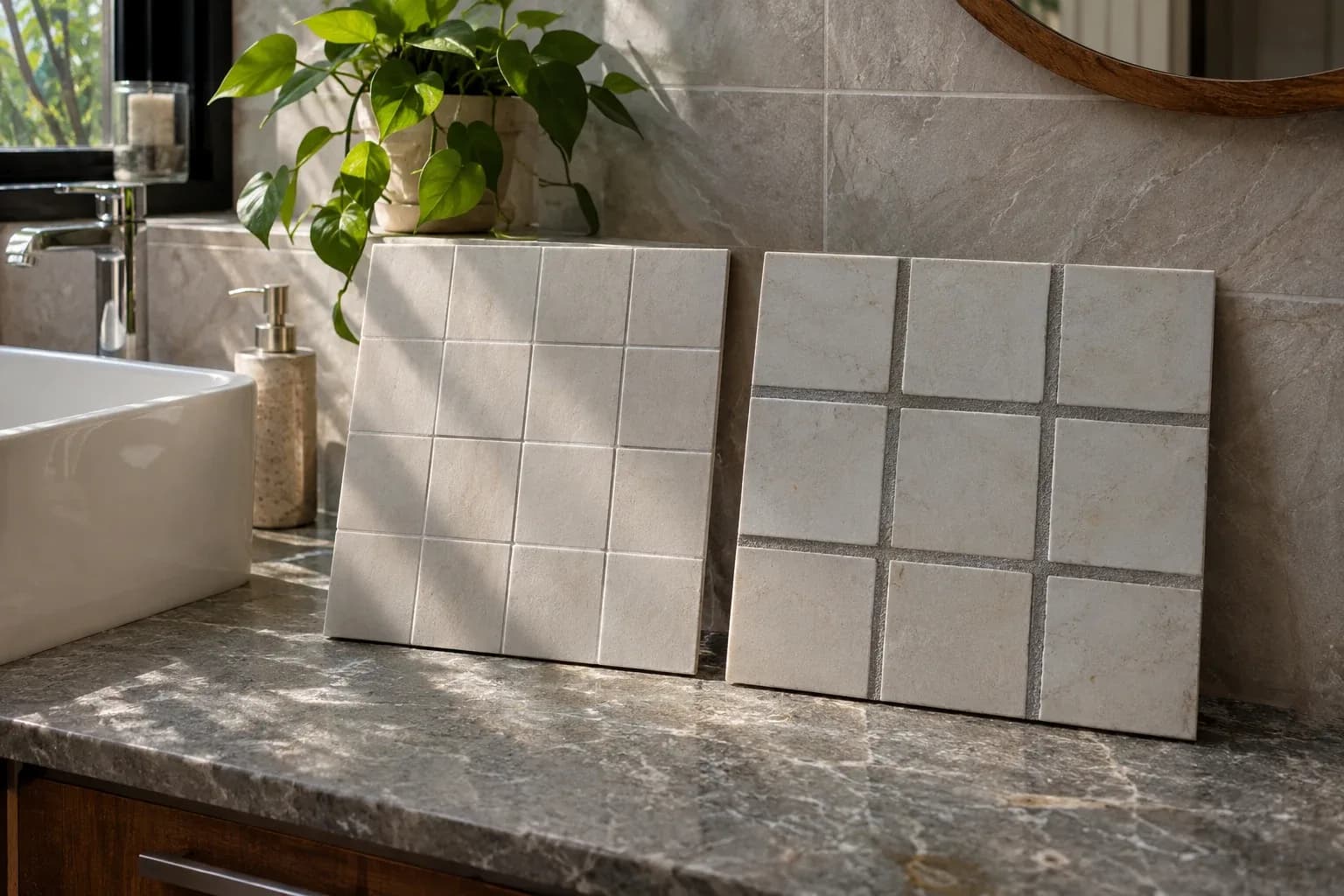
Approve a small representative mock-up including tile, grout colour and joint width. View it after the specified curing period. Grout can look different in a real joint from a printed chart, and a cleaning haze can be mistaken for the intended finish if the sample is inspected too early.
Keep movement joints separate
Grout is not a universal replacement for a movement-joint detail. Changes of plane and other required movement locations should be designed according to the installation system. Ask the installer to identify those areas on the drawing and specify the appropriate material.
Compare the whole installed cost, including preparation, product, labour, cleanup and any special treatment. Retain product references and care guidance. If the existing grout is failing, have the cause investigated before covering it with a different material, because movement or moisture problems may remain underneath.
## A practical check before you decide
Request a mock-up using the actual tile and the two shortlisted grouts. Compare colour, texture and permitted maintenance after curing. Ask the installer to mark movement joints separately and record the exact product names, colour references and included cleanup work in the quotation.
## Compare the job you will actually receive
Ask each installer to describe the same area using the same tile layout. Separate product supply, preparation, application, cleaning and the treatment of junctions. A more expensive material can still produce a disappointing result if the installer has allowed too little time for the required process. Ask who checks the completed surface and who returns if residue remains.
Include the tile face and edge in the mock-up, especially if the surface is textured or porous. Obtain the suppliers' permission before testing cleaners or stains. Use only the permitted maintenance method once the sample has cured. Judge the result under the room's intended lighting rather than accepting a colour name from a chart as the final appearance.
## Define the handover record
Keep the grout brand, product, batch and colour reference with the tile record. Ask which joints are intentionally flexible and how they should be maintained. This helps prevent a later repairer from filling every visible line with the same material. If a substitution is proposed, review the technical information and sample before work proceeds.
At completion, inspect the full wall as well as close details around corners and fittings. Note haze, missing material or an unexpected colour change by location, with photographs. Ask the installer to assess the cause before applying another product over it. A clear repair plan is more useful than changing grout categories without understanding why the first installation failed.
Questions people ask us
Does epoxy grout make a shower waterproof?
The complete waterproofing assembly must be designed correctly. Grout selection alone does not establish that.
Does every cement grout need sealing?
Follow the exact product's instructions rather than a universal rule.
Can grout replace flexible joints at corners?
Use the movement-joint detailing required by the installation system.
Why request a mock-up?
It reveals the cured colour, surface texture and cleanup result on the chosen tile.
Should I accept a product substitution?
Review compatibility, colour and application requirements before approving a different grout.