
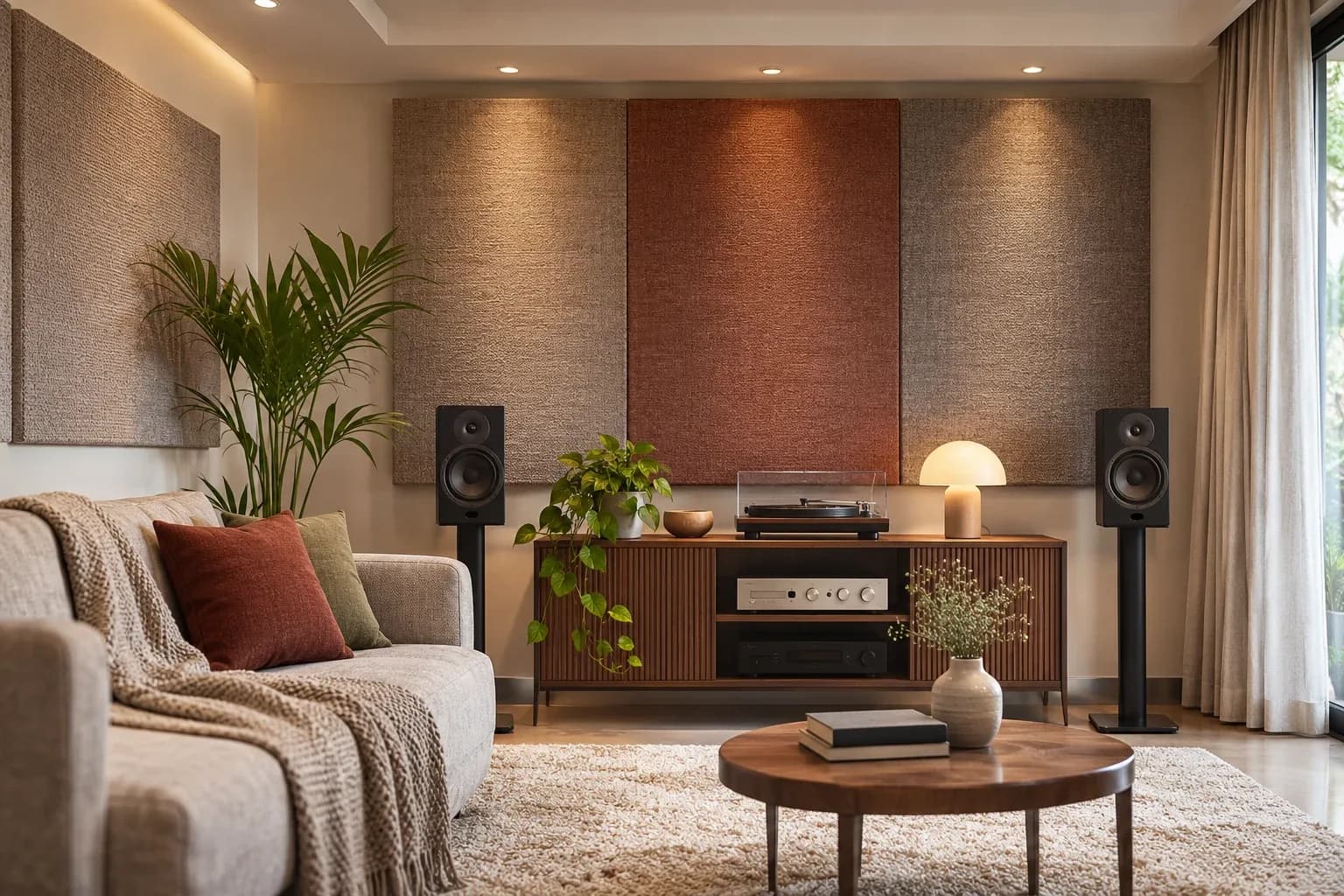
Decorative acoustic panels mainly address sound reflections within a room. They should not be assumed to block sound from a neighbouring property. Identify whether the problem is echo or transmission through the building, then ask for performance information for the complete proposed assembly before choosing its decorative finish.
Practical guidance
Decorative acoustic panels are usually considered for reducing reflections within a room. Blocking a neighbour's sound is a different problem involving the paths through walls, doors, floors and services. Identify the noise problem before buying a panel for its appearance.
## Describe what you are hearing
A room that rings during conversation may benefit from changes to sound absorption. Speech or music arriving from next door calls for investigation of transmission paths. The two complaints can coexist but should not be treated as the same task.
Record when the sound occurs, where it is strongest and whether it changes near a door, window or service opening. A decorative wall treatment on one surface may have little effect if the dominant path is elsewhere.
Ask what performance has been tested
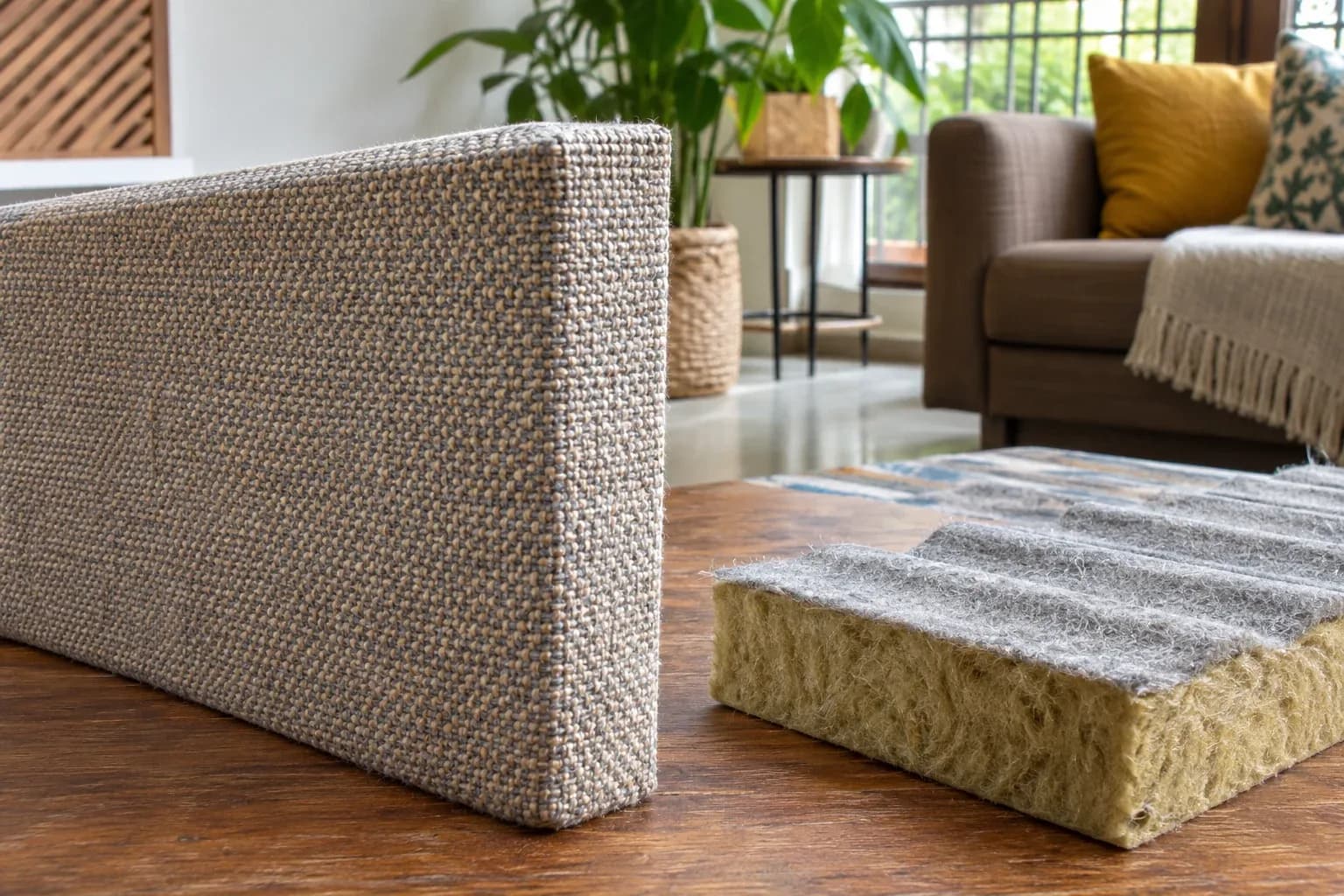
A panel's colour, slat pattern or felt backing does not establish its acoustic performance. Request suitable test data for the actual product and the assembly used in the test. Mounting, backing and coverage can affect the result.
For serious neighbour-noise problems, obtain advice based on the complete construction. Do not equate an absorption claim with a sound-isolation rating or assume thin decorative material will create privacy by itself. Keep any quotation linked to the problem it is intended to address.
Coordinate the room and the finish
An absorption treatment should be placed and sized for the room's acoustic needs while preserving ventilation, services and required fire performance. Ask the supplier about installation, cleaning and replacement.
If the main goal is appearance, choose the panel honestly on that basis and treat any acoustic benefit as something to verify. If the goal is measured noise reduction, agree the assessment and expected outcome before purchasing. This avoids spending on an attractive wall that does not solve the complaint.
## A practical check before you decide
Write a one-sentence problem statement describing source, timing and location. Ask the supplier whether its evidence addresses reflections inside the room or transmission from outside it. Keep that answer beside the tested assembly and proposed mounting detail before agreeing a treatment.
## Describe the sound before choosing a finish
An echo that makes speech unclear within the room is different from voices or music heard through the building. Note where the sound is strongest, when it occurs and whether it changes when doors or windows are closed. This gives an acoustic professional or supplier a clearer problem to assess than a request for soundproof panels.
Ask for test information relevant to the actual proposed assembly. A result for a panel with a particular backing and air gap should not be assumed to describe the same face glued directly to a different wall. Keep the report and installation detail with the quotation.
If neighbouring noise is the concern, have the likely transmission paths assessed before buying a decorative treatment. Doors, service openings and flanking paths may matter alongside the main wall. For an internal echo problem, consider the whole room and the surfaces already present. Choose the decorative finish after the performance goal and suitable assembly are understood, then retain the specification so installation can be checked against it.
## Read the complete acoustic product section
WoodUpp’s Akupanel data sheet describes a 9 mm acoustic felt backing with 13 mm slats. These component dimensions describe that product, not a promise to block a neighbour’s noise. Ask which tested installation arrangement supports the performance claim for your proposal, and do not assume that changing the backing or fixing method preserves the same result.
Questions people ask us
Are absorption and sound blocking the same?
No. They address different aspects of room acoustics and noise transmission.
Will a slatted wall stop loud neighbours?
Do not assume that from appearance or an absorption claim.
Does mounting method matter?
Yes. Evaluate test information for the relevant assembly.
Can ordinary soft furnishings help a reflective room?
They can affect reflections, but suitability depends on the room and the problem.
When is specialist advice worthwhile?
When the aim is meaningful isolation, privacy or a defined noise-reduction result.