
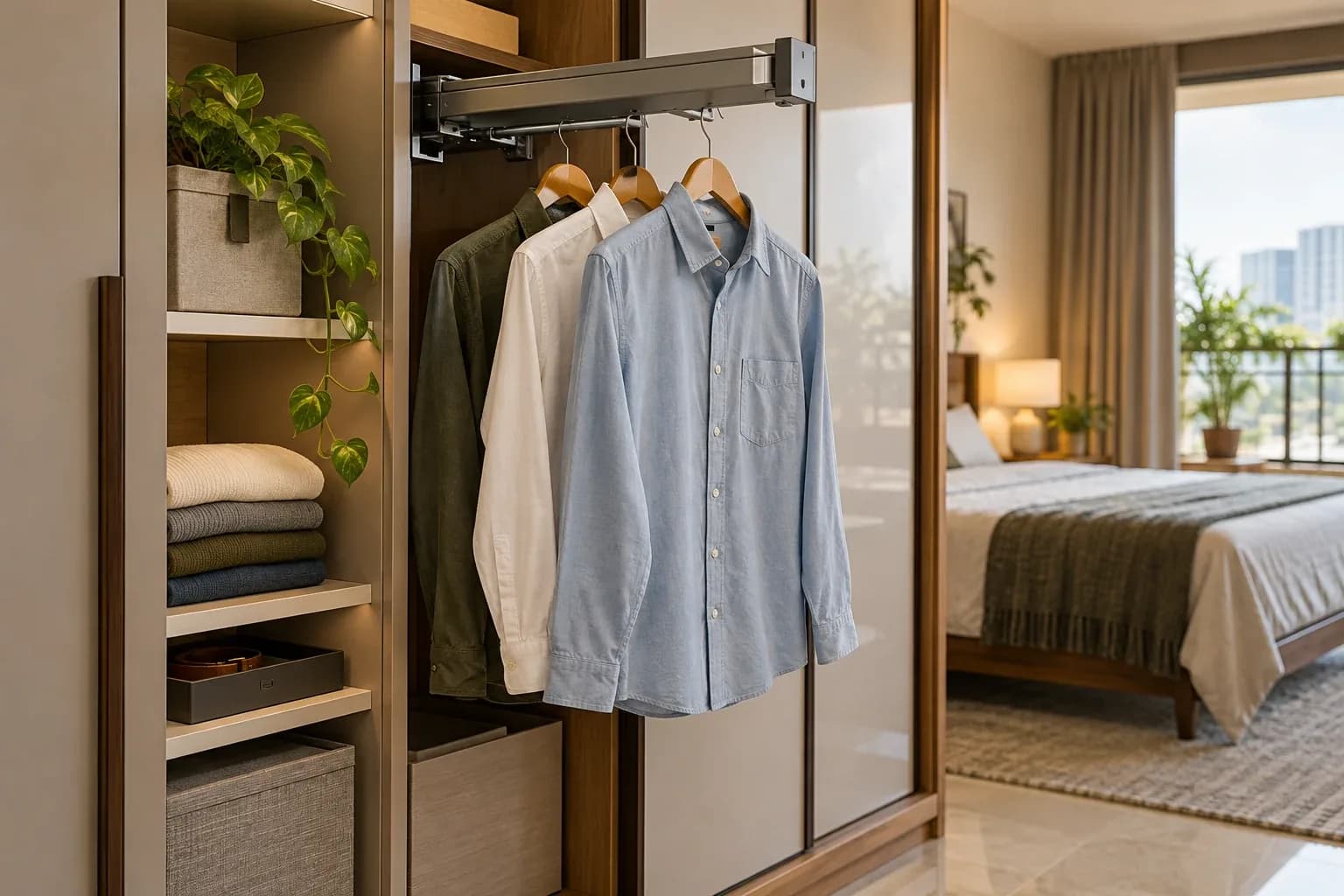
A shallow wardrobe can work for hanging clothes when its clear internal depth and rail arrangement suit the actual garments. Test a clothed hanger with the door closed. If normal hanging does not fit, compare a properly specified alternative rail or use the shallow compartment for folded storage.
Practical guidance
A shallow wardrobe can store hanging clothes if its usable depth and hanging arrangement suit the garments. Test the hanger with clothes on it and the door closed. The outer cabinet depth includes panels, fronts and hardware, so it is not the space available to the shoulders of a shirt.
## Measure the clothing envelope
Hang a representative jacket or kurta and measure the space it occupies naturally. Include the hanger, sleeves and any bulky fabric. Compare that with the clear interior after the back, front and door system are included.
Do not press the garment into the cabinet merely to prove it fits. If fabric rubs the closed front or projects into a sliding track, everyday use may crease clothes or obstruct movement. A mock-up with the actual hanger is more revealing than a bare rail measurement.
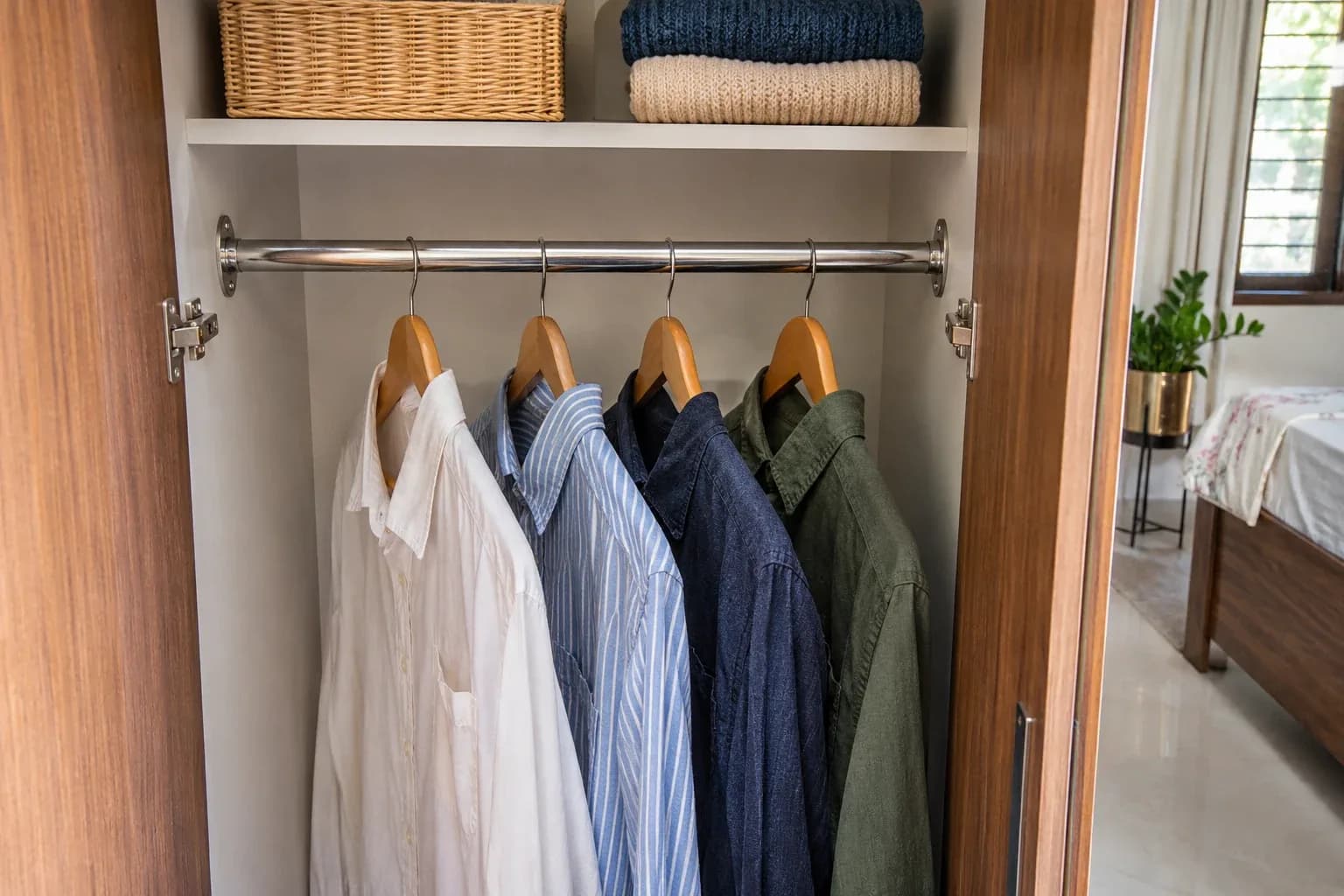
Consider another rail direction
A front-to-back or pull-out hanging arrangement can make a shallow compartment useful, provided the fitting, load and access suit the design. It presents clothes differently from a conventional side-to-side rail and may expose fewer garments at once.
Compare the same clothing quantity in both arrangements. Check how you reach the rear hanger and whether the fitting extends through the clear door opening. Drawer fronts, hinges and sliding-door overlaps must be included in the trial.
Use shallow space where it helps
Folded items, bags or smaller accessories may use a shallow compartment effectively. Avoid forcing every bay to carry hanging clothes if that makes the whole wardrobe awkward. A mixed-depth plan can be deliberate when the room allows it.
If an existing carcass is to be reduced, have the carpenter assess its joints, back, shelves and doors before cutting. Changing depth is a construction change, not simply trimming a visible side panel. Keep the revised internal drawing with the original room plan.
## A practical check before you decide
Build a temporary depth gauge from cardboard and close it in front of a dressed hanger. Repeat with the bulkiest regular garment. Compare the conventional rail and the proposed alternative, noting both the closed fit and how easily the back item comes out.
## Test the actual garment, not an empty hanger
Hang a representative jacket or shirt on the hanger you use and place it in a mock-up of the clear compartment. Include the door and any rear panel in the test. Check whether the clothing is pushed forward, catches at the sides or stops the door closing normally. The cabinet's outer depth does not describe that usable envelope.
If the proposed solution uses a front-to-back or pull-out rail, try reaching an item at the rear with the front garments in place. Ask the hardware supplier to confirm its mounting and loading requirements. A different rail direction changes the way you see and retrieve clothes, not just the drawing.
Use shallow compartments for suitable folded items or accessories where hanging does not work well. Keep the division flexible where the maker permits it. Before approving fabrication, record the clear dimensions, chosen hardware and tested storage use. At handover, repeat the check with clothes inside so a door or drawer conflict is found while the installer can assess it.
## Keep the board specification with the drawing
Greenply discusses 18 mm plywood in its wardrobe material guide. Ask for the shallow wardrobe section to identify the grade and finished thickness of each board, including the back and facing. Check the rail and shelf supports against the usable depth shown there.
Questions people ask us
Is a nominal 600 mm wardrobe always deep enough?
Check the actual usable depth, door system and garments rather than the nominal dimension alone.
Can I turn the hangers sideways?
Consider a designed alternative rail and test access with real clothes.
Will a sliding door reduce useful depth?
Its track and front arrangement must be included in the section.
Can a deep wardrobe be cut down?
Have the whole construction assessed before altering it.
What is the simplest fit test?
Use the actual hanger, a bulky garment and a temporary closed-front position.