
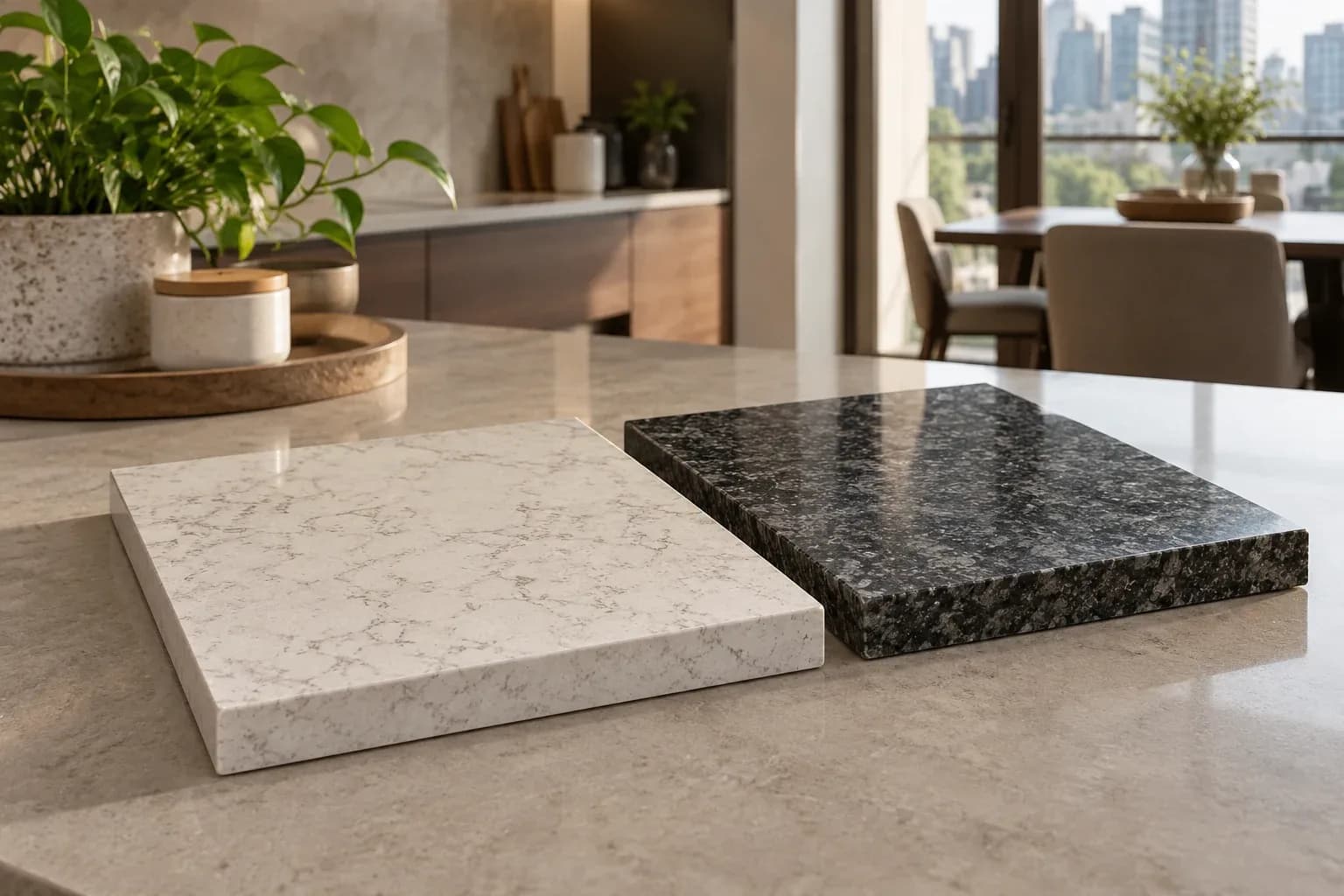
| Engineered quartz | Granite | |
|---|---|---|
| Appearance | Product and batch patterns; inspect the allocated slab | Natural variation; inspect the actual stone |
| Heat planning | Follow the exact brand's protection guidance | Follow the fabricator's care advice and use protection |
| Surface care | Use the approved product-specific cleaning method | Check finish and any sealing or treatment requirements |
| Edges and openings | Fabricator must detail support and cut-outs | Stone condition and fabrication detail matter |
| Cost comparison | Compare completed scope, not slab price alone | Use the same installed drawing and inclusions |
Practical guidance
Quartz and granite can both work in a busy kitchen, but they ask different questions about appearance, heat, care and fabrication. Compare the exact slabs and installation proposals. A broad material label cannot describe every product, finish or support detail.
Start with the cooking routine
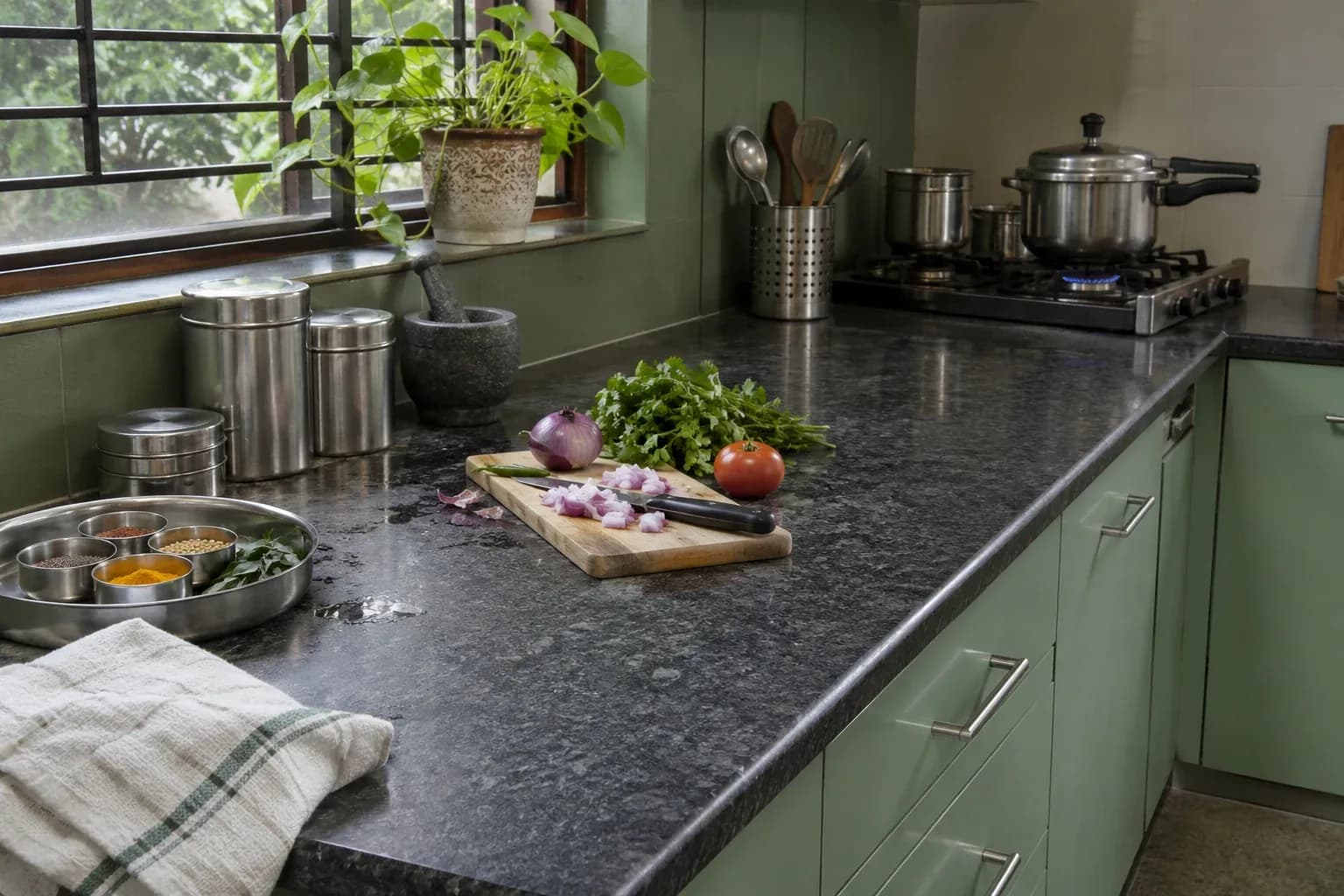
List what happens on your counter during a normal week. Include hot cookware, acidic ingredients, food colouring, heavy appliances and repeated wiping. Use protective habits recommended for the chosen surface rather than assuming that a hard material tolerates every exposure.
Granite is a natural stone with variation between slabs. Engineered quartz combines mineral material with binders, with product-specific care requirements. Ask each supplier to provide written guidance for heat, cleaning and stain response. Test permitted cleaning on a sample when the supplier allows it, instead of improvising an aggressive demonstration.
Approve the slab and the edge together
Look at the full slab or the actual allocated material. Small pieces may miss a prominent vein, a colour change or a repeated pattern. View the slab beside your cabinet finish and floor, then discuss where the sink, hob and joints will fall.
Check the finished edge, exposed cut-outs and corner treatment. The same surface can appear very different with a thin edge or a built-up front. Ask the fabricator to explain the underlying construction and support, particularly around openings and any seating overhang.
## Compare the installed scope and care
A fair quotation uses the same drawing, edge detail, cut-outs, seams, transport and installation responsibilities. Ask whether old-surface removal, plumbing reconnection and substrate correction are included. A lower slab rate can still produce a higher completed bill.
Keep the allocated material reference, drawing and care instructions. At handover, inspect seams and cut-outs in the room's normal light. Establish who to contact about a fabrication defect and how ordinary maintenance is documented. Choose the appearance you like alongside a care routine your household can realistically follow.
## A practical check before you decide
Make a two-column comparison using your actual kitchen drawing. Record slab identity, edge construction, planned joints, care requirements and complete installed scope for both options. Include a photograph of the exact material approved and a sample of its finished edge, so colour and detailing are judged together.
## Compare a specified product with a specified slab
Cosentino lists Silestone in 12 mm, 20 mm and 30 mm thicknesses. This is a product example, not a statement that all quartz or granite is supplied alike. Use the manufacturer specification to understand why the quote must identify the exact material and section. Ask the granite supplier for the equivalent information for the allocated natural stone. Match the finished counter height and edge appearance in both proposals, rather than comparing unrelated thicknesses.
## Turn everyday habits into an acceptance checklist
Describe where you set down a hot pan, where you chop and how you clean after cooking. Ask each supplier to explain the protective accessories and permitted cleaners for those tasks. Cosentino recommends trivets for hot containers on Silestone; that is a useful reminder to read the product's care sheet rather than treating the word quartz as an assurance about every exposure. Obtain separate written guidance for the selected granite.
At the sink, inspect a finished edge sample and consider contact with heavy pots. At the hob, ask how clearances and support are coordinated with the appliance instructions. These details may matter more in daily use than a small difference in the colour of two showroom chips.
Record what is included in maintenance and what requires a paid service visit. Keep the invoice, slab reference, final template, installation photographs and care instructions together. If one supplier proposes a change after measuring, compare the revised detail before approving fabrication. A confident decision combines an appearance you like, an installation the fabricator can explain and a care routine that your household will actually follow.
Questions people ask us
Is every quartz worktop the same?
Composition, pattern, finish and warranties vary between products.
Does granite always need the same sealing schedule?
Ask about the particular stone, finish and treatment rather than using a universal interval.
Can I put hot cookware directly on either?
Follow the selected surface's care instructions and use appropriate heat protection.
Will a small sample show the final pattern?
It may not. Approve the allocated slab and layout.
Which price should I compare?
Compare the completed installed scope on the same kitchen drawing.