
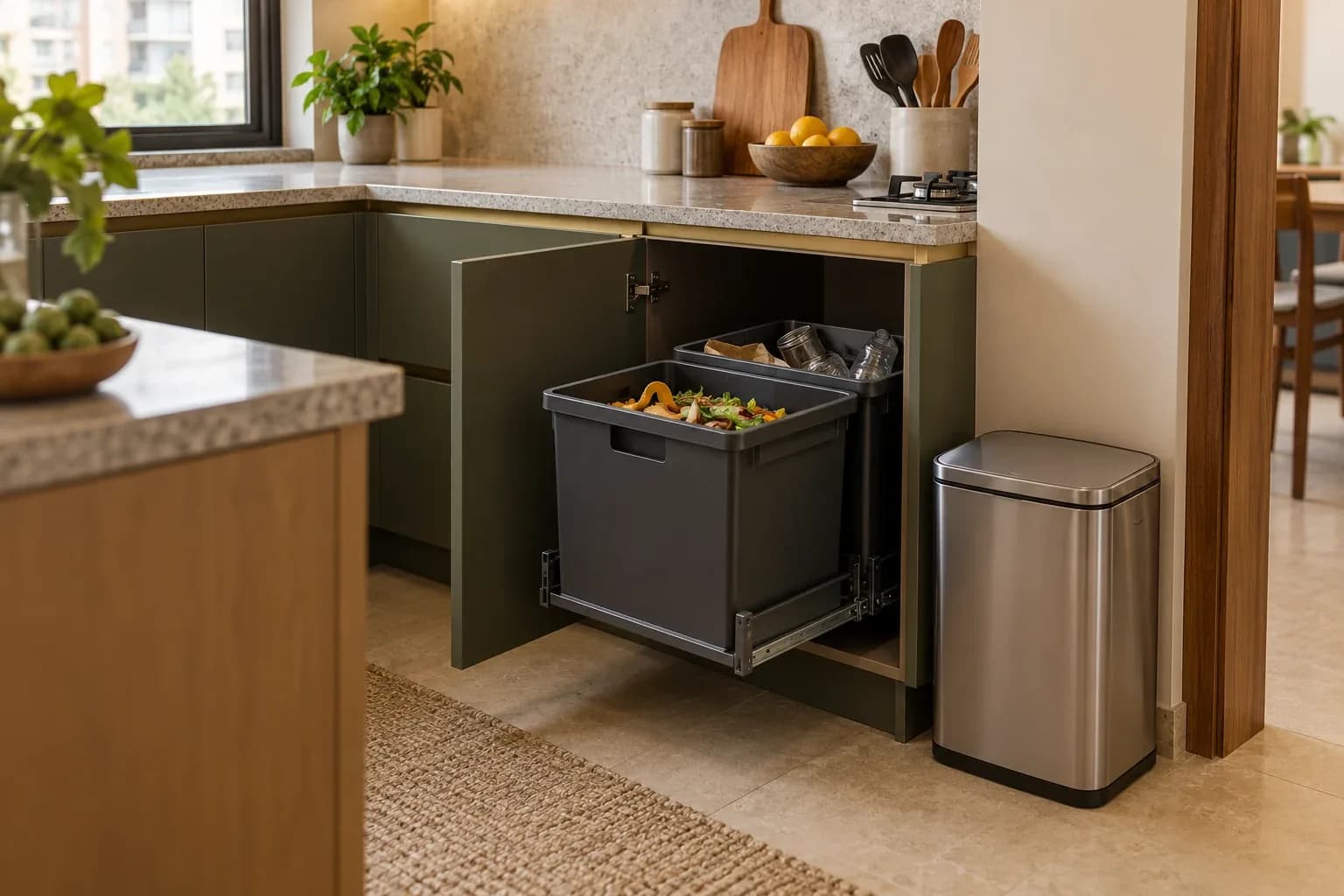
| Pull-out bin | Freestanding bin | |
|---|---|---|
| Location | Allocated cabinet position | Movable floor position |
| Storage trade-off | Uses a cabinet and moving fitting | Uses floor space |
| Bag removal | Check bucket lift-out clearance | Check lid and liner retention |
| Cleaning | Inspect cabinet floor and frame access | Inspect the outside and floor below |
| Replacement | Check buckets, runners and front fittings | Usually replaced as a separate container |
Introduction
A pull-out waste bin keeps rubbish behind a cabinet front, while a freestanding bin gives you a separate container to position and replace. Choose by the way you prepare food, remove bags and clean spills. Concealing the bin is useful only if it stays convenient.
## Rehearse the messy part of cooking
Stand where you peel vegetables and clear plates. Decide whether the bin needs to open while you are holding a chopping board or whether a separate lid is easier. A drawer front may need a clean hand unless you choose a compatible opening arrangement. A freestanding pedal bin needs space for the pedal and raised lid.
Consider several users working together. A person scraping dishes should not block the person loading the dishwasher. Test access with those doors open before allocating a narrow cabinet solely to waste storage.
Compare actual capacity and cleaning access
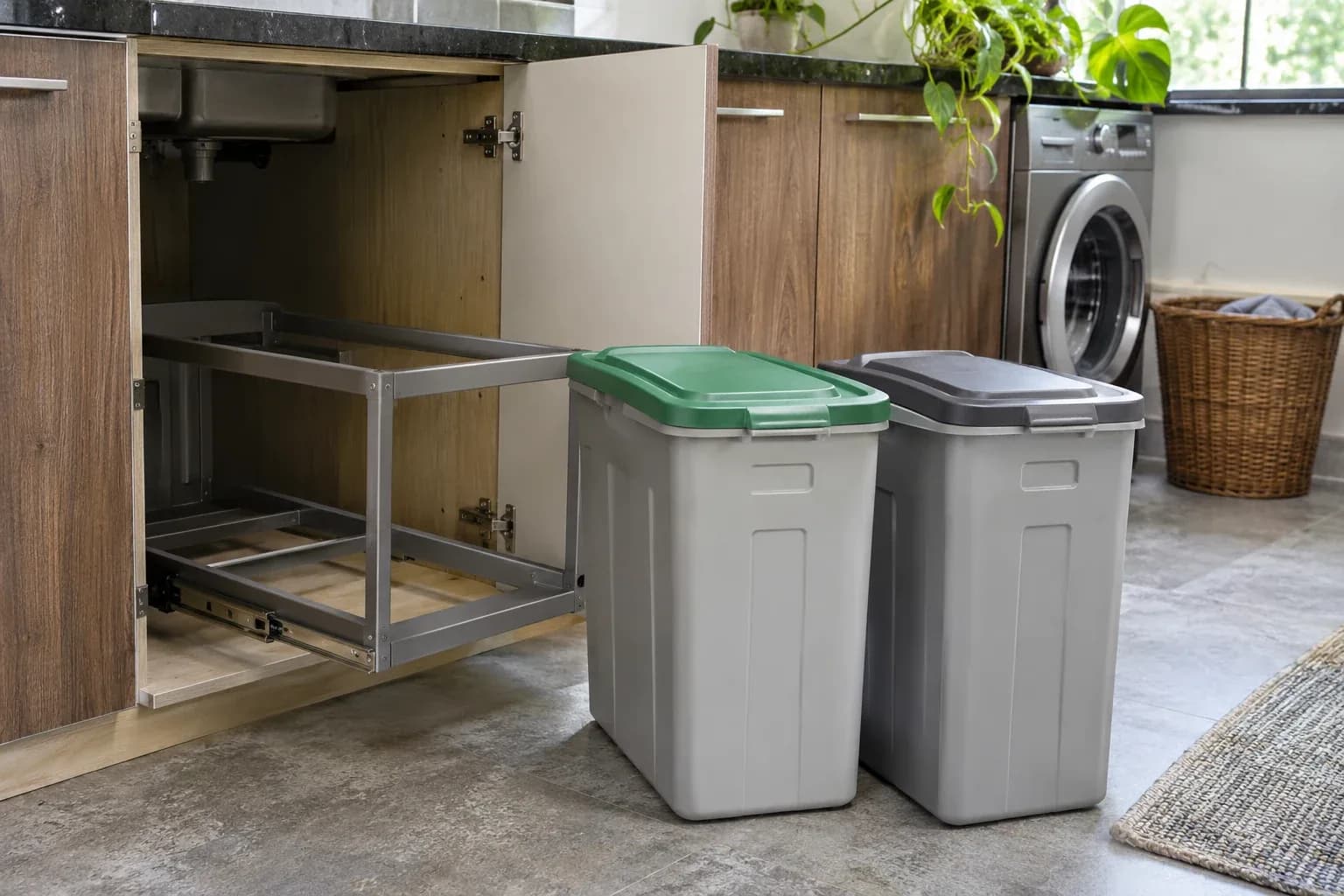
The external size of a pull-out does not equal the capacity of its buckets. Look inside, lift each container out and practise taking out a full liner. Check whether the bag catches the surrounding frame and whether the rear bucket is accessible.
An enclosed system also needs a sensible response to drips, loose scraps and smells. Inspect removable parts and the floor beneath the fitting. A freestanding container is easier to replace as a unit, but its outside and the floor around it remain part of your cleaning routine. Neither location makes food waste maintenance disappear.
Allow for hardware and future replacement
A pull-out occupies usable cabinetry and adds runners or a frame to service. Confirm the complete unit's rated load, bucket sizes, front attachment and replacement availability. The buckets are consumable household parts in practice, so ask whether a damaged one can be obtained separately.
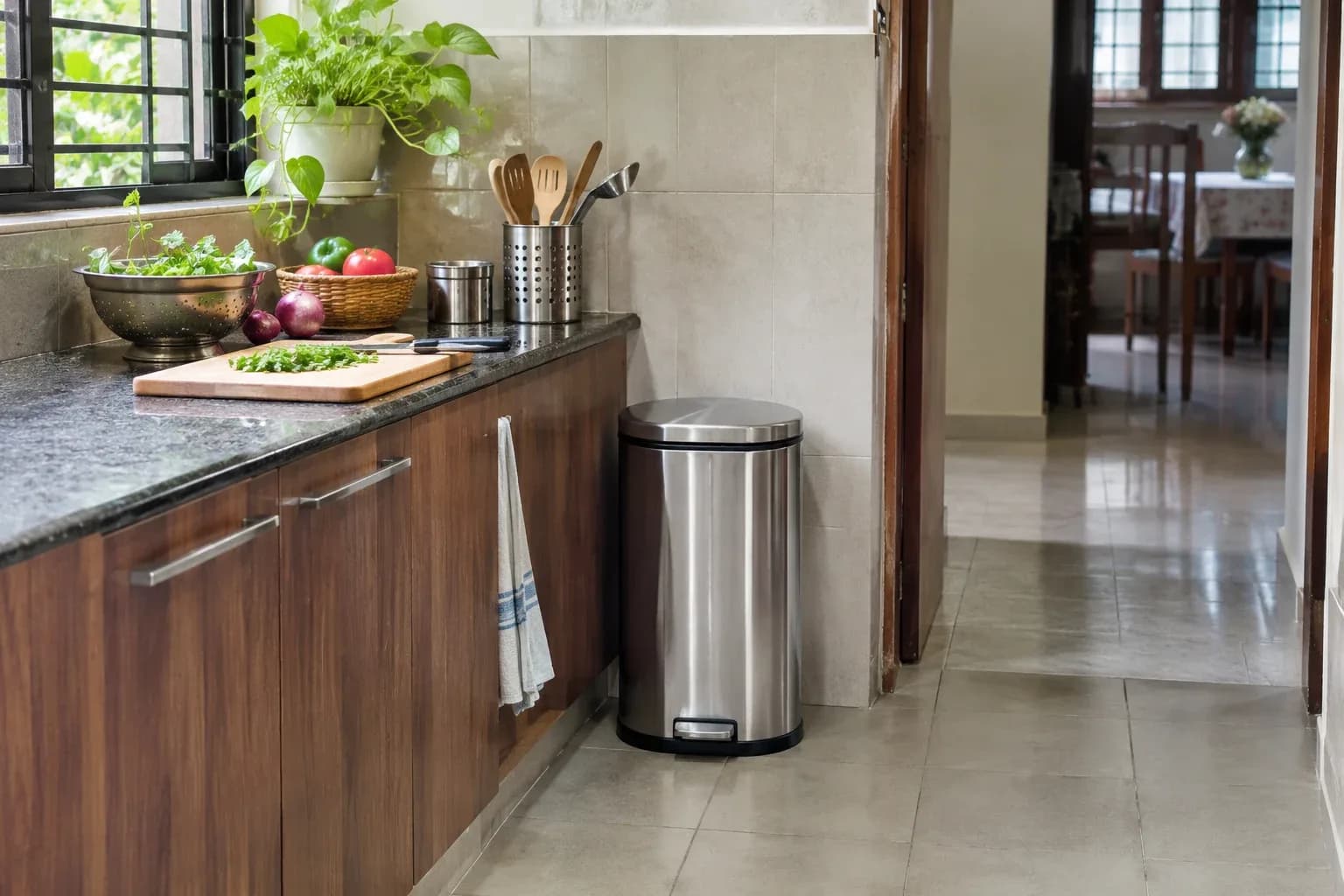
For a freestanding bin, mark its real footprint and lid movement on the plan. Avoid placing it where it narrows the only route through the room. If you are uncertain, begin by testing a movable bin at the proposed position before committing a cabinet to built-in storage.
## A practical check before you decide
Measure one full day's waste before deciding how many separate buckets you need. Include dry packaging and food waste according to your household's collection arrangements. Compare emptying the proposed system with a bag fitted, then photograph the bucket references and cleaning access before ordering.
Compare the bag-change routine in full
A bin can be easy to fill but awkward to empty. Try lifting out the inner container and removing a full bag without dragging it past a sharp fitting or against the underside of the counter. Check where the lid rests during this movement and where you will put the bucket while cleaning. For a pull-out, look at the clearance above the container, not only the cabinet width. For a freestanding bin, include the open lid and the space needed to step around it.
Think about the waste your household separates. Compare the useful size of each compartment with the bags you actually buy. Two small buckets are not necessarily more useful than one larger container, and a large total capacity may not suit a household that empties wet waste frequently. Decide the routine first, then compare the available arrangements.
Inspect the surrounding surfaces
Check whether a spill can be reached without dismantling the fitting and whether the container lifts out as intended. A pull-out front with 1 mm laminate is still a complete panel with edges and fixings that need appropriate detailing; the finish description alone does not establish how the assembly should be cleaned. Follow the fitting and surface instructions.
Before choosing, ask what is replaceable: the bucket, lid, runners and front attachment for a pull-out, or the liner-retention and lid parts for a freestanding option. Record the exact references where available. Compare the installation and eventual replacement effort alongside the initial purchase price, and leave a clear route for carrying the bag out of the kitchen.
Questions people ask us
Does a concealed bin prevent smells?
Regular emptying, drying and cleaning still matter.
Can I use the cabinet under the sink?
Only if the bucket, plumbing and service access fit without conflict.
Should the rear bucket be smaller?
Choose capacities from your actual waste separation and emptying routine.
Can a bin pull-out be retrofitted?
Have the fitter check the clear opening, door arrangement and fixing points.
What if the kitchen is narrow?
Test both the open pull-out and a freestanding bin footprint before choosing.