
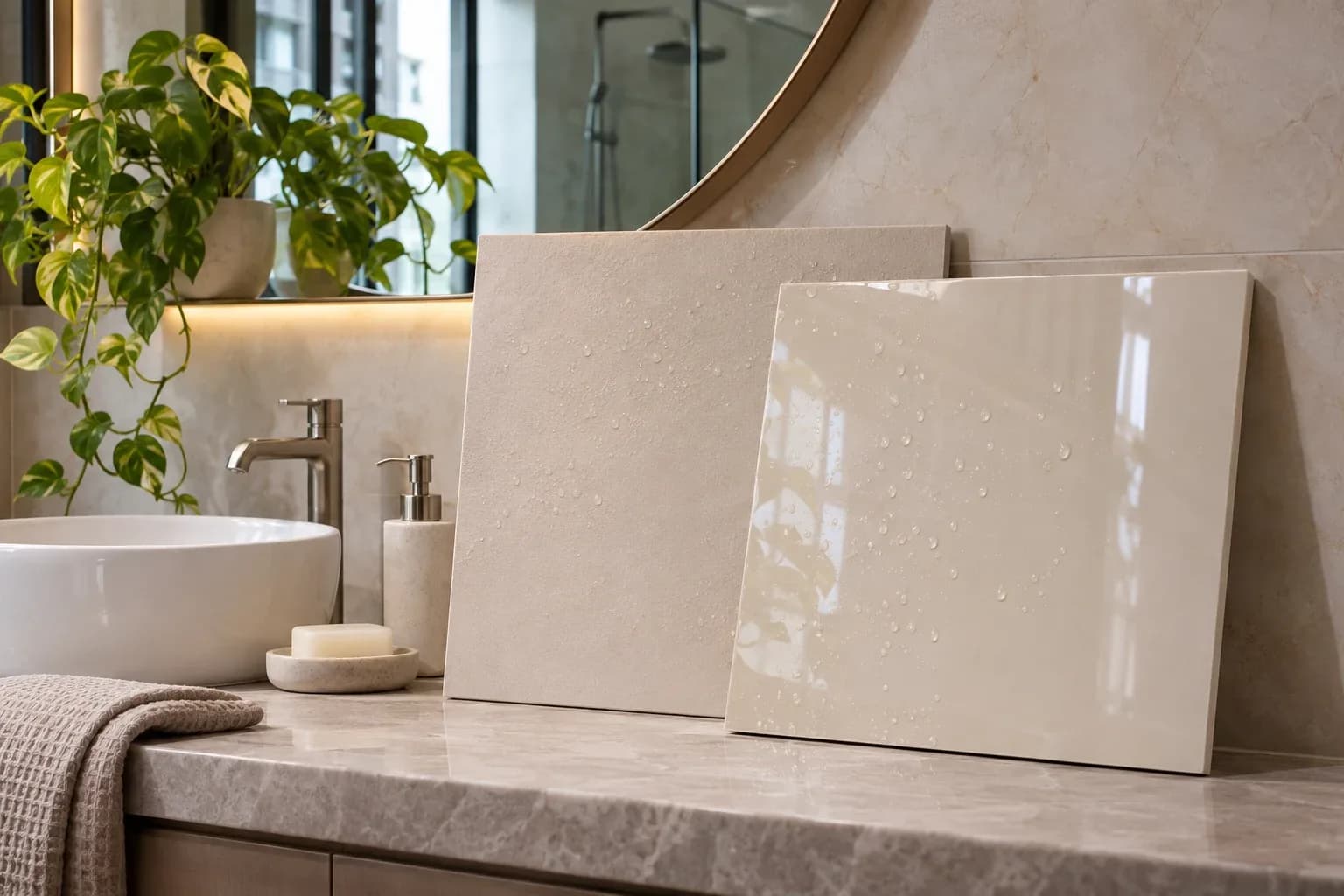
| Matte wall tile | Glossy wall tile | |
|---|---|---|
| Surface review | Inspect the exact texture and pattern | Inspect the exact face and reflections |
| Water marks | Test the actual sample after wetting and drying | Test the actual sample after wetting and drying |
| Cleaning | Follow the selected product's permitted method | Follow the selected product's permitted method |
| Lighting | Check how texture appears under task lighting | Check reflected fittings and glare from normal viewpoints |
| Floor use | Confirm floor suitability separately | Confirm floor suitability separately |
Practical guidance
Matte and glossy wall tiles can both suit a bathroom. Compare their actual surface, pattern and cleaning instructions under the room's lighting. Sheen affects reflection, but it does not by itself determine water resistance, stain resistance or suitability for a floor. Shortlist exact products and judge a representative sample rather than choosing from the words matte and glossy alone.
## Separate wall choice from floor requirements
Begin by identifying where every tile will be used. A wall beside a basin, a shower wall and a wet floor are different applications. If the design repeats a matching colour on the floor, ask the supplier for the suitability and performance information for that exact floor product. Do not infer wet-floor performance from a wall sample's appearance.
Keep the tile code, finish and intended location together in the schedule. Similar names may refer to different faces or versions within a range. Have the designer or installer confirm the actual assembly, including preparation, waterproofing where required and junctions. The visible sheen is one part of that decision.
Test water marks and wiping on the real sample
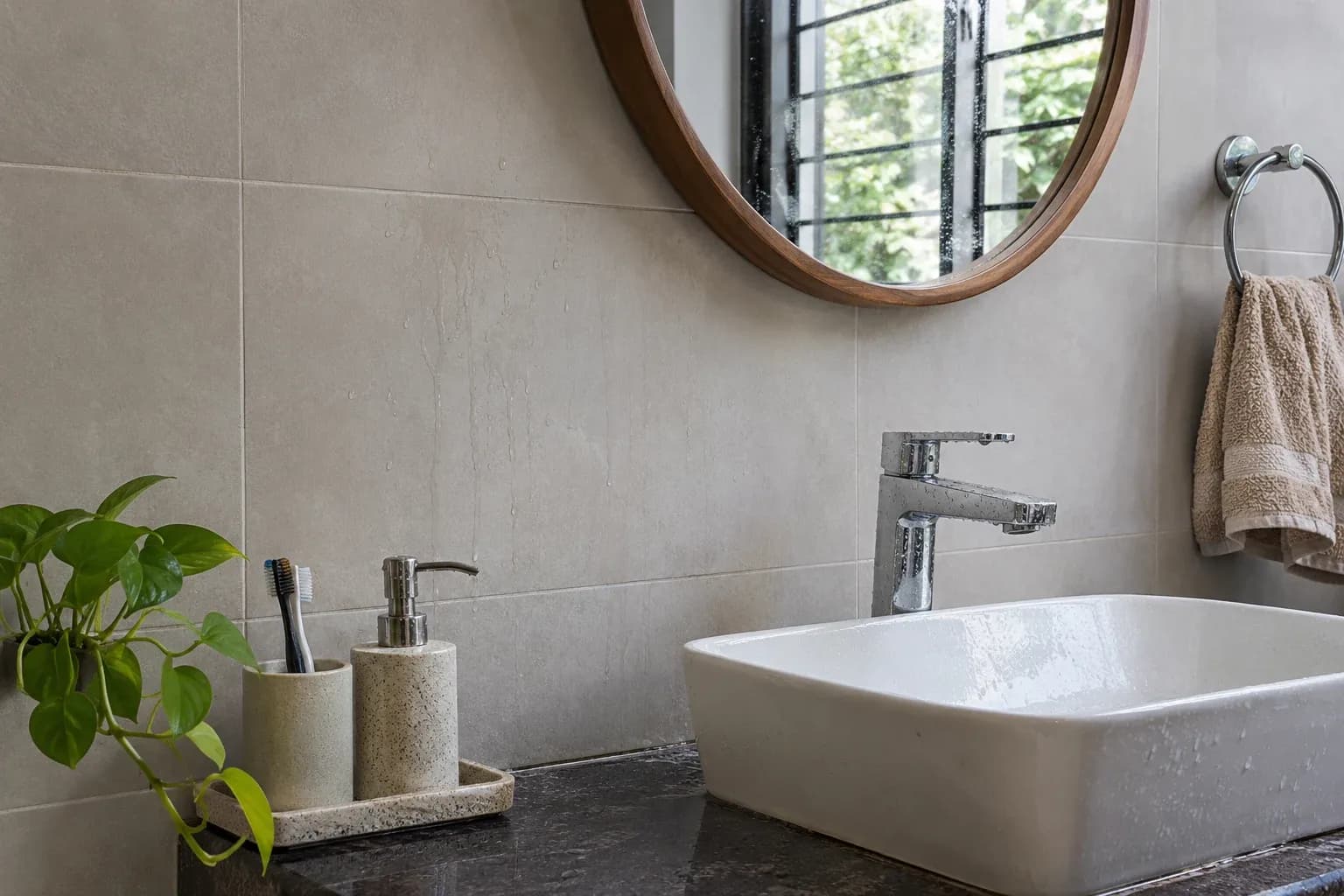
Ask which cleaning products and methods the manufacturer permits. Where the supplier allows it, wet a sample and look at it after drying under the intended light. Then use the recommended cleaning process. Compare the effort needed to restore the intended appearance, rather than assuming either finish will remain free of visible marks.
Look at texture as well as gloss. A strongly textured matte face can collect residue differently from a smooth matte face. On a glossy product, reflected light may reveal streaks that are less obvious from another position. Colour, pattern and local water conditions also affect what you notice. A brief showroom impression cannot predict every bathroom.
Do not apply an aggressive chemical as a demonstration without the supplier's approval. A cleaner that removes one mark can be unsuitable for the tile, grout, sealant or adjacent metalwork. Retain the care instructions for the complete sample group, not only the main tile.
Compare the faces in the room's lighting
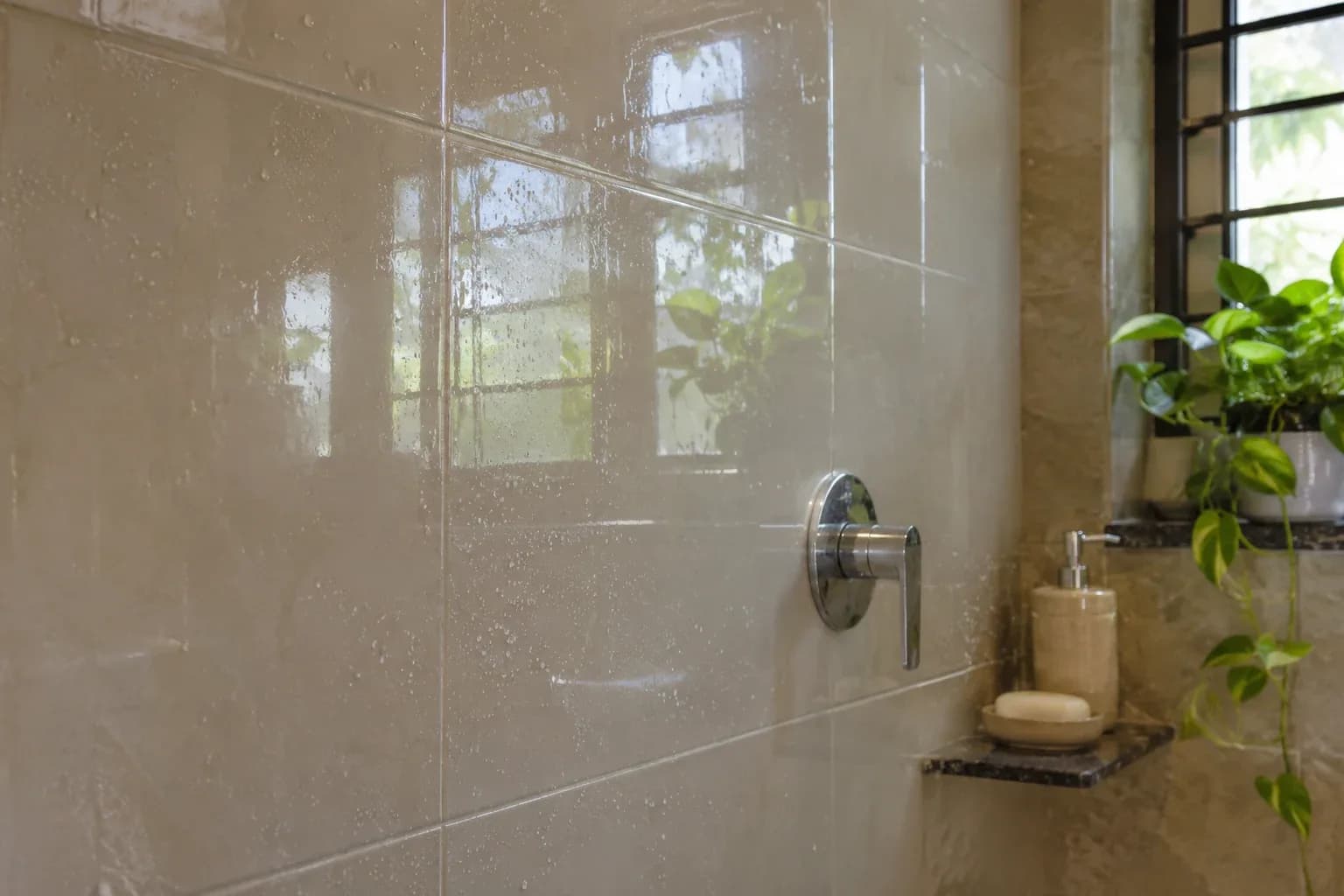
Stand samples vertically and view them from the doorway, basin and shower positions. Include the intended light direction. Check whether a glossy face reflects a bright fitting into your eyes and whether a textured face creates shadows that change its apparent colour.
Add the vanity finish, grout and any visible trim. A tile that seems quiet by itself can become a strong grid when contrasting joints are added. Arrange several pieces where possible so variation and pattern repeat are visible. Review the same group in daylight and evening light before approving it.
Use photographs to record the arrangement, while making the colour decision from physical materials. Phone processing can change brightness and undertones. Keep the signed sample or a clearly identified reference with the order.
## Include the joint in the maintenance decision
Mapei identifies Kerapoxy Easy Design for joints from 1 to 15 mm in its product information. That range describes a particular grout, not the correct joint width for every tile. Ask the installer to confirm the selected tile-and-grout assembly and the separate movement-joint details.
Approve a cured sample that includes the actual tile and joint. Compare permitted cleaning across the face and the joint rather than wiping only the centre of a display tile. Record grout and sealant references so future maintenance is matched to the installation.
## Review the full elevation before ordering
Mark corners, niches, fittings, window returns and exposed edges on the wall drawing. Ask how cut pieces will sit around those interruptions. A narrow sliver or an awkward trim may be more noticeable than the overall sheen choice.
Confirm quantities, matching spares and what happens if the supplied batch differs from the approved sample. At handover, inspect the walls under normal lighting before accessories obscure the details. Have the installer assess haze, residue or inconsistent joints instead of assuming they are inherent to the chosen finish. Select the product whose appearance and care routine suit the household, then retain the complete tile and joint record.
Questions people ask us
Will glossy wall tiles always show more water marks?
Compare the actual colour, face and lighting using permitted sample tests; sheen alone cannot settle it.
Are matte wall tiles suitable for the wet floor?
Confirm floor suitability and the relevant performance for the exact product separately.
Should grout be part of the sample?
Yes. Review the cured joint, colour and permitted cleaning alongside the tile.
Can I test any strong cleaner?
Use only methods approved for the tile and the surrounding joint and fitting materials.
What should I retain?
Keep tile codes, batch information, grout and sealant references, care instructions and suitable spares.